 Clearwater Siding
 Exterior Contracting in Belleair, Florida
Belleair sits on the Pinellas peninsula between Clearwater Harbor and the Gulf of Mexico, and that location shapes everything about how a home's exterior ages here. Homes in this part of Pinellas County live with near-constant onshore breezes, intense sun exposure most of the year, and the periodic threat of tropical systems moving through the Gulf. Add in the humidity that never really goes away and you have a climate that is genuinely hard on siding, roofing, windows, and outdoor structures like decks. We work throughout Belleair and the surrounding Clearwater area, and the approach we take here starts with understanding what the coastal environment actually does to a building over time, not just what looks good on installation day.
This page walks through how each part of the exterior — siding, roof, windows, and decks — holds up in Belleair's climate, and what we do differently as a local crew that installs to that reality rather than to a generic spec sheet.
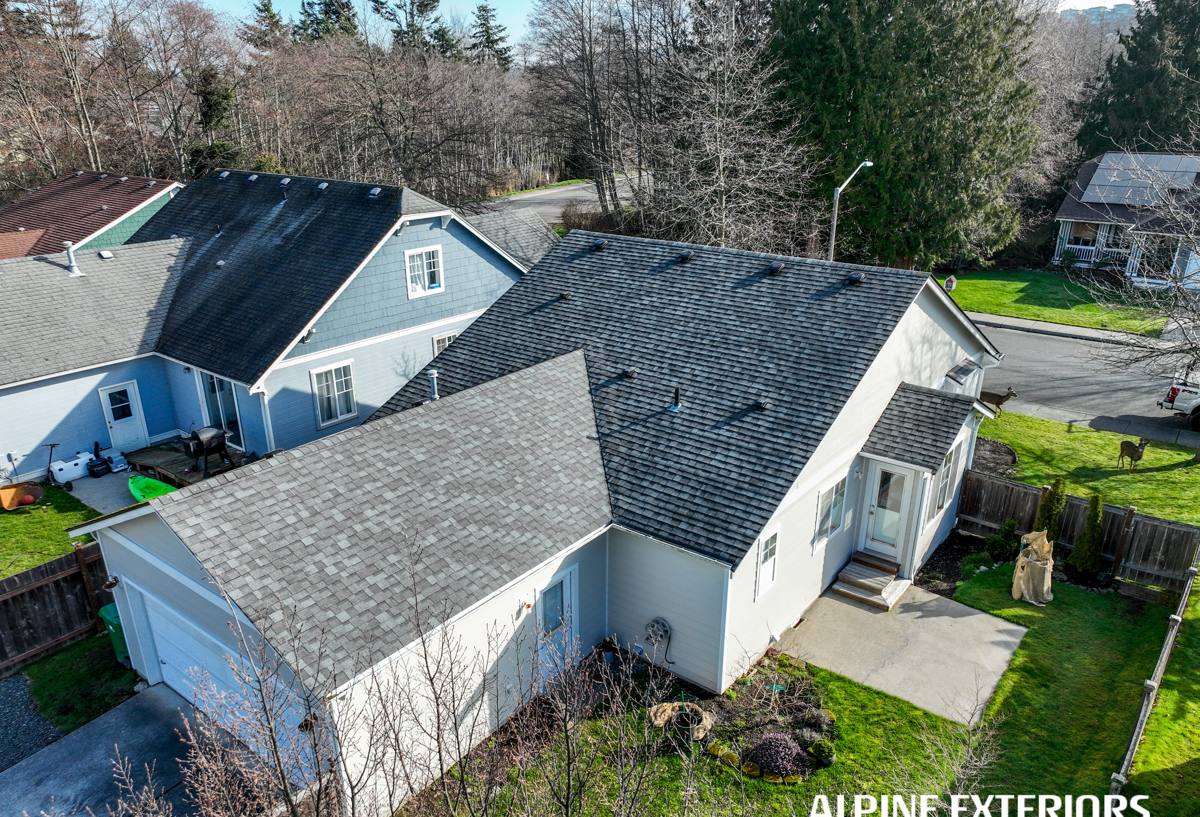
What Belleair's Climate Does to a Home's Exterior
Salt Air and Moisture
Proximity to the Gulf and the Intracoastal means salt-laden air reaches homes here even several blocks inland. Salt accelerates corrosion on fasteners, trim, and any metal component, and it can degrade lower-quality paints and coatings faster than manufacturers' standard warranties assume. Combine that with Florida's humidity and you get conditions where anything that traps moisture against wood or absorbs water into its structure is working against itself from day one.
Wind and Wind-Driven Rain
Pinellas County sits in Florida's wind-borne debris region, and Belleair's exposure to open water means storms don't need to make direct landfall nearby to push strong, sustained wind and driving rain against a house. Wind doesn't just test how well siding and roofing are fastened down — it tests how well they shed water that's being forced sideways and upward under eaves, at corners, and around window and door openings.
Year-Round UV
Florida sun is intense for most of the calendar year, not just in summer. UV breaks down cheap paints, causes cladding to fade unevenly, and dries out wood-based products, which leads to cracking, warping, and checking. Materials and finishes that aren't engineered for this level of sun exposure show it within a few years, not a few decades.
Siding in Belleair: Why We Only Install James Hardie
We install James Hardie fiber cement siding exclusively. We don't install vinyl, LP SmartSide, Cemplank, Allura, or primed wood products like spruce or cedar, and that's a deliberate standard, not a limitation on what we're capable of installing. Each of those alternatives has real strengths, but each also has a trade-off that matters more in a coastal Pinellas County climate than it might inland.
- Vinyl siding can warp or distort in prolonged high heat and is more vulnerable to cracking under wind-driven debris impact.
- Wood-based and primed products (spruce, cedar, some engineered wood) require diligent, ongoing maintenance to keep moisture out at seams and cut edges — miss a maintenance cycle in this humidity and problems compound quickly.
- Some fiber cement competitors are legitimate products, but we've standardized on Hardie specifically for its factory-applied ColorPlus finish, its HZ5 formulation engineered for humid climates, and the strength of its transferable warranty when installation follows their spec.
James Hardie fiber cement is non-combustible, resists moisture-driven swelling and rot far better than wood-based sidings, and the ColorPlus finish is baked on at the factory under controlled conditions — which holds color and resists the fading and chalking that UV causes on field-applied paint. For a home exposed to Belleair's combination of salt air, humidity, and sun, that durability profile is why we put it on every siding job we do.
How Common Exterior Materials Compare in a Coastal Climate
| Material | Moisture/Rot Resistance | Wind & Impact Resistance | UV/Fade Resistance | Typical Maintenance |
|---|---|---|---|---|
| James Hardie fiber cement | Engineered HZ5 formulation for humid regions | Rated for high-wind installation when installed to spec | Factory ColorPlus finish resists fading | Periodic caulk/inspection, minimal repainting |
| Vinyl siding | Doesn't absorb moisture but can trap it behind panels | Can crack or warp under impact and heat | Color can fade and become brittle over time | Low, but panels are hard to spot-repair invisibly |
| Primed wood/spruce | Vulnerable to rot if seams aren't maintained | Moderate; depends on fastening | Requires repainting on a regular cycle | High — regular inspection and repainting needed |
| Engineered wood (LP-type) | Good if properly sealed and maintained | Good when installed correctly | Needs maintained coating to prevent moisture entry | Moderate to high — edge sealing is critical |
Roofing for Belleair Homes
A roof in this part of Pinellas County has to manage the same three stresses as the siding — wind uplift, wind-driven rain intrusion, and sustained UV — but it takes the worst of all three directly. We look at underlayment quality, fastening patterns, flashing details around penetrations and valleys, and edge/ridge details as closely as we look at the shingle or tile itself, because most roof failures in coastal wind events start at a connection point, not in the field of the roof. Ventilation matters too: a well-ventilated attic keeps roofing materials from cooking from underneath during Florida's long hot season, which extends the life of whatever roofing system is installed.
Windows: Managing Wind, Water, and Heat Together
Windows in Belleair have to do three jobs at once: resist wind pressure and wind-borne debris, keep wind-driven rain out at the frame and sill even during a sideways downpour, and cut down on solar heat gain so cooling costs don't run away with you for eight or nine months of the year. Correct flashing and sealing at the window opening is just as important as the window unit itself — a good window installed with poor flashing will leak, and a mediocre window installed with excellent flashing will still underperform on comfort and energy cost. We treat window installation as a system, not just a swap-out.
Decks: Built for Sun, Rain, and Salt Air
Outdoor living spaces are part of daily life in Belleair, and a deck here needs a structure and decking material chosen with the same climate factors in mind — moisture at ground contact and fasteners, UV exposure across open unshaded surfaces, and the corrosive effect of salt air on hardware over years of exposure. Framing, fastener selection, and decking material all get evaluated together, because a deck that looks good the first season but needs major repair in five years isn't doing its job.
Why a Local Crew Matters Here
A contractor who works Pinellas County's barrier islands and coastal peninsula neighborhoods regularly understands things a crew from outside the area has to learn on the job: how local wind exposure differs block to block near the water, what inspectors in this jurisdiction expect to see, and how salt air and humidity actually behave against different materials over a few Florida summers rather than in a lab. That local knowledge shows up in the small decisions — flashing details, fastener choice, how tight seams get caulked — that determine whether an exterior holds up through storm season after storm season.
What to Expect From Our Process
- An honest, in-person assessment of your home's current siding, roofing, windows, and/or decking condition
- A clear explanation of what's driving any recommendation — not just "replace it" without a reason
- James Hardie fiber cement as our siding standard, installed to manufacturer spec for warranty coverage
- Attention to the connection points — flashing, fastening, sealing — where most coastal exterior failures actually start
- A written scope and timeline before any work begins, with no pressure to decide on the spot
Signs It's Time to Have Your Exterior Inspected
Homeowners in Belleair don't need to wait for an obvious failure to get an exterior looked at. A few signs worth acting on sooner rather than later:
- Visible gaps, cracking, or soft spots in siding, especially near ground level or at corners
- Missing, curling, or granule-shedding shingles, or visible daylight in the attic
- Fogging, sticking, or drafts around window frames
- Soft, discolored, or splintering deck boards, or rust staining around deck fasteners
- Any water staining on interior ceilings or walls near exterior walls or the roofline
If you're in Belleair and want a straight answer about the condition of your siding, roof, windows, or deck, we're glad to take a look. The estimate is free, there's no pressure to commit to anything, and you'll get a clear explanation of what we see and why — just fill out the form below to get started.