 Clearwater Siding
 Living on Clearwater Beach Means Your Siding Works Harder
Clearwater Beach is a barrier island, and that single fact changes almost everything about how a home's exterior should be built and maintained. Homes here sit closer to open salt water than almost anywhere else in Pinellas County, which means the siding, trim, and fasteners on a Clearwater Beach house are exposed to a combination of stresses that inland Clearwater and Tampa Bay-area homes simply don't see at the same intensity: constant salt-laden air, direct Gulf sun for most of the day, wind-driven rain that gets pushed sideways into walls during storms, and the periodic threat of hurricane-force gusts. Any one of those on its own is manageable. All four, year-round, is what separates a barrier-island exterior job from a typical suburban siding job.
We install siding, roofing, windows, and decks across the Clearwater and greater Tampa Bay area, and the beach properties are consistently where we see the most exterior wear relative to a home's age. A 15-year-old siding job a few miles inland can look nearly new. A 15-year-old siding job facing the Gulf, especially on a home without gutters or with landscaping that traps moisture against the wall, often tells a very different story.
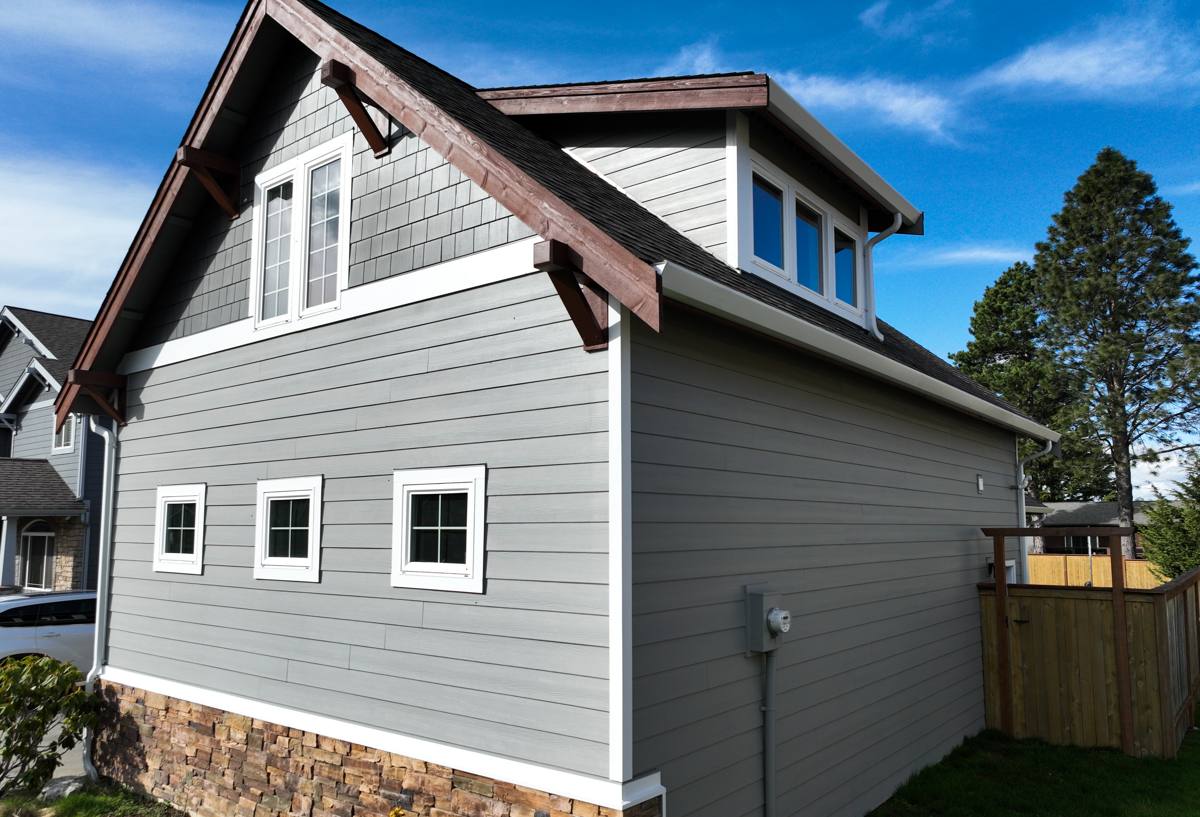
What Salt Air Actually Does to Exterior Materials
Salt air isn't just "humid air with a coastal smell." Airborne salt is corrosive and hygroscopic, meaning it pulls moisture out of the atmosphere and holds it against whatever surface it settles on. Over time that has a few predictable effects on a home's exterior:
- Metal fasteners, flashing, and trim hardware corrode faster unless they're rated for coastal exposure.
- Painted and coated surfaces chalk, fade, and lose adhesion sooner than the same product would inland.
- Any seam, gap, or unsealed joint becomes a place where salt-laden moisture can work its way behind the cladding.
- Materials that absorb water and swell — even slightly — go through more expansion-contraction cycling near the coast, which accelerates wear at joints and fastener points.
This is why the specific siding material and the specific installation detailing matter more on Clearwater Beach than almost anywhere else we work. A product and installation approach that's "good enough" a few miles inland can be genuinely inadequate a block from the water.
UV Exposure Compounds the Problem
Florida sun is intense everywhere, but a Gulf-facing property gets long, unobstructed exposure with very little tree canopy or building shade to interrupt it. UV breaks down pigments and polymers in coatings, which is why cheaper paint jobs and lower-grade siding finishes fade, chalk, or crack years ahead of schedule on beachfront and near-beachfront homes. Combined with salt air, UV exposure is one of the two biggest reasons siding finishes fail early on the island.
Why We Only Install James Hardie Fiber Cement Siding
We made a deliberate decision as a company to install James Hardie fiber cement exclusively, and not vinyl, not LP SmartSide, not Cemplank, Allura, or primed wood products. That's a stricter standard than most contractors hold themselves to, and on a barrier island like Clearwater Beach, we think it matters even more than usual.
Fiber cement is a mix of cement, sand, and cellulose fibers. It doesn't absorb and swell the way wood-based or engineered-wood siding can, it's non-combustible, and it holds a factory-applied finish far better than field-applied paint. James Hardie's ColorPlus finish is baked on and cured under controlled conditions, which gives it substantially better UV and fade resistance than a paint job applied on-site — a real advantage on a property that gets full Gulf sun most of the year. Hardie also engineers specific product lines (their HZ5 formulation, for example) for hot, humid, moisture-heavy climates like ours, rather than selling one generic siding for the whole country.
None of this means other products are junk — vinyl is inexpensive and low-maintenance in mild climates, and engineered wood has real fans. But we've seen how coastal conditions expose the weak points in those materials over a 10-20 year horizon: vinyl can warp, fade, and become brittle under sustained heat and UV, and it isn't rated to withstand the wind loads some Clearwater Beach properties need. Engineered wood products depend heavily on perfect installation and ongoing maintenance to keep moisture out, which is a harder bar to clear consistently in a salt-air environment. We'd rather install one product very well than offer several and hope each one holds up.
Wind Rating Matters as Much as the Material
Clearwater Beach properties often fall under stricter wind-load and coastal construction requirements than homes further inland, and Pinellas County permitting reflects that. James Hardie siding carries wind-load ratings that hold up under hurricane-force gusts when installed to manufacturer specification — but "installed to spec" is the operative phrase. Fastener pattern, fastener type, and starter strip detailing all affect real-world wind performance, not just the product itself.
How Wind-Driven Rain Gets Into a Wall System
During tropical storms and hurricanes, rain on Clearwater Beach doesn't fall straight down — it's pushed sideways, sometimes with enough force to drive water horizontally into wall assemblies that would stay dry in an ordinary rainstorm. This is one of the most misunderstood parts of coastal exterior work: most water intrusion problems we find aren't failures of the siding material itself, they're failures of the water-resistive barrier and flashing details behind it.
A correctly built wall system assumes some water will get past the outer cladding during a severe wind event, and gives it a way to drain back out rather than sit against the sheathing. That means:
- A continuous, properly lapped weather-resistive barrier behind the siding.
- Correct flashing at windows, doors, and every horizontal trim transition.
- Proper clearance at the bottom of the siding so water can't wick up from grade or a deck surface.
- Sealant used only where it's actually needed — over-sealing every joint can trap moisture rather than release it.
This is why we treat siding replacement on Clearwater Beach as a whole wall-system job, not just a material swap. Installing premium siding over a compromised water barrier just hides the problem for a while.
Roofing, Windows, and Decks Face the Same Environment
Siding doesn't work in isolation, and on a barrier island property the whole exterior envelope is under the same stress. A roof that's lost granules to UV and salt exposure, or has aging flashing at penetrations, will eventually feed water into places that damage siding and trim from behind. Older or non-impact windows are both a wind-vulnerability and a water-intrusion risk during storms. Decks facing direct sun and salt spray see faster fastener corrosion and wood degradation than decks set back from the water. Because we handle siding, roofing, windows, and decks, we can look at a Clearwater Beach property as one connected system and flag issues in one trade that are about to become problems in another — instead of a siding-only crew missing a roof flashing issue that's actually the real source of a stain.
What Correct Coastal Installation Looks Like
| Detail | Why It Matters on Clearwater Beach |
|---|---|
| Corrosion-resistant fasteners | Standard fasteners can corrode noticeably faster in salt air, leading to staining and loosened boards |
| Correct fastener spacing/pattern | Directly affects the siding's real-world wind rating in a hurricane-prone area |
| Continuous weather-resistive barrier | Backstop for wind-driven rain that gets past the outer siding layer |
| Proper flashing at penetrations and trim | The most common source of hidden water intrusion in coastal wall systems |
| Factory-cured ColorPlus finish | Resists UV fade and salt exposure far longer than field-applied paint |
| Clearance at grade and deck surfaces | Prevents moisture wicking into the bottom edge of the siding |
Maintenance Realities for a Barrier-Island Home
Even the best-installed siding needs some routine attention near the water, and being upfront about that is part of doing this job honestly. A Clearwater Beach homeowner should expect to:
- Rinse salt residue off exterior surfaces periodically, especially after long dry stretches without rain to wash it off naturally.
- Inspect caulking and sealant at trim joints and window/door transitions annually, since UV and salt exposure age sealant faster here than inland.
- Keep gutters and downspouts clear so water is directed away from the wall assembly rather than sheeting down the siding face.
- Have flashing and roof penetrations checked after major storms, since that's where hidden water paths tend to start.
- Trim back landscaping or irrigation spray that keeps siding surfaces damp longer than they need to be.
None of that is unusual maintenance for a coastal home — it's just more frequent than what an inland property needs, and worth planning for rather than being surprised by.
Why a Local Crew Matters Here
Coastal construction detailing isn't something you improvise from a general how-to guide. Pinellas County's permitting and wind-load requirements for a barrier island property, the way local sun angles hit a Gulf-facing wall, and the specific ways salt air attacks fasteners and finishes are things you learn by working on these exact properties repeatedly, not by installing siding somewhere with a milder climate. A crew that mainly works inland subdivisions may not think twice about a detail that's routine there but genuinely undersized for a Clearwater Beach exposure. We work throughout Pinellas County and the broader Clearwater area, and the beach and near-coastal properties get treated as the higher-exposure jobs they are — not scaled-down versions of an inland install.
Get a Straightforward Look at Your Home's Exterior
If you own a home on or near Clearwater Beach and you're seeing early fading, chalking, soft spots, or staining on your siding, or you're just planning ahead for a property that's due for an exterior update, we're happy to take a look. We'll give you an honest read on what's actually going on, what it would take to fix it correctly for this environment, and what a James Hardie fiber cement installation would involve for your specific home. Reach out for a free, no-pressure estimate using the form below.