 Clearwater Siding
 Why Siding Estimates Vary So Much From House to House
Ask three contractors to price the same siding job in Clearwater and you'll often get three different numbers, sometimes a wide spread. That's not necessarily a sign someone is padding a bid or lowballing to win work. Siding replacement cost is built from a stack of variables that aren't visible from the curb — what's under the old siding, how the home is shaped, what wind rating the wall assembly needs to meet, and how much of the crew's time goes to prep versus install. Understanding those variables is the difference between comparing quotes intelligently and just picking the smallest number on a piece of paper.
This guide walks through what actually moves the price, in the order it usually matters, so you can read a Clearwater siding quote and know what you're paying for.
Square Footage and Home Shape
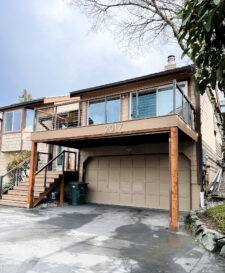
Total wall square footage is the starting point for every estimate, but it's not the whole story. A simple rectangular ranch with few corners costs less per square foot to side than a house with multiple gables, dormers, bump-outs, and a complex roofline. Every inside and outside corner, every window and door opening, and every transition between roof pitches adds cutting, flashing, and trim time that a flat wall doesn't require.
Two homes with identical square footage can land tens of thousands of dollars apart once you account for architectural complexity. When you're comparing quotes, make sure each contractor measured the same way and priced the same scope — not just a "per square foot" number pulled from memory.
Tear-Off vs. Installing Over Existing Siding
Some contractors will install new siding directly over old siding to save labor. We don't recommend this, and it's worth understanding why it affects price. A full tear-off costs more up front because it means stripping the old material, hauling it off, and inspecting the sheathing underneath. But it's the only way to actually know what condition the wall is in before you close it back up — and in a coastal, wind-driven-rain climate like Pinellas County, that inspection matters more than almost anywhere else in the country.
Installing over existing siding is cheaper in the short term but it traps whatever moisture or damage is already there, and it usually isn't compliant with proper manufacturer installation instructions for a fiber cement product. A lower bid that skips tear-off isn't a better deal — it's a different, riskier scope.
What Tear-Off Reveals
- Rotted or delaminated wall sheathing behind window and door openings
- Missing or degraded house wrap and water-resistive barrier
- Old, improperly lapped flashing around windows, doors, and roof-to-wall intersections
- Termite or moisture damage in framing, especially near grade level and roof valleys
- Improperly fastened or unsupported sheathing from a prior renovation
Hidden Damage Is the Line Item Nobody Can Quote in Advance
This is the single biggest reason a final invoice can differ from the original estimate, and it's not unique to any one contractor — it's physics. Clearwater homes take on a lot of water exposure over the years: wind-driven rain during summer storms, humidity that never fully lets a wall assembly dry out, and salt-laden air that accelerates corrosion of fasteners and flashing. By the time old siding comes off, it's common to find soft or rotted sheathing that wasn't visible or detectable from outside.
A contractor who tells you up front that substrate repair is billed separately, as-needed, is being honest with you. One who promises a fixed price with zero contingency for what's found during tear-off is either assuming the wall is perfect or leaving themselves room to renegotiate later. Ask how substrate repair is priced — by the sheet, by the hour, or with an allowance built into the contract — before you sign anything.
Material Choice Sets the Baseline
The siding material itself is a major cost driver, but material price alone doesn't tell you the full cost story — installation requirements, expected lifespan, and maintenance all factor into what you actually pay over the time you own the house.
| Material | Relative Install Cost | Typical Lifespan | Ongoing Maintenance |
|---|---|---|---|
| Vinyl | Lowest | 15-25 years, shorter with direct sun/heat exposure | Low, but fades and can warp in high heat |
| Engineered wood (LP SmartSide) | Moderate | 20-30 years with strict maintenance | Requires diligent caulk/paint upkeep to manage moisture risk |
| Fiber cement (James Hardie) | Moderate to higher | 30-50 years | Low; factory ColorPlus finish resists fading and doesn't need repainting on the manufacturer's typical cycle |
| Wood (cedar, primed spruce) | Higher | Varies widely by upkeep | High; regular painting/sealing required to prevent rot |
We install James Hardie fiber cement exclusively, and the reason comes down to that lifespan-versus-maintenance column. A material that costs a little more to install but doesn't need repainting, doesn't feed pests, and is engineered as non-combustible tends to cost less over a 20-year ownership window than one that's cheaper today but needs ongoing attention. That's a decision every homeowner should make with real numbers in front of them, not marketing.
Local Factors: Wind Ratings, Permits, and Pinellas County Code
Clearwater sits in a high-velocity hurricane zone, and Pinellas County's building code reflects that. Siding installed here has to meet wind-load and fastening requirements that inland markets don't deal with — this affects fastener schedules, the type of house wrap and flashing used, and how siding is attached at corners and around openings. All of that is labor, and all of it is required, not optional upgrade work.
A permit is required for a full siding replacement in most cases, and permit fees, inspections, and code-compliant materials are a real part of the total cost — not a place to cut corners to save money. A contractor quoting a price that doesn't account for wind-rated installation isn't quoting a job that will pass inspection or hold up in the next named storm.
Labor and Timing in the Tampa Bay Market
Labor cost fluctuates with demand. Spring and early summer, before hurricane season peaks, tend to be the busiest window for exterior contractors across the Tampa Bay area, and post-storm periods can create real backlogs when a lot of homes need repair at once. Scheduling a replacement during a slower season can sometimes mean better crew availability and less pressure on the timeline, though it shouldn't be the deciding factor if your siding needs attention now.
Crew experience also affects price in a way that's easy to overlook. A crew that installs fiber cement daily works faster and with fewer callbacks than one that installs it occasionally alongside several other materials. That experience is part of what you're paying for in labor, even though it doesn't show up as its own line item.
Finish, Trim, and Detail Work
Siding is rarely just flat panels. Trim boards, corner posts, window and door casing, soffit and fascia work, and color-matched caulking all add cost, and they're also what makes a finished job look intentional instead of assembled. Factory-finished products like James Hardie's ColorPlus system reduce some of this cost over time because the color and trim finish come baked in at the factory rather than requiring field painting, but the installation detailing around every penetration and transition still takes skilled labor to get right.
Skipping proper trim and flashing detail is one of the easiest ways to shave a number down on paper — and one of the fastest ways to end up with water intrusion problems two or three years later.
Getting an Accurate, Comparable Quote
The best way to protect yourself against surprise costs is to make sure every quote you're comparing covers the same scope. Use this checklist when you're evaluating bids:
- Confirm whether the quote includes full tear-off or installation over existing siding
- Ask how substrate repair (rotted sheathing, damaged framing) is priced if it's discovered
- Verify the quote includes wind-rated fastening and flashing that meets Pinellas County code
- Confirm who is pulling the permit and whether permit fees are included
- Ask exactly which siding product, line, and finish is being quoted — not just "fiber cement" or "Hardie board"
- Get the warranty terms in writing: manufacturer warranty and separate workmanship warranty
- Ask for a written timeline and what happens if weather delays the job
A detailed, itemized quote takes a little longer to produce than a rough per-square-foot number, but it's the only kind worth comparing against another contractor's bid.
What This Means for Your Home
Siding replacement cost in Clearwater isn't one number — it's the sum of your home's size and shape, what condition the wall assembly is actually in once it's opened up, the material you choose, and the code-driven installation work required to make it storm-ready. Homeowners who understand these drivers ahead of time end up with quotes they can actually compare, and fewer surprises once the crew starts pulling old siding off the walls.
If you're weighing a siding replacement and want a clear, itemized look at what your specific home would involve, we're happy to walk the property, take real measurements, and put together a free, no-pressure estimate — no obligation, just straight numbers.