 Clearwater Siding
 Siding in Countryside: A Different Kind of Wear and Tear
Countryside is one of Clearwater's older, more established residential areas — mature tree canopy, homes built across several decades, and a mix of original exterior materials that have had years to show their age. If you've lived in this part of Pinellas County for a while, you've probably noticed that siding here doesn't fail the way it does in drier, milder climates. It doesn't just fade. It cups, it swells at the seams, it grows soft at the bottom edge, and after a bad storm season it sometimes just looks tired in a way that's hard to pin down.
That's not bad luck. It's the environment. Clearwater sits close enough to the Gulf that salt-laden air moves inland on a regular basis, even into neighborhoods well back from the water. Add hurricane-force wind events, sun exposure that runs close to year-round, and the kind of wind-driven rain that gets pushed sideways into wall assemblies rather than falling straight down, and you've got a climate that's genuinely tough on exterior materials. Countryside's tree cover helps with shade, but it also means more debris impact, more humidity trapped against north-facing walls, and more moisture that lingers instead of drying out quickly.
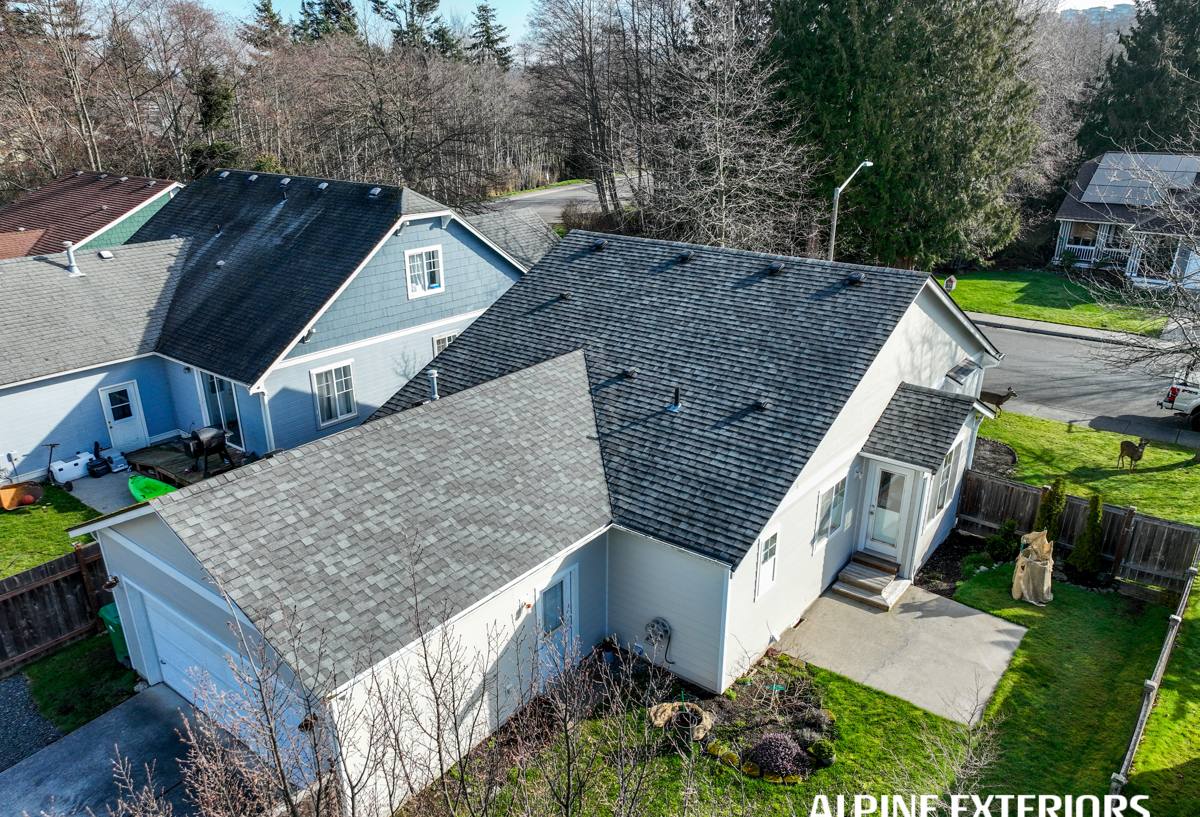
What This Climate Actually Does to a House
UV and Heat
Florida sun is relentless on painted and coated surfaces. Cheaper coatings chalk, fade unevenly, and lose adhesion faster than manufacturers' warranties suggest, especially on south- and west-facing walls that take direct afternoon sun most of the year.
Wind-Driven Rain
During tropical storms and the heavier summer squalls, rain doesn't just fall — it's pushed horizontally into siding, trim, and window and door openings. Materials and installation details that aren't built for that kind of lateral moisture load end up letting water behind the cladding, where it can sit against sheathing and framing.
Salt Air
Even away from the immediate coastline, salt aerosol travels on Gulf breezes and settles on exterior surfaces. Over time it accelerates corrosion of fasteners and metal components and can degrade certain finishes faster than inland climates would.
Storm Wind Loads
Pinellas County's wind exposure means siding has to be rated and fastened to hold up under real hurricane-force gusts, not just everyday breezes. Panels that flex, warp, or lose their fastening pattern over time become vulnerable exactly when a storm actually arrives.
Why We Install Only James Hardie Fiber Cement
We get asked fairly often why we don't offer more product options. The honest answer is that we've seen how different siding materials actually perform once they've spent a few Florida hurricane seasons on a wall, and we'd rather stand behind one system we trust completely than offer a menu of products with very different long-term track records.
We don't install vinyl siding, LP SmartSide, Cemplank, Allura, or primed wood products like spruce or cedar. That's not a knock on every homeowner who has one of these on their house right now — plenty of these products are engineered reasonably well and have real advantages, particularly around upfront cost. But each comes with trade-offs that matter more in this climate than in most: vinyl can warp and become brittle under sustained heat and UV, and it's a fuel source rather than a fire-resistant barrier. Engineered wood products depend heavily on sealed edges and flawless installation to resist moisture, and a single missed detail can lead to swelling years down the road. Primed wood siding needs a maintenance schedule most homeowners underestimate, especially with humidity this high.
James Hardie fiber cement is non-combustible, holds up to wind-driven rain without swelling, and comes from the factory with a baked-on ColorPlus finish engineered to resist Florida-level UV fade far longer than field-applied paint. Hardie also builds specific product lines for high-humidity, coastal-influenced climates, and backs the material with a strong, transferable limited warranty. When it's installed to Hardie's specifications — correct clearances, proper fastening, sealed joints — it's the most durable, lowest-maintenance option we can put in front of a Countryside homeowner in good conscience.
How Hardie Siding Performs on a Countryside Home
| Concern | What Hardie Fiber Cement Does |
|---|---|
| Intense UV exposure | Factory ColorPlus finish resists fading far longer than typical field-painted siding |
| Wind-driven rain | Fiber cement doesn't swell or wick moisture like wood-based products can |
| Hurricane wind loads | Engineered and rated for high-wind installation when fastened per spec |
| Salt air | Cement composition doesn't corrode; proper stainless or coated fasteners limit metal-related staining |
| Fire exposure | Non-combustible material, unlike vinyl or wood-based sidings |
| Pests and rot | No organic wood content for termites or fungal decay to feed on |
A Siding Project, Start to Finish
Assessment
We start by actually looking at what's on the house now — where moisture has gotten in, where trim and flashing are compromised, and whether there's hidden damage behind the existing siding that needs to be addressed before anything new goes up. In an older Countryside home, this step matters; skipping it just buries a problem under new material.
Prep and Moisture Management
Proper house wrap, flashing at every window and door opening, and correct clearances at the ground and roofline are what actually keep water out over the long run — the siding itself is only part of the system. This is where a lot of lower-quality installs fail, regardless of what material was used.
Installation
Hardie panels, planks, or shingles go up per manufacturer specification: correct fastener type and spacing, proper joint treatment, and finish work that's built for a climate with real wind exposure. We don't shortcut fastening patterns to save labor time — it's the difference between siding that survives a named storm and siding that doesn't.
Final Detailing
Trim, caulking, and touch-up finishing are what make a siding job look genuinely finished rather than just "done." We check clearances and seal points before we consider a project complete.
Beyond Siding: The Whole Exterior Envelope
Siding doesn't work in isolation. On a lot of Countryside homes, the roof, windows, and siding are all roughly the same age, which means they're often wearing out around the same time — and a weak point in one system puts stress on the others. We handle roofing, windows, and decks alongside siding for exactly this reason.
Roofing
A roof that's shedding granules, has lifted shingles, or has aging flashing lets water into places that eventually show up as siding or interior damage. Coordinating roof and siding work also means fewer separate contractors touching the same areas of the house.
Windows
Older windows are frequently the weakest point for both wind-driven rain intrusion and energy loss. Replacing windows at the same time as siding lets us properly integrate flashing and trim in one continuous system instead of patching around mismatched work later.
Decks
Exterior wood structures take the same UV and moisture punishment as siding, just closer to the ground. If a deck is due for attention, it's worth evaluating alongside the rest of the exterior.
Signs a Countryside Home Needs Siding Attention
- Soft or spongy spots when you press on siding, especially near the bottom edge or below windows
- Visible cupping, warping, or separation at panel seams
- Paint that's peeling, bubbling, or chalking heavily to the touch
- Streaking or dark staining that keeps coming back after cleaning
- Cracked or missing caulk at trim, corners, and window/door joints
- Rising cooling bills that can't be explained by anything else
- Visible gaps or damage after a tropical storm or high-wind event
Why a Local Crew Matters Here
A crew that works across Pinellas County understands how Countryside's mix of home ages, mature landscaping, and storm exposure differs from a coastal high-rise job or a newer subdivision on the other side of the county. We know what correct fastening and flashing look like for this wind zone, we know how salt air and humidity actually behave on a wall over ten or twenty years, and we're not learning Florida's climate on your house. That local knowledge shows up in the small decisions during an install — clearance heights, fastener choice, sealant selection — that determine whether siding holds up through the next decade of Gulf storm seasons or needs premature repair.
Get a Straightforward Look at Your Options
If your Countryside home's siding is showing its age, or you're planning ahead of the next storm season, we're happy to come take a look and give you an honest read on what it needs. There's no pressure and no obligation — just a straight assessment and a written estimate for James Hardie siding, along with roofing, windows, or decks if those are part of the picture. Use the form below to request your free estimate.