 Clearwater Siding
 Why Siding Problems Don't Stay Small in Clearwater
Siding is the first line of defense between your home's structure and the Gulf Coast climate, and in Pinellas County that defense works overtime. Between June and November, tropical systems bring sustained wind and wind-driven rain that force water sideways into seams and fastener holes. The other nine months bring some of the most intense year-round UV exposure in the continental United States, which breaks down paint films and certain siding substrates from the outside in. Add the salt air rolling off the Gulf and Tampa Bay, and you have a climate that accelerates almost every failure mode siding is prone to.
The problem is that siding failure is rarely dramatic at first. It starts as a hairline crack, a slightly soft spot near a downspout, or a patch of paint that looks a little duller than the rest of the wall. None of those things look urgent. But behind the siding, moisture doesn't wait for a homeowner to notice — it works its way into sheathing, framing, and insulation, and by the time a problem is visible from the street, the damage underneath is often much further along. Catching the early signs is the difference between a $300 repair and a $15,000 wall rebuild.
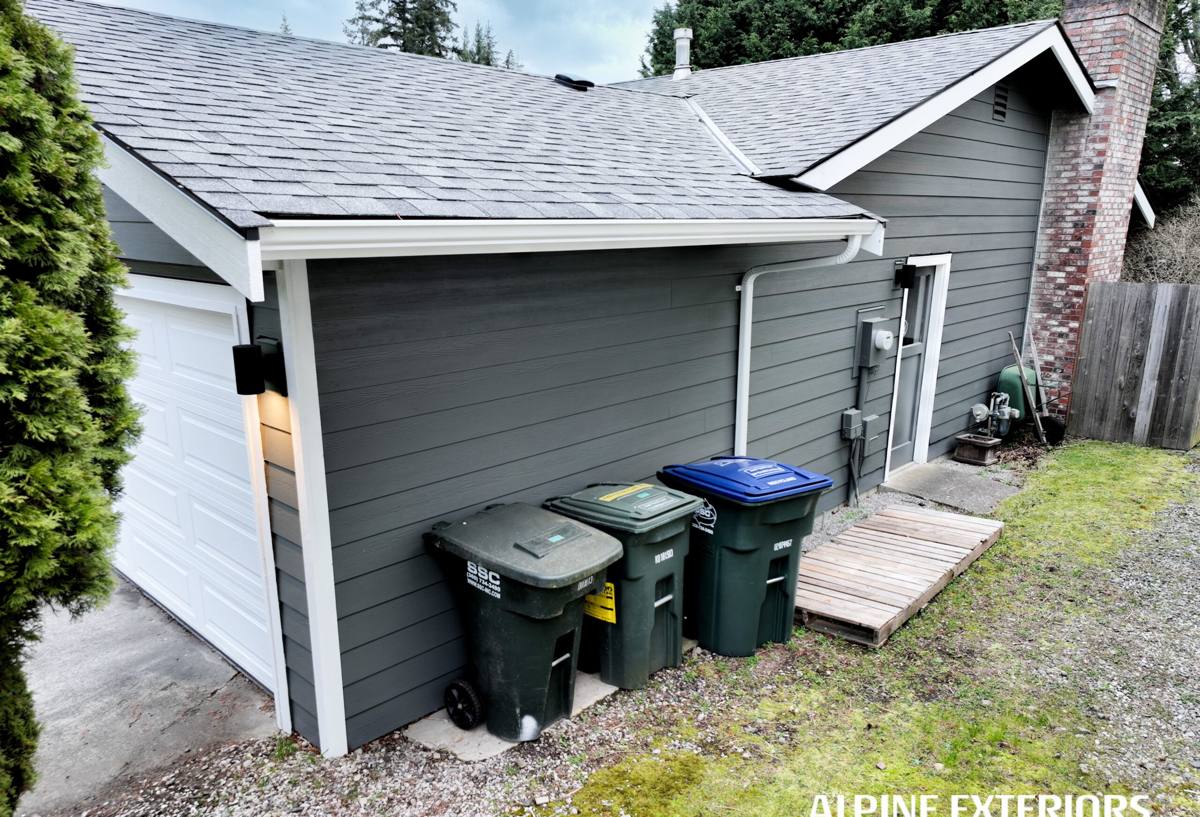
Cracking, Splitting, and Buckling
Cracks in siding are almost never purely cosmetic. Depending on the material, they show up for different reasons, and the reason matters for how urgent the fix is.
Hairline Cracks
Small surface cracks, especially near butt joints or fastener points, are usually the first sign of movement — panels expanding and contracting with heat, or a fastener that was driven too tight during installation. In Clearwater's heat, this cycling happens daily, and a hairline crack that isn't sealed will widen over a season or two, giving wind-driven rain a direct path behind the panel.
Splitting and Buckling
Wider splits, or panels that visibly bow or buckle away from the wall, usually mean either moisture has already gotten behind the siding and the substrate is swelling, or the siding was installed without the correct expansion gaps. Buckling after a windstorm is also a red flag for fasteners that have backed out or panels that were under-nailed to begin with — both of which put the whole wall at risk in the next round of hurricane-force gusts.
Bubbling, Peeling, or Chalking Paint
Paint condition tells you a lot about what's happening underneath. A few specific patterns are worth watching for:
- Bubbling paint almost always means moisture is trapped behind the finish, trying to escape through the coating. This is common on the sun-baked west and south-facing walls that take the brunt of Florida's UV exposure.
- Peeling in sheets suggests the paint has lost its bond to the substrate entirely — often from repeated moisture cycling or a coating that was never rated for this climate.
- Chalking (a powdery residue that rubs off on your hand) is normal UV breakdown of standard paint over years of exposure, but heavy chalking means the protective layer is thinning and the siding underneath is increasingly exposed.
Factory-applied finishes designed for coastal UV exposure resist all three of these far longer than field-applied paint, which is one of the practical reasons color retention matters as much as color choice when you're picking a product for a Pinellas County home.
Soft Spots and Spongy Areas
Press gently on siding near ground level, below windows, and around any penetration — hose bibs, dryer vents, electrical boxes. If it gives even slightly or feels spongy compared to the surrounding wall, water has likely been sitting in that spot for a while. This is one of the most reliable early indicators of moisture damage, and it's often present well before any discoloration is visible from a few feet away.
Staining and Discoloration
Dark streaking, especially running down from seams or trim, usually traces back to a small leak point above it. Green or black discoloration that won't wash off is a sign of sustained moisture and the early stages of mold or algae growth on or behind the surface.
Rot and Delamination
On wood-based products, a screwdriver test tells the story quickly — if the tip sinks in with light pressure where it shouldn't, the wood fiber is compromised. On layered products, delamination shows up as the outer layer separating or lifting from the core, which is a structural failure of the panel itself, not just a coating issue.
Warping, Rippling, and Waves in the Panels
Stand at the corner of your house and sight down the wall at a low angle. Siding should read as a flat, even plane. Ripples, waves, or a visibly uneven surface usually mean the panels are absorbing and releasing moisture unevenly, or that the material is expanding and contracting more than it was designed to. This is a common complaint with products that aren't dimensionally engineered for humid, high-swing climates, and it's a maintenance issue that never really goes away — the panels will keep moving with the weather for as long as they're on the wall.
Gaps, Loose Panels, and Missing Fasteners
After any significant wind event — and Clearwater sees several a year — walk the exterior and look for:
- Panels that have visibly shifted out of alignment with their neighbors
- Gaps opening up at seams that used to sit tight
- Fastener heads popping through the surface or pulling loose
- Corner boards or trim separating from the wall
- Panels that flex or rattle when pushed by hand
A single loose panel is a wind event waiting to happen — once wind gets under one edge, it can peel back an entire section. It's also an open invitation for wind-driven rain to get behind the wall assembly during the next storm, even if the panel itself never comes off.
Pest Activity and Soft-Wood Signs
Florida's climate is hospitable to wood-boring insects and moisture-loving pests year-round. Small holes, sawdust-like debris at the base of a wall, or sections that sound hollow when tapped can indicate pest activity, particularly on wood or wood-composite siding that has taken on moisture. This is worth flagging early because pest damage compounds quietly — by the time it's visible, it's usually spread further than the surface suggests.
Rising Energy Bills and Indoor Drafts
Not every warning sign is visible from the driveway. If your cooling costs have crept up without an obvious cause, or you notice drafts, temperature swings between rooms, or musty smells near exterior walls, failing siding is worth ruling out. Gaps and compromised panels let conditioned air escape and let humid outside air in, and in a climate as humid as Pinellas County's, that moisture infiltration can also feed mold growth inside wall cavities long before it's visible on either side.
Warning Signs at a Glance
| What You See | Likely Cause | Urgency |
|---|---|---|
| Hairline cracks at seams | Panel movement, tight fastening | Address within a season |
| Bubbling or peeling paint | Trapped moisture behind coating | Investigate soon |
| Soft or spongy spots | Sustained water intrusion | Urgent — schedule inspection |
| Visible warping or rippling | Uneven moisture absorption | Address within a season |
| Loose or shifted panels | Failing or backed-out fasteners | Urgent, especially before storm season |
| Dark streaking or green staining | Leak point above, algae growth | Investigate soon |
| Rising cooling bills, drafts | Gaps, compromised wall assembly | Investigate soon |
A Simple Seasonal Inspection Checklist
You don't need a ladder or special tools to catch most of these signs early. Twice a year — a good habit is once before hurricane season and once after — walk the full perimeter of your home and check:
- Sight down each wall at a low angle for waves, ripples, or misaligned panels
- Press gently on areas near ground level, downspouts, and window sills for soft spots
- Look closely at paint condition on south- and west-facing walls, which take the most UV
- Check every seam and trim joint for gaps or separation
- Look for staining, streaking, or discoloration below any horizontal surface
- Listen and feel for loose or rattling panels when you press on them
- Note any change in indoor comfort, drafts, or unexplained increases in cooling costs
Keep a few photos from each inspection. Side-by-side comparisons over a year or two make slow-developing problems — like gradual warping or spreading discoloration — much easier to catch than relying on memory alone.
What This Means When It's Time to Replace
Every siding material has a point where repair stops making sense and replacement takes over — usually when the warning signs above show up in multiple places, or when the underlying substrate has taken on moisture damage that repair alone can't reverse. When that point arrives, we install James Hardie fiber cement exclusively. It's non-combustible, engineered specifically for Gulf Coast humidity and UV exposure in its HZ5 product line, holds a factory-applied ColorPlus finish that resists the fading and chalking that plague field-painted siding here, and carries a strong transferable warranty. We made that choice after years of seeing which products actually hold up to Clearwater's combination of heat, humidity, salt air, and storm wind — and which ones require homeowners to fight the same battles over and over.
If you're noticing any of the signs above on your home, or you'd just like a second set of eyes before storm season, we're happy to take a look. Reach out for a free, no-pressure estimate using the form below.