 Clearwater Siding
 Island Estates: A Different Kind of Siding Job
Island Estates sits out on the water, connected to the rest of Clearwater by causeway, with canals, open bay views, and boat docks that come standard with the neighborhood. That waterfront setting is exactly why homes here need different treatment than a house ten miles inland. Every exterior surface on an Island Estates home is closer to salt water, more exposed to open wind, and under more direct sun for more hours of the day than a typical Pinellas County property. Siding, trim, and fascia take that punishment year-round, not just during storm season.
We've worked enough waterfront and near-waterfront properties around Clearwater to know that a siding job here isn't just "the same install, closer to the water." The details change — fastener choice, flashing, ventilation, even how the crew sequences the work around tide and wind — and getting those details right is the difference between siding that looks good for two years and siding that looks good for twenty.
What Salt Air, Sun, and Wind Actually Do to a House Out Here
Homeowners on the island usually notice the effects before they know the cause. Paint that used to last a decade starts chalking and fading in five or six years. Metal fasteners and trim pieces show rust bleed. Caulk joints crack and separate faster than they should. These aren't random maintenance issues — they're the predictable result of a few environmental factors stacking on top of each other in a place like Island Estates.
Salt Air and Corrosion
Airborne salt from the surrounding water settles on every exterior surface, not just the side facing the bay. It accelerates corrosion in fasteners, hardware, and any metal trim components, and it breaks down lower-grade paint and coating systems faster than inland exposure would. Materials and fastener specs that are "good enough" a few miles from the coast often aren't good enough here.
Year-Round UV Load
Open water reflects sunlight back onto the house in addition to direct exposure, so waterfront homes effectively get more UV load than a shaded or tree-covered lot elsewhere in the county. That extra exposure is hard on paint film, caulking, and any wood-based product — colors fade unevenly, and painted surfaces need attention sooner.
Wind-Driven Rain and Hurricane Exposure
With open exposure on multiple sides, wind-driven rain during storms and hurricane season pushes water sideways into seams, laps, and penetrations that would stay dry on a more sheltered inland lot. Siding systems that rely on tight-but-imperfect factory finishes or that swell and shift with moisture are put to the test here in ways they simply aren't elsewhere.
Why We Install Only James Hardie Fiber Cement
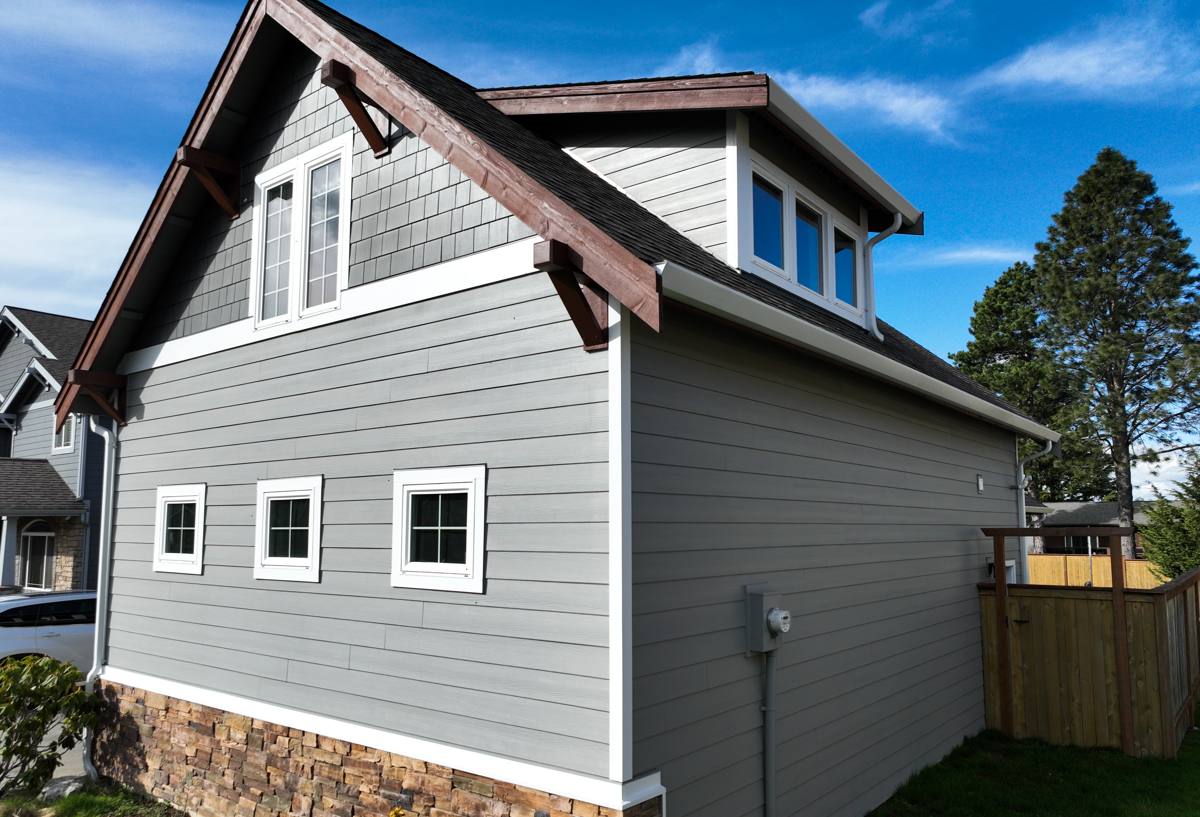
We standardized on James Hardie fiber cement siding for every job we do, and waterfront neighborhoods like Island Estates are a big part of why. Hardie's HZ5 product line is engineered specifically for high-humidity, high-exposure climates like ours — it's built to resist moisture-related swelling, cracking, and warping in conditions that are hard on lesser materials. It's also non-combustible, which matters on any home but especially matters when you're also thinking about wind-driven embers and general storm resilience.
ColorPlus factory-applied finish is the other half of the equation. Instead of a job-site paint job that has to hold up against salt air and constant UV from day one, ColorPlus is baked on in a controlled factory environment with a finish designed to resist fading and chipping far longer than field-applied paint. On a waterfront lot where the sun and salt work overtime, that factory finish buys years of extra life before repainting becomes a conversation.
We don't install vinyl, LP SmartSide, Cemplank, Allura, or primed wood siding, and waterfront exposure is one of the clearest reasons why. Vinyl can warp and become brittle under sustained heat and UV, and its seams and fastening are more vulnerable to sustained wind-driven rain. Wood-based and OSB-based products depend heavily on paint film integrity and correct field sealing to keep moisture out — miss a seam or let the paint fail, and moisture-related damage follows, especially in a climate that never really lets materials dry out for long. None of that means these products are junk everywhere they're used. It means we've made a professional call that, for the way we build and for the exposure our customers deal with, fiber cement engineered for this climate is the better long-term investment.
Siding, Roofing, Windows, and Decks: One Envelope, One Crew
Siding doesn't work in isolation. On a waterfront home, siding, roofing, windows, and decking all interact — flashing at the roofline has to tie into siding correctly, window openings have to be flashed and sealed as part of the siding install (not treated as someone else's problem), and exterior decks facing open water deal with the same UV and salt exposure as the walls above them. We handle all four, which means one crew is responsible for how those systems meet each other instead of finger-pointing between separate contractors down the road.
- Siding: James Hardie fiber cement replacement and new installation
- Roofing: replacement and repair, coordinated with siding and flashing details
- Windows: replacement with proper flashing integration into the siding system
- Decks: built and finished for sun and salt exposure
What Correct Installation Looks Like in a High-Exposure Zone
Fiber cement siding is only as good as its installation, and that's doubly true on a waterfront lot. A few things we pay close attention to on Island Estates jobs:
Fastener and Flashing Specification
Corrosion-resistant fasteners rated for coastal exposure, not general-purpose hardware. Flashing at every penetration, window, and roofline transition, installed to shed water outward rather than trap it behind the cladding.
Manufacturer-Spec Clearances
James Hardie's installation instructions specify minimum clearances from grade, roofing, decking, and other surfaces so water can drain and materials can dry. On tight waterfront lots where decks, docks, and hardscaping sit close to the house, holding those clearances takes more planning, not less.
Joint and Seam Treatment
Properly sized gaps, correct caulking or sealant selection, and attention to how panels and trim meet at corners and butt joints. These are the spots wind-driven rain finds first if they're rushed.
Wind Rating and Local Code
Homes in Pinellas County's coastal areas fall under wind-load and, in many cases, flood-zone requirements that affect materials, fastening schedules, and sometimes elevation-related detailing. We install to the wind ratings and code requirements that apply to the property, not a generic inland standard.
Cost Factors for an Island Estates Siding Project
Every home is different, but a few things consistently move the price on waterfront jobs more than they would on a typical inland house:
| Factor | Why It Matters Here |
|---|---|
| Home size and complexity | Square footage, number of stories, and how many corners, gables, and dormers the crew has to work around |
| Existing siding removal | Tear-off and disposal of old material adds labor, especially with limited waterfront access or tight lot lines |
| Substrate condition | Water intrusion behind old siding is more common near the water and may require sheathing repair before new siding goes on |
| Window and door count | Each opening needs flashing and trim work, which adds time regardless of siding material |
| Access and site logistics | Causeway access, narrow lots, seawalls, and docks can affect staging, scaffolding, and material delivery |
| Trim and color selection | Custom trim details and premium ColorPlus color choices affect material cost |
Choosing a Contractor for Waterfront Work
Not every siding crew is set up to do this work well on the water. A few things worth asking any contractor bidding an Island Estates job:
- Are they familiar with the wind and, where applicable, flood-zone requirements for coastal Pinellas County properties?
- Do they specify corrosion-resistant fasteners and hardware rated for salt-air exposure, or generic materials?
- Will they inspect and repair damaged sheathing before installing new siding, not just cover it up?
- Do they install to the manufacturer's published clearance and fastening specs, and can they explain what those are?
- Are they licensed and insured to work in Pinellas County, with references from similar coastal or waterfront jobs?
- Do they coordinate roofing, window, and siding details, or treat each as a separate, disconnected trade?
A local crew that regularly works Clearwater's barrier islands and waterfront neighborhoods will know these answers without having to look them up. That familiarity matters more here than almost anywhere else in the county — the margin for error on flashing and fastening details is smaller when a house sits this close to open water.
Maintenance: What to Expect After Installation
Even the right material needs some upkeep on a waterfront lot. Rinsing salt residue off exterior surfaces periodically, keeping gutters and drainage clear so water doesn't sit against the base of the siding, and doing a visual check after major storms for loose trim, damaged flashing, or caulk separation will go a long way. James Hardie's ColorPlus finish reduces how often repainting is needed compared to field-painted materials, but it doesn't eliminate the need for basic seasonal attention in a climate this demanding.
Get a Free, No-Pressure Estimate
If you own a home in Island Estates and your siding is showing its age — fading, chalking, soft spots, or trim that's starting to pull away — it's worth getting a straight assessment from a crew that understands what waterfront exposure does to a house. We'll walk the property, look at what's actually going on with your siding, roofing, windows, or decking, and give you honest options. Fill out the form below for a free estimate, no pressure and no obligation.