 Clearwater Siding
 Cedar Looks Great On Day One. That's Never Been the Argument.
Nobody needs convincing that cedar siding looks good. The grain, the warmth, the way it ages into a silvery patina if you let it — cedar has a natural appeal that manufactured products spend a lot of marketing money trying to imitate. If curb appeal on installation day were the only thing that mattered, this would be a short page.
It isn't the only thing that matters. We've been putting siding on homes in Clearwater and around Pinellas County long enough to see what cedar looks like five, ten, and fifteen years after installation — not just in photos, but on real houses exposed to real Gulf Coast weather. That's the gap between cedar's reputation and its actual maintenance demands, and it's why we don't sell or install it anymore. This page explains the specifics, not vague warnings.
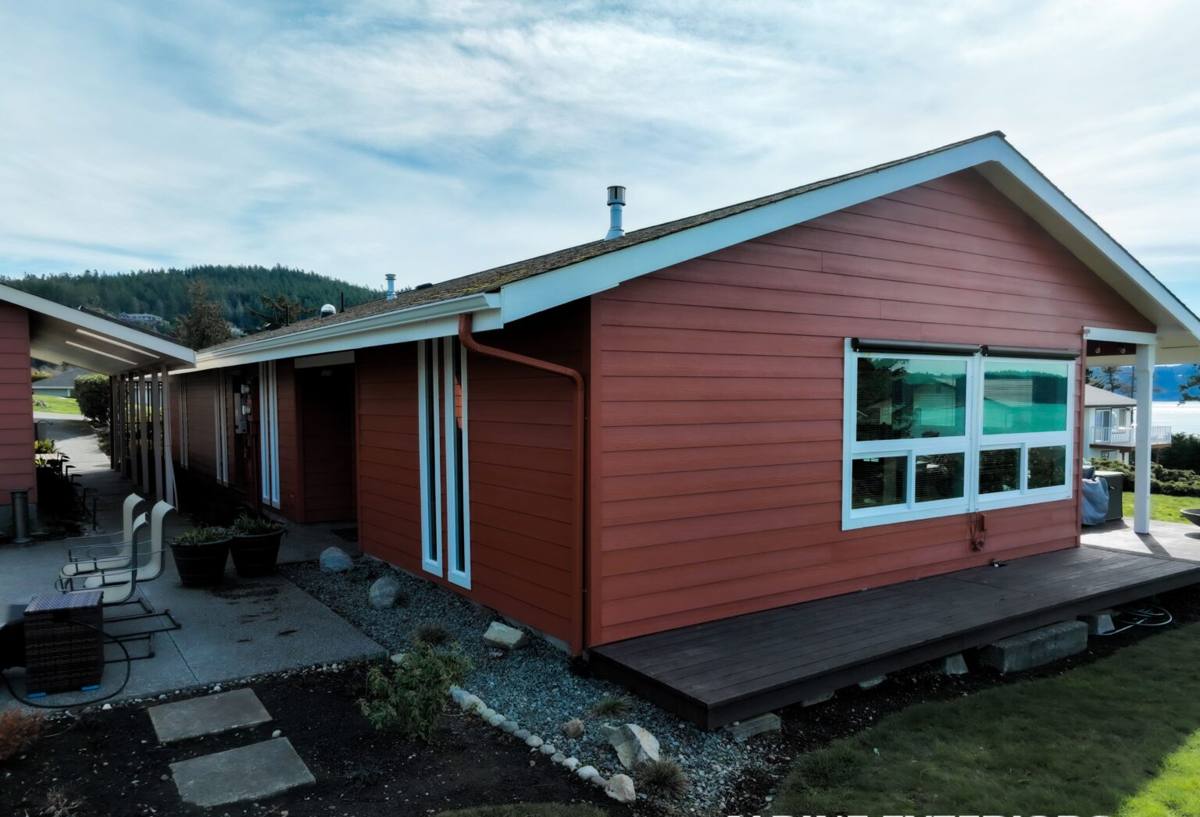
What Cedar Actually Requires To Stay Protected
Cedar is a real wood product, and like any wood exposed to the outdoors, it depends entirely on its finish to keep water out. Paint, stain, or a clear sealant is doing all the work of keeping moisture from reaching the wood fibers underneath. Once that finish starts to fail — and it will — the clock starts on rot, cupping, and cracking.
The Realistic Refinishing Schedule
In a moderate climate, cedar siding finished with a quality solid-body stain might go 5-7 years between recoats. In Clearwater's climate, that interval shrinks. Between intense UV exposure, high humidity, and salt-laden air moving in off the Gulf, most cedar-sided homes here need attention closer to every 2-4 years to keep the finish intact — pressure washing, spot-sanding, caulking joints, and reapplying stain or paint on every elevation, not just the sun-facing walls.
What Happens When Maintenance Slips
Homeowners don't skip maintenance on purpose. Life gets busy, a refinish gets pushed a year, then two. On cedar, that's when problems start compounding — a failed finish lets water into the wood, the wood swells and checks, and now you're not repainting, you're replacing boards. We've seen this pattern often enough on Pinellas County homes that it's not a hypothetical.
What Florida's Climate Specifically Does To Wood Siding
This isn't generic "wood needs upkeep" advice. Clearwater's climate hits cedar with several stressors at once, and they compound each other.
UV and Sun Exposure
Central Florida gets intense, near year-round UV exposure. UV breaks down the lignin and finish coatings on wood siding faster than in northern climates, which is a big part of why the repaint interval here runs shorter than manufacturer averages assume.
Humidity and Wind-Driven Rain
Pinellas County's humidity keeps moisture in contact with exterior surfaces longer than drier regions. During tropical storms and hurricane season, wind-driven rain gets forced sideways into seams, laps, and fastener points — exactly where a wood siding finish is most likely to have a hairline gap. Water finds those gaps.
Salt Air Near the Gulf
Clearwater sits directly on the Gulf, and salt-laden air travels well inland from the coast. Salt accelerates the breakdown of paint and stain films and can contribute to fastener corrosion over time, both of which shorten the useful life of a wood finish system.
Hurricane-Force Wind Events
Wood siding that's already compromised by moisture or insect activity is more vulnerable to failure during high-wind events. A board that's structurally sound handles wind load differently than one that's been softened by years of moisture cycling.
Rot, Insects, and What's Happening Behind the Finish
Florida's warm, humid climate is hospitable to the organisms that damage wood — subterranean termites, wood-boring insects, and the fungi that cause rot all thrive in these conditions. Cedar has natural oils that give it some inherent resistance compared to other woods, but that resistance is not permanent and it does not apply once the surface finish has failed and moisture is getting into the wood regularly. A homeowner can be doing everything right on the visible surface and still have damage developing at butt joints, behind trim, or at the bottom courses near grade — the spots that hold moisture longest and get inspected least.
Insurance and Fire Considerations
Florida property insurers increasingly factor exterior construction materials into underwriting and premiums, particularly around wind and fire risk. Wood siding is combustible; fiber cement is not. That distinction can matter for insurance conversations in a state where carriers have gotten more selective about what they'll cover and at what rate. It's worth a direct conversation with your insurance agent before committing to any siding material, cedar included.
Cedar vs. James Hardie Fiber Cement: The Honest Comparison
We're not going to pretend fiber cement is flawless or that cedar is worthless — this is a trade-off, and here's how it actually breaks down over time on a Gulf Coast home.
| Factor | Cedar Siding | James Hardie Fiber Cement |
|---|---|---|
| Refinishing interval in Pinellas County climate | Roughly every 2-4 years | ColorPlus factory finish typically holds 15+ years before repainting is needed |
| Moisture/rot vulnerability | High once finish fails | Engineered to resist moisture damage when installed to spec |
| Insect vulnerability | Real risk despite natural oils | Not a food source for termites or wood-boring insects |
| Combustibility | Combustible | Non-combustible material |
| Salt air resistance | Finish degrades faster near the Gulf | HZ5 line is engineered for high-humidity, coastal climate zones |
| Warranty structure | Varies by finish product, not the siding itself | Manufacturer-backed, transferable product warranty |
| Upfront material cost | Often comparable to or higher than fiber cement | Comparable, with lower lifetime cost due to maintenance savings |
The upfront price of cedar and quality fiber cement is often closer than people expect. The real gap opens up in years two through twenty, in the recurring cost of scaffolding, labor, and materials to keep a wood finish intact against Florida sun and salt.
Why We Standardized on James Hardie Instead
We made a decision as a company to install James Hardie fiber cement exclusively, and cedar's maintenance burden in this climate is a core reason why. Hardie's HZ5 product line is specifically engineered for climate zones like ours — hot, humid, storm-exposed — rather than adapted from a product built for a different region. The ColorPlus factory finish is baked on under controlled conditions, which holds up more consistently than field-applied stain on wood, especially in intense UV. It's non-combustible, it isn't a food source for the insects that are active year-round here, and it comes with a strong transferable warranty backing the material itself. When it's installed correctly — proper clearances, fastening, and flashing — it's built to perform for decades with minimal upkeep, which is what most homeowners actually want out of their siding: not a project, a solved problem.
If You Already Have Cedar Siding
None of this is a reason to panic if your Clearwater home currently has cedar siding. It can be maintained for a long time with consistent attention. If you're staying with it for now, here's what actually keeps it in good shape:
- Inspect the finish annually, especially after hurricane season, for cracking, peeling, or bare wood
- Recoat with a quality solid-body stain or paint on a 2-4 year cycle rather than waiting for visible failure
- Keep caulking at joints, corners, and trim intact — gaps are where water gets in
- Check bottom courses and areas near grade or sprinklers, where moisture exposure is highest
- Keep vegetation and irrigation spray away from siding surfaces
- Address any soft, spongy, or discolored boards immediately rather than waiting for a larger repair
- Have it inspected by a contractor before a repaint, not after — catching rot early is far cheaper than replacing sections
If the maintenance cycle has become more than you want to keep up with, that's usually the point where homeowners start asking us about replacement — and it's a reasonable time to have that conversation.
What We'd Tell You Straight, In Person
We're not going to tell you cedar is a bad product — it's a real, time-tested material with genuine curb appeal. What we will tell you honestly is that in Clearwater's combination of UV, humidity, salt air, and storm exposure, cedar asks more of a homeowner over time than most people want to give it, and that's why we don't put it on houses anymore. If you're weighing cedar against fiber cement, replacing failing wood siding, or just want a straight answer about what your home's exterior actually needs, we're happy to take a look and give you a free, no-pressure estimate.