 Clearwater Siding
 Downtown Clearwater's Exterior Challenge
Downtown Clearwater sits close enough to the water that homes and businesses here take on a different kind of weathering than properties further inland. The combination of intense subtropical sun, humidity that rarely lets up, salt-tinged air moving off the Gulf and Clearwater Harbor, and the seasonal threat of tropical storms and hurricanes puts real, sustained stress on exterior siding, trim, and roofing. Add in the older housing stock that makes up a lot of Downtown's residential blocks — bungalows, mid-century ranches, and updated cottages mixed in with newer construction — and you get a neighborhood where exterior materials need to work hard year-round, not just survive one bad storm season.
We work throughout Pinellas County, and Downtown Clearwater is one of the areas where we see the clearest evidence of what happens when siding isn't matched to the climate. Paint that bubbles and peels faster than it should. Trim boards that stay soft at the bottom edge no matter how many times they're recaulked. Panel seams that open up and let moisture behind the cladding. None of this is unusual for coastal Florida — it's just the reality of building this close to open water, and it's exactly why the products we choose matter as much as the workmanship.
What the Local Climate Actually Does to Siding
UV and Heat
Florida sun is not the same stress a siding product faces in most of the country. Downtown Clearwater gets long hours of direct, high-intensity UV exposure across most of the year, and that exposure is relentless on painted or coated surfaces. Cheaper coatings chalk, fade unevenly, and lose adhesion well before their rated lifespan. Materials that weren't engineered with UV degradation in mind — certain composite and wood-based products in particular — can start looking tired within a handful of years, especially on south- and west-facing walls that catch the afternoon sun.
Humidity and Moisture
Pinellas County's humidity sits high for most of the year, and Downtown Clearwater's proximity to the harbor and the Gulf keeps ambient moisture in the air even on dry days. Siding materials that absorb water — or that trap it once it gets behind the panel — are working against the climate from day one. Swelling, soft spots, and rot at butt joints and bottom edges are the predictable result over time, particularly on the shaded or less-ventilated sides of a house.
Wind-Driven Rain and Storm Exposure
Tropical systems and the wind-driven rain that comes with even a moderate summer storm push water sideways into wall assemblies, testing every seam, joint, and fastener pattern in the siding system. A product and installation method that hold up fine in a light rain can still fail under storm-driven wind pressure if flashing details, joint treatment, or fastening weren't done correctly. This is where installation quality matters as much as the material itself.
Salt Air
Downtown Clearwater isn't beachfront, but it's close enough to the water that salt aerosol carried on Gulf breezes reaches exterior surfaces regularly. Salt accelerates corrosion on exposed metal fasteners and trim components and contributes to the general breakdown of coatings and caulking over time. It's a slow, cumulative effect, but it's a real one, and it's part of why we think about fastener and flashing material choices, not just the siding panel itself.
Why We Install Only James Hardie Fiber Cement
We made a decision as a company to install James Hardie fiber cement siding exclusively — not vinyl, not LP SmartSide, not Cemplank, not Allura, not primed spruce or cedar. That's not a marketing position; it's a practical one, built on what actually holds up under the conditions described above.
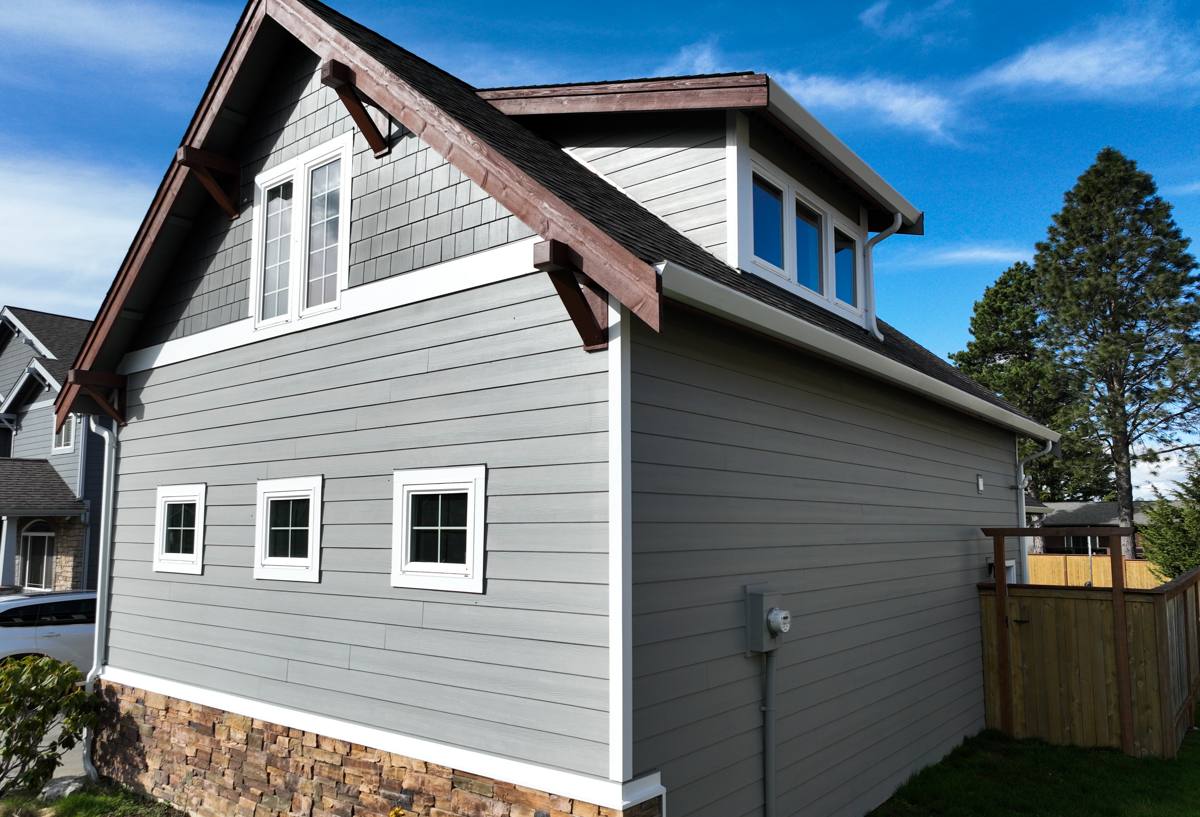
Fiber cement is non-combustible, which matters for insurance and fire safety considerations. It's dimensionally stable, meaning it doesn't expand and contract with humidity swings the way wood-based products do, so joints stay tighter longer. James Hardie's HZ5 product line is engineered specifically for climates like ours, with attention to moisture and humidity performance that generic fiber cement or wood-composite alternatives aren't built around. The ColorPlus factory-applied finish is baked on under controlled conditions and backed by its own finish warranty, which means the coating isn't relying on field-applied paint holding up against Clearwater's UV load on its own.
We're not going to tell you every other product on the market is worthless — vinyl, LP SmartSide, and other fiber cement brands all have legitimate uses and reasonable track records in the right applications. But for a coastal Pinellas County installation, we've made the call that the combination of non-combustibility, moisture engineering, factory finish durability, and Hardie's transferable warranty structure is the standard we're willing to put our name behind. When a product requires more field maintenance or performs less predictably in humidity and salt exposure, that's a trade-off we'd rather not hand a homeowner.
Quick Comparison: What We Look At
| Factor | Why It Matters Here |
|---|---|
| Moisture/humidity behavior | Downtown Clearwater's year-round humidity and coastal proximity punish materials that absorb or trap water |
| UV/coating durability | Long, intense sun exposure fades and chalks weaker coatings faster than in most of the country |
| Combustibility | Non-combustible cladding is a meaningful safety and insurance factor |
| Wind/storm performance | Panels and fastening need to hold under wind-driven rain and storm-force gusts |
| Warranty structure | A transferable, well-documented warranty protects the homeowner, not just the installer |
How This Plays Out on a Downtown Clearwater Project
Every siding job starts with an honest look at what's actually happening on the house — not just the visible siding, but what's going on underneath it. On older Downtown homes, that often means checking for moisture damage at the base of walls, around window and door openings, and at any point where the original siding was penetrated for fixtures, vents, or trim. We don't put new siding over problems; we address the substrate first so the new material has a sound base to perform the way it's supposed to.
Installation details matter as much as the product choice, especially in a wind-driven rain environment. That means correct flashing at every penetration, proper fastener spacing and type (matched to withstand salt air exposure), and joint treatment that keeps water from finding its way behind the panels. Fiber cement is a forgiving, durable material, but only when it's installed to manufacturer specification — cutting corners on flashing or fastening undercuts the performance the material is capable of.
Beyond Siding: The Full Exterior Envelope
We also handle roofing, windows, and decks, and on a lot of Downtown Clearwater properties these systems are interconnected. A roof that's shedding water improperly can compromise siding at the wall-roof intersection. Windows with failing seals let moisture into wall cavities that then shows up as damage behind otherwise sound siding. Decks exposed to the same sun and salt air need their own weathering-resistant approach. Looking at the whole exterior envelope together — rather than treating each component in isolation — tends to produce better long-term outcomes than patching one system at a time.
What Homeowners Should Check Before Hiring
- Confirm the contractor is licensed and insured to work in Pinellas County, and ask to see proof
- Ask what specific James Hardie product line is being proposed (HZ5 vs. standard) and why
- Get clarity on flashing and fastening details in writing, not just "we'll follow manufacturer spec"
- Ask how the crew handles moisture or rot found once old siding comes off
- Confirm who is responsible for warranty registration — the manufacturer's warranty typically requires proper registration to be valid
- Get a written scope that separates siding, trim, flashing, and any roofing or window work tied to the project
A Local Crew Matters More Than It Sounds
Siding installation isn't identical everywhere in the country, and a crew that's used to working in a dry, low-humidity climate can miss details that matter in coastal Florida. Knowing how Pinellas County's building requirements apply, understanding how wind-driven rain moves through a wall assembly during a summer storm, and having handled the kind of older housing stock common in Downtown Clearwater all shape how a job gets done. It's less about local pride and more about pattern recognition — a crew that's replaced siding on dozens of homes facing the same sun, humidity, and storm exposure knows where problems tend to show up before they become visible.
Maintenance Expectations After Installation
James Hardie fiber cement with a ColorPlus finish is low-maintenance compared to painted wood or many composite products, but "low-maintenance" doesn't mean zero-maintenance, especially in a coastal environment. A periodic rinse to clear salt residue and organic growth, a visual check of caulked joints and trim after major storms, and prompt attention to any impact damage will keep the system performing the way it's designed to. None of this requires special expertise — it's the same basic upkeep any exterior surface benefits from in this climate, just with a product that's engineered to need less of it.
Getting Started
If you're seeing early signs of trouble on your current siding — soft spots, peeling paint that keeps coming back, visible gaps at seams — or you're just planning ahead for a home in Downtown Clearwater, we're happy to take a look and talk through what we're seeing and why. We'll give you a straightforward, no-pressure estimate and explain the reasoning behind what we recommend, including why James Hardie is the only siding product we put our name behind. Fill out the form below to get started.