 Clearwater Siding
 Siding Repair Built for Clearwater Beach's Climate
Clearwater Beach sits about as close to the Gulf as a home in Pinellas County can get, and that location is exactly why siding here wears out faster than it does even a few miles inland. Salt-laden air moves through the barrier island constantly, wind-driven rain hits walls sideways during summer storms, and the sun is intense and near-constant for most of the year. Add in the periodic threat of hurricane-force winds, and you have a combination of stressors that most siding products were never designed to handle indefinitely. Repairing siding correctly on Clearwater Beach means understanding all four of these forces at once, not just patching whatever looks obviously broken.
We work on Clearwater Beach regularly, and this page focuses on one thing: siding repair for homes in this specific area. Not a full replacement pitch, not a generic "siding services" overview — just what actually needs to happen when siding on a Clearwater Beach home is damaged, aging, or failing, and why the repair itself has to be done differently here than it would in a drier, calmer climate.
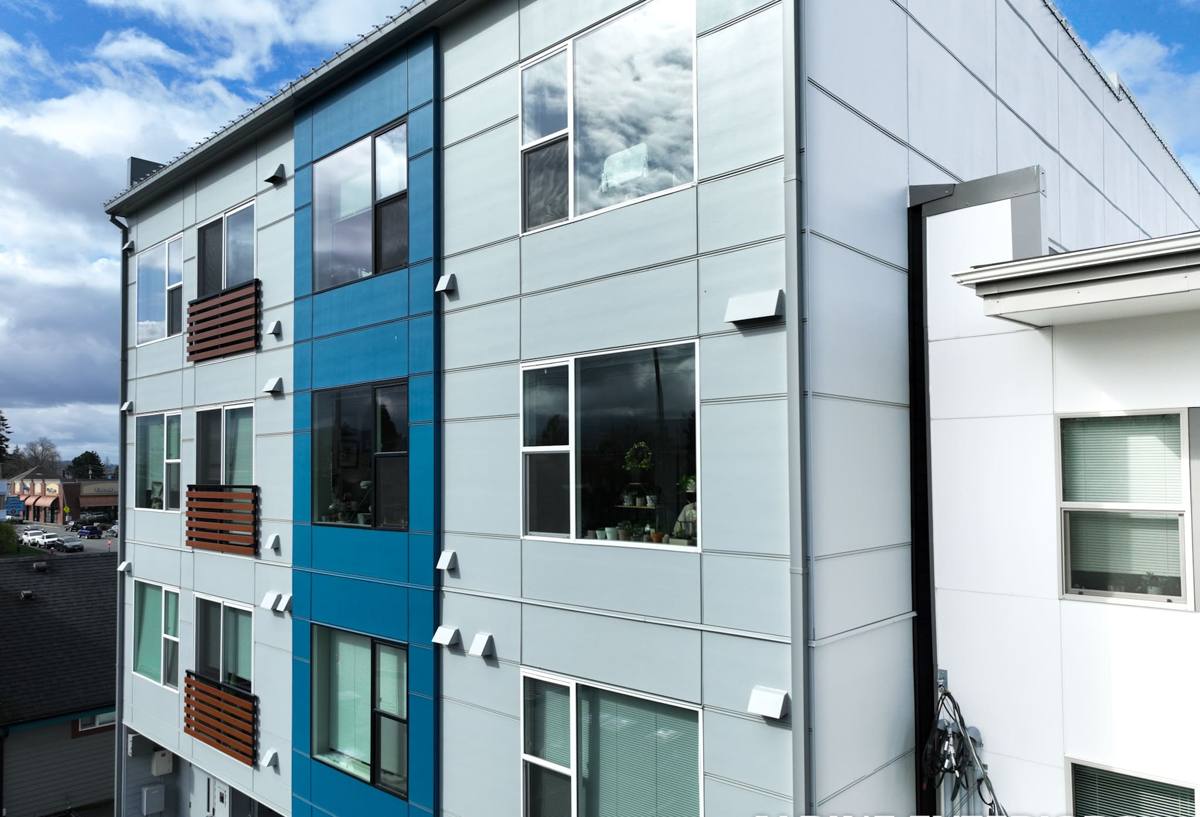
Why Beachfront and Near-Beach Homes Fail Siding Faster
Every coastal home faces the same basic exposures, but Clearwater Beach compounds them in ways that shorten the useful life of poorly matched siding products:
- Salt air corrosion: Airborne salt settles on exterior surfaces and fasteners year-round, accelerating deterioration of anything not rated for coastal exposure — including some fasteners, trim, and lower-grade siding materials.
- Wind-driven rain intrusion: Storms off the Gulf don't just fall straight down; wind pushes water sideways and up under laps, seams, and trim edges that were never built to shed water from that angle.
- UV degradation: Near-constant, high-intensity sun breaks down paint films and unprotected substrates, leading to fading, chalking, and cracking well before a homeowner expects it.
- Wind load and impact: Hurricane-force gusts stress every seam, fastener, and panel edge, and can drive debris into siding during storm events.
- Humidity cycling: Constant moisture in the air, paired with intense heat, creates repeated expansion and contraction that loosens fasteners and opens seams over time.
None of these forces act alone. A small gap at a butt joint that would be a cosmetic issue inland becomes an entry point for wind-driven rain on Clearwater Beach, and once moisture gets behind siding, the damage accelerates quickly.
What a Correct Siding Repair Actually Involves
Diagnosis Before Patching
The most common mistake in siding repair isn't poor workmanship on the visible patch — it's stopping at the visible damage. A cracked or buckled panel is usually a symptom, not the root cause. Before we touch a single board, we look at what's happening behind and around the damaged area: flashing condition, moisture staining on sheathing, fastener corrosion, and whether water has been tracking somewhere it shouldn't for months or years.
Matching the Repair to the Original System
Siding is a system, not a stack of individual boards. Repairs need to match the existing reveal, fastening pattern, and water-management detailing, or the repaired section becomes its own weak point. This matters even more on a home where the original siding is a product we wouldn't install today — the repair still has to be done to a standard that protects the wall assembly, not just patched to look acceptable from the street.
Addressing the Cause, Not Just the Symptom
If wind-driven rain caused the failure, the repair needs to correct the flashing or lap detail that let water in — not just replace the damaged piece and leave the same vulnerability in place. If salt-air corrosion compromised fasteners, replacement fasteners need to be corrosion-resistant, not simply "the same as before." A repair that doesn't correct the underlying exposure is a repair that fails again on the same timeline.
Signs a Clearwater Beach Home Needs Siding Repair
| What You See | Likely Cause | Why It Matters Here |
|---|---|---|
| Cracked, buckled, or warped panels | Moisture cycling, heat exposure, or impact damage | Gaps let wind-driven rain behind the siding during storms |
| Soft or spongy spots near the base | Trapped moisture, possible substrate rot | Salt air and humidity accelerate rot once moisture is trapped |
| Peeling or bubbling paint/finish | UV breakdown or moisture pushing through from behind | Constant sun exposure shortens finish life on unprotected products |
| Rust streaks at fastener heads | Corroding fasteners | Salt air corrodes standard fasteners faster than inland exposure |
| Gaps opening at seams or corners | Fastener loosening from expansion/contraction cycling | Open seams are direct entry points for wind-driven rain |
| Visible storm damage after high wind events | Wind load or wind-borne debris impact | Hurricane-force gusts are a recurring risk on the barrier island |
Our Repair Process on Clearwater Beach
1. On-Site Inspection
We walk the exterior and look beyond the obviously damaged section — checking adjacent panels, trim, flashing, and any staining that suggests moisture has been moving somewhere it shouldn't.
2. Root-Cause Assessment
We identify why the damage happened, not just where it happened. On a beach-exposed home, that usually traces back to one of the five stressors listed earlier — salt air, wind-driven rain, UV, wind load, or humidity cycling — sometimes more than one at once.
3. Scoped Repair Plan
We tell you plainly what needs to be repaired, what's cosmetic versus structural, and whether a targeted repair is the right call or whether the damage pattern suggests a larger section (or the whole elevation) is nearing the end of its service life. We don't upsell repairs into replacements that aren't needed.
4. Correct Materials and Detailing
Repairs are executed to match the wall assembly's water-management system — proper lap orientation, flashing integration, and fastener placement — using materials suited to coastal exposure.
5. Finish and Cleanup
Finished repairs are color-matched where possible and the site is left clean. If we're repairing an area where a full re-side would be the more durable long-term answer, we'll say so directly and explain the trade-offs — that decision is always yours.
Why We Only Install James Hardie Fiber Cement
When siding damage on Clearwater Beach goes beyond repair — or when a homeowner asks what we'd install if starting fresh — our answer is the same across every home we work on: James Hardie fiber cement, and nothing else. We don't install vinyl, LP SmartSide, Cemplank, Allura, or primed wood siding, and that's a deliberate standard, not a lack of options.
Fiber cement is non-combustible and dimensionally stable in a way that holds up better to the humidity cycling and heat that define Florida's climate. Hardie's ColorPlus factory finish is baked on under controlled conditions, which gives it stronger resistance to the UV exposure and salt air that break down field-applied paint faster. Hardie also engineers specific product lines (HZ5, for example) for high-humidity, moisture-prone climates like ours — the product isn't a one-size-fits-all national spec, it's built with regions like Pinellas County in mind. That combination of fire resistance, factory-cured finish, and climate-specific engineering is why we standardized on it, and it's why any siding we install on a Clearwater Beach home going forward is Hardie, backed by its transferable warranty.
We're not going to tell you other products are junk — vinyl and engineered wood both have legitimate uses and plenty of homes wearing them. But on a barrier island exposed to salt air, wind-driven rain, and hurricane-force gusts, we've made a professional judgment about which product gives homeowners the best long-term outcome, and we build every installation around that standard.
Repair, or Is It Time to Talk Replacement?
Not every damaged section needs a full re-side, and we won't tell you it does just to sell a bigger job. But there are honest signs that repair is reaching its limit:
- Damage is spread across multiple elevations rather than isolated to one area
- The underlying material is original and nearing or past its expected service life
- Repeated repairs have been needed in the same general area over recent years
- Moisture intrusion has affected sheathing or framing, not just the siding surface
- The existing product is one we don't install and is showing systemic wear rather than isolated damage
If your home shows one or two of these, a targeted repair is often still the right, cost-effective move. If several apply at once, we'll walk you through what a phased or full replacement with James Hardie would look like, with no pressure either way.
What Local Experience on Clearwater Beach Actually Buys You
A contractor who mostly works inland can still do competent general repair work, but coastal barrier-island exposure has specific failure patterns that show up repeatedly if you're used to seeing them: where wind-driven rain tends to find its way in on a given wall orientation, how quickly salt air corrodes standard fasteners versus coastal-rated ones, and which detailing choices hold up through a real Gulf storm season versus which ones look fine until the first one hits. Working Clearwater Beach regularly means we're not guessing at these patterns — we're applying what consistently works on homes facing the same exposure as yours.
Questions Worth Asking Any Siding Repair Contractor Here
- Will you diagnose the cause of the damage, or just replace what's visibly broken?
- What fasteners and flashing details will you use, and are they rated for coastal salt exposure?
- Will the repair match the existing reveal and water-management detailing?
- Do you have experience specifically with barrier-island or near-beach properties, not just general Pinellas County work?
- Will you tell me honestly if repair isn't the right long-term answer?
If your siding on Clearwater Beach has storm damage, salt-air corrosion, sun-worn finish, or areas that just don't look or feel right anymore, we're happy to take a look and give you a straight answer on what it needs. Reach out for a free, no-pressure estimate using the form below.