 Clearwater Siding
 Decking That Has to Survive Coachman Ridge, Not Just a Showroom
Coachman Ridge sits inland enough from the immediate coastline to feel like a break from the beach crowds, but it still lives inside Pinellas County's marine climate. That means the same punishing combination hits every deck in the neighborhood: months of direct, high-UV sun, sudden wind-driven downpours, salt-laden air moving in off the Gulf, and the real possibility of hurricane-force wind gusts during storm season. A deck that was built or installed with shortcuts doesn't fail dramatically — it fails quietly, board by board, fastener by fastener, until a homeowner notices fading, warping, or a soft spot underfoot years before it should show any wear at all.
We install composite decking specifically with this environment in mind, not as a generic outdoor product. That distinction — general installation versus climate-correct installation — is the whole reason this page exists. A deck built the same way you'd build one in a dry inland state will not hold up the same way here, no matter how good the composite material itself is.
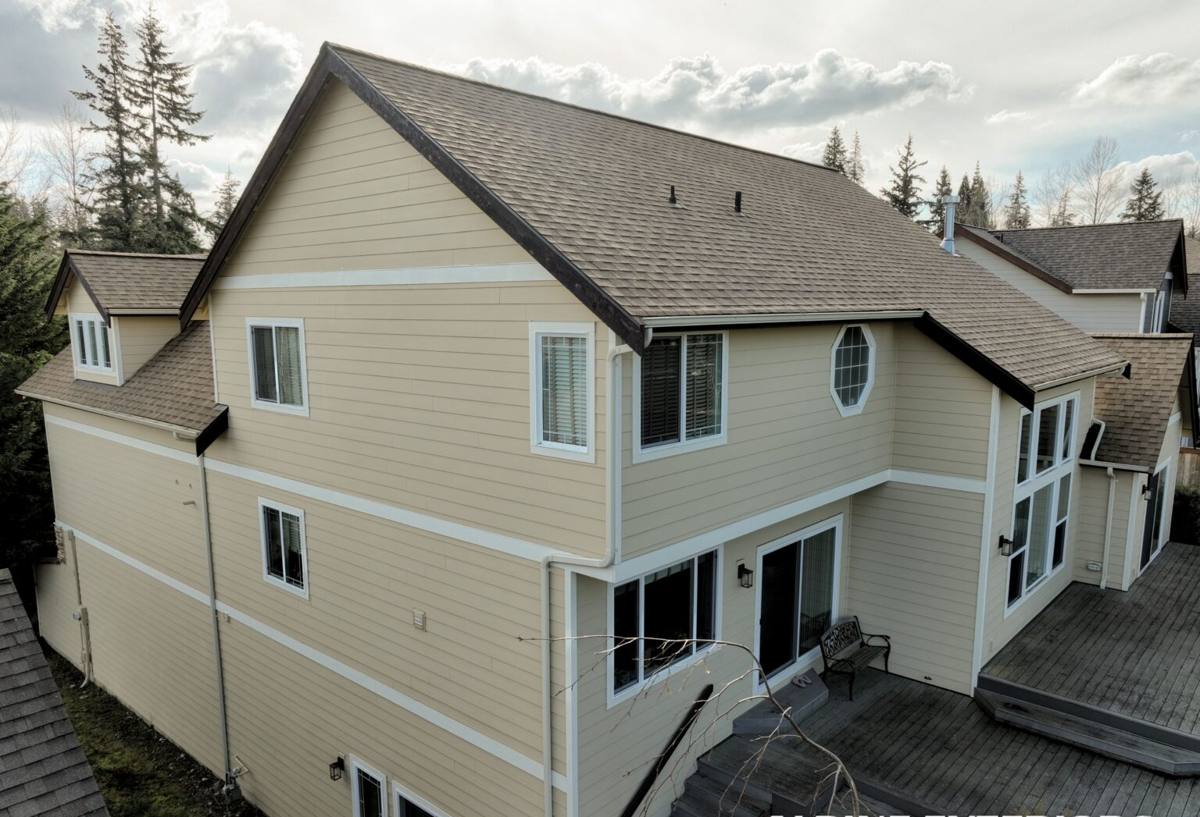
What Clearwater's Climate Actually Does to a Deck
UV exposure, year-round
Florida doesn't get a real off-season for sun exposure. Composite boards are engineered to resist fading and surface degradation far better than wood, but the quality of the capstock (the outer protective layer on the board) and how the boards are installed both affect how well that resistance holds up over ten, fifteen, twenty years.
Wind-driven rain and moisture cycling
Afternoon storms in this area don't just fall straight down — wind pushes rain sideways, up under railings, and into any gap that wasn't sealed or flashed correctly. Composite decking resists water absorption far better than wood, but the substructure underneath it, the ledger board connection to the house, and any fastener penetration are still vulnerable if they're not detailed correctly.
Salt air corrosion
Even set back from the immediate coastline, Pinellas County homes sit inside a salt-air envelope that accelerates corrosion on anything metal — fasteners, joist hangers, post bases, railing hardware. Standard galvanized hardware corrodes faster here than it would inland, which is why hardware selection matters as much as the decking material itself.
Hurricane-force wind loads
Deck structures need to resist uplift and lateral load during named storms, not just support foot traffic on a calm day. This affects how the frame is fastened to the house, how posts are anchored to footings, and how railings are secured — decisions that happen below the composite boards but determine whether the whole structure survives a real event.
What a Correctly Built Composite Deck Actually Involves
Composite boards get most of the attention because they're what you see and touch, but the boards are only as good as what's underneath them. A correct installation in this climate covers several layers most homeowners never think to ask about:
- Ledger board attachment and flashing — where the deck ties into the house is the single most common failure point in coastal climates if it isn't flashed to shed water away from the structure.
- Joist spacing rated for composite — composite boards typically require tighter joist spacing than wood decking, especially at angles or stair treads; installing at wood-standard spacing is a common corner-cut that leads to bounce and premature sagging.
- Corrosion-resistant fasteners and hardware — stainless steel or coated hardware rated for coastal/salt-air exposure, not standard galvanized, at every connection point.
- Hidden fastener systems — most composite lines are designed for hidden clips rather than face-screwing, which also reduces the number of penetration points where water can find its way into the board core.
- Proper gapping and ventilation — composite boards expand and contract with heat; correct gapping prevents buckling in Florida's summer temperatures and allows airflow underneath to prevent moisture buildup.
- Post and footing anchoring rated for wind uplift — engineered connections sized for the loads this region actually sees, not the minimum the material technically allows.
Composite vs. Other Decking Materials, for This Climate Specifically
Homeowners in Coachman Ridge usually compare three options. Here's an honest breakdown of the trade-offs as they actually play out in a Gulf-coast climate, not in general marketing terms:
| Material | UV / Fade Resistance | Moisture Behavior | Maintenance Burden | Typical Lifespan Here |
|---|---|---|---|---|
| Composite (capped) | Strong, engineered for it | Resists absorption; minimal swelling | Periodic cleaning only | 25–30+ years |
| Pressure-treated wood | Fades and grays quickly in full sun | Absorbs water; prone to cupping/splitting | Annual sealing/staining | 10–15 years with upkeep |
| PVC (uncapped composite alternative) | Good, but can chalk over time | Very low absorption | Low, but surface can show wear differently | 20–25+ years |
We install composite decking as our standard recommendation for this area because it holds its color and structural integrity through UV exposure and moisture cycling with the least ongoing maintenance. Wood can look great initially and costs less up front, but the annual sealing and staining required to keep it protected from Florida sun and rain adds up in both time and money — and skipping that upkeep, even for one season, shortens its life noticeably.
How We Approach a Coachman Ridge Deck Project
1. On-site assessment
We look at the existing structure (if there is one), the ledger connection to the house, drainage patterns around the footprint, and sun/shade exposure across the day. This tells us what substructure work is actually needed versus what can be reused.
2. Permitting and code compliance
Deck construction in Clearwater and unincorporated Pinellas County areas requires permitting and inspection, and wind-load requirements are stricter here than in inland jurisdictions. We handle the permit process and build to the load requirements that apply to this area, not a generic national minimum.
3. Structural build-out
Framing, ledger flashing, joist spacing, and hardware selection happen before a single composite board goes down. This is the stage that determines how the deck performs in a storm, not just how it looks the first summer.
4. Composite installation
Boards are installed with hidden fastener systems where the product line supports it, correct expansion gapping, and attention to how stairs, railings, and picture-frame borders are finished — details that affect both appearance and long-term durability.
5. Final walkthrough
We walk the finished deck with the homeowner, check fastener coverage, railing security, and drainage, and answer questions about care before we consider the job done.
Fasteners and Hardware: The Part Nobody Sees, But Everyone Feels Eventually
Salt air doesn't announce itself the way a hurricane does. It works slowly on unprotected metal, and a deck that's structurally sound the day it's finished can develop hidden corrosion at fastener points within a few years if the hardware wasn't rated for this environment. We use stainless steel or coastal-rated coated fasteners and connectors at every structural point — ledger bolts, joist hangers, post bases, and railing brackets — because replacing a corroded connector after the fact means tearing into finished decking to get to it. It's far cheaper to spec it correctly the first time.
Maintenance: What Coachman Ridge Homeowners Actually Need to Do
One of the real advantages of composite decking is how little upkeep it demands compared to wood, but "low maintenance" doesn't mean "no maintenance" in this climate. A simple seasonal routine keeps a composite deck performing the way it's supposed to:
- Rinse and sweep off salt residue, pollen, and debris every few weeks, more often after storms.
- Clean with mild soap and water once or twice a year to prevent surface buildup that can trap moisture or encourage mildew in shaded areas.
- Check railing hardware and fastener points annually for any early corrosion, especially after hurricane season.
- Keep gutters and downspouts clear so runoff isn't dumping extra water onto or under the deck.
- Trim back landscaping that keeps sections of the deck shaded and damp longer than the rest.
What Actually Drives the Cost of a Composite Deck Here
Every Coachman Ridge property is a little different, so we won't quote a number without seeing the site, but these are the factors that move the price up or down on almost every project we bid:
| Factor | Why It Matters |
|---|---|
| Deck size and footprint shape | More linear feet of board, framing, and fastening; complex shapes add labor and waste |
| Substructure condition | Reusing sound existing framing costs less than a full tear-out and rebuild |
| Composite product tier | Capped composite lines vary in price based on capstock quality and warranty length |
| Railing system | Composite, aluminum, or cable railing all price differently and affect wind/code compliance |
| Height and stairs | Elevated decks and multi-run stairs add structural and labor complexity |
| Permitting and inspection requirements | Pinellas County wind-load and setback requirements can affect design and footing depth |
Why Hiring a Crew That Already Works in Coachman Ridge Matters
Anyone can install composite boards on a flat surface. What separates a deck that lasts through fifteen Florida summers from one that starts showing problems in year three is whether the crew building it understands the specific conditions of this neighborhood — the wind exposure, the storm patterns, the salt content in the air, and the local permitting requirements that apply here specifically. A crew that regularly works Clearwater and the surrounding Pinellas County area already knows which fastener grades hold up, which framing details keep water out of a ledger connection, and what inspectors are actually looking for on a deck permit in this jurisdiction. That local familiarity shows up later as fewer callbacks, fewer surprises, and a deck that still looks and performs the way it should long after the installation crew has moved on to the next job.
If you're planning a new composite deck or replacing an aging one in Coachman Ridge, we're happy to walk the property with you and put together a straightforward, no-pressure estimate — just fill out the form below to get started.