 Clearwater Siding
 Custom Decks Built for Countryside, Clearwater
Countryside is one of Clearwater's larger established neighborhoods, and most of the homes here were built for indoor-outdoor Florida living — sliders that open onto a patio, a pool cage out back, mature landscaping that gives some shade but also drops debris and holds moisture. A deck in this setting has to do more than look good. It has to survive Pinellas County's summer humidity, handle sudden downpours without holding water, and stand up to whatever tropical system rolls through during hurricane season. We build custom decks specifically with that environment in mind, not a generic deck dropped into a Florida yard.
This page covers what we've learned building and repairing decks in this part of Clearwater: what the climate actually does to a deck over time, the material and structural choices that matter most, how our process works from first call to final walkthrough, and why local experience changes the outcome.
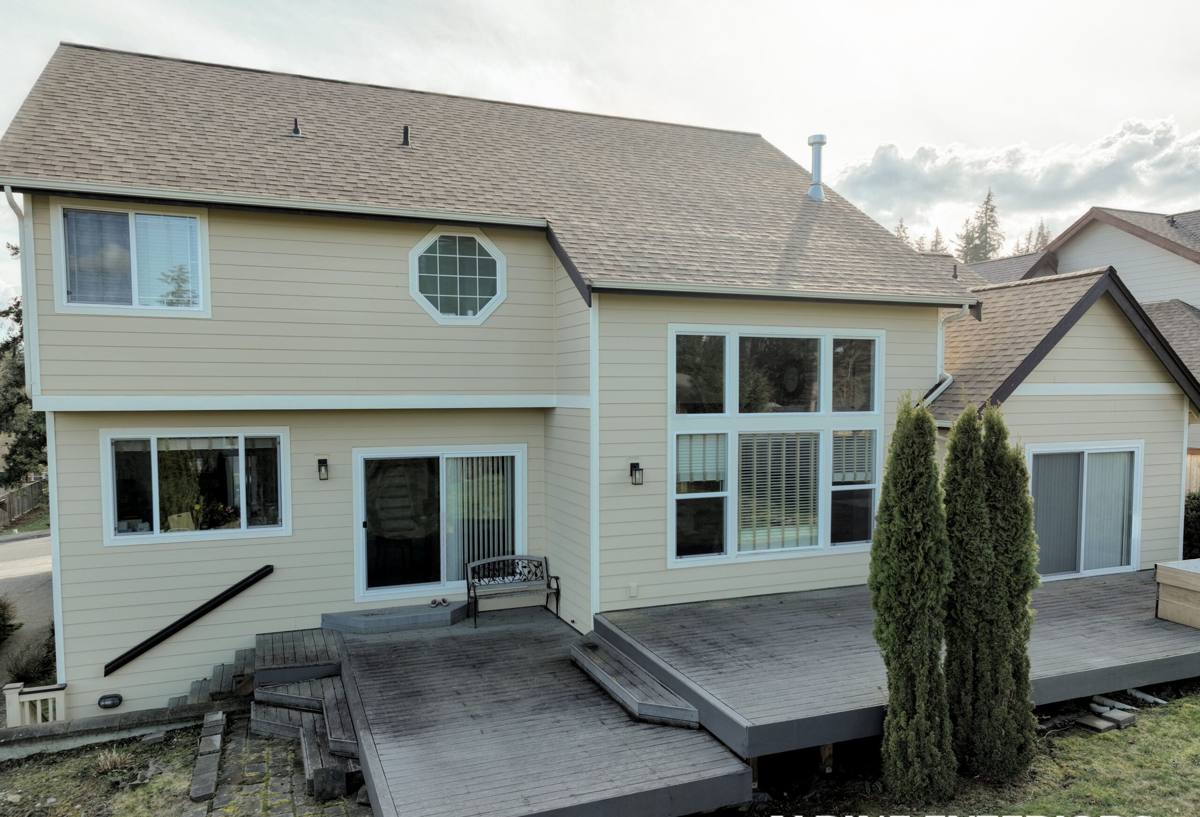
What Countryside's Climate Does to a Deck
Countryside sits inland from the immediate Gulf coast, so it isn't hit with direct salt spray the way a beachfront property is. That doesn't mean it's immune to the coastal effects that define Pinellas County construction — humid air still carries salt content across the peninsula, and every deck here still deals with the same year-round sun and storm exposure as the rest of the county.
The four things we design around
- Intense, near-constant UV — Florida sun breaks down wood fibers and fades or chalks lower-grade composite decking faster than northern climates, even under a covered lanai.
- Wind-driven rain — thunderstorms here don't just fall, they blow sideways into ledger connections and stair stringers, which is where rot and hardware corrosion usually start.
- Humidity and ground moisture — Pinellas County's water table sits close to the surface in many yards, so post footings and framing near grade stay damp longer than they would elsewhere.
- Hurricane-force wind loads — even a deck that never sees a storm directly needs connections rated for the wind speeds Pinellas County code requires, because tropical systems are a when, not an if.
A deck built without those four things in mind might look fine for a year or two. The failures show up later — soft spots near the house connection, fasteners bleeding rust through the decking, railing posts that have started to wobble.
Choosing the Right Decking Material
There's no single "best" decking material — there's the right material for how a specific household uses the space, and its exposure. We walk every Countryside customer through the real trade-offs instead of just selling the most expensive option.
| Material | Upfront Cost | Maintenance | How It Handles This Climate |
|---|---|---|---|
| Pressure-treated wood | Lowest | Annual cleaning, re-sealing every 1–2 years | Affordable and repairable, but UV and humidity require ongoing upkeep to prevent graying, splitting, and rot |
| Capped composite | Mid to high | Occasional washing, no sealing or staining | Strong UV and moisture resistance; the cap layer resists fading and staining far better than uncapped composite |
| Cellular PVC | Highest | Minimal — soap and water | Doesn't absorb moisture at all, so it's the most consistent performer in high-humidity, high-UV settings |
| Tropical hardwood (e.g., ipe) | High | Regular oiling to maintain color | Naturally dense and rot-resistant, but heavy, expensive to install correctly, and will gray without upkeep |
We don't push cellular PVC or premium composite on every job — a well-built pressure-treated deck that's sealed on schedule can last for many years. What matters is that the homeowner knows the maintenance commitment they're signing up for before the wood is cut.
Why we're selective about which composite products we install
Not all composite decking is built the same way. Older, uncapped composite boards absorb moisture at the cut ends and can swell, stain, or grow mildew faster in a humid climate like ours. We install fully capped composite and PVC products for that reason — the capped layer is what actually keeps water and UV out of the board core. It's a maintenance and warranty decision, not a brand preference, and we'll explain exactly why for any product we do or don't recommend for your project.
Framing and Structural Details That Actually Matter
The decking boards are the part everyone sees, but the framing underneath is what determines whether the deck is still solid in ten years. This is also where Florida's wind and moisture requirements show up in the building code.
Footings and posts
Post footings need to be sized and set below grade to the depth Pinellas County code requires, not just poured to "look deep enough." In yards with a high water table, that also means using post bases that keep wood off wet concrete and soil contact entirely.
Ledger connections
Where a deck attaches to the house is the single most common failure point we find on older Clearwater decks. It has to be properly flashed to shed wind-driven rain away from the house's siding and framing, and lag-bolted (not just nailed) into solid framing.
Hardware and fasteners
Standard galvanized fasteners corrode faster in Florida's humid, salt-influenced air than most homeowners expect. We use stainless steel or coated fasteners rated for coastal exposure, along with hurricane ties and hold-down hardware sized to current wind-load requirements — because rust-streaked, loosening hardware is one of the most common complaints we hear about decks built to a lower standard.
Designing a Deck That Fits a Countryside Lot
Countryside lots vary — some back up to golf course frontage, some are tighter suburban yards, many already have a pool cage or covered lanai in place. Good design works with what's already there instead of fighting it.
- Tying the new deck height and stair placement into existing pool cage or lanai openings so traffic flow makes sense
- Planning railing and privacy screening for sightlines to neighboring yards, without blocking the breeze a covered deck needs in summer
- Positioning the deck relative to afternoon sun exposure, since west- and south-facing decks in this climate get significantly hotter underfoot
- Accounting for existing drainage patterns so the new structure doesn't redirect water toward the house foundation
We do this planning on-site, walking the actual yard, rather than designing purely off a satellite photo.
Our Custom Deck Process
- On-site consultation — we walk the yard, discuss how the space will be used, and talk through material options and realistic budget ranges.
- Design and proposal — a layout, material selection, and a written scope of work, so there are no surprises about what's included.
- Permitting — we prepare and submit the plans required for permitting rather than leaving that step to the homeowner.
- Site prep and framing — footings, posts, and structural framing built to code, inspected before decking goes down.
- Decking, railing, and finish work — installation of the chosen decking material, railing system, stairs, and any lighting or fastener detailing.
- Final walkthrough — we go over the finished deck together, including basic care instructions for whatever material was installed.
Permitting in Pinellas County
Most new deck construction and many substantial deck rebuilds require a permit in Pinellas County, along with inspections at key stages like footing and framing. Skipping this step is one of the most common issues we see on decks that were built by unlicensed labor — it can create real problems at resale, since an unpermitted structure typically has to be disclosed and can hold up a home sale. We handle the permitting process as part of the build so the finished deck is on record and inspected, not something the homeowner has to sort out later.
Keeping a Countryside Deck Looking Good Year-Round
Whatever material is chosen, a little seasonal attention goes a long way in this climate.
- Sweep off leaf litter and debris regularly — trapped organic matter holds moisture against the decking surface and can stain or grow mildew
- Check railing posts and stair connections once or twice a year for any looseness
- Rinse salt-laden humidity residue and pollen off the surface periodically, especially after long dry spells followed by rain
- Re-seal or re-stain wood decking on the schedule recommended for the specific product — don't wait until it visibly grays
- After any major storm, do a quick visual check of fasteners, railings, and the ledger connection at the house
Why Local Experience Matters for This Job
A deck built to a generic national spec sheet doesn't automatically hold up in Clearwater. Crews that already work in Countryside and the surrounding Pinellas County area know which fastener grades actually last here, how deep footings need to go given the local water table, and what wind-load hardware the local code officials expect to see at inspection. That local knowledge is the difference between a deck that needs attention every year and one that's genuinely built for this climate the first time.
If you're planning a new deck or need to replace one that's showing its age, we're happy to come take a look at your yard and put together a straightforward, no-pressure estimate — just fill out the form below to get started.