 Clearwater Siding
 Island Estates sits closer to open water than almost any other residential pocket of Clearwater — surrounded by the Intracoastal Waterway and a short causeway ride from Clearwater Beach. That location is exactly why the neighborhood is desirable, and it's also why the exterior of a home there works harder than a home a few miles inland in Pinellas County. Salt-laden air moves across these lots constantly, sun exposure is nearly year-round and intense, and when a tropical system tracks through the Gulf, water-adjacent homes take the wind and wind-driven rain first and hardest.
Siding on an Island Estates home isn't just a cosmetic layer — it's the first line of defense against a specific combination of stresses that most siding products, and most siding installations, were never built to handle indefinitely. This page covers what that environment actually does to a home's exterior, why we install James Hardie fiber cement exclusively, and what a correct installation looks like for a waterfront property in this neighborhood.
What Makes Island Estates Different From an Inland Clearwater Lot
Distance from salt water isn't a minor variable — it's one of the biggest factors in how fast an exterior wears out. Homes directly on or near the Intracoastal deal with airborne salt settling on every surface, near-constant onshore breeze, and full exposure to whatever a storm pushes in off the water. A home a few miles inland in Clearwater faces the same general Florida climate, but at a lower intensity and lower frequency.
That difference shows up on siding in a few specific ways:
- Salt residue builds up faster on wall surfaces facing open water, accelerating corrosion on any exposed metal — fasteners, flashing, trim edges — that isn't rated for a marine-influenced environment
- UV exposure is essentially unbroken for much of the year, which stresses paint films and coatings more than the same climate zone a short drive inland
- Wind-driven rain during summer storms and tropical systems gets pushed sideways into laps, seams, and trim joints with more force on an open, water-facing lot
- Hurricane-force wind is a real design load here, not a hypothetical — siding, fastening, and flashing all need to be installed to hold under that load, not just look right on a calm day
None of this means a home in Island Estates needs an exotic solution. It means the margin for a shortcut — a skipped flashing detail, an under-engineered material, a paint film that isn't built for salt air — is much thinner here than it is on a typical inland remodel.
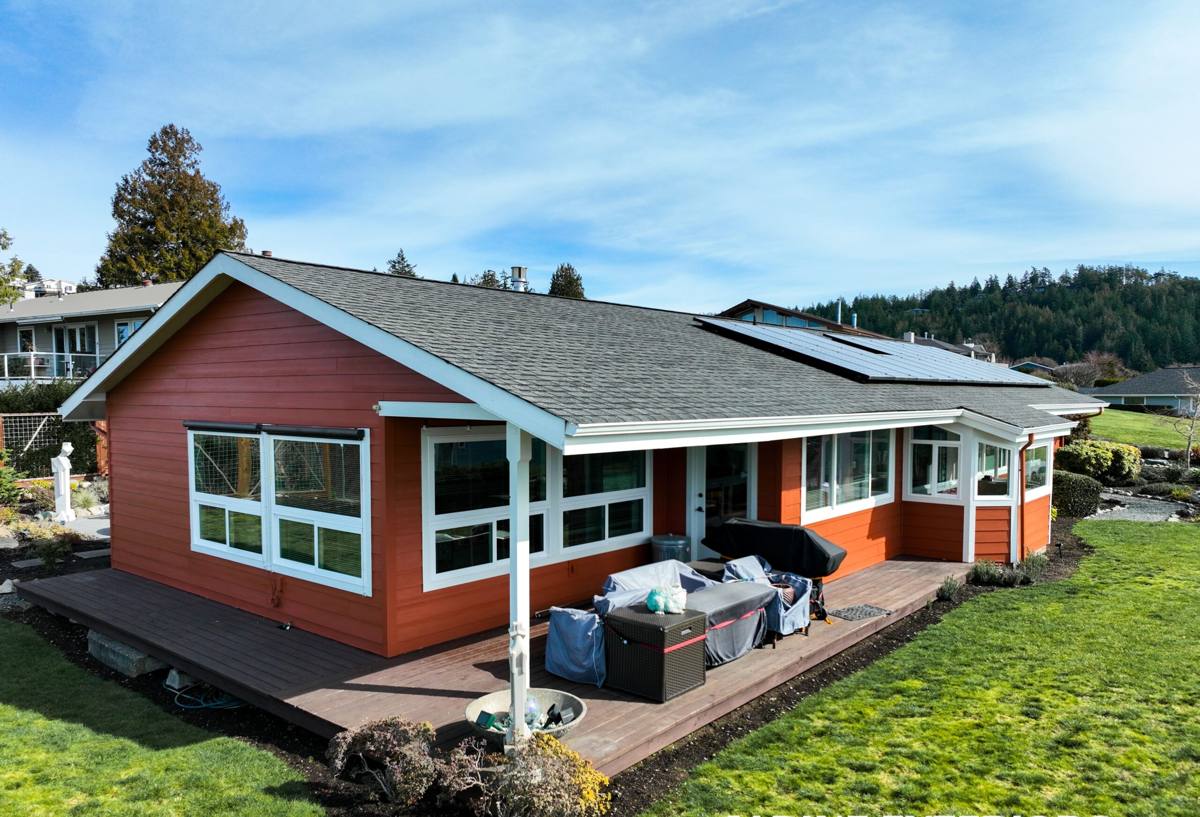
Why We Only Install James Hardie in This Neighborhood
We install exclusively James Hardie fiber cement siding — not vinyl, not LP SmartSide, not primed spruce or cedar, not other cement-board brands. That's a standard we apply everywhere we work, but it matters more in a location like Island Estates because the gap between a correctly engineered, correctly finished product and something less suited to the environment shows up faster near the water.
A few specific things about Hardie make it the right call for a waterfront Pinellas County home:
Non-Combustible Material
Fiber cement is composed primarily of Portland cement, sand, and cellulose fiber. It doesn't burn, rot, or feed termites, which matters for long-term durability regardless of proximity to water — but it's one less variable to manage on a property that already has enough environmental factors working against it.
Dimensional Stability
Unlike wood or wood-composite siding, Hardie boards don't swell and shrink significantly with humidity swings. That stability keeps seams, laps, and caulk joints tight over years of exposure instead of gapping and opening paths for water intrusion — a meaningful advantage anywhere in Florida, and especially where humidity and salt air are both elevated.
ColorPlus Factory Finish
Rather than relying on field-applied paint, Hardie's ColorPlus technology bakes the finish on in a controlled factory process through multiple coats. That finish resists fading and chipping far better than site-applied paint holds up under sustained coastal UV and salt exposure, which directly extends the time before a homeowner is looking at a repaint.
Climate-Engineered HZ5 Formulation
James Hardie manufactures region-specific product formulations. Homes in our area are built with the HZ5 line, engineered for high-humidity, high-moisture-exposure climates — a different specification than what's sold in dry inland states. It's a manufacturing decision built around exactly the conditions Island Estates sees every day.
What Correct Installation Looks Like on a Waterfront Home
The product only performs to spec if the installation matches that spec. On a home this exposed, a handful of details matter more than they would on a sheltered inland lot:
- A continuous, properly lapped weather-resistant barrier behind the siding — not house wrap that's been stapled up and left with gaps at seams
- Correct fastener selection and spacing, using fasteners rated to resist corrosion in a salt-air environment, driven to the depth James Hardie specifies rather than over- or under-driven
- Proper flashing at every horizontal transition — window heads, roof-to-wall intersections, and any point a deck, porch, or dock structure meets the house
- Correct clearance between the bottom of the siding and grade, decking, or roofing, so the material isn't sitting in standing water or repeated splash-back
- Butt joints and panel gaps sized to James Hardie's published clearance specifications, allowing for material movement without opening a path for water
- Caulking applied only where the manufacturer specifies it — used to seal, not as a substitute for flashing that was left out
Every one of these steps is standard James Hardie installation practice. The difference on a water-facing property isn't a different set of rules — it's less tolerance for skipping any of them, because the consequences of a missed flashing detail or the wrong fastener show up sooner in this environment than they would a few miles inland.
Our Process for an Island Estates Project
Working this close to open water changes how we sequence a job, not just what material goes up. A typical project looks like:
- Site assessment — we walk the property, check existing siding and trim for moisture damage or corrosion, and look at how the home is oriented relative to prevailing wind and sun exposure
- Removal and substrate check — once old siding comes off, we inspect the sheathing and framing underneath for hidden moisture issues before anything new goes up, since covering a problem is worse than finding it
- Weather barrier and flashing — house wrap, flashing, and any water-management details go in first and get inspected before siding installation starts
- Hardie installation to spec — fastening, gapping, and flashing follow James Hardie's published installation guide, with corrosion-resistant fasteners appropriate for the salt-air exposure on this property
- Final walkthrough — trim, caulking, and paint touch-up get checked against the finished wall, with attention to the transitions most likely to be tested by wind-driven rain
Cost Factors on a Waterfront Home
Pricing for any siding project depends on square footage, home shape, and existing condition. A few factors tend to matter more specifically on an Island Estates property than on a typical inland Clearwater home:
| Factor | Why It Matters Here |
|---|---|
| Existing substrate condition | Homes with long-term salt and moisture exposure are more likely to need sheathing repair once old siding comes off |
| Fastener and flashing spec | Corrosion-resistant fasteners and more thorough flashing detailing add labor and material cost but are not optional this close to the water |
| Access and site logistics | Waterfront lots, seawalls, docks, and tighter setbacks can affect staging, scaffolding, and material delivery |
| Trim and architectural detail | Homes with more elevation changes, dormers, or accent features require more cutting, fitting, and flashing points |
| Color and finish selection | ColorPlus finish options vary in cost slightly by color family; darker tones absorb more heat and UV load over time |
Maintenance in a Salt-Air Environment
A correctly installed Hardie system on a waterfront home still needs some upkeep — just far less than wood, and less than most alternative materials would require in this same location. Realistic expectations:
- Periodic rinsing of wall surfaces facing open water to clear salt residue before it builds up, more frequently than an inland home would need
- A visual check after major wind events for any loosened trim, shifted flashing, or caulk joints that may need attention
- Keeping irrigation and landscaping from spraying directly onto the base of exterior walls
- Prompt attention to any physical damage — impact from storm debris, for example — rather than letting a small breach sit
- No routine repainting cycle required for the field of the siding itself, since the ColorPlus finish is factory-cured rather than field-applied
Why a Crew That Already Works This Neighborhood Matters
Siding contractors who mostly work inland don't always plan for the details that matter on a water-facing lot — corrosion-rated fasteners, tighter attention to flashing at every penetration, and realistic expectations about how fast salt residue accumulates on a wall. A crew that regularly works waterfront Pinellas County properties brings that experience into the estimate and the installation itself, rather than treating the job like a standard inland re-side.
That local familiarity also matters for the practical side of a project — sequencing work around Florida's storm season, coordinating with the realities of tighter waterfront lots, and knowing what Clearwater's permitting and wind-load requirements expect for exterior work in this area. None of that replaces good installation practice, but it removes surprises that can slow a project down or compromise the result.
Choosing the Right Approach for Your Home
Every Island Estates home is a little different — some sit directly on canal frontage, others are set back further from open water, and the age and condition of the existing exterior varies widely across the neighborhood. The right siding plan starts with an honest look at the specific property, not a one-size answer. What stays consistent is the material and installation standard: James Hardie fiber cement, installed to the manufacturer's flashing, fastening, and clearance specifications, chosen specifically because it holds up to what this location does to a home's exterior year after year.
If you own a home in Island Estates and want a straight answer on what your siding needs and what it would take to do it right, we're glad to walk the property and put together a free, no-pressure estimate.