 Clearwater Siding
 Board & Batten Siding in Oldsmar's Climate
Oldsmar sits at the north end of Tampa Bay in Pinellas County, and the homes here take a beating that inland Florida towns don't see in the same combination. You've got hurricane-force wind gusts during tropical systems, wind-driven rain that gets pushed sideways into wall assemblies, intense UV exposure nearly every day of the year, and a steady dose of salt air drifting in off the bay. Any siding product installed on an Oldsmar home has to hold up to all four of those forces at once, year after year, not just look good on installation day.
Board and batten is a style a lot of Oldsmar homeowners want for its clean, vertical lines and craftsman or coastal-cottage look. It works well here architecturally. But the style itself doesn't protect your walls — the material and the installation detailing do. That's the part we focus on.
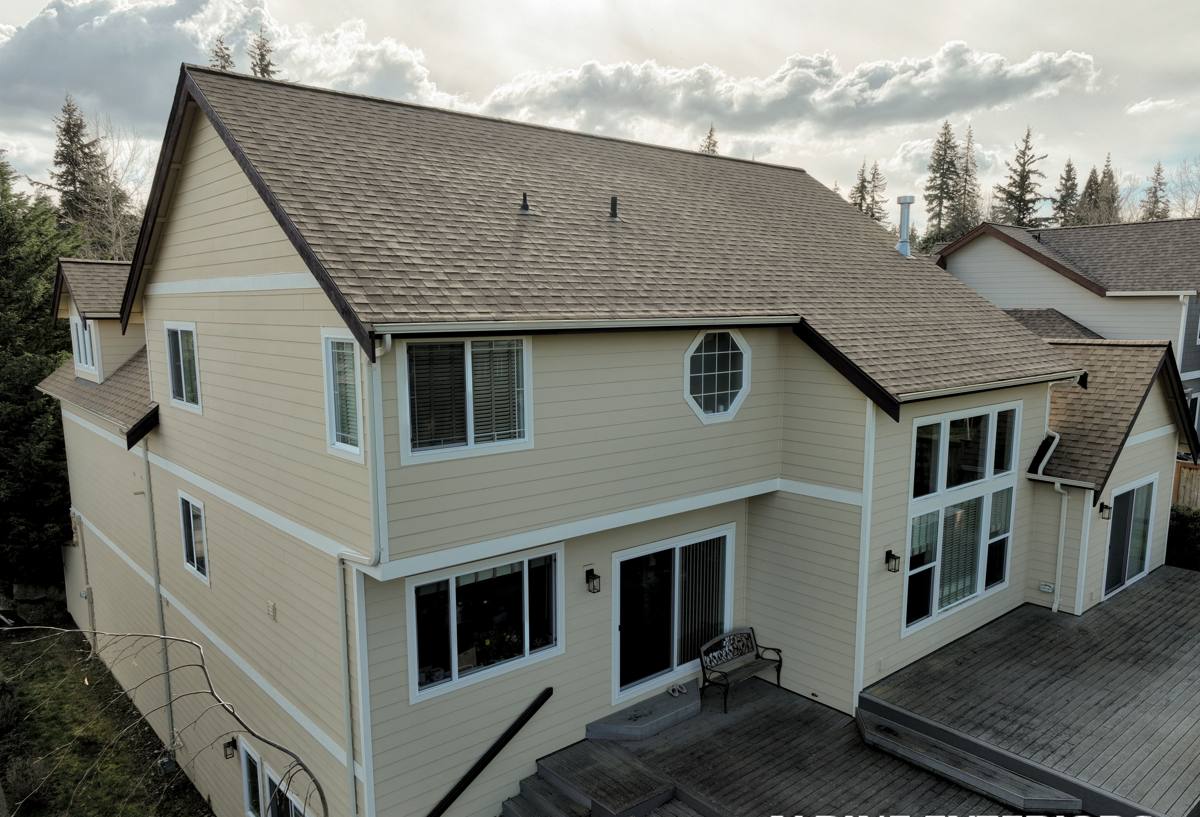
What Board & Batten Siding Actually Is
Board and batten is a two-layer siding pattern: wide flat boards (or a single continuous panel) installed vertically, with narrower strips called battens covering the seams between them. The result is a rhythmic, striped vertical look that reads as more custom than standard lap siding, and it pairs well with gable accents, porches, and mixed-material facades that are common around Pinellas County.
Because it's a vertical system, board and batten has different water-management needs than horizontal lap siding. Water runs down the face of the boards and battens instead of shedding off the bottom edge of overlapping courses, which means the seams, the flashing behind them, and the fastening pattern all matter more than they do on a standard lap job. Get those details wrong and you're not just risking a cosmetic issue — you're risking moisture intrusion behind the cladding.
Why We Only Install It in Fiber Cement
We install James Hardie fiber cement exclusively — we don't offer board and batten in vinyl, LP SmartSide (engineered wood), Cemplank, Allura, or raw cedar. That's a deliberate standard, not a sales pitch, and it matters more for board and batten than for almost any other siding style.
Vertical board and batten panels take direct sun and driving rain across their whole face, with seams running the full height of the wall. Engineered wood products rely on a resin-treated wood core and a factory or site-applied coating; if water finds its way behind that coating at a seam, joint, or fastener, wood-based substrates can swell, delaminate, or degrade from the inside out — and that damage is often invisible until it's advanced. Vinyl board and batten is lightweight and low-cost, but it flexes and expands with heat, isn't rated for the wind speeds Pinellas County design pressures require in many zones, and can crack or blow off in a serious storm. Cedar board and batten looks beautiful new, but it's a wood product in a humid coastal climate — it needs ongoing sealing, staining, and vigilance against rot, insects, and cupping, or it fails faster than most homeowners expect.
James Hardie fiber cement is cement, sand, and cellulose fiber — non-combustible, dimensionally stable in heat and humidity, and engineered specifically for climates like ours through Hardie's HZ10 product line, which is built for high-humidity, high-UV, storm-prone regions. The ColorPlus factory finish is baked on under controlled conditions rather than applied on-site, which gives it far better UV and fade resistance than field-applied paint. That's why it's the only material we put on Oldsmar homes.
What a Correct Board & Batten Installation Involves
The visible boards and battens are the smallest part of a good job. Most of what actually protects your home happens underneath, and it's the part a homeowner can't easily inspect once the siding is up — which is exactly why installer skill and discipline matter so much.
- A code-compliant weather-resistive barrier installed correctly behind the entire assembly, with seams lapped in the right direction to shed water downward
- Proper flashing at every horizontal transition — window and door heads, roof-to-wall junctions, and any trim breaks
- Correct fastener type, length, and spacing, driven into structural framing rather than just sheathing
- Batten placement and spacing that follows Hardie's engineering specs, not just "what looks even"
- Field-cut edges primed and sealed before installation, since factory ColorPlus coating doesn't extend to a cut edge
- Correct clearance at the bottom of the wall, at grade, and at any roofline or deck intersection to keep the siding from wicking moisture
- Caulking only where Hardie's install specs call for it — over-caulking a vertical seam can trap moisture instead of shedding it
Skip or rush any one of these steps and the siding can look fine for a year or two while a problem builds behind it. That's the trap with vertical siding styles in particular: the seams are longer, more numerous, and more exposed to wind-driven rain than a horizontal lap system, so installation error shows up as a leak, not just a cosmetic flaw.
Why Local Experience in Oldsmar Matters
Oldsmar homes span a range of ages and construction styles, and a crew that regularly works in this part of Pinellas County has already seen how local framing, older stucco-to-siding transitions, and typical roofline details tend to be built here. That matters when a board and batten job has to tie into an existing structure rather than go up on new construction.
It also matters for timing and sequencing. Tampa Bay's wet season brings frequent afternoon storms, and a crew that's used to working this coastline plans around that — protecting open wall sections, sequencing work to minimize exposed framing time, and not leaving a wall half-flashed overnight when rain is likely. That's a scheduling discipline you develop from working the area regularly, not something you can fully plan from a spec sheet alone.
Our Process for an Oldsmar Board & Batten Job
- On-site assessment: we look at your existing wall assembly, any moisture or rot issues already present, window and door flashing condition, and how the roofline and trim details will interact with a vertical siding pattern.
- Product and layout plan: we spec the correct Hardie board and batten configuration and batten spacing for your home's design, and walk you through ColorPlus color options.
- Removal and prep: old siding comes off, the sheathing is inspected and repaired as needed, and a new weather-resistive barrier goes on before anything else.
- Installation to spec: boards, battens, flashing, and fasteners installed per Hardie's published installation guidelines for our wind zone and exposure.
- Final detailing and walkthrough: trim, caulking where appropriate, cleanup, and a walkthrough so you know exactly what was done and why.
Board & Batten vs. Other Siding Styles for Oldsmar Homes
| Factor | Board & Batten (Fiber Cement) | Standard Lap Siding (Fiber Cement) |
|---|---|---|
| Look | Vertical, architectural, often used as an accent or full facade | Traditional horizontal shadow line |
| Water management | Relies heavily on correct flashing and seam detailing at every batten joint | Overlapping courses shed water more forgivingly by design |
| Best fit | Gables, porches, accent walls, craftsman/coastal styles | Full-home coverage, most Florida ranch and two-story layouts |
| Installation sensitivity | Higher — more seams, more precision required | Lower, though still requires correct installation |
| Maintenance in our climate | Low, if installed correctly in Hardie fiber cement | Low, if installed correctly in Hardie fiber cement |
Many Oldsmar homeowners use board and batten as an accent — on a gable, a porch surround, or a front-facing feature — paired with standard lap siding on the rest of the house. That's a design decision we're happy to talk through; it's not always an all-or-nothing choice.
Maintenance and Lifespan Expectations
Properly installed James Hardie board and batten in a Pinellas County climate needs very little upkeep compared to wood-based alternatives. You're not staining, resealing, or watching for rot the way you would with cedar. That said, "low-maintenance" doesn't mean "no maintenance" — a few habits go a long way toward protecting your investment:
- Rinse the siding periodically to clear salt residue, pollen, and mildew buildup, especially on north- and shade-facing walls
- Inspect caulking at trim and penetration points annually, since caulk is a maintenance item even when the siding itself isn't
- Keep sprinklers and landscaping from spraying the lower courses directly and constantly
- After any major storm, do a quick visual check for cracked boards, loose battens, or damaged trim
- Address any small issue promptly — a small gap or crack left alone is how wind-driven rain eventually finds its way behind the cladding
What Affects the Cost of an Oldsmar Board & Batten Project
| Cost Factor | Why It Matters |
|---|---|
| Scope | Full-home board and batten costs more than using it as an accent on gables or a porch |
| Wall condition | Sheathing repair or rot remediation found during tear-off adds cost but is essential to skip |
| Trim and detailing | Corner boards, window trim, and transition details add labor time proportional to complexity |
| Home height and access | Multi-story sections and tight side-yard access affect labor and equipment needs |
| Color selection | Standard ColorPlus colors versus premium or custom-matched finishes |
We give honest, itemized estimates based on what we actually find on your home rather than a flat per-square-foot number pulled out of the air. If we find hidden damage during tear-off, we'll show it to you and explain the options before doing anything about it.
Signs You Need Board & Batten Repair or Replacement
If you already have board and batten siding — in any material — a few warning signs are worth acting on before they become bigger problems:
- Soft or spongy spots when you press on a board, especially near the bottom or around windows
- Visible gaps opening up between boards and battens
- Peeling, bubbling, or chalky paint that wasn't factory-finished ColorPlus
- Staining or discoloration that tracks downward from a seam or trim joint
- Battens that have started to bow, warp, or pull away from the wall
Any of these can point to moisture getting behind the cladding, and in a humid coastal climate like ours, that's not something to leave alone.
Get an Honest Look at Your Home
If you're weighing board and batten for an Oldsmar home — as a full facade or an accent feature — we're glad to walk the exterior with you, explain what we see, and give you a straight answer on scope and cost. There's no pressure and no obligation. Fill out the form below to schedule a free estimate.