 Clearwater Siding
 Siding Repair Built for Seminole's Climate
Seminole sits close enough to the Gulf and the Intracoastal that homes here deal with a specific combination of stress most inland Florida towns don't see in the same intensity: salt-laden air moving in off the water, wind-driven rain during summer storms, and long stretches of direct UV exposure almost every month of the year. Add in the occasional hurricane-force wind event, and it's easy to see why siding in this part of Pinellas County ages differently than siding in, say, central Florida. A repair crew that only shows up in Seminole once or twice a year tends to treat every job the same. A crew that works the neighborhood regularly knows which elevations take the worst weathering, which older siding materials are already past their useful life, and what a repair actually needs to hold up rather than fail again in a year or two.
This page is about one thing: siding repair, done right, for homes in Seminole. Not a full replacement pitch, not a generic "siding services" overview — just what local repair work actually requires and how we approach it.
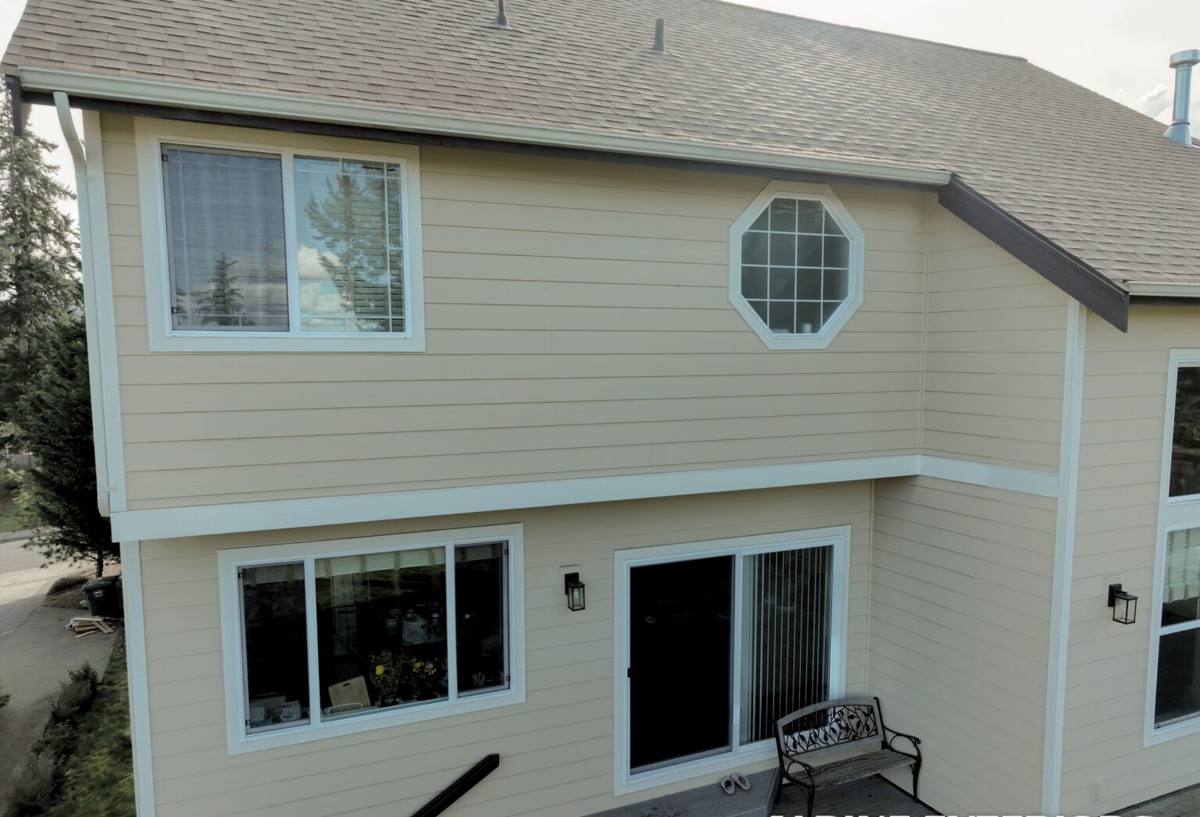
What Seminole's Weather Does to Siding Over Time
Every siding material reacts differently to the coastal Pinellas environment, but the underlying stresses are the same across the neighborhood:
- Salt air corrosion: Airborne salt accelerates the breakdown of fasteners, trim, and lower-grade siding materials, especially on homes closer to open water or canals.
- UV degradation: Florida's near year-round sun fades paint, dries out caulking, and causes some siding materials to warp or become brittle faster than manufacturers' national averages suggest.
- Wind-driven rain intrusion: Storms here rarely fall straight down. Rain gets pushed sideways into seams, laps, and panel joints, which is where hidden moisture damage usually starts.
- Wind load from tropical systems: Even storms that don't reach hurricane strength can loosen panels, pop fasteners, or crack corner boards, especially on siding that was installed with tight tolerances or minimal fastening in the first place.
None of that is unique to Seminole specifically, but the combination — proximity to the water, consistent humidity, and direct sun exposure — is a defining feature of Clearwater-area exteriors generally, and it's the backdrop for every repair decision we make.
Signs a Seminole Home Needs Siding Repair
Visual Warning Signs
Some damage is obvious. Cracked or missing panels, visibly warped boards, and peeling paint at seams are easy to spot from the street. Other signs take a closer look:
- Soft or spongy spots when you press on the siding, especially near the bottom courses or around window and door trim
- Dark staining or streaking that doesn't wash off, which often points to moisture tracking behind the surface
- Nail pops or fasteners backing out, usually from repeated expansion and contraction cycles
- Gaps opening up at butt joints or corner boards where caulking has dried out and shrunk
- Bubbling or blistering paint, which is frequently a sign of trapped moisture underneath rather than just a cosmetic paint failure
What's Happening Behind the Siding
The visible symptoms are usually the least of it. Siding's real job is keeping water out of the wall assembly — the sheathing, framing, and insulation behind it. When siding fails at a seam or fastener point, water can get behind the material and sit there, invisible, for months. By the time a stain or soft spot shows up on the surface, there's a reasonable chance some of that damage has already reached the substrate. That's why a proper repair inspection doesn't stop at the siding surface — it has to check what's happening underneath.
What a Correct Siding Repair Actually Involves
A lot of "siding repair" in this market means pulling off a damaged piece, nailing up a new one, and caulking the edges. That can look fine for a season or two, but it doesn't address why the damage happened in the first place, and it often doesn't match the surrounding material well. A repair done to a proper standard involves several distinct steps:
- Diagnose the actual cause. Is this impact damage from debris, a fastening failure, a flashing problem, or ongoing moisture intrusion from a failed seal? Repairing the symptom without finding the cause just means repeating the repair later.
- Check the substrate. Any area with suspected moisture intrusion gets checked for soft or rotted sheathing before new siding goes back on. Covering up compromised substrate with new siding is one of the most common shortcuts in this trade, and it guarantees a bigger repair down the road.
- Address the water management detail, not just the panel. Flashing, house wrap, and proper lap sequencing matter more than the siding material itself when it comes to keeping water out. A repair that skips this step is cosmetic, not structural.
- Match material and profile. Replacement pieces need to match the existing siding's exposure, profile, and finish as closely as possible. Mismatched repairs are one of the most common complaints homeowners have after a "quick fix."
- Reseal and refinish properly. Correct caulking at joints and trim, plus touch-up finishing that holds up to UV exposure, is what determines whether the repair looks intentional or looks patched.
Why We Only Work With James Hardie Fiber Cement
We install and repair James Hardie fiber cement siding exclusively — we don't install vinyl, LP SmartSide, or other fiber cement brands. That decision shapes how we approach repair work in Seminole specifically:
Fiber cement doesn't warp, rot, or become brittle in UV exposure the way some wood-based and polymer siding products can over time in this climate. It's non-combustible, which matters more each year as wildfire-adjacent insurance underwriting tightens across Florida. And because we work almost exclusively with Hardie's HZ5 product line — engineered specifically for high-humidity, storm-prone climate zones like ours — replacement pieces we install match the performance characteristics of what's likely already on many Seminole homes, not just the color.
When we repair a home that already has James Hardie siding, matching is usually straightforward: Hardie's ColorPlus factory-finish system is formulated for consistent, long-term color retention, so even older sections tend to match newer product reasonably well when the color line is still in production. When we repair a home with a different siding material, we'll be honest with you about the trade-offs of patching that material versus starting to transition sections of the home to fiber cement over time — but we won't install a competing product ourselves, even for a small repair. That's a standard, not a sales tactic.
Repair or Replace: How to Think About It
| Situation | Repair Usually Makes Sense | Replacement Should Be Considered |
|---|---|---|
| Damage extent | Isolated to one or two elevations or a small area | Widespread across multiple sides of the home |
| Substrate condition | Sheathing and framing are dry and sound | Rot or moisture damage found behind multiple sections |
| Material age | Siding is within its expected service life | Original material is at or past typical end-of-life |
| Cause of damage | One-time event (impact, isolated fastener failure) | Systemic issue (poor original installation, failed flashing throughout) |
| Appearance match | Replacement pieces can blend closely with existing siding | Existing siding is faded or discontinued, making a seamless match unrealistic |
Our Repair Process in Seminole
Because we work this part of Pinellas County regularly, our process is built around getting an honest answer fast, not upselling a bigger job than the home needs:
- On-site inspection: We look at the damaged area and check adjacent sections and common trouble spots — corner boards, window trim, and lower courses near grade — for related issues before quoting anything.
- Substrate check where warranted: If there's any sign of moisture intrusion, we check what's happening behind the siding before finalizing a scope of work.
- Clear scope and pricing: You get a specific explanation of what's being replaced, why, and what it will cost — not a vague estimate.
- Repair using matched James Hardie material: Replacement panels, trim, or fascia are sourced to match existing profile and finish as closely as Hardie's current product lineup allows.
- Proper water management detailing: Flashing and sealing get addressed as part of the repair, not skipped to save time.
- Final walk-through: We show you what was done and why, including anything we found that's worth keeping an eye on going forward.
Cost Factors for Siding Repair
Repair pricing varies with the specifics of the damage, so we won't quote a number without seeing the home — but these are the factors that actually move the price:
| Factor | Why It Matters |
|---|---|
| Extent of damaged area | A single panel is a very different job than damage spanning a wall section |
| Substrate condition | Rotted sheathing behind the siding adds carpentry work beyond the siding itself |
| Height and access | Second-story or hard-to-reach areas require more setup time and equipment |
| Material availability | Matching an older Hardie color line can take longer to source than a current one |
| Underlying cause | Fixing a flashing or water-management issue adds scope beyond replacing panels |
What to Check Before Hiring a Siding Repair Crew
Storm season brings out door-knockers offering fast, cheap patch jobs across Pinellas County. Before you hire anyone for siding repair, it's worth confirming a few basics:
- Do they check for and address moisture damage behind the siding, or just replace what's visible?
- Can they explain why the damage happened, not just what they plan to replace?
- Do they carry proper licensing and insurance for exterior work in Florida?
- Will the replacement material match your existing siding's profile and finish, or is it a generic substitute?
- Do they give you a written scope of work before starting, not just a verbal price?
- Are they familiar with wind-driven rain and storm patterns specific to coastal Pinellas homes, or working from general assumptions?
A crew that already works Seminole regularly has usually seen the specific failure patterns common to homes in this area — which fastening methods hold up, which original installations were done to spec, and which weren't. That familiarity shows up in the quality of the diagnosis, not just the speed of the repair.
Get an Honest Look at Your Siding
If you're seeing warning signs on your Seminole home — cracked panels, soft spots, staining, or storm damage from a recent system — it's worth getting an honest assessment before the underlying issue gets worse. We'll tell you plainly whether a targeted repair makes sense or whether you're better off planning for replacement, and we'll explain exactly why. Reach out for a free, no-pressure estimate using the form below.