 Clearwater Siding
 Building a Deck That Actually Holds Up in Sunset Point
Sunset Point is one of the older, established residential pockets of Clearwater, and a lot of the homes here have decks that were built decades ago under very different assumptions about weather and materials. A deck in this part of Pinellas County isn't just outdoor furniture — it's a structure that has to survive intense year-round UV, wind-driven rain, salt-laden air off the water, and the real possibility of hurricane-force wind loads. Build it like a deck in Ohio and you'll be replacing boards, re-tightening railings, and fighting rust within a few seasons. Build it for this climate from the ground up, and it'll still be solid a decade or two from now.
This page is specifically about deck building for Sunset Point — what the local conditions demand, what a correctly built deck involves structurally and materially, and how our process works when we take on a project in this neighborhood.
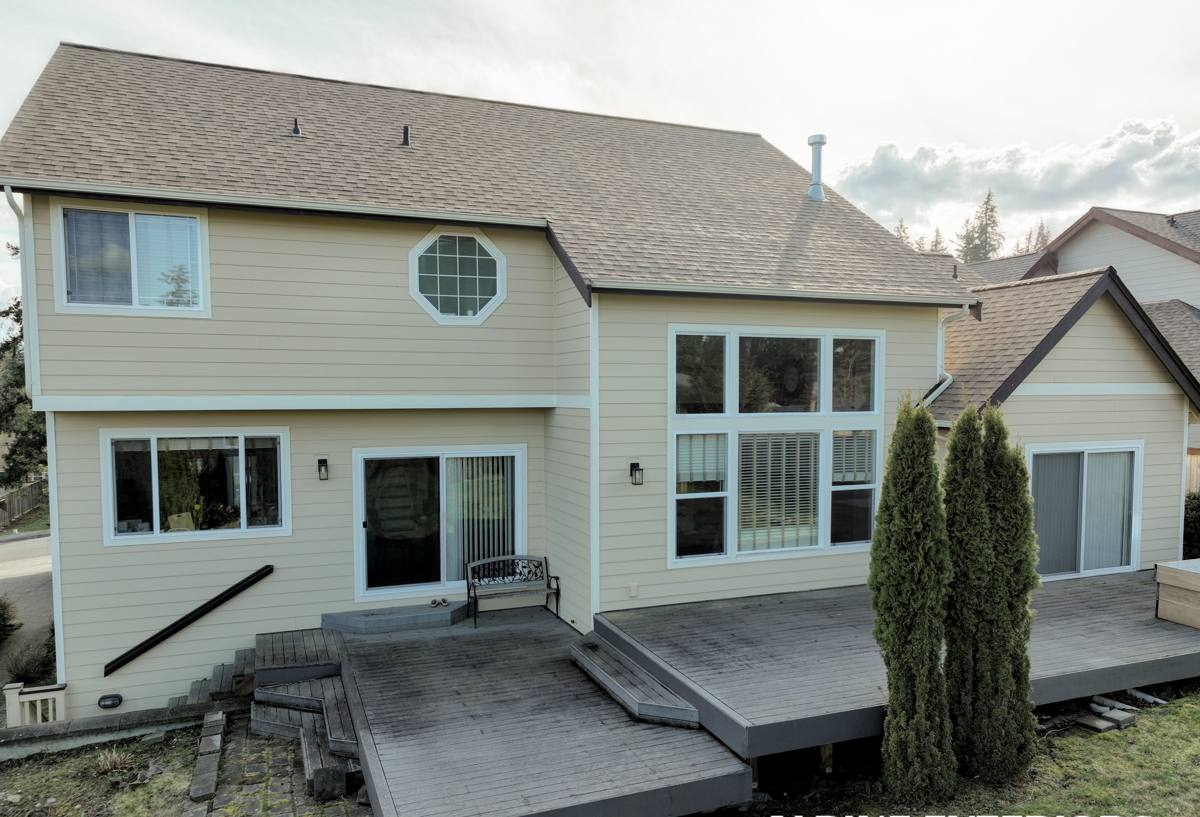
What Clearwater's Climate Actually Does to a Deck
UV Exposure
Florida sun is relentless almost all year. Untreated or poorly finished wood grays and checks (splits along the grain) within a couple of years. Composite decking without UV inhibitors baked into the material can fade unevenly, especially on a deck with partial shade from trees or the house itself. UV also breaks down the resins in cheaper composite and PVC products faster than the manufacturer's marketing usually suggests, which is why we pay attention to product-specific UV warranties rather than assuming "composite" is one uniform product.
Salt Air and Wind-Driven Rain
Being close to the water, Sunset Point deals with salt air that accelerates corrosion on anything metal — screws, joist hangers, bolts, railing brackets. A deck built with standard interior-grade or even basic exterior fasteners will show rust streaks and weakened connections well before the decking itself wears out. Wind-driven rain is a separate problem: it doesn't fall straight down, it gets driven sideways and up under fascia boards, ledger connections, and railing posts, which means flashing and drainage details matter as much as the visible materials.
Hurricane Wind Loads
Pinellas County requires decks to be engineered and fastened to resist real wind uplift and lateral loads, not just gravity. That affects everything from how the ledger board is attached to the house, to the spacing and type of joist hangers, to how railing posts are anchored. A deck that looks fine day to day can fail in a wind event if the connections weren't built to code in the first place.
Choosing the Right Decking Material
There's no single "best" decking material for every home — it depends on budget, how much upkeep you're willing to do, and how close you are to the water. Here's an honest comparison of the two most common choices we install in this area.
| Factor | Pressure-Treated Wood | Capped Composite |
|---|---|---|
| Upfront cost | Lower | Higher |
| Maintenance | Needs periodic sealing/staining, especially in Florida sun | Occasional cleaning, no sealing required |
| UV fade/graying | Grays without upkeep; sealing slows it | Resists fading with a quality cap layer; varies by product line |
| Moisture/mold resistance | Good if properly treated and ventilated underneath | Very good; doesn't absorb water like wood |
| Salt air corrosion of the board itself | Not affected (fasteners are the concern) | Not affected (fasteners are the concern) |
| Typical lifespan here | 15-20 years with maintenance | 25+ years, product-dependent |
We install both, and we'll tell you honestly which one fits your budget and how much maintenance you actually want to do. What we won't do is cut corners on the framing or fasteners underneath, because that's what actually determines whether a deck survives storm season — the surface material is secondary to what's holding it up.
The Structure Underneath Matters More Than the Boards
Most deck problems we get called out to inspect in this area aren't about the decking boards — they're about what's underneath. A few things we treat as non-negotiable on every Sunset Point project:
- Footings sized and depth-set for the actual soil conditions on the lot, not a generic minimum
- Ledger board attached to the house with proper flashing so wind-driven rain can't get behind it and rot the rim joist or sheathing
- Joist hangers and structural connectors rated for coastal/corrosive environments, not standard galvanized
- Stainless steel or coated fasteners throughout — the ones facing direct weather especially
- Railing posts anchored to resist lateral load, not just toe-screwed into the rim joist
- Proper board spacing and under-deck ventilation so water and salt air don't sit and accelerate wear
A deck that looks identical from the top can have wildly different service lives depending on which of these details were done correctly. This is the part of the job that doesn't show up in photos but is exactly where cutting corners shows up five years later as soft framing, rusted hardware, or a railing that's gone loose.
Permits, Codes, and Working With Clearwater and Pinellas County
Deck construction in Clearwater requires a permit in nearly all cases, and inspections happen at specific stages — typically footings/framing before the decking goes down, and a final inspection once railings and stairs are complete. Pinellas County and the City of Clearwater both enforce wind load and attachment requirements that are stricter than what you'd find in many other parts of the country, which is appropriate given what these structures have to survive.
Skipping the permit might save a little time up front, but it creates real problems later: unpermitted work can complicate a home sale, cause issues with insurance claims after storm damage, and in some cases require the deck to be torn out and rebuilt to code. We pull permits and schedule inspections as a standard part of the job, not an add-on.
Our Deck Building Process
- On-site consultation. We look at your lot, existing structure (if replacing a deck), drainage, sun exposure, and how close you are to standing water or salt spray, since that changes hardware and material recommendations.
- Design and material selection. We go over wood versus composite, layout, railing style, and stairs, with honest cost and maintenance tradeoffs for each.
- Permitting. We handle the permit application and engineering documentation required by Clearwater/Pinellas County before any work starts.
- Footings and framing. This is the stage that determines long-term durability — proper footing depth, ledger flashing, and corrosion-resistant structural hardware.
- Decking, railing, and stairs. Installed with fastener spacing and gapping appropriate for Florida humidity and thermal movement.
- Inspection and walkthrough. We schedule the final inspection and walk the finished deck with you before calling the job done.
Why a Crew That Already Works Sunset Point Matters
A contractor who mostly builds decks inland or in drier climates will often default to standard-grade fasteners, skip the corrosion-resistant hardware upgrade, or under-detail the ledger flashing because it's never bitten them before. In a neighborhood like Sunset Point, those shortcuts show up faster — salt air and wind-driven rain expose weak details within a few years instead of a few decades.
Working regularly in this area also means we're familiar with Clearwater's permitting process and inspection expectations, which keeps the project moving instead of stalling on paperwork or failed inspections from missed code details. That familiarity is worth something you can't easily price out on a quote — fewer surprises, fewer callbacks, and a deck built for the conditions it will actually face.
Maintenance Checklist for Long-Term Durability
Whatever material you choose, a little regular upkeep goes a long way in this climate. Here's what we recommend homeowners in the area stay on top of:
- Rinse salt residue and debris off the deck surface and railings every few months
- Check fastener heads and structural hardware annually for early rust or corrosion
- Reseal or stain wood decking on the manufacturer's or installer's recommended schedule
- Keep gutters and downspouts near the deck clear so runoff isn't pooling against the structure
- Confirm under-deck ventilation isn't blocked by storage, landscaping, or debris buildup
- After any major storm, do a quick visual check of railings, stairs, and ledger connections
None of this is complicated, but skipping it is how a well-built deck ends up needing early repairs — and how a poorly built one fails outright.
If you're planning a new deck or replacing an aging one in the Sunset Point area, we're happy to take a look and give you a straightforward, no-pressure estimate — just fill out the form below and we'll get in touch.