 Clearwater Siding
 Windows in Skycrest: Built for Coastal Pinellas Weather
Skycrest is one of Clearwater's established residential neighborhoods, and like most of this part of Pinellas County, it's home to a real mix of housing ages and styles — original mid-century construction sitting alongside homes that have been updated or rebuilt over the decades. Whatever the age of the house, the windows in it are doing the same job: holding back hurricane-force wind loads, standing up to some of the most intense year-round UV exposure in the country, shedding wind-driven rain that rarely falls straight down here, and resisting the slow corrosive effect of salt-laden Gulf air. That's a demanding combination, and it's a big part of why window work in this area needs to be treated differently than it would be almost anywhere inland.
Clearwater Siding Company installs windows across Clearwater and the surrounding Pinellas County communities, including Skycrest, alongside our siding, roofing, and exterior work. We treat a window as one component of the wall assembly rather than a standalone product, because in this climate a window is only as good as the flashing, sealing, and structural attachment around it. A well-made window installed carelessly will fail here faster than a modest window installed correctly.
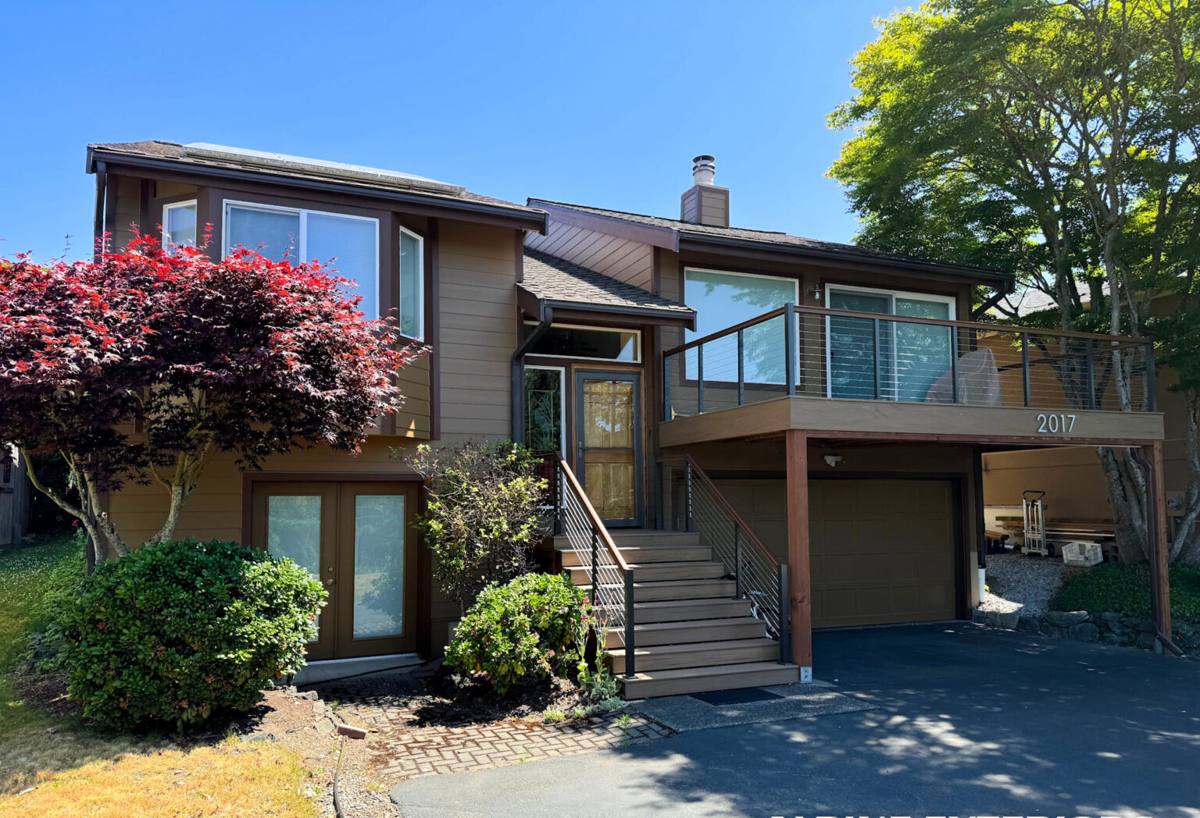
What Skycrest's Housing Stock Means for a Window Job
A neighborhood with this range of home ages means no two window jobs look exactly alike. Older homes may still have original single-pane aluminum windows that were never built to current wind-load or impact standards, while homes that were updated more recently may already have code-compliant windows that just need proper flashing repair or a straightforward replacement in kind. Before we recommend anything, we look at what's actually in the wall: the condition of the existing rough opening, whether prior flashing was done correctly, and whether the surrounding siding or stucco will need to be disturbed to do the job right. Guessing at any of that from a driveway estimate is how homeowners end up with a window that looks fine on install day and leaks the first time a real storm pushes rain sideways into the wall.
What This Climate Does to a Window Over Time
Hurricane-Force Wind Loads
Pinellas County sits in a wind-borne debris region under the Florida Building Code, which means windows here have to be rated to withstand both sustained wind pressure and impact from flying debris during a storm. A window that isn't rated for the wind zone it's installed in, or that's installed without the fastening schedule the product approval calls for, is a structural liability, not just a comfort issue — a failed window during a storm lets wind pressure into the house, which is one of the more common ways roofs get lifted from the inside out.
Year-Round UV Exposure
Florida's sun load is intense and consistent almost every month of the year, not seasonal the way it is farther north. That UV exposure breaks down lower-grade vinyl frames, weatherstripping, and glazing seals faster than in milder climates, and it fades interior finishes through glass that doesn't have adequate UV-blocking coatings. Frame material and glass coating both need to be chosen with that sun load in mind, not just for how the window looks on install day.
Wind-Driven Rain and Flashing Failures
Rain in a Gulf Coast storm system rarely falls straight down — it's pushed sideways by wind, sometimes hard enough to drive water uphill along a wall surface. That means head flashing, jamb flashing, and the sill pan beneath a window are doing more work here than they would in a calmer climate. Most of the water intrusion we find around windows traces back to a flashing detail that was skipped or done poorly during installation, not to a defect in the window itself.
Salt Air and Corrosion
Even away from the immediate waterfront, Pinellas County homes sit inside a steady dose of salt-carrying air moving in off the Gulf. Over years, that accelerates corrosion on window hardware, screen frames, and lower-grade fasteners — cheap hardware finishes tend to pit, stiffen, or seize up well before the glass or frame itself shows any wear. It's a slow problem, which is exactly why it's easy to underestimate until a window won't latch anymore.
Impact-Rated Glass vs. Standard Glass with Shutters
Homeowners in this area generally choose between two approaches to meeting the wind-borne debris requirement, and both are legitimate — the right answer depends on budget, how the home will be used, and how much ongoing effort you want to put in before every storm.
| Approach | Storm Prep Required | Upfront Cost | Day-to-Day Trade-Off |
|---|---|---|---|
| Impact-rated laminated glass | None — always protected | Higher per window | Also cuts UV transmission and outside noise year-round |
| Standard glass + accordion or panel shutters | Shutters must be deployed before each storm | Lower on the glass, added cost for shutter hardware | Shutters block light and views when closed; require working, well-maintained hardware |
| Standard glass, no shutters | Not code-compliant for wind-borne debris regions on most projects | Lowest | Not something we install as a stand-alone solution here |
We'll walk through both real options for a given project — impact glass is a bigger investment upfront but it's a permanent, no-maintenance solution, and it also does double duty cutting UV and noise on ordinary days when there's no storm anywhere near Florida. Shutters can bring the upfront glass cost down but only work if they're deployed correctly and the hardware is kept in working order year after year.
Florida Building Code, Wind Zones, and Pinellas County Permitting
Every window installed or replaced in this area has to meet the wind-load and impact requirements of the Florida Building Code for the wind zone the property sits in, and the work needs a permit through the local jurisdiction. Pinellas County is not inside the state's High-Velocity Hurricane Zone (that designation applies to Miami-Dade and Broward counties), but it's still squarely inside a wind-borne debris region, which means the code requirements here are still substantial — they're just a different set of numbers than what you'd see farther south. Every window installed has to carry a valid Florida product approval or Miami-Dade Notice of Acceptance rating appropriate to its actual exposure and wind zone, not just a generic "impact-rated" label. We handle the permitting and inspection process as part of the job; it isn't an optional add-on, and skipping it isn't a shortcut worth taking on a home that will eventually need to be sold, insured, or repaired by someone else down the line.
What a Correct Installation Actually Involves
Most window failures we're called out to inspect in this area aren't failures of the window product — they're shortcuts taken during installation that don't show up until the first real storm season tests them. On every job, that means:
- Confirming the window's wind-load and impact rating actually matches the home's wind zone and exposure, not just picking whatever's in stock
- A properly pitched sill pan that sheds water outward instead of letting it pool under the frame
- Head flashing correctly lapped and integrated with the surrounding wall covering so water sheds downward and outward, not behind the siding
- Jamb flashing tied into the wall assembly rather than relying on caulk alone to keep water out
- Fastening into structurally sound framing, following the fastening schedule specified by the window's product approval
- Corrosion-resistant fasteners and hardware suited to a salt-influenced coastal climate
- Sealants and glazing compounds rated for sustained Florida UV exposure, not general-purpose caulk that chalks and cracks within a couple of summers
- A final inspection that confirms the installed window matches the permit and product approval on file
None of these steps add meaningfully to the overall cost of a window job. Skipping any one of them is what turns a properly rated, well-made window into a leak or a storm liability within a few years.
Our Process, Start to Finish
- On-site assessment. We look at the existing windows, the condition of the rough openings and any prior flashing, and the home's wind zone and exposure before recommending anything.
- Product selection. We go over frame material, glass options, and impact-rating choices in plain terms, including the honest cost and maintenance trade-offs of each.
- Permitting. We pull the required permit through the appropriate local jurisdiction and make sure the specified products carry the correct Florida product approval for the job.
- Removal and prep. Old windows come out carefully, and we inspect the opening for hidden moisture damage or framing issues before anything new goes in.
- Flashing and installation. Sill pans, head flashing, and jamb flashing go in first, followed by the window itself, fastened according to its product approval.
- Sealing and finish work. Interior and exterior trim, caulking, and finish details are completed to a weathertight standard, not just a visually finished one.
- Final inspection. We coordinate the required inspection so the completed work is documented and matches what was permitted.
Signs a Skycrest Home Needs Window Attention
- Visible fogging or condensation trapped between panes, usually meaning a failed seal on an insulated glass unit
- Noticeable drafts, whistling, or a temperature difference near a closed window
- Chalky, cracked, or missing caulk and glazing compound around the frame
- Difficulty opening, closing, or latching a window that used to move smoothly, often a sign of hardware corrosion
- Soft or discolored trim, sill, or wall material near a window, which points to moisture already behind the surface
- Windows that are original single-pane aluminum with no visible impact rating or shutter protection
- Water staining on interior walls, ceilings, or window sills after a heavy rain or storm
Any one of these is worth a professional look before it becomes a bigger problem. Some point to a straightforward repair or reseal; others point to moisture damage that's already working on the framing behind the window.
Why a Crew That Already Works Skycrest Matters
A contractor who installs windows across Clearwater and Pinellas County through every hurricane season sees how wind, UV, rain, and salt air actually behave on real homes over years — not just how a product's spec sheet reads. That experience shows up in the decisions that matter on install day: which flashing details are worth the extra time on a given wall orientation, how a sill pan needs to be pitched for the amount of wind-driven rain a particular elevation sees, and which product approvals are actually appropriate for the wind zone a Skycrest address falls in. It also means familiarity with the local permitting process, so a job doesn't stall out waiting on paperwork that a crew unfamiliar with Pinellas County requirements would need to learn from scratch. We'd rather you get a straight answer about what your home actually needs than a generic pitch that could apply to a house anywhere in the country.
Getting Started
If you're weighing repair against replacement, trying to figure out whether your current windows meet code for your wind zone, or just want an honest look at what a correct installation would involve for your home, we're glad to walk through it. Reach out for a free, no-pressure estimate using the form below, and we'll give you a straight assessment of what your Skycrest home actually needs.