 Clearwater Siding
 Dunedin's Roofs Work Harder Than Most
Dunedin sits right on the Gulf, tucked between St. Joseph Sound and the Pinellas Trail corridor, and that waterfront location is part of why homes here need a different level of care than a roof going up thirty miles inland. The same breeze that makes Dunedin pleasant in the evening is carrying fine salt particulate that settles on shingles, flashing, and fasteners day after day. Add in the direct, nearly year-round UV load of a Florida sun that sits high in the sky for most of the year, seasonal tropical systems that bring sustained wind and wind-driven rain, and the humidity that never really goes away, and you've got a set of conditions that will find every weak point in a roofing job within a few years.
None of this means asphalt shingle roofing is a bad choice for Dunedin. It's still one of the most common and cost-effective roofing systems in Pinellas County, and it holds up well here when it's specified and installed correctly for coastal conditions. The problem is that "correctly for coastal conditions" is a narrower target than a lot of roofing crews treat it as. A roof that would be perfectly fine in a drier, calmer climate can underperform in Dunedin if the installer isn't accounting for wind uplift, fastener corrosion, and moisture cycling from day one.
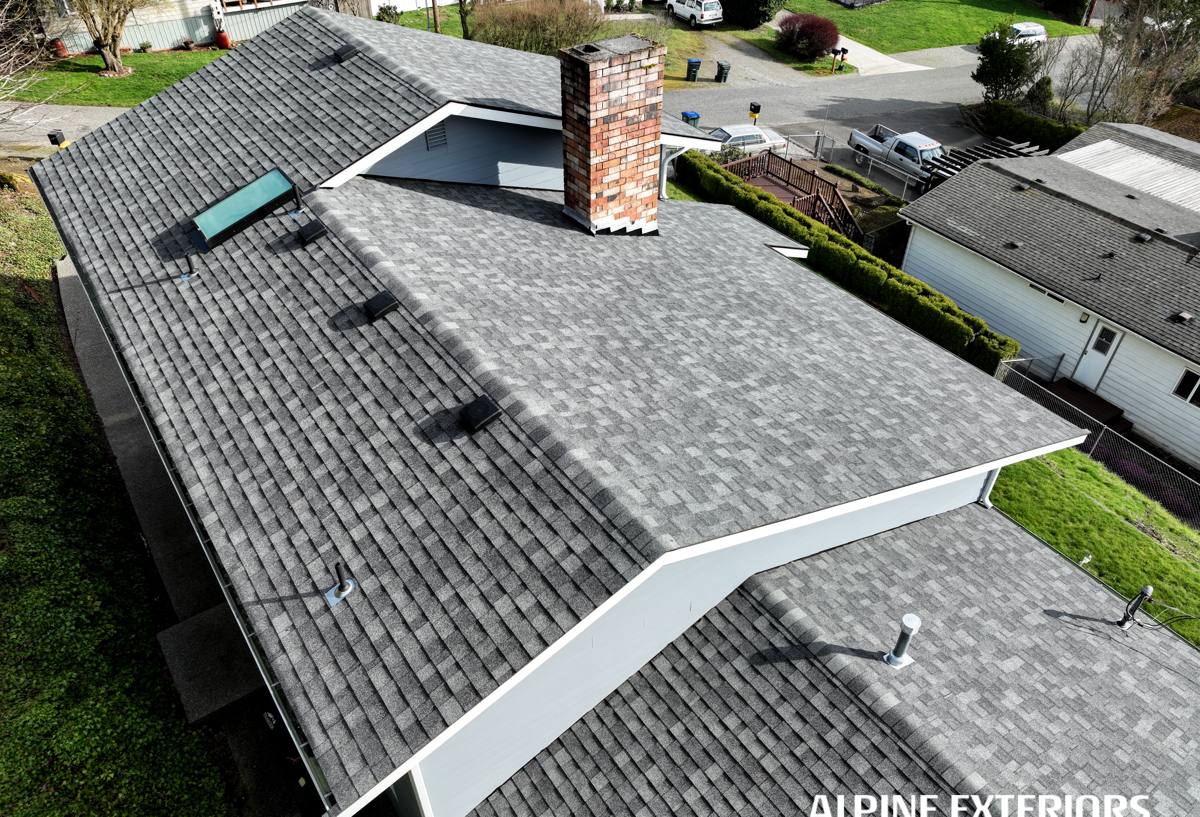
What Dunedin's Climate Actually Demands From a Shingle Roof
Wind uplift resistance
Pinellas County sits in a wind-borne debris region under the Florida Building Code, and coastal communities like Dunedin see the full force of tropical systems moving off the Gulf. Shingles are rated for wind resistance, but the rating on the wrapper only means something if the fastening pattern, nail placement, and starter strip are installed to match it. A shingle roof with the right product but the wrong nailing pattern will fail at wind speeds well below what the shingle is rated for.
UV and heat cycling
Asphalt shingles lose oils and granules over time as UV breaks down the asphalt base. In Dunedin, that aging process runs faster than it would in a milder climate because the sun exposure is more intense and more constant. Attic ventilation matters here more than homeowners usually realize — a poorly ventilated attic bakes the underside of the deck and accelerates shingle aging from below, on top of the UV damage happening from above.
Wind-driven rain and moisture intrusion
Rain that comes in sideways during a tropical system or a strong summer storm doesn't behave like rain falling straight down. It gets pushed up under shingle edges and around penetrations — vent stacks, chimneys, skylights — unless underlayment, flashing, and shingle overlap are done with that in mind. This is where a lot of roof leaks in this area actually originate, not from a missing shingle but from water finding its way past a detail that was fine for calm weather but not for wind-driven rain.
Salt air and metal corrosion
Every metal component on a roof — nails, drip edge, flashing, vent housings — is exposed to airborne salt in Dunedin's coastal environment. Standard fasteners corrode faster here, and corroded nails lose holding power long before the shingles themselves are worn out. This is one of the most overlooked failure points on Gulf Coast roofs.
Signs a Dunedin Roof Needs a Closer Look
Because of the combined UV, wind, and salt exposure, asphalt shingle roofs in this area often show wear patterns earlier or differently than roofs inland. Homeowners should watch for:
- Granules collecting in gutters or at downspout outlets, especially after a storm
- Shingle edges that look curled, lifted, or cupped rather than lying flat
- Dark streaking or staining, which is usually algae growth rather than structural damage but signals the roof surface is aging
- Soft spots or discoloration on interior ceilings, particularly near chimneys, skylights, or where two roof planes meet
- Visible rust bleeding from nail heads, flashing, or vent housings
- Missing or displaced shingles after any named storm or high-wind event, even if there's no visible interior leak yet
- Sagging along the roofline, which can indicate deck or structural issues beneath the shingles
Any one of these on its own isn't necessarily an emergency, but a Dunedin roof showing two or more of these signs is worth a professional inspection rather than a wait-and-see approach — small issues here tend to get worse quickly once wind-driven rain finds an opening.
Choosing the Right Shingle for a Coastal Pinellas County Home
Not every asphalt shingle product is a good fit for direct Gulf exposure. The table below reflects the general trade-offs we walk homeowners through when specifying a roof for Dunedin.
| Shingle Type | Typical Wind Rating | Coastal Fit | Trade-Offs |
|---|---|---|---|
| 3-tab asphalt | Lower end of rated range | Marginal for direct waterfront exposure | Lower upfront cost, but shorter service life under high UV and wind load |
| Architectural (laminate) asphalt | Mid-to-high rated range | Solid choice for most Dunedin homes | Higher material cost, better wind and impact performance, more dimensional look |
| High-wind / impact-rated architectural | Upper rated range | Best fit for the most exposed lots | Highest material cost, often paired with enhanced underlayment for full system performance |
| Algae-resistant granule shingles | Varies by product | Recommended given humidity levels | Slightly higher cost, reduces dark streaking over the life of the roof |
We don't push homeowners toward the most expensive option by default — a mid-range architectural shingle with algae-resistant granules is the right call for a lot of Dunedin properties. But for homes with direct, unobstructed Gulf or Sound exposure, spending up for the higher wind rating tends to pay for itself in fewer repairs after storm seasons.
What a Correct Installation Looks Like
The shingle brand and style matter less than most homeowners assume. What actually determines how a roof performs over ten, fifteen, twenty years in this climate is the system underneath and around it:
- Deck inspection and repair before anything new goes down — old fasteners, soft spots, or delamination in the decking get addressed first, not covered up
- Underlayment matched to exposure — synthetic or self-adhering underlayment at eaves, valleys, and penetrations, sized for wind-driven rain rather than the bare minimum
- Corrosion-resistant fasteners appropriate for salt air exposure, placed at the count and pattern the shingle manufacturer specifies for the local wind zone
- Proper flashing at every chimney, skylight, sidewall, and vent penetration — this is where the majority of leaks originate on an otherwise sound roof
- Balanced attic ventilation so the deck isn't cooking from underneath, which extends shingle life on the top side too
- Starter strip and edge detail done to spec, since this is the first thing to fail in high wind if it's skipped or shortcut
Skipping or rushing any one of these doesn't necessarily show up on day one. It shows up two years later during the first serious wind event, which is exactly when a homeowner doesn't want to find out the roof was under-built.
Our Process for a Dunedin Roofing Job
We keep the process straightforward and give homeowners a clear picture before any work starts:
- On-site inspection of the existing roof, deck condition, ventilation, and any signs of past leaks or storm damage
- A written scope and estimate that specifies the shingle product, underlayment, flashing approach, and fastener spec — not just a square-footage price
- Permitting through the appropriate local building department, since reroofs in Pinellas County require a permit and inspection
- Deck repair as needed, done before dry-in, with any findings communicated to the homeowner directly
- Dry-in with underlayment and flashing, followed by shingle installation to the wind-rated nailing pattern for the product used
- Final walkthrough and cleanup, including a magnetic sweep for stray fasteners around the property
We don't add pressure-driven upsells mid-project. If we find deck damage or additional flashing needs once the old roof comes off, we explain what we found, why it matters, and what the options cost before doing the work.
Permitting and Code in Pinellas County
Reroofing work in Dunedin and the surrounding Clearwater area falls under Florida Building Code requirements for wind-borne debris regions, which set minimums for wind resistance, fastening, and underlayment that go beyond what's required in many other parts of the country. A permit and inspection are part of a legitimate reroof — not paperwork to skip. Beyond the legal requirement, a permitted, inspected job also matters for insurance: many homeowners' policies and premium discounts in coastal Florida depend on documented code-compliant roofing work, and that documentation only exists if the job was permitted properly in the first place.
Maintenance That Actually Extends Roof Life Here
Asphalt shingle roofs in Dunedin benefit from a bit more attention than the same roof would need inland, mostly because of salt exposure and algae growth in the humidity. A simple, low-cost maintenance routine goes a long way:
- Rinse accumulated salt residue and debris off the roof surface periodically, especially after long dry spells with onshore wind
- Keep gutters clear so water isn't backing up under the shingle edge during heavy rain
- Trim back overhanging branches to reduce debris buildup and abrasion during wind events
- Have the roof checked after any named storm, even if there's no obvious interior damage, since wind can lift or loosen shingles without an immediate leak
- Address minor granule loss or small repairs promptly rather than waiting, since small openings are how wind-driven rain gets into a roof system
Why Hiring a Crew That Already Works Dunedin Matters
A roofing crew that works this specific stretch of the Gulf Coast regularly already knows which fastener specs hold up against the salt air, which flashing details actually stop wind-driven rain on the roof pitches common in this area, and what the local permitting process expects. That's not something a crew based well inland, or one that only occasionally works Pinellas County, picks up as quickly. It shows up in fewer callbacks, fewer surprises during permitting, and a roof that's actually built for the conditions it has to survive rather than a generic specification.
If you're weighing a repair against a full replacement, or just want an honest read on how much life is left in your current roof, we're happy to take a look. Reach out for a free, no-pressure estimate using the form below.