 Clearwater Siding
 Clearwater Beach roofs work harder than roofs almost anywhere else in Pinellas County. Sitting out on the barrier island, homes here take on salt-laden air, near-constant UV exposure, and the full force of Gulf winds and wind-driven rain — often all in the same week. When a roof develops a leak, a lifted shingle, or soft decking under a vent boot, the fix has to account for that exposure, not just patch the symptom. This page covers what roof repair actually looks like for Clearwater Beach homes: what the climate does to a roof, what a correct repair involves, and how our process works.
What Clearwater Beach's Climate Does to a Roof
Every coastal Florida roof ages differently than one inland, and a barrier island roof ages differently again. Understanding the specific stresses at play is the first step in diagnosing a repair correctly instead of just chasing the visible symptom.
Salt Air and Corrosion
Airborne salt from the Gulf settles on every exposed surface, including your roof. On metal components — flashing, drip edge, exposed fasteners, pipe boots with metal collars, and HVAC curb flashing — that salt accelerates corrosion. A fastener that would last decades inland can start rusting, backing out, or losing its grip on the deck within a few years on the beach. Corroded fasteners are one of the most common hidden causes of a leak that seems to have "no clear source" during a quick visual inspection.
Intense, Year-Round UV
Florida's UV load doesn't take a winter break, and Clearwater Beach gets it with almost no tree canopy to soften it. UV exposure dries out asphalt shingle oils, makes sealant strips brittle, and breaks down exposed caulking and pipe boot rubber faster than manufacturers' national averages assume. A pipe boot rated for a 10-15 year service life inland may crack and start leaking well before that on an exposed beach roof.
Wind-Driven Rain and Hurricane-Force Gusts
Wind is the other half of the equation. Sustained coastal wind and gusts during tropical systems don't just risk blow-offs — they drive rain sideways and upward under shingle tabs, ridge caps, and flashing laps that were never designed to shed water from that angle. A roof can look intact from the ground after a storm and still have water intrusion at a lifted tab, a stressed ridge vent, or a flashing lap that opened up under wind pressure.
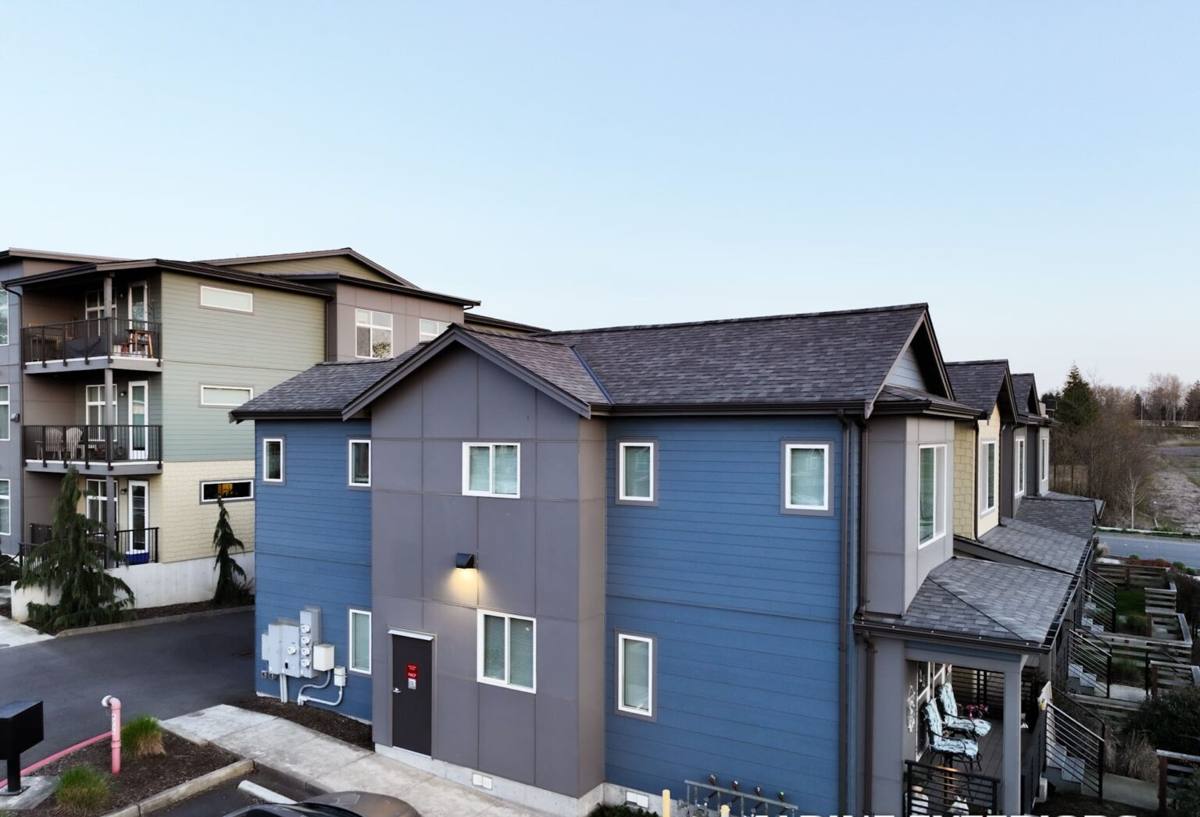
Common Roof Repair Issues We See on Clearwater Beach Homes
Most repair calls on the beach fall into a fairly predictable set of problems. Recognizing the pattern helps us diagnose faster and helps you understand what we're actually looking for during an inspection.
- Lifted, cracked, or missing shingles after wind events, especially near ridges, hips, and roof edges where uplift pressure is highest
- Cracked or shrunken rubber pipe boots allowing water to track down the vent pipe into the attic
- Corroded or backed-out fasteners at flashing, drip edge, and metal roof panel laps
- Deteriorated sealant at wall-to-roof transitions, chimney bases, and skylight curbs
- Soft or delaminated roof decking discovered once a shingle or tile is pulled back, usually from a slow leak that went unnoticed for a season or more
- Granule loss and UV-brittle shingles that are still watertight today but are close to a failure point
- Damaged or displaced ridge vents and turbine vents after high-wind events
- Rusted valley metal or step flashing where two roof planes meet
What a Correct Roof Repair Actually Involves
A repair that only addresses the spot where water is visibly entering the attic or ceiling is often a repair that comes back. Doing it right means tracing the problem to its actual source and rebuilding that section correctly — not just sealing over it.
Finding the Real Source of the Leak
Water rarely enters exactly where it shows up on a ceiling. It can travel along rafters, decking seams, or underlayment before dripping at a point several feet away. We inspect from both the roof surface and, when accessible, the attic side, tracing staining, wood discoloration, and moisture patterns back to the actual entry point before we open anything up.
Removing and Replacing Damaged Layers
Once the source is confirmed, damaged shingles, underlayment, and — if the deck has taken on moisture — the affected decking are removed down to sound material. Patching over compromised decking or reusing brittle underlayment just relocates the next failure a few feet away.
Reflashing and Resealing Penetrations
Most coastal leaks trace back to a penetration: a pipe boot, a vent, a chimney, a skylight curb, or a wall transition. We replace failed boots and flashing rather than caulking over them, and we reseal transitions with materials chosen for UV and salt exposure, not just whatever is fastest to apply.
Matching Materials Properly
Shingle color runs, profile changes, and fastener types all matter for a repair to blend in and perform correctly. We match shingle type, exposure, and fastening pattern to the surrounding roof field so the repair holds up the same way the rest of the roof does under wind load.
Repair vs. Replacement: How We Help You Decide
Not every damaged roof needs to be replaced, and not every leak can be permanently solved with a patch. We give you a straight answer based on the roof's age, condition, and how widespread the damage actually is — not a default push toward the bigger job.
| Factor | Repair Usually Makes Sense | Replacement Should Be Considered |
|---|---|---|
| Roof age | Roof is well within its expected service life | Roof is near or past the manufacturer's expected lifespan for this climate |
| Extent of damage | Isolated to one area, penetration, or storm event | Multiple areas showing granule loss, cracking, or soft decking |
| Decking condition | Deck is sound once opened up | Widespread soft or delaminated decking found during inspection |
| Insurance context | Damage doesn't meet claim thresholds or isn't storm-related | Documented storm damage supports a covered claim |
| Underlayment condition | Underlayment beneath the repair area is still intact | Underlayment is brittle or failing across the roof, not just locally |
When we're on your roof, we'll tell you honestly which column your situation falls into, including cases where a repair now can reasonably buy you several more years before replacement makes sense.
Our Roof Repair Process
- Inspection and diagnosis. We assess the roof surface, flashing, penetrations, and — where accessible — the attic to confirm the actual source of the problem, not just where it's showing up.
- Written scope and honest options. You get a clear explanation of what's damaged, what's causing it, and what repair (or, if warranted, replacement) actually involves — before any work starts.
- Damaged material removal. Compromised shingles, flashing, boots, or decking are removed down to sound material so the repair isn't built on a weak base.
- Rebuild with matched materials. New decking, underlayment, flashing, and shingles are installed to match the surrounding roof and tie in correctly at every seam and lap.
- Fastening and sealing for coastal exposure. Corrosion-resistant fasteners and appropriate sealants are used at every penetration and transition, not just the visible repair area.
- Final walkthrough. We review the completed repair with you and point out anything else on the roof worth keeping an eye on going forward.
Materials and Fasteners We Use for Barrier Island Conditions
Choosing the right materials for a repair on Clearwater Beach isn't the same as choosing for an inland roof. We weigh corrosion resistance and UV stability alongside cost, and we'll walk you through the trade-offs rather than defaulting to the cheapest option that happens to work today.
| Component | Standard-Grade Option | Why We Often Upgrade for Beach Exposure |
|---|---|---|
| Fasteners | Electro-galvanized nails | Ring-shank stainless or hot-dip galvanized fasteners resist salt-air corrosion far longer |
| Pipe boots | Standard rubber collar | UV-resistant or lead/aluminum-base boots hold up longer under constant sun exposure |
| Flashing metal | Painted steel | Aluminum or properly coated metal resists the corrosion that painted steel is prone to near salt air |
| Sealants | General-purpose roofing caulk | Polyurethane or high-grade sealants rated for UV and movement hold their seal longer |
We're upfront when a standard-grade component is genuinely sufficient for a given repair, and when the added cost of the more durable option is worth it because of where your roof sits. That's a judgment call we make with you, not a blanket upsell.
Why a Crew That Already Works Clearwater Beach Matters
Roofing crews that mainly work inland neighborhoods can do fine work, but they don't always account for the accelerated wear that comes with barrier island exposure — the corroded fastener that looks fine from the ground, the pipe boot that's cracked on the sun-facing side only, the flashing lap that was adequate inland but undersized for the wind-driven rain out here. Working Clearwater Beach and the surrounding Pinellas County coastline regularly means we've seen how these roofs actually fail over time, not just how they're built on day one. That translates into repairs that hold up, and into knowing when a "quick patch" recommendation is actually going to leave you with the same call in eight months.
It also means we understand the practical side of working on the beach: tight lot access, HOA or condo association considerations in some communities, and timing work around the tourist season when that matters to a homeowner renting out their property.
Maintaining Your Roof Between Repairs
A repair holds up longer when it's not fighting neglect elsewhere on the roof. A little regular attention between service calls goes a long way in this climate.
- Have the roof visually checked after any named storm or significant wind event, even if nothing looks obviously wrong from the ground
- Keep gutters and valleys clear of debris so water isn't pooling or backing up under shingles
- Watch for granules collecting in gutters or at downspouts, a sign of accelerating UV wear
- Trim back any overhanging vegetation that holds moisture against the roof surface or scrapes shingles in wind
- Address small issues — a lifted tab, a cracking boot — before the next storm season rather than after the next leak
- Keep a rough record of the roof's age and any prior repair work, which helps us (or your insurer) assess condition quickly
Get a Free, No-Pressure Estimate
If you've got a leak, storm damage, or just want an honest read on your roof's condition before the next storm season, we're glad to take a look. Fill out the form below for a free estimate on roof repair for your Clearwater Beach home — no pressure, no obligation, just a straight assessment of what's going on and what it'll take to fix it right.