 Clearwater Siding
 Deck Repair Built for Del Oro's Climate, Not a National Checklist
Decks in Del Oro don't fail the way decks fail in drier, colder parts of the country. Around here, the damage pattern is specific: intense year-round UV that breaks down wood fibers and finishes faster than most homeowners expect, salt-laden air drifting in off the Gulf that accelerates corrosion on anything metal, sudden wind-driven rain that gets pushed sideways under railings and through board gaps, and the occasional hurricane-force gust that tests every fastener and connection point at once. A deck repair here isn't just patching what's broken today — it's rebuilding that section so it can take the same abuse again next season without failing in the same spot.
We work on decks throughout the Del Oro area regularly, so we're not guessing at how Pinellas County weather affects a structure over time. We're looking at the same soffit rot, the same rusted-through joist hangers, and the same sun-bleached, cupping boards on repeat. That pattern recognition is what separates a repair that actually holds from one that reopens in a year.
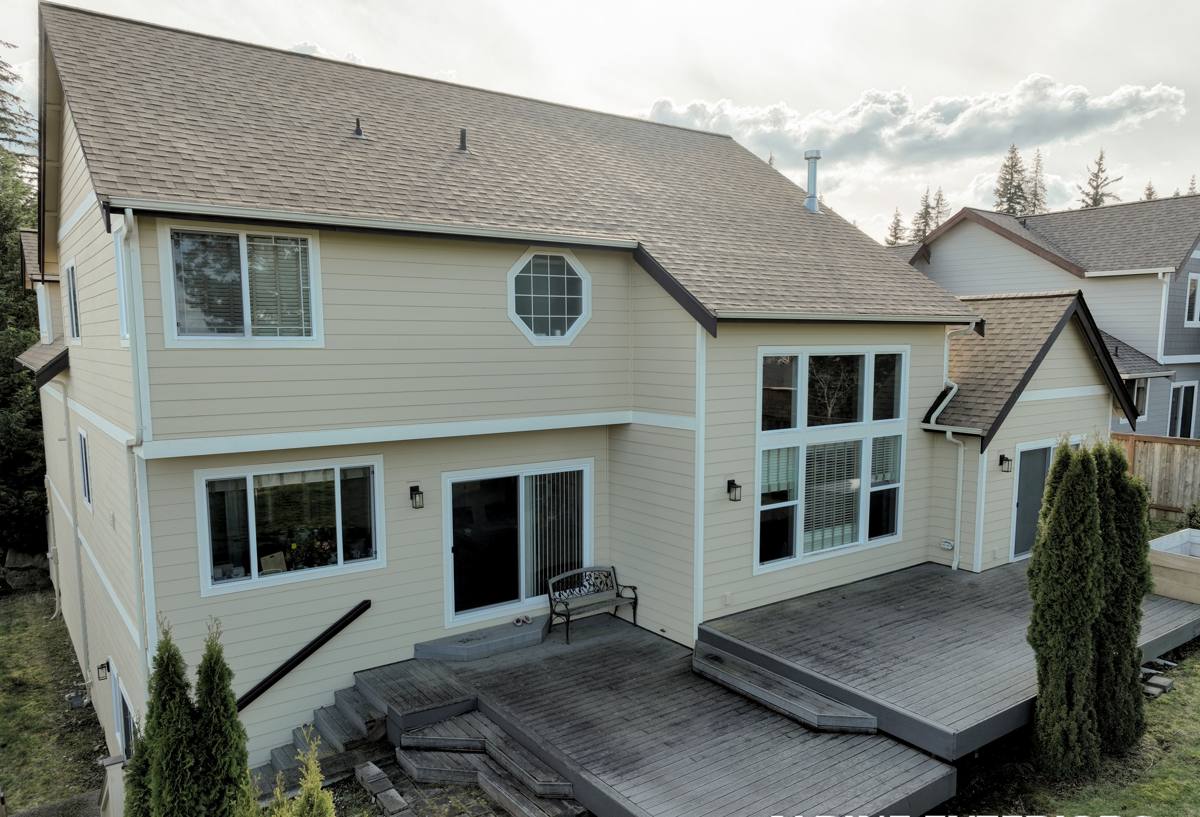
What Clearwater's Weather Actually Does to a Deck
UV and Heat
Florida sun is stronger and more constant than what most deck materials were originally rated for. Wood loses its natural oils and starts to gray, crack, and splinter within a couple of seasons if the finish isn't maintained. Composite decking fades too, just more slowly, and dark-colored boards can get hot enough to be uncomfortable underfoot in peak summer. UV also breaks down sealants and caulking around fasteners and flashing, which is often the first failure point that lets water in.
Salt Air
Even a few miles inland from the Gulf, airborne salt settles on exposed metal — screws, joist hangers, bolts, and railing hardware — and speeds up corrosion. Standard zinc-coated fasteners that might last decades elsewhere can start rusting and losing holding strength much sooner in a coastal county like Pinellas. A repair that reuses old, corroded hardware is a repair that's already on a countdown.
Wind-Driven Rain and Humidity
Afternoon storms here don't just fall straight down — wind pushes rain sideways and up under ledger boards, railing caps, and stair stringers. Combined with Florida's humidity, that means wood surfaces rarely get a real chance to dry out between rain events. Trapped moisture behind boards or around post bases is where rot gets started, often invisibly, until a board finally gives underfoot.
Hurricane-Force Wind
Even when a storm doesn't cause obvious damage, wind loading stresses every connection on a deck — ledger-to-house attachment, post-to-beam connections, railing posts, and stair framing. Repeated stress cycles from seasonal storms can loosen fasteners and fatigue connections that looked fine after the last inspection.
Signs a Del Oro Deck Needs Repair
- Boards that flex, bounce, or feel spongy when you walk across them
- Visible cracking, splintering, or graying wood, especially on south- and west-facing sections
- Rust streaks bleeding out from screw heads, brackets, or joist hangers
- Railings or posts that wiggle when pushed
- Gaps opening up where the deck meets the house (ledger board separation)
- Soft or discolored wood around post bases, stair stringers, or under planters
- A musty smell coming from underneath the deck
- Fasteners backing out or heads stripped from corrosion
Any one of these on its own might be a simple fix. Several at once, especially near the ledger board or support posts, usually means it's time for a proper structural inspection rather than a surface patch.
Repair or Replace? How We Make That Call
Homeowners often assume a deck with visible problems needs a full teardown, but that's frequently not true. The honest answer depends on what's actually compromised — cosmetic wear on the decking surface is a very different situation from rot in the structural framing.
| Factor | Usually Repairable | Usually Needs Replacement |
|---|---|---|
| Decking boards | Isolated cracking, splintering, or a few soft boards | Widespread rot or cupping across most of the surface |
| Ledger board | Minor gap or a few loose lags, sound wood underneath | Soft, spongy, or separated from the house rim joist |
| Framing (joists/beams) | Localized rot at one or two joist ends | Rot or damage spread across multiple joists or the main beam |
| Railings/posts | Loose connections, surface wear | Rotted post bases or non-code-compliant spacing throughout |
| Fasteners/hardware | Scattered rust, still holding | Widespread corrosion, hardware failing under load |
| Age of structure | Under 15 years, built to a reasonable standard | Original construction unknown or clearly undersized for current code |
Our job during the estimate is to figure out which column your deck actually falls into, section by section — not to sell a full rebuild when a targeted repair will hold up just as well for a fraction of the cost.
What a Correct Repair Actually Involves
A repair that looks fine from the top but skips the structure underneath is the most common shortcut we see undone within a year or two — usually after the next big storm. A correct repair addresses the whole path water and load travel through, not just the visible surface.
Structural Inspection First
Before any board comes off, we check the ledger board attachment, post bases, beam condition, and joist hangers. This is where the deck actually holds its weight and resists wind uplift, and it's the part that's easiest to miss if you only look at what's visible from a chair on the deck.
Removing Compromised Material — Not Just the Obvious Spot
Rot and corrosion spread wider underneath the surface than they show on top. We probe beyond the visibly damaged area to make sure we're replacing all the compromised wood, not just the piece that finally cracked.
Corrosion-Resistant Hardware, Every Time
Given the salt air here, we use hot-dip galvanized or stainless fasteners and connectors rated for coastal exposure — not standard hardware that's cheaper but starts rusting within a couple of Gulf Coast summers. This is one place where cutting corners costs the homeowner a repeat repair.
Proper Flashing and Water Management
Where the deck meets the house, flashing needs to actually shed water away from the structure, not just look sealed. A ledger board without correct flashing is one of the most common hidden causes of deck failure, because the damage happens where nobody's looking until it's serious.
Matching Materials the Right Way
Whether we're repairing wood decking or a composite system, board replacements get matched for width, thickness, and fastening pattern so the repaired section performs the same as the rest of the deck — not just looks similar from a distance.
Our Process, Start to Finish
- On-site inspection: We walk the whole deck, check underneath where possible, and test railings, posts, and boards for soft spots or movement.
- Honest scope and estimate: You get a clear breakdown of what's structural versus cosmetic, and what repair options exist at different price points.
- Material selection: We talk through wood versus composite repair options for your specific situation, including how each holds up to Pinellas County sun and moisture.
- Repair work: Compromised framing, boards, and hardware get replaced with corrosion-rated materials, with proper attention to flashing and water paths.
- Final check: We test the repaired sections under load and walk you through what was done and why.
- Cleanup: Job site cleared of old material and debris before we consider it finished.
Wood vs. Composite: What We Recommend and Why
Both materials can work well in Del Oro if they're installed and maintained correctly — the right choice usually comes down to how much upkeep a homeowner wants to commit to.
Pressure-treated wood is less expensive upfront and repairs are typically cheaper and faster since individual boards are easy to source and swap. It does require regular sealing or staining to hold up against Florida sun and rain — skipping that maintenance is what leads to the graying, cracking, and rot we see most often on older wood decks.
Composite decking resists UV fading and moisture damage better over time and needs far less maintenance, but it costs more initially, and repairs can require matching a specific board profile and color that may be harder to source if the original product has been discontinued. We'll tell you honestly which situation you're in before recommending one over the other — there's no single right answer for every deck.
Maintenance That Extends the Life of a Repair
- Reseal or restain wood decking every 1-2 years, sooner on south- and west-facing sections that take the most direct sun
- Rinse salt residue off boards and hardware periodically, especially after storms
- Keep gutters and downspouts clear so runoff isn't dumping extra water onto or under the deck
- Check railing posts and stair connections for movement a couple of times a year
- Clear leaves and debris from between boards so moisture doesn't get trapped
- Look underneath the deck occasionally for soft wood, rust streaks, or standing water
None of this takes long, but it's the difference between a repair that lasts a decade and one that needs revisiting in two or three years.
Why It Matters That We Already Work in Del Oro
A crew that's unfamiliar with this specific corner of Clearwater is starting from scratch on every job — guessing at how much sun exposure a given orientation gets, how close the property sits to salt air influence, and what kind of storm exposure the deck has already weathered. We don't have to guess. Working regularly in and around Del Oro means we already know the failure patterns typical to this area, which lets us diagnose faster and repair the actual problem instead of just the symptom that's currently visible.
It also means a shorter distance for us to travel for follow-up visits or warranty work, which matters if you want a contractor who'll still be reachable a year after the repair, not just during the sales pitch.
Permits and Pinellas County Code
Structural deck repairs — especially anything involving the ledger board, support posts, framing, or railings — can require a permit under Pinellas County and City of Clearwater building codes, particularly if the work goes beyond simple board replacement. We handle the permitting conversation as part of the estimate so you know upfront whether your repair needs inspection sign-off, rather than finding out after the fact.
If you're seeing soft boards, rust stains, or a wobbly railing on your Del Oro deck, it's worth getting a straight answer on what's actually going on underneath before it gets worse. We offer free, no-pressure estimates — use the form below and we'll take a look and tell you honestly what your deck needs.