 Clearwater Siding
 Clearwater Beach Sits at the Edge of Everything Siding Has to Fight
Clearwater Beach is a barrier island, which means the homes here take on a combination of stresses that inland Pinellas County properties simply don't see to the same degree. Salt-laden air moves off the Gulf and settles on every exterior surface, humidity stays high most of the year, UV exposure is intense and constant, and hurricane season brings sustained wind loads and wind-driven rain that pushes moisture into places it was never meant to go. Any siding installed here is working against all four of those forces at once, every day, not just during a named storm.
That's the lens we use when we talk about siding on Clearwater Beach: not "what looks good," but "what actually survives this exact environment for decades without turning into a maintenance project." Fiber cement, installed correctly, is built for that job. Installed poorly — or built from a material that wasn't engineered for coastal exposure in the first place — it becomes the weak point in an otherwise sound home.
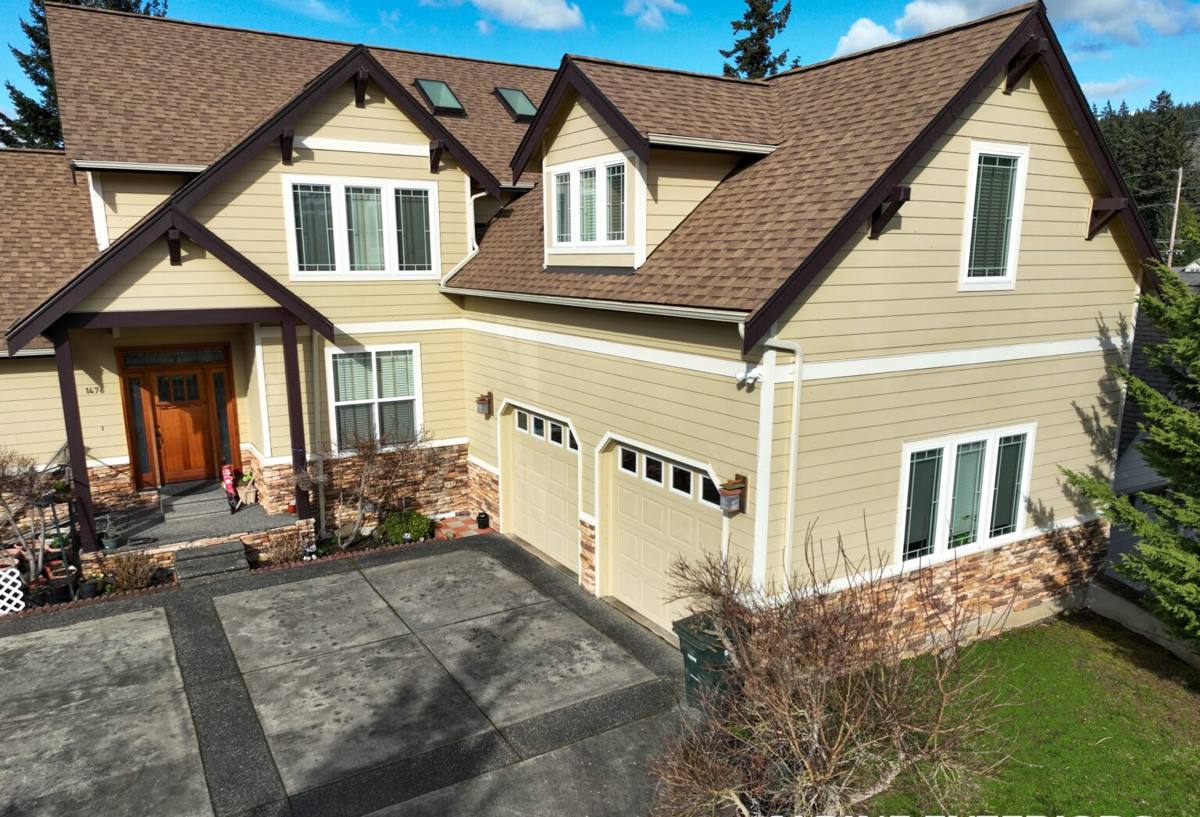
What Happens When Siding Isn't Built for a Barrier Island
Most siding failures we get called out to inspect on the beach and along the immediate coastline trace back to one of a few root causes, and they're worth understanding before you choose a product or a contractor.
Salt Air and Corrosion
Salt accelerates corrosion on fasteners, trim, and any metal components in a siding system. Cheap or mismatched fastener hardware, or siding systems that rely heavily on exposed metal, age faster here than they would twenty miles inland. The siding material itself also needs to tolerate constant salt deposition without breaking down.
UV Breakdown
Florida's sun is relentless year-round, not seasonal. Paint film on wood or engineered wood products chalks, fades, and eventually cracks under that kind of sustained UV load, which opens the door to moisture intrusion at the exact spots where the coating has failed.
Wind-Driven Rain and Moisture Intrusion
Hurricanes and tropical systems don't just bring wind — they push rain sideways, under laps, around trim, and into any gap a builder-grade installation left behind. Products that swell, delaminate, or lose structural integrity when they take on moisture are a liability on a barrier island where wind-driven rain is a near-annual event, not a rare occurrence.
None of this means Clearwater Beach homes can't have durable, attractive siding. It means the product and the installation both have to be matched to the environment, not just to a budget or a look.
Why We Install Only James Hardie Fiber Cement Here
We made a deliberate decision as a company to install James Hardie fiber cement exclusively — not vinyl, not LP SmartSide or other engineered wood products, not primed spruce or cedar, and not other fiber cement brands. That's not a marketing position; it's a standard we hold because of what we've seen these products do over time in exactly this kind of coastal, high-UV, hurricane-exposed climate.
Fiber cement itself is a mix of cellulose fiber, sand, and cement, which makes it non-combustible and dimensionally stable — it doesn't expand and contract with humidity swings the way wood-based products do, and it doesn't provide fuel in a wildfire or structure-fire scenario the way wood-based sidings can. Within fiber cement as a category, we standardized on James Hardie specifically because of the factory-applied ColorPlus finish, the climate-specific engineering behind their product lines, and a warranty structure that's transferable and backed by installation to their published specifications — something we build our own process around.
We're not going to tell a homeowner that every alternative product is defective. Vinyl, engineered wood, and other fiber cement brands all have legitimate uses. What we will say plainly is that after years of coastal installation work, we don't think they hold up to Pinellas County's combination of salt air, UV, and storm exposure as reliably as Hardie does, and we'd rather turn down a job than install something we don't believe in on a barrier island home.
The Right Hardie System for a Gulf-Facing Home
ColorPlus Factory Finish
Field-painted siding is only as good as the paint job, and repainting a home on the beach every few years because the sun and salt are stripping the finish gets expensive fast. ColorPlus is a factory-applied, baked-on finish that's engineered to resist UV fading and hold color far longer than a field-applied coat, which matters enormously in a location with this much sun exposure. It also means color consistency across the whole job, including trim, without a painter trying to match factory color on site.
Climate-Engineered Product Lines
James Hardie builds different product formulations for different climate zones, including versions engineered for hot, humid, high-moisture climates like Florida's. We spec the product line appropriate to a Gulf-facing, high-humidity barrier island application rather than a generic national default — that decision is made at the estimate stage, based on the specific home and its exposure.
Non-Combustible, Dimensionally Stable
Because fiber cement doesn't absorb and release moisture the way wood-based sidings do, it resists the swelling, warping, and buckling that humidity cycling can cause over years of Florida weather. That stability is part of what keeps seams tight and paint film intact for the long haul.
What a Correct Installation Involves on Clearwater Beach
The product is only half the equation. Fiber cement siding that's installed against manufacturer specification will underperform no matter how good the material is, and on a barrier island where wind and moisture exposure are constant, installation shortcuts show up faster than they would elsewhere.
Weather-Resistive Barrier and Flashing
Before a single piece of siding goes up, the water-resistive barrier and flashing details around windows, doors, and penetrations have to be correct. This is the layer that protects the wall assembly if wind-driven rain gets past the siding — and on the beach, it will be tested.
Fastening and Clearances
Hardie specifies fastener type, spacing, and penetration depth, along with minimum clearances from grade, roof lines, and other surfaces. Salt air punishes the wrong fastener choice quickly, so we use corrosion-resistant fasteners rated for coastal exposure, not whatever is cheapest or fastest to install.
Joints, Caulking, and Butt Seams
Improperly sealed joints and butt seams are one of the most common points of water intrusion on any fiber cement job. Correct installation means factory or field-cut edges are sealed per spec, seams are staggered correctly, and caulking is used only where the manufacturer calls for it — not as a substitute for correct flashing.
| Installation Detail | Why It Matters on Clearwater Beach |
|---|---|
| Weather-resistive barrier & flashing | Backstops wind-driven rain during tropical storms and hurricanes |
| Corrosion-resistant fasteners | Salt air accelerates rust on standard hardware |
| Correct nail penetration & spacing | Under- or over-driven fasteners compromise wind resistance |
| Proper clearance from grade & roofline | Prevents standing water and splash-back moisture exposure |
| ColorPlus touch-up at cut edges | Protects factory finish integrity and warranty coverage |
Our Process, Start to Finish
Every Clearwater Beach project follows the same disciplined sequence, whether it's a full re-side or a section replacement.
- On-site inspection of existing siding, sheathing, and any moisture or wind damage specific to the property
- Product and color selection, matched to the home's exposure and any HOA or community design guidelines
- Written estimate with a clear scope — no vague allowances
- Removal of existing siding and inspection of the wall assembly underneath for hidden moisture or rot
- Repair of any compromised sheathing before new material goes up
- Installation of weather-resistive barrier, flashing, and Hardie fiber cement to manufacturer specification
- Final walkthrough and cleanup
We don't cover up problems with new siding. If we open a wall and find rot or water damage from a prior installation, we address it before anything new goes on — covering it up only guarantees the same failure comes back sooner.
What Drives Cost on a Barrier Island Job
Costs vary by home size, existing siding condition, and how much substrate repair is needed, so we don't quote a number without seeing the property. That said, a few factors consistently move the price on Clearwater Beach jobs specifically:
| Cost Factor | Why It Applies Here |
|---|---|
| Existing wall condition | Coastal homes more often need sheathing repair before re-siding |
| Access and site logistics | Narrow lots, elevated homes, and limited parking common on the island |
| Product line selected | Climate-engineered lines and premium ColorPlus colors vary in price |
| Trim and architectural detail | Coastal homes often carry more trim work, which adds labor |
| Permitting requirements | Pinellas County wind-resistance and building code compliance |
Any legitimate estimate for a barrier island home should account for these upfront rather than surfacing them as change orders once work has started.
Why Hiring a Crew That Already Works Clearwater Beach Matters
Siding experience from an inland job doesn't automatically transfer to a barrier island one. A crew that regularly works Clearwater Beach already understands the local permitting process, has a feel for how exposed a given block is to Gulf wind and salt, and isn't learning coastal detailing for the first time on your house.
- Ask whether the crew is a James Hardie-focused installer, not a general contractor who occasionally installs siding
- Ask how they handle sheathing repair if they find hidden moisture damage during tear-off
- Ask which Hardie product line they'd recommend for your specific exposure and why
- Confirm they pull the required Pinellas County permits rather than working without them
- Ask about their fastener and flashing standards, not just the siding brand
- Get the scope of work in writing before any deposit changes hands
A barrier island home is a bigger investment to protect than a typical inland property, and the siding is one of its primary defenses against salt, sun, and storms. It's worth working with a crew that treats it that way.
If you own a home in Clearwater Beach and want an honest look at your siding — what shape it's in, what it would take to do it right, and what James Hardie fiber cement would cost for your specific property — we offer free, no-pressure estimates. Fill out the form below and we'll take it from there.