 Clearwater Siding
 Harbor Oaks and the Realities of Clearwater's Climate on Siding
Harbor Oaks is one of Clearwater's older, established neighborhoods, sitting close to the harbor with a mix of long-owned homes and more recent renovations. Homes here take on a specific combination of stress that newer inland subdivisions in Pinellas County don't see in the same intensity: salt-laden air moving off the water, direct and reflected UV exposure nearly year-round, wind-driven rain during summer storms, and the structural wind loads that come with any Gulf Coast hurricane season. None of these factors is dramatic on its own. Together, over years, they are exactly what wears out the wrong siding material and exposes the seams of a sloppy installation.
Older homes in this part of Clearwater often still carry original wood siding, aging vinyl, or a prior fiber cement job that wasn't detailed correctly at the seams and penetrations. Replacement siding done right in Harbor Oaks has to account for the age and construction of these homes as much as the climate — proper water management behind the cladding matters just as much as what's on the surface.
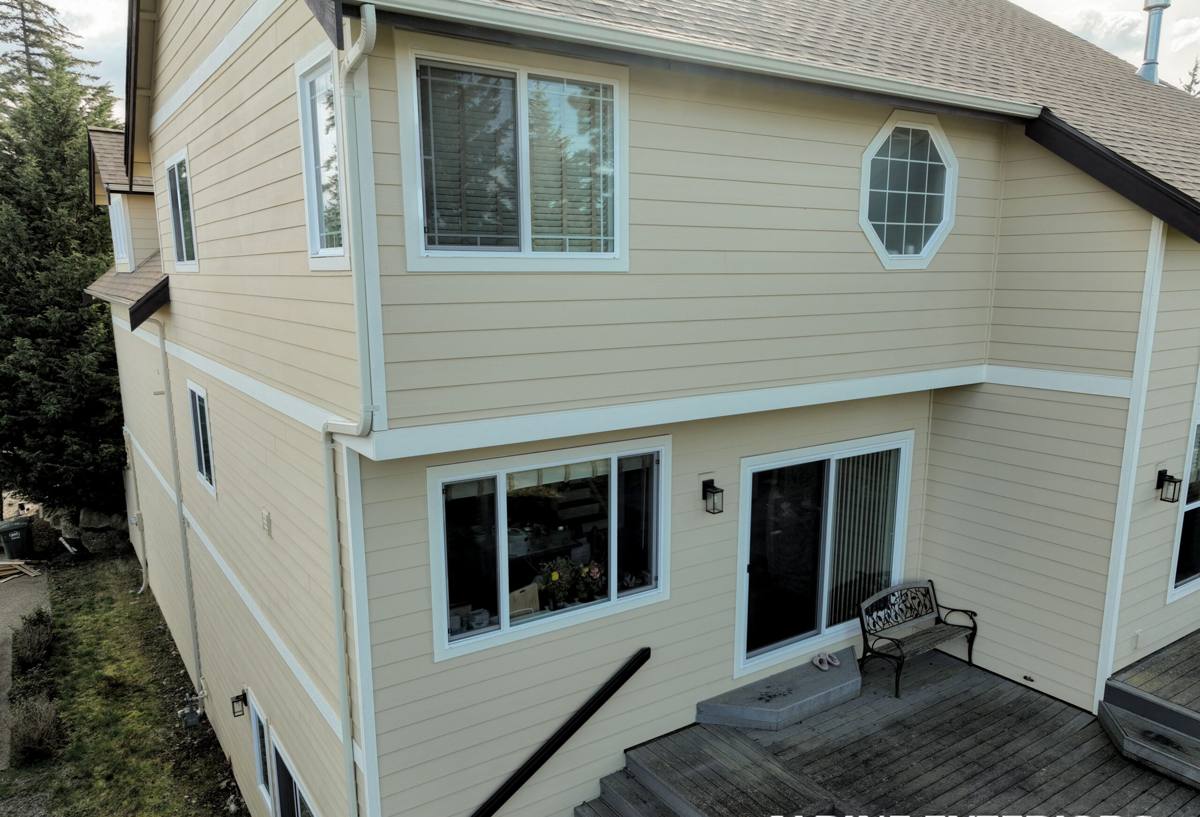
Signs a Harbor Oaks Home Needs Replacement, Not Repair
Not every siding problem calls for a full tear-off. But in a coastal, high-UV, high-wind environment, certain signs mean patching is a temporary fix at best:
- Soft or spongy spots when you press on the siding, especially near the bottom courses and around windows
- Visible cupping, warping, or buckling panels, common on older wood or lower-grade composite siding
- Paint that won't hold — repeated peeling or chalking within a couple of years of repainting
- Cracked or missing caulk joints that keep reopening no matter how often they're redone
- Visible gaps at panel seams, corners, or trim after a windstorm
- Interior signs — musty smells, staining on interior walls near exterior corners, or soft drywall — that point to moisture getting behind the cladding
When several of these show up at once, it usually means the water-resistive barrier and flashing behind the siding have already been compromised, not just the visible surface. That's a full replacement, done correctly from the sheathing out, not a caulk-and-paint job.
Why We Install Only James Hardie Fiber Cement
We install James Hardie fiber cement siding exclusively. We don't install vinyl, LP SmartSide, Cemplank, Allura, or primed wood species like spruce or cedar — not because those products have no place in the market, but because after years of installing and standing behind exterior work in this climate, we don't think they hold up to Clearwater's combination of sun, salt, and wind the way our customers expect a 15-, 20-, or 30-year exterior investment to hold up.
Vinyl softens, warps, and can pull loose from fasteners in sustained high heat and direct sun, and it has real limits in hurricane-force wind events. Wood-based products — including engineered wood like LP SmartSide and untreated cedar or spruce — depend heavily on paint film integrity and perfect field sealing to resist moisture; any lapse in maintenance in a humid, rainy climate shortens their life. Other fiber cement brands are reasonable products, but we've standardized on one manufacturer, one set of installation details, and one warranty structure so we can guarantee consistent results instead of mixing systems.
James Hardie fiber cement is non-combustible, dimensionally stable in heat and humidity, and available in HZ10 formulations engineered for high-moisture, hot-humid climates like ours. The factory-applied ColorPlus finish is baked on under controlled conditions, which holds color and resists the fading and chalking that raw-primed products suffer under intense Florida UV. It's also backed by a strong, transferable manufacturer warranty when installed to spec — which matters to Harbor Oaks homeowners thinking about resale.
What "installed to spec" actually means
Hardie siding's real-world performance depends almost entirely on installation quality. The product itself is engineered well; failures in the field almost always trace back to skipped steps — wrong fastener placement, missing flashing, or panels installed tight against each other with no expansion gap. That's the part of the job that separates a correct installation from one that just looks right on day one.
What a Correct Siding Replacement Involves
Tear-off and substrate inspection
Every job starts with full removal of the old siding down to the sheathing, not siding-over-siding. This is the only way to actually find and address rot, delamination, or prior water damage — especially relevant on older Harbor Oaks homes where a previous layer may be hiding years of hidden moisture intrusion.
Water-resistive barrier and flashing
A new weather-resistant barrier goes on before any siding, with correctly lapped and sealed flashing at every window, door, and penetration. In a wind-driven rain climate, this layer — not the siding itself — is the primary defense against water getting into the wall assembly. Skipping or shortcutting this step is the single most common cause of hidden rot behind siding that "looks fine" from the outside.
Fastening and clearances to manufacturer spec
Hardie panels have specific fastener spacing, embedment depth, and required gaps at seams, trim, and grade that are engineered for wind uplift resistance and moisture drainage. Nailing pattern and clearance from the ground, roofline, and adjoining surfaces all follow the manufacturer's written specifications — not job-site shortcuts.
Trim, caulking, and finish details
Corners, trim boards, and joints get sealed and finished according to Hardie's guidelines so the ColorPlus finish is protected and the assembly sheds water rather than trapping it. This is also where a rushed crew tends to cut corners that don't show up as a problem until a storm season or two later.
Our Process From Estimate to Final Walkthrough
- On-site assessment — we inspect the existing siding, trim, and any visible signs of water intrusion, and walk the whole exterior with you.
- Written estimate — a clear scope of work and price, specifying the Hardie product line, profile, and color, with no vague allowances.
- Scheduling around weather — Clearwater's rain patterns mean we plan tear-off and barrier installation for windows where the substrate won't sit exposed longer than necessary.
- Tear-off and substrate repair — removal of old material and repair of any damaged sheathing or framing found underneath.
- Barrier, flashing, and siding installation — installed to manufacturer spec, inspected at each stage rather than only at the end.
- Final walkthrough — we go over the finished job with you before calling it complete.
Comparing Siding Options for a Harbor Oaks Home
| Factor | Vinyl | Engineered Wood / Cedar | James Hardie Fiber Cement |
|---|---|---|---|
| Coastal wind performance | Limited; can crack or blow off in high wind | Adequate if fastened correctly; sensitive to warping | Engineered for high wind zones when installed to spec |
| UV / fade resistance | Can fade and become brittle over time | Depends entirely on paint maintenance | Factory ColorPlus finish resists fading |
| Moisture / rot risk | Low rot risk, but water can trail behind panels | Higher — wood-based core is moisture-sensitive | Non-combustible, dimensionally stable in humidity |
| Maintenance | Low, but limited repair options once damaged | Regular repainting and caulk upkeep required | Low; repaint cycle much longer with ColorPlus |
| Typical lifespan (installed correctly) | 15–25 years | 10–20 years | 30+ years |
Cost Factors Homeowners Should Understand
Every Harbor Oaks home is a little different, so exact pricing depends on a site visit, but the main cost drivers are consistent across jobs:
- Home size and wall complexity — square footage, number of stories, and how many corners, gables, and trim details the crew has to work around
- Substrate condition — hidden rot or sheathing damage found during tear-off adds repair scope that can't always be quoted sight-unseen
- Product line and profile — lap width, texture, and whether trim and soffit work are included alongside the field siding
- Color and finish — factory ColorPlus finishes versus field-painted options
- Access and site conditions — mature landscaping, fencing, or tight lot lines common in older neighborhoods can affect labor time
Be wary of any quote that's dramatically lower than others for the same scope — it's almost always a sign of a thinner product, skipped flashing detail, or an allowance for substrate repairs that will surface as a change order mid-job.
Why Hiring a Crew That Already Works in Harbor Oaks Matters
Siding installation quality is only partly about the product — the rest is judgment calls made in the field: how to flash an odd window detail on an older home, how to sequence work around Pinellas County's rain patterns, and how to handle the substrate surprises that come with houses that have already been through a few decades of Gulf Coast weather. A crew that regularly works this area has already seen the common conditions in Harbor Oaks homes and doesn't have to learn on your project.
Local presence also matters after the job is done. Warranty follow-up, a caulking touch-up, or a question a year or two down the road is a much simpler conversation with a contractor who's still working in your neighborhood than with an out-of-area crew that's moved on to the next county.
Questions worth asking before you hire
- Do you install James Hardie exclusively, or multiple siding brands?
- Will you remove all existing siding down to the sheathing, and what happens if you find rot?
- What water-resistive barrier and flashing details do you use at windows and penetrations?
- Can I see the manufacturer's fastening and clearance spec you're installing to?
- Is your crew factory-trained or certified on Hardie installation?
- What does the workmanship warranty cover, separate from the manufacturer's product warranty?
If your Harbor Oaks home has siding that's cupping, cracking, holding paint poorly, or showing signs of moisture behind it, it's worth getting a straight answer on what's actually going on before you spend on another round of patching. We offer free, no-pressure estimates — use the form below to schedule a look at your home.