 Clearwater Siding
 Why Decking on Island Estates Takes a Different Approach
Island Estates sits right on the water, connected to the rest of Clearwater by a causeway, with canal-front and open-water lots that put a deck within a few hundred feet of salt water on most homes. That changes the math on decking. A deck built the way you'd build one ten miles inland, away from the coast, will show its age here in a fraction of the time — cupping boards, corroding hardware, and a substructure that rots from the inside before the surface ever looks bad. We treat every Island Estates deck as a waterfront build first and a decking project second.
That's not a sales pitch, it's just what the environment demands. Between the salt air rolling off the intracoastal, the wind off open water, and Pinellas County's flood and wind-load requirements for homes this close to the coast, a deck here needs to be engineered and installed with those specific stresses in mind, not just assembled from a box.
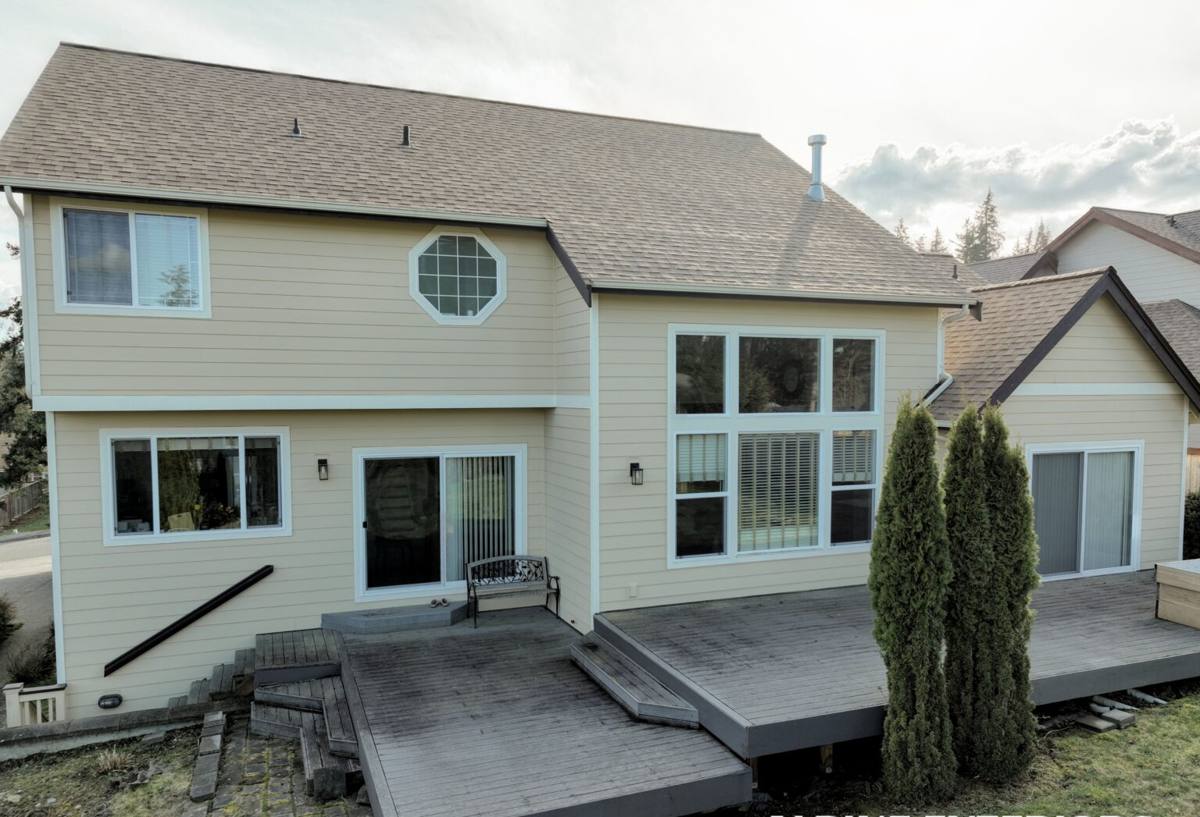
What Clearwater's Waterfront Climate Does to a Deck
Every deck in Clearwater deals with intense year-round UV, wind-driven rain, and hurricane-force wind risk. Island Estates gets an extra layer on top of that: constant salt air off the water, which accelerates corrosion on anything metal and speeds up the breakdown of lower-grade decking materials. Add higher humidity from being surrounded by water and you get a substructure that stays damp longer after every rain and storm.
The four things working against your deck
- UV exposure — fades and embrittles low-quality composite boards and breaks down wood fibers on the surface layer
- Salt air — corrodes standard fasteners, brackets, and screws faster than in non-coastal parts of Pinellas County
- Wind-driven rain — pushes moisture into joints, ledger connections, and end-grain cuts that aren't properly sealed
- Storm wind loads — stresses ledger attachment, post connections, and railing anchoring during tropical systems
None of this means composite decking is a bad choice for Island Estates — the opposite, actually. It means the materials and the installation details both have to be chosen with this specific environment in mind, not a generic spec sheet.
What a Correctly Built Composite Deck Includes
The composite boards get the attention because they're what you see and walk on, but most deck failures we get called out to inspect start below the surface. On a waterfront lot, we pay as much attention to what's hidden as to what's visible.
Substructure and framing
Pressure-treated framing rated for ground contact and coastal exposure, with joist tape or a comparable moisture barrier on top of every joist. This one step keeps rainwater from sitting directly against the wood under the decking, which is where rot starts on nearly every failed deck we've replaced.
Fasteners and hardware
Standard galvanized hardware corrodes noticeably faster this close to the water. We use stainless steel or coated fasteners rated for coastal and marine-adjacent use throughout — joist hangers, structural screws, and hidden fastener clips included. It costs more upfront and it's worth it on every Island Estates job.
Ledger attachment and flashing
Where the deck ties into the house, proper flashing keeps water from working its way behind the ledger board and into the home's structure. This connection also carries a large share of the deck's structural load, so it has to be both watertight and mechanically sound — not just caulked and bolted.
Board selection and layout
Board spacing accounts for thermal expansion in Florida heat, and layout is planned to minimize end cuts, which are the most vulnerable point on any composite board unless properly capped or sealed.
Composite Decking Options Compared
Not all composite decking performs the same way in a salt-air, high-UV environment. Here's how the main categories generally compare for a home like yours on Island Estates.
| Type | Moisture Resistance | UV/Fade Resistance | Maintenance | Best Fit |
|---|---|---|---|---|
| Capped composite | High — outer shell resists moisture absorption | Strong, color-stable over time | Low — periodic washing | Most Island Estates homes, especially near canals |
| Uncapped/non-capped composite | Moderate — core can absorb moisture at cuts and edges | Moderate, more prone to fading | Moderate | Budget-conscious, less water-exposed lots |
| PVC/cellular decking | Very high — no wood fiber content | Strong | Low | Direct waterfront, high-splash areas |
| Pressure-treated wood | Low without diligent upkeep | Fades and grays quickly in Florida sun | High — annual sealing recommended | Budget builds where upkeep is expected |
We'll walk you through the real trade-offs for your specific lot — how close you are to open water, how much direct sun the deck gets, and what upkeep you're realistically willing to do — rather than pushing one product line.
What Affects Your Cost
Composite decking costs vary quite a bit based on a handful of factors specific to your property, not just square footage. Broad ranges only — we'll give you an exact number after seeing the site.
| Factor | Why It Matters Here |
|---|---|
| Deck size and shape | Multi-level decks and curved layouts require more framing and cutting |
| Height off grade | Waterfront lots often need taller substructures, railings, and stairs |
| Board grade | Capped composite and PVC cost more upfront than uncapped composite or wood |
| Substructure condition | Existing framing on older homes may need partial or full replacement |
| Railing and hardware | Coastal-rated fasteners and railing systems cost more than standard-grade parts |
| Permitting requirements | Waterfront and flood-zone lots can require engineering review before permits are pulled |
Our Process From Estimate to Finished Deck
1. On-site assessment
We look at your existing structure (if there is one), grade, drainage, sun exposure, and distance from the water before recommending anything.
2. Honest material recommendation
We'll tell you which composite or PVC options actually make sense for your lot, and why, including what each one will and won't do for you long-term.
3. Permitting
We handle the permit application through Pinellas County and the City of Clearwater, including any engineering documentation your lot requires.
4. Demo and structural work
Removal of any failing decking or framing, followed by coastal-rated substructure work — this is the part of the job that determines how long everything above it lasts.
5. Decking, railing, and finish work
Board installation, railing, stairs, and any trim or lighting, finished with a final walk-through so you know exactly what maintenance, if any, your specific decking needs going forward.
Permitting and Code Considerations Near the Water
Homes on Island Estates often fall within flood zone overlays and coastal wind-load requirements that inland Clearwater properties don't deal with. That can mean elevation considerations, specific attachment and anchoring requirements for the ledger and posts, and in some cases an engineer's letter before the county will issue a permit. Skipping or shortcutting this process is one of the more common reasons we see decks fail an inspection or get flagged during a home sale. We pull the proper permits and handle the documentation as a standard part of the job, not an add-on.
Maintaining a Composite Deck in Salt Air
One of the real advantages of composite decking over wood is how little upkeep it needs — but "low maintenance" doesn't mean "no maintenance," especially this close to the water.
- Rinse the deck periodically to clear salt residue and airborne debris before it builds up in the board grain
- Clean up leaves, pollen, and organic debris promptly — trapped moisture under debris is where mold and mildew start
- Inspect railing posts and stair connections after any major storm for looseness or corrosion
- Keep gutters and downspouts near the deck clear so runoff doesn't pool against framing or fascia
- Check fastener heads and hidden clips annually — coastal-rated hardware lasts, but it's still worth a visual check
Why an Island Estates-Familiar Crew Matters
A crew that already works this neighborhood knows the practical realities before they show up — the flood zone and permitting patterns the county applies to waterfront lots, how much more the salt air demands from hardware and board selection, and what wind exposure means for railing and post anchoring on an open-water lot versus a canal-front one. That's the difference between a deck that's built to spec on paper and one that's actually built for where it sits.
If you're weighing a new deck or replacing one that's showing its age, we're happy to come take a look and give you a straight answer — no pressure, no upsell, just what your home actually needs. Use the form below to request a free estimate.