 Clearwater Siding
 Belleair Bluffs is a small, tightly packed community perched above the Intracoastal Waterway, wedged between Clearwater and Largo in Pinellas County. Homes here sit close to open water, close to the barrier islands, and squarely in the path of everything the Gulf Coast throws at a house over the course of a year — intense UV, wind-driven rain, hurricane-force gusts, and the slow, constant corrosion of salt-laden air. Siding in this pocket of the county works harder than siding almost anywhere else in the state, and it shows on homes where the wrong product or a rushed installation was used. We install James Hardie fiber cement siding exclusively, and this page covers what that means specifically for a Belleair Bluffs home.
Why This Climate Is Hard on Siding
Every coastal Pinellas County neighborhood deals with heat and humidity, but Belleair Bluffs' proximity to the Intracoastal adds a layer most inland Florida homes don't face: near-constant exposure to salt-carrying air. Combine that with the region's summer storm pattern and you get a set of conditions that will find every weakness in a siding system within a few years.
Salt Air and Corrosion
Airborne salt accelerates the breakdown of metal fasteners, trim, and any siding material that relies on adhesives or coatings that weren't engineered for a marine-influenced environment. It also speeds up chalking and fading on lower-grade paint finishes, which is one of the reasons factory-applied, baked-on finishes matter so much closer to the water.
Wind-Driven Rain
Summer storms and the occasional hurricane don't just bring heavy rain — they push it sideways, forcing water into any gap, seam, or fastener hole that wasn't sealed and flashed correctly. Siding that looks fine from the street can still be letting water behind it if the installation cut corners on flashing.
UV and Heat Cycling
Florida sun is relentless, and dark-colored siding on a west- or south-facing wall can reach surface temperatures well above the surrounding air. Materials that expand and contract with heat, or that aren't UV-stabilized, will crack, warp, or fade faster here than they would in a milder climate.
Wind Load
Being close to the water means Belleair Bluffs sees higher sustained wind speeds during tropical systems than inland parts of the county. Siding, fasteners, and the underlying wall assembly all need to be rated and installed to hold up under that load — not just look good on a calm day.
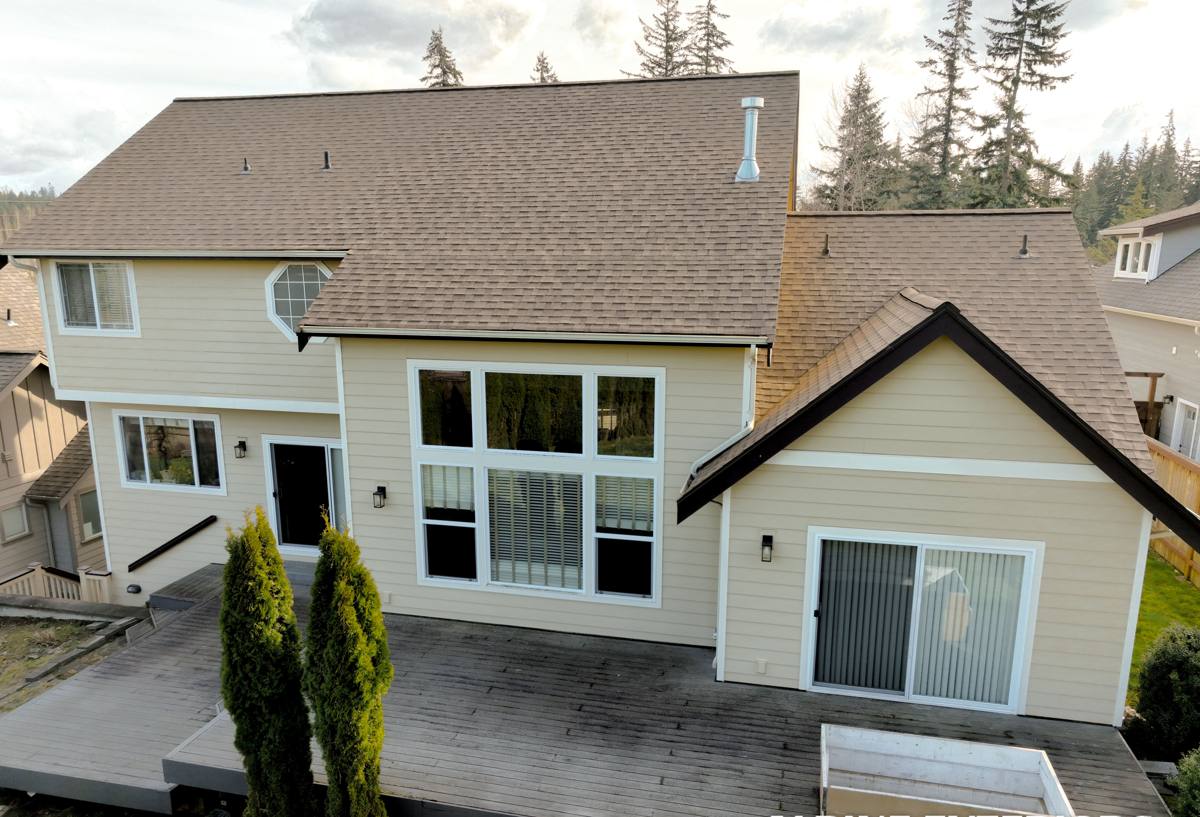
Why We Only Install James Hardie
James Hardie fiber cement is engineered specifically for these conditions. It's non-combustible, dimensionally stable, and resistant to moisture-driven rot and insect damage in a way that wood-based and many engineered-wood products simply aren't. Hardie's HZ5 formulation, which is what we use for this region, is manufactured to hold up in the highest-humidity, highest-exposure climate zones in the country — Florida's Gulf Coast is exactly what it was built for.
Just as important is the finish. Hardie's ColorPlus factory-applied finish is baked on under controlled conditions and backed by its own finish warranty, which holds up better against salt air and UV than field-applied paint. That's a meaningful difference for a home sitting this close to open water, where a lesser finish will start chalking and fading well before it should.
We don't install vinyl, LP SmartSide, Cemplank, Allura, or primed wood siding, and it's worth being direct about why. Vinyl can warp and become brittle under sustained UV and heat, and it offers little in the way of impact resistance during storm season. Engineered wood products depend heavily on maintaining an intact factory coating — any breach lets moisture in, and moisture is the one thing this climate provides in abundance. These aren't bad products in every application, but for a coastal Pinellas County home, we don't think they're the right long-term bet, and we'd rather stand behind one product system we trust completely than offer several we have reservations about.
What a Correct Installation Actually Involves
The material is only half the equation. Most siding failures we get called out to inspect — regardless of brand — trace back to installation shortcuts, not the product itself. A correct Hardie installation in a wind- and moisture-exposed area like Belleair Bluffs includes:
- Proper weather-resistant barrier behind the siding, lapped and sealed to shed water downward
- Flashing at every window, door, and roofline transition — the points where water intrusion actually starts
- Correct fastener type, spacing, and penetration depth per Hardie's published installation specifications
- Proper clearance between the bottom of the siding and grade, roofing, decks, and patios to avoid wicking moisture
- Caulking and sealing only where Hardie's guidelines call for it — over-caulking traps moisture just as badly as under-caulking
- Correct panel and joint layout to accommodate thermal movement without buckling
Skipping any one of these doesn't usually cause a visible problem in year one. It shows up in year five or six as staining, soft spots, or fastener corrosion — long after the crew that installed it is gone.
Our Process for Belleair Bluffs Homes
Because we work this part of Pinellas County regularly, we already know the wind exposure, humidity, and salt load a Belleair Bluffs home is dealing with before we walk the site. That means a more accurate inspection and a proposal built around what actually needs to happen, not a generic bid.
Inspection and Assessment
We walk the exterior, check for existing moisture damage or soft sheathing, look at flashing details around openings, and evaluate wind and sun exposure on each elevation. This tells us whether we're dealing with a straightforward re-side or whether there's underlying substrate damage that needs to be addressed first.
Product and Profile Selection
We'll walk through Hardie's siding profiles and colors and talk through which fits the home's architecture and which elevations need extra attention for sun and wind exposure.
Installation
Our crews follow Hardie's installation specifications to the letter — this is what preserves the manufacturer's warranty and what actually keeps water out. We don't deviate from spec to save time.
Final Walkthrough
Before we consider the job done, we walk the exterior with you, check every elevation, and go over warranty documentation and any maintenance recommendations specific to your home's exposure.
Hardie Product Lines for This Area
| Product | Best Use | Why It Fits Belleair Bluffs |
|---|---|---|
| HardiePlank Lap Siding | Most common full-home application | Traditional look, HZ5 formulation holds up to humidity and salt exposure |
| HardieShingle | Accent areas, gables, coastal-style architecture | Popular for the shingle-style look common in older Gulf Coast neighborhoods |
| HardiePanel | Modern/vertical siding sections | Clean lines for contemporary updates, same climate-rated substrate |
| HardieTrim | Fascia, corner boards, window trim | Matches siding durability so trim doesn't fail before the field siding does |
What Drives Cost
Every home is different, and we won't quote a number without seeing the house, but the main factors that move the price on a Belleair Bluffs siding project are consistent from job to job.
| Factor | Why It Matters |
|---|---|
| Home size and elevation count | More square footage and more architectural detail mean more labor and material |
| Existing substrate condition | Rotted sheathing or water damage found during tear-off adds repair scope |
| Siding profile and color | Shingle-style and premium ColorPlus colors run higher than standard lap profiles |
| Trim and detail work | Corner boards, window trim, and fascia replacement add to the scope |
| Access and site conditions | Tight lots, fencing, and landscaping near the home affect labor time |
Most full siding replacements on homes in this area land somewhere in the range of a typical mid-size exterior renovation — generally low-to-mid five figures for a full re-side, with the exact number depending entirely on the factors above. We'll always give you a firm, itemized number before any work starts.
Signs Your Siding Needs a Closer Look
If your home has original vinyl, wood, or an aging fiber cement product, it's worth checking for these before a small issue becomes a structural one:
- Soft or spongy spots when you press on the siding, especially near the bottom courses
- Visible warping, buckling, or panels that have pulled away from the wall
- Persistent staining or discoloration that doesn't wash off, especially around seams
- Cracking or chalking finish, particularly on south- and west-facing walls
- Rust streaks around fasteners or trim
- Rising energy bills that could point to a compromised weather barrier
- Visible gaps at window and door flashing
Any one of these on its own isn't necessarily an emergency, but a combination of two or three is usually a sign the siding system is past the point where patching makes sense.
Why a Crew That Already Works This Neighborhood Matters
Belleair Bluffs is a small city, and its housing stock, wind exposure, and proximity to the water aren't quite the same as inland Clearwater or Largo. A crew that already understands this stretch of Pinellas County's coastline — the salt exposure, the wind patterns, the way storms move across the Intracoastal — is going to make fewer assumptions and catch more of the details that matter on a re-side here. We'd rather show up already knowing what your street and your exposure typically require than learn it on your roofline for the first time.
Warranty and Long-Term Maintenance
James Hardie backs its siding with a strong transferable limited warranty, and ColorPlus finishes carry their own separate finish warranty covering fading and chipping. That warranty is only as good as the installation behind it, though — improper fastening or flashing can void coverage even on genuine Hardie material, which is another reason installation quality matters as much as the product choice itself.
Ongoing maintenance on a correctly installed Hardie system is minimal compared to wood or vinyl: periodic rinsing to clear salt residue, an annual visual check of caulking and trim, and prompt attention to any landscaping or sprinklers throwing water directly at the siding. That's a meaningfully lighter maintenance load than most alternative products require in this environment.
If you're weighing a siding replacement or repair for a home in Belleair Bluffs, we're happy to walk the property, look at your specific exposure, and put together a straightforward, no-pressure estimate — just fill out the form below.