 Clearwater Siding
 Siding Built for the Way Countryside Actually Gets Weathered
Countryside sits inland enough from the Gulf to feel a little sheltered, but homeowners here still deal with the same punishing combination that defines exterior work across Pinellas County: long stretches of intense UV, sudden wind-driven rain, salt-laden air that travels further inland than most people expect, and the real threat of hurricane-force wind gusts during storm season. Siding that isn't engineered for that combination doesn't fail all at once — it fails gradually, through fading, swelling, cupping, and moisture intrusion that homeowners often don't notice until a repaint won't fix it anymore.
We install James Hardie fiber cement siding exclusively, and Countryside is one of the neighborhoods where we've put in enough jobs to know exactly how the local building stock, sun exposure, and storm patterns interact with the product. This page focuses specifically on what a correct James Hardie installation looks like for homes in this part of Clearwater — not a generic overview of the product line.
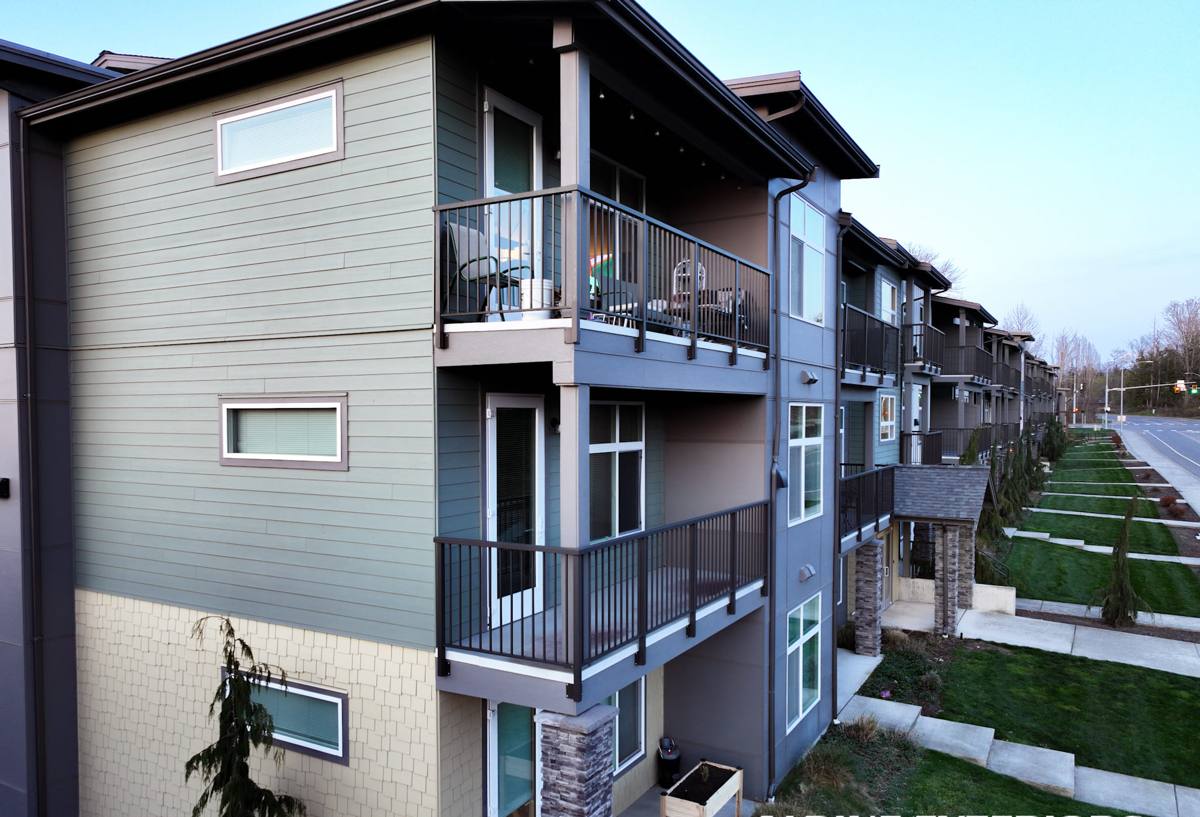
What Countryside Homes Need From Their Siding
UV and Heat Cycling
Florida sun is relentless on exterior materials almost year-round. Traditional wood and engineered wood siding rely on surface paint films that absorb UV energy directly; over years of Florida sun exposure, that paint film chalks, fades unevenly, and eventually cracks, letting moisture behind the material. James Hardie's ColorPlus factory-applied finish is baked on and cured under controlled conditions, so it resists fading and holds color consistency far longer than a field-applied paint job on wood-based products.
Wind-Driven Rain
Even when a storm doesn't produce sustained hurricane winds, Clearwater's summer thunderstorm pattern regularly pushes rain sideways into wall assemblies. Siding systems that aren't detailed correctly at laps, joints, and penetrations let that water behind the cladding, where it can sit against sheathing and framing for days in humid conditions. This is as much an installation issue as a product issue — which is why the flashing and lap details matter as much as the material itself.
Salt Air
Countryside isn't beachfront, but salt aerosol carries well inland across the Pinellas peninsula, especially with onshore wind patterns. Salt exposure accelerates corrosion on fasteners and trim components and degrades some coatings faster than inland climates would. Non-combustible fiber cement doesn't corrode the way metal or absorb moisture the way untreated wood products can, which matters over a multi-decade ownership period.
Wind Load
Pinellas County's wind-borne debris region requirements mean siding attachment isn't just about the material — it's about fastening schedule, substrate condition, and whether the installation matches the product's engineered wind ratings. James Hardie's HZ10 product line is formulated specifically for high-humidity, high-wind Gulf Coast and Southeast climates, which is the line we spec for Countryside jobs.
Why We Don't Install Alternatives Here
Homeowners in Countryside sometimes ask us to quote LP SmartSide, vinyl, or a cheaper fiber cement alternative. We don't install any of those, and it's worth explaining why in plain terms rather than just saying no.
- Vinyl siding softens and can warp at high surface temperatures, which is a real consideration on west and south-facing walls that take direct Florida sun most of the day. It also relies on lap-over-lap installation that can loosen under sustained wind, and it isn't a fire-resistant material.
- LP SmartSide (engineered wood) performs well in drier climates, but it's an engineered wood product with a paint film as its only moisture barrier. In a humid, storm-exposed climate like ours, any breach in that film — from a nail pop, a hairline crack, or hail — gives moisture a path into the wood substrate, and swelling at cut edges and seams is a known long-term maintenance item.
- Lower-tier fiber cement products (Cemplank, generic imports) use the same basic cement-fiber chemistry as James Hardie but without the same climate-specific engineering, factory finish warranty, or manufacturer track record backing the installation.
We standardized on James Hardie because it's non-combustible, engineered specifically for humid coastal climates through the HZ10 product line, backed by a factory finish warranty on ColorPlus products, and has a long track record in Gulf Coast markets exactly like ours. That's a professional judgment call we're comfortable explaining to any homeowner who asks.
What a Correct Installation Actually Involves
The material is only part of the equation — most siding failures we get called out to inspect trace back to installation shortcuts, not product defects. A correct James Hardie job on a Countryside home includes:
- Substrate inspection. Checking sheathing for existing moisture damage or rot before anything new goes up — covering a bad substrate with new siding just hides the problem.
- Weather-resistive barrier installation, installed and lapped correctly to shed water down and out, not trap it behind the cladding.
- Proper flashing at every window, door, penetration, and horizontal trim transition — this is where the majority of water intrusion actually starts.
- Correct fastening schedule matched to the wind-borne debris region requirements for this part of Pinellas County, using corrosion-resistant fasteners appropriate for coastal-influenced air.
- Manufacturer-specified gaps and clearances at the foundation, roofline, and trim boards, so the material can handle normal expansion and won't wick moisture from grade or roof runoff.
- HZ10 product selection, the James Hardie line engineered specifically for high-humidity, hurricane-prone climates like ours, rather than a standard-climate formulation.
Cost Factors for a Countryside Siding Job
Every home is different, but the line items that actually move the price on a James Hardie project here are consistent. We give exact numbers only after an on-site look — anyone quoting a firm price sight unseen is guessing.
| Factor | Why It Matters Locally |
|---|---|
| Existing substrate condition | Homes with prior moisture intrusion may need sheathing repair before new siding goes on — common on older Countryside homes with aging original siding |
| Siding profile and plank size | Lap siding, board-and-batten, and shingle-style Hardie profiles each price differently in labor |
| Trim and accessory scope | Fascia, soffit, and trim board replacement alongside siding affects both cost and long-term water management |
| House height and access | Two-story sections and steep rooflines affect crew time and equipment needs |
| ColorPlus vs. field-painted finish | Factory-applied ColorPlus finish costs more up front but eliminates a repaint cycle for years |
| Removal and disposal of old siding | Tear-off scope depends on what's currently on the house and its condition underneath |
Our Process for Countryside Jobs
Because we've worked in this neighborhood before, our process starts with information most out-of-area contractors don't have on day one:
- On-site assessment — we walk the exterior, check current siding and trim condition, and look for signs of existing moisture intrusion before quoting anything.
- Written scope and product selection — including which HZ10 profile and ColorPlus finish fits the home, in writing, before work starts.
- Substrate repair first — any rot or damaged sheathing gets addressed before a single piece of new siding goes up.
- Correct flashing and barrier installation — the unglamorous work that determines whether the job holds up in year eight, not just year one.
- Fastening to wind-region spec — installed to the standard required for this part of Pinellas County, not a generic national minimum.
- Final walkthrough — reviewing the finished work with the homeowner before we consider the job done.
What to Check Before Hiring Anyone for This Work
- Do they install James Hardie as certified installers, or is it one of several products they'll sell you depending on margin?
- Will they put the HZ10 product line and ColorPlus finish selection in writing, or just "Hardie siding" with no specifics?
- Do they inspect and repair substrate issues before installation, or just cover what's there?
- Can they explain their flashing and fastening approach for this wind-borne debris region, specifically?
- Have they actually worked in Countryside or nearby Clearwater neighborhoods, or is this their first job in the area?
Longevity: What to Expect With Correct Installation
James Hardie fiber cement, installed to spec with HZ10 formulation and ColorPlus finish, is designed to hold up through decades of Gulf Coast sun, humidity, and storm exposure with minimal maintenance beyond routine cleaning and inspection after major storms. It won't rot, won't feed termites, and is non-combustible — all relevant considerations for a home in a hurricane-prone, humid climate. The transferable warranty backing the product also matters if you sell the home later; it's a selling point buyers increasingly ask about in this market.
None of that holds if the installation cuts corners on flashing, fastening, or substrate prep. That's the part we control, and it's where we spend the most attention on every Countryside project.
Ready to Talk About Your Home
If your Countryside home needs new siding — or you're evaluating whether your current siding is holding up the way it should — we're happy to take a look and give you a straight assessment. Request a free, no-pressure estimate using the form below, and we'll walk you through exactly what your home needs and why.