 Clearwater Siding
 Why Indian Rocks Beach Roofs Take More Punishment Than Most
Indian Rocks Beach sits on a narrow barrier island between the Gulf of Mexico and the Intracoastal Waterway, which means every home here deals with a roofing environment that's harsher than a typical inland Pinellas County property. You're getting salt-laden air moving off the Gulf almost constantly, direct UV exposure with very little tree canopy to soften it, and wind that doesn't just gust occasionally — it's a near-constant coastal presence that turns into a real structural load during named storms. A roof that would hold up fine in a shaded inland neighborhood can show fastener corrosion, coating breakdown, or seam fatigue years earlier out here.
Metal roofing has become a popular answer for exactly this kind of exposure, but "metal roofing" covers a wide range of products and installation approaches, and not all of them are suited to a barrier island. This page is about what actually matters when you're putting a metal roof on a home in Indian Rocks Beach specifically — not a generic rundown of metal roofing in general.
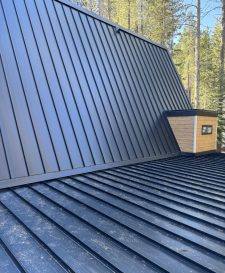
What the Local Climate Actually Does to a Roof
Wind
Pinellas County sits in a high-velocity hurricane zone, and Indian Rocks Beach's exposed, low-elevation position means wind loads on a metal roof here are a real engineering concern, not a formality. Uplift happens at the edges, ridges, and any place the panel or trim isn't mechanically locked down the way it should be. Most metal roof failures we see in wind events trace back to fastening or edge detailing that was done to save time, not to failure of the metal itself.
Salt air
Airborne salt settles on every exposed surface near the coast, and it doesn't rinse off completely even with regular rain. On a metal roof, that salt accelerates corrosion at cut edges, fastener heads, and any spot where the protective coating has been scratched or worn thin. The metal alloy, coating system, and fastener hardware you choose all matter more here than they would ten miles inland.
UV and heat
Florida sun is intense year-round, and a west- or south-facing metal roof on the island takes a steady dose of it with minimal shading. UV breaks down paint finishes and sealants over time, and repeated heating-and-cooling cycles stress panel fasteners and expansion joints. A roof designed with proper thermal movement allowance handles this; one installed without it eventually shows oil-canning, loosened fasteners, or sealant failure.
Wind-driven rain
Storms here rarely bring rain straight down — it comes in sideways, which means every seam, penetration, and flashing detail has to shed water under lateral pressure, not just gravity. This is where installation quality separates a metal roof that performs for decades from one that leaks at the first serious storm.
Comparing Metal Roofing Options for This Area
Not every metal roofing system is a good match for a coastal barrier island home. Here's how the common options stack up for Indian Rocks Beach conditions specifically:
| System | Coastal Suitability | Wind Performance | Typical Trade-Offs |
|---|---|---|---|
| Standing seam (concealed fastener) | Excellent | Very strong when properly clipped and locked | Higher upfront cost; needs experienced installers |
| Exposed-fastener metal panel | Good, with quality fasteners and gaskets | Good, but fastener seals need future maintenance | Lower cost; gaskets and fasteners will need periodic checking |
| Metal shingles / shakes | Good | Strong when interlocked correctly | More seams than standing seam; installation detail matters |
| Uncoated or thin-gauge budget panel | Poor near saltwater | Inconsistent | Corrodes faster in salt air; we don't recommend it for this location |
For most Indian Rocks Beach homes, we steer clients toward standing seam or a quality interlocking metal shingle system with a marine-grade coating, because the concealed or interlocked fasteners give the coating fewer places to be compromised by salt exposure over time.
What a Correct Metal Roof Installation Actually Involves
The metal panel itself is only part of the system. On a coastal home, the details underneath and around it are what determine whether the roof performs for its full service life.
Deck inspection and prep
Before any panel goes down, the roof deck needs to be sound — no soft spots, delaminated sheathing, or hidden moisture damage from a prior roof. On older Indian Rocks Beach homes, this step sometimes turns up deck issues from years of humidity and past leaks that need to be addressed before the new roof goes on, not covered over.
Underlayment
A high-temperature-rated synthetic or self-adhered underlayment is standard practice under metal in this climate, both for the heat metal panels can reach in direct sun and for the added layer of water protection at seams and penetrations.
Fastening and attachment
This is where wind performance is won or lost. Panel clips, fastener spacing, and fastener type all need to match the product manufacturer's specification for the wind zone the home sits in — not a generic pattern used everywhere regardless of exposure.
Edge, ridge, and penetration detailing
Drip edges, ridge caps, valleys, and every roof penetration (vents, stacks, chimneys) are the places wind-driven rain finds a way in if they're not flashed correctly. These details take more time to do right, and they're also the most common shortcut on a rushed job.
Ventilation
Proper attic and roof ventilation keeps heat from building up under the metal and helps control moisture, which matters in a humid coastal environment where trapped moisture can lead to deck problems over time.
Wind Ratings and Florida Building Code
Pinellas County enforces wind-load and product-approval requirements under the Florida Building Code, and coastal locations like Indian Rocks Beach fall under higher design wind speed requirements than inland areas of the same county. Every metal roofing product we install carries the manufacturer's product approval documentation for the applicable wind zone, and the fastening pattern is installed to match that approval — not just "close enough." When you're getting quotes, it's worth asking any contractor directly what wind rating their proposed system and installation method are actually approved for at your address.
Corrosion Protection: Choosing Metal and Hardware for Salt Air
Not all metal coatings hold up the same way this close to the Gulf. We factor in:
- Aluminum or a quality Galvalume/steel product with a marine-rated paint finish, since bare or lightly coated steel corrodes faster in salt air
- Stainless steel or coated fasteners rather than standard hardware, since fastener corrosion is one of the most common early failure points on coastal metal roofs
- Proper isolation between dissimilar metals, since direct contact between certain metals accelerates corrosion through galvanic reaction
- Coating warranties that specifically address coastal or "severe marine environment" exposure, since standard inland warranties often carry reduced coverage within a certain distance of saltwater
Our Process for Indian Rocks Beach Metal Roofing Projects
We approach every metal roof on the island the same structured way:
- On-site assessment — we inspect the existing roof, deck condition, ventilation, and any problem areas specific to your home before recommending a system.
- System selection — we walk you through panel type, gauge, coating, and color options suited to your home's exposure, not a one-size-fits-all package.
- Tear-off or overlay decision — in most cases full tear-off is the right call on a coastal home so we can properly inspect and prep the deck; we'll explain why if an overlay isn't a good option for your roof.
- Installation — deck prep, underlayment, panel installation, and all flashing and penetration detail work, done to manufacturer and code specification for our wind zone.
- Final inspection and walkthrough — we review the completed roof with you, including care and maintenance expectations specific to a saltwater-adjacent home.
What a Metal Roof Costs to Install Here
Metal roofing costs more upfront than asphalt shingles, and coastal-grade materials and detailing add to that compared to an inland install. Exact numbers depend on your roof's size, pitch, and complexity, but the main cost drivers are:
| Factor | Why It Affects Cost |
|---|---|
| Panel system type | Standing seam typically costs more than exposed-fastener panel due to material and labor |
| Roof complexity | More valleys, penetrations, and roof planes mean more flashing and labor time |
| Deck condition | Any deck repair or replacement found during tear-off adds to the scope |
| Coating and gauge | Heavier gauge metal and marine-grade coatings cost more but last longer in salt air |
| Ventilation upgrades | Adding or correcting attic ventilation during the reroof adds a modest cost but protects the whole system |
We'll always give you a written, itemized estimate so you can see exactly what you're paying for, rather than a single lump-sum number.
Maintaining a Metal Roof on a Barrier Island Home
Metal roofing is low-maintenance compared to most other roofing materials, but "low-maintenance" doesn't mean "no maintenance" in a coastal environment. A short annual checklist goes a long way:
- Rinse accumulated salt and debris off the roof periodically, especially after long dry stretches
- Have fasteners and gaskets on exposed-fastener systems checked for looseness or wear
- Keep gutters and valleys clear so water doesn't pool against seams or flashing
- Inspect for scratched or worn coating after any tree limb contact or storm debris impact, since exposed metal corrodes faster than coated metal
- Check sealant at penetrations periodically, since UV exposure breaks sealant down faster here than inland
Why Hiring a Crew That Already Works Indian Rocks Beach Matters
A metal roof installed to inland specifications, by a crew unfamiliar with barrier island exposure, is more likely to underperform here — not because the product is bad, but because the fastening pattern, flashing detail, or hardware selection wasn't matched to what this specific environment demands. A crew that regularly works Indian Rocks Beach and the surrounding Clearwater coastline already knows the wind zone requirements for the area, has a track record with the local permitting process, and has seen firsthand which details hold up against years of salt air and which ones fail early. That local experience shows up in the small decisions — fastener choice, edge detail, sealant selection — that a generic quote sheet won't capture.
If you're weighing a metal roof for your Indian Rocks Beach home, we're happy to walk the roof with you, explain what we see, and put together a straightforward, no-pressure estimate. There's no obligation — just an honest look at what your roof actually needs. Use the form below to get started.