 Clearwater Siding
 Why Palm Harbor Roofs Wear Out Faster Than the Manufacturer's Warranty Suggests
Every asphalt shingle sold in Florida comes with a warranty number printed on the wrapper, and almost none of those numbers were calculated with the Gulf Coast in mind. A roof in Palm Harbor sits under some of the most intense year-round UV exposure in the continental United States, gets soaked by wind-driven rain during summer storms and the occasional hurricane, and breathes salt-laden air pulled in off the water almost every day. None of that is dramatic on its own. It's the combination, repeated for fifteen or twenty years, that shortens the practical life of a roof compared to the same product installed somewhere with milder weather.
That's the context we bring to every roof replacement estimate in this part of Pinellas County. A correct roof for a Palm Harbor home isn't just "shingles installed to code." It's a system chosen and installed with this specific climate in mind — because the roof that performs fine in a mild inland market can fail early here.
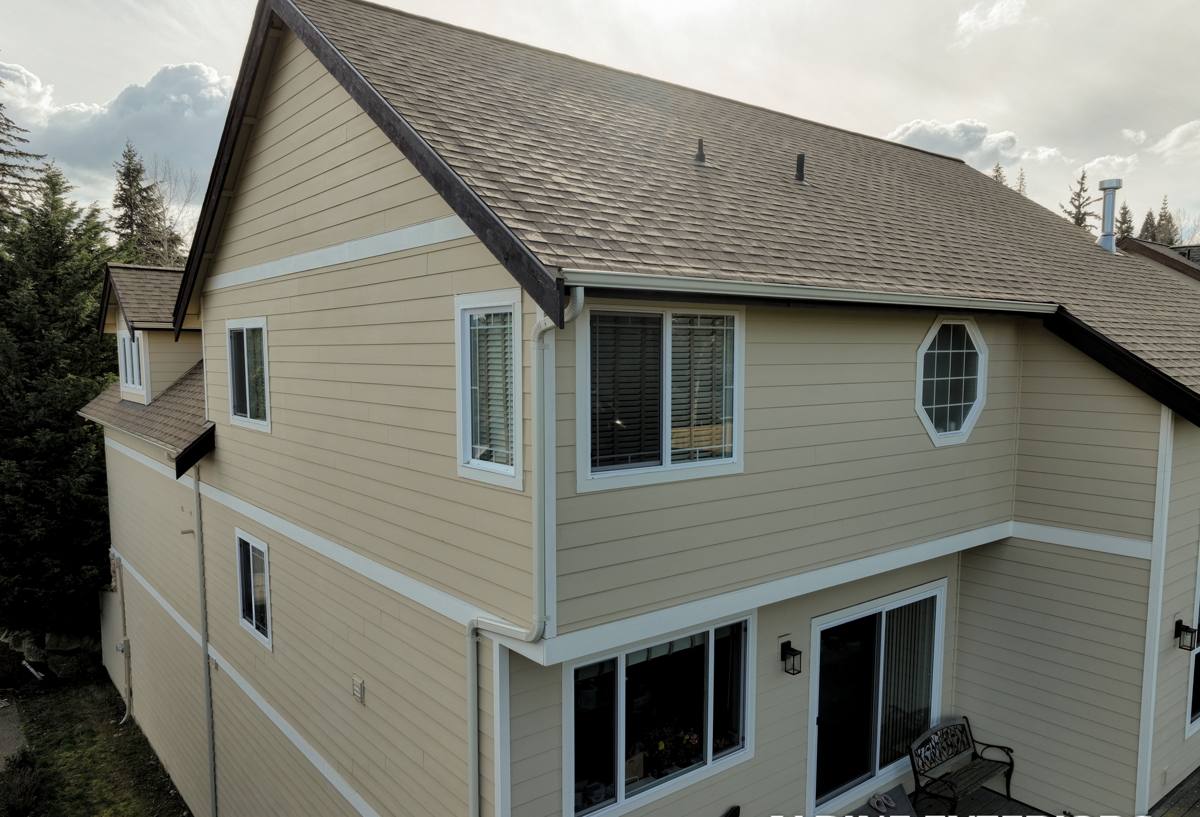
Signs a Palm Harbor Roof Needs Replacement, Not Another Repair
Homeowners often call us after a leak, but the leak is usually the last symptom, not the first one. By the time water is visible inside the house, the underlying roofing system has typically been failing for a while. Here's what tends to separate a roof that still has repair life left from one that's due for full replacement:
- Granule loss heavy enough that you can see bare, shiny patches on multiple shingles, not just one or two
- Shingles that are cupping, curling at the edges, or cracking when you look closely from the ground
- Repeated leaks in different spots after previous patch repairs — a sign the whole underlayment is compromised, not just one section
- Visible sagging anywhere on the roof plane, which can point to decking damage underneath
- A roof already at or past 15–20 years old, which is the realistic service life range for most asphalt roofs in this coastal climate, well short of the 25–30 year marketing figures
- Rusting, loose, or missing flashing around chimneys, vents, and skylights
If a roof is showing two or three of these at once, patching is usually a short-term fix that costs money now and gets replaced by a full tear-off later anyway. We'll always tell you honestly which category your roof falls into.
What a Correct Roof Replacement Actually Involves
It's Not Just the Shingles
The shingles (or metal panels, or tile) are the part everyone sees, but they're the last layer of a system with several components that all have to work together. A roof replacement done right in this climate includes:
- Full tear-off of the old roofing material down to the deck — never installing new shingles over old ones
- Inspection and repair or replacement of any damaged or rotted roof decking before new material goes down
- A high-quality underlayment, ideally a synthetic or self-adhering membrane in vulnerable areas, since Florida's wind-driven rain finds gaps that drier climates never test
- New flashing at every roof penetration — chimneys, vents, skylights, and wall intersections — rather than reusing old, corroded flashing
- Proper attic ventilation, which affects both shingle life and cooling costs in a climate where attic temperatures climb fast
- Fastening and installation methods that meet Florida's wind-uplift requirements, not just the manufacturer's minimum nail pattern
Skipping any one of these steps is how a roof that looks fine on installation day ends up leaking within a few years.
Choosing the Right Roofing Material for a Palm Harbor Home
There's no single "best" roofing material — the right choice depends on your home's structure, your budget, your HOA (if you have one), and how long you plan to stay in the house. Here's how the common options actually compare in this specific climate:
| Material | Wind Performance | Typical Lifespan Here | Maintenance Reality |
|---|---|---|---|
| Architectural asphalt shingle | Good when properly fastened and rated for high wind | 15–20 years | Periodic inspection; most common and most affordable to repair |
| Standing seam metal | Excellent; performs well in sustained high wind | 30–40+ years | Low; occasional fastener and sealant checks |
| Concrete or clay tile | Very good when installed with proper fastening and underlayment | 30–50 years for the tile itself | Underlayment beneath the tile still ages and typically needs replacement mid-life |
| 3-tab asphalt shingle | Lower wind rating than architectural shingles | 10–15 years | Least expensive upfront, shortest service life in coastal exposure |
We don't push homeowners toward the most expensive option by default. A well-installed architectural shingle roof is a perfectly sound choice for most Palm Harbor homes — the priority is matching the material to your roof's slope, structure, and your own plans for the property, then installing it correctly.
Permits, Wind Mitigation, and Insurance in Pinellas County
A roof replacement in Palm Harbor requires a permit through Pinellas County, and the finished work has to meet Florida's current wind-uplift and fastening code, which is stricter than what many older roofs in the area were originally built to. We handle the permitting and schedule the required inspections as part of the job — it's not an extra step you have to chase down yourself.
There's also a financial upside worth knowing about. After a qualifying roof replacement, homeowners in Florida can request a wind mitigation inspection, which documents features like the roof's fastening method, roof shape, and roof-to-wall connections. Insurance carriers use that report to calculate windstorm premium discounts, and a new roof built to current code will generally qualify for better terms than an aging one. We can point you toward what that inspection typically documents, though the inspection itself and the insurance discount are between you and your carrier.
Our Roof Replacement Process
From First Look to Final Walkthrough
We keep the process straightforward because a roof replacement is disruptive enough without added confusion:
- On-site inspection and honest assessment — including whether replacement is actually needed or a repair will genuinely hold
- A clear, written estimate covering material options, scope of work, and timeline
- Permit pulled through Pinellas County before any work begins
- Material delivery scheduled around weather, since we don't tear off a roof with rain in the forecast
- Full tear-off, deck inspection and repair, underlayment, flashing, and installation of the new roofing system
- Daily job-site cleanup, including magnetic sweeps for nails and debris
- Final walkthrough and county inspection before we consider the job complete
Why a Crew That Already Works in Palm Harbor Matters
Roofing crews that mostly work outside this region tend to make the same handful of mistakes: underestimating wind-uplift fastening requirements, using underlayment that isn't rated for this level of UV and moisture exposure, or missing the salt-air corrosion issues that affect metal flashing and fasteners near the water. None of these show up as problems on installation day — they show up two or three years later.
A crew that regularly works Palm Harbor and the surrounding Clearwater area already knows the Pinellas County permitting process, already understands which underlayment and fastening specs hold up here, and has already seen how different materials age in this exact climate. That familiarity translates directly into fewer callbacks and a roof that performs the way it's supposed to for its full service life.
What to Expect During the Job
Most residential roof replacements in this area take one to three days depending on roof size and material, though tile and metal roofs can run longer. A few practical things to plan around:
- Expect noise and vibration throughout the day — this is normal during tear-off and re-decking
- Move vehicles out of the driveway and away from the house if possible, since debris falls close to the structure
- Cover or move sensitive items in the attic or top-floor closets, as vibration can dislodge dust
- Pets are usually more comfortable elsewhere for the day given the noise
- We'll walk the property line and use magnetic sweeps for stray nails before considering the job finished
Protecting Your New Roof After Installation
A new roof still benefits from basic upkeep in this climate. Gutters and downspouts should stay clear so wind-driven rain has somewhere to go. Overhanging tree limbs should be trimmed back to reduce abrasion and debris buildup. And after any major storm, a quick visual check — or a call to us — for lifted shingles, dented flashing, or debris impact is worth the few minutes it takes, since catching small damage early is what keeps a well-installed roof reaching its full lifespan despite everything the Gulf Coast throws at it.
If your roof in Palm Harbor is showing its age or you just want an honest opinion on where it stands, we're happy to take a look. Use the form below to request a free, no-pressure estimate.