 Clearwater Siding
 Why Island Estates Siding Takes a Harder Hit
Island Estates sits differently than most Clearwater neighborhoods. Homes here face open water on more sides than a typical inland lot, which means siding is dealing with a rougher combination of stressors nearly every day of the year: salt-laden air drifting off the water, wind-driven rain that gets pushed sideways into wall assemblies during storms, intense year-round UV that never really lets up even in winter, and the occasional direct hit from hurricane-force wind. Any one of those factors will age exterior siding over time. Together, they shorten the life of the wrong material and accelerate wear on the right one if it wasn't installed or maintained correctly.
That's the context we bring to every repair call in this part of Pinellas County. A crack, a soft spot, or a section of siding that's pulling away from the wall on an Island Estates home is rarely just cosmetic — it's usually a sign that moisture, salt, or sustained wind pressure found a weak point in the assembly. Repairing it properly means understanding why that weak point formed, not just patching over what's visible.
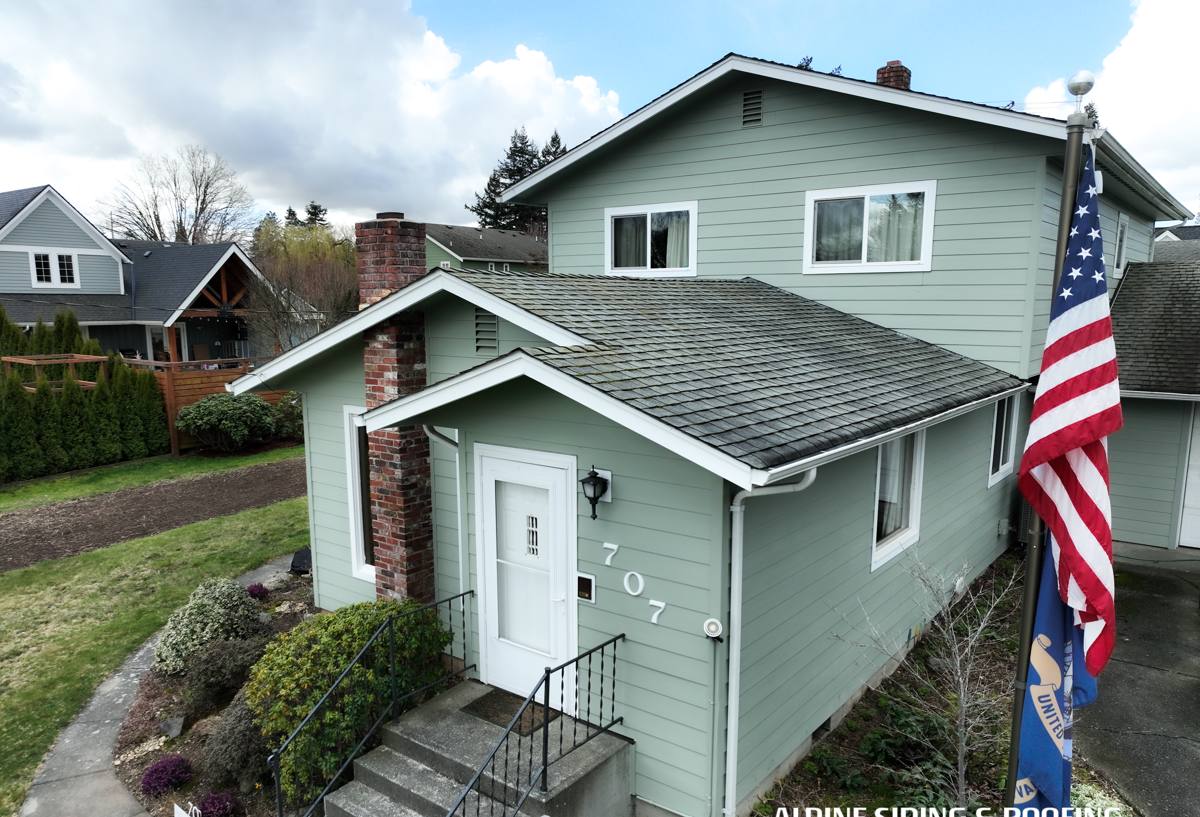
Signs Your Siding Needs Repair (Not a Full Replacement)
Most siding problems we see on Island Estates homes are localized — a specific board, a corner, an area around a window or door — rather than a sign that the whole exterior has failed. Catching these early is what keeps a repair a repair instead of turning it into a replacement project.
- Visible cracking, chipping, or splitting along one or more boards, especially near seams or corners
- Soft or spongy spots when pressed, which usually point to moisture that's already gotten behind the surface
- Boards that have separated, buckled, or pulled away from the wall after a wind event
- Peeling or bubbling paint/finish concentrated in one area rather than across the whole elevation
- Staining, streaking, or discoloration that keeps returning after cleaning, which often signals water tracking behind the siding
- Small impact damage from debris during storms — dents, punctures, or cracked corners
- Visible gaps at trim, window, or door edges where caulking has failed and moisture can enter
If what you're seeing matches one or two of these on an otherwise sound exterior, repair is almost always the right call. If it's showing up in multiple places across different elevations, that's usually a sign of a systemic issue — often moisture that's been getting in for a while — and it's worth a full inspection before deciding on repair versus replacement.
What a Correct Siding Repair Actually Involves
Diagnosing the Cause, Not Just the Symptom
A repair that only addresses what's visible on the surface tends to fail again within a season or two, especially on a waterfront lot where the underlying conditions haven't changed. Before any board comes off, we look at what's happening behind it: is there a flashing gap letting wind-driven rain in around a window? Has caulking failed at a trim joint? Is there a drainage issue at grade that's kept a lower section of wall damp longer than it should be? On Island Estates specifically, we also check how exposed the affected area is to prevailing wind and salt spray, since repairs on the water-facing side of a home need a bit more attention to sealant and flashing detail than a sheltered side.
Matching Material and Finish
Because we work exclusively in James Hardie fiber cement, repairs use the same product system that's already on the home — not a generic patch material. That matters for two reasons. First, fiber cement expands and contracts differently than other siding materials, so mixing products at a repair seam creates a long-term weak point. Second, Hardie's factory-applied ColorPlus finish is formulated to hold color and resist fading from UV exposure far better than field-applied paint, so matching it correctly (or refinishing an area properly when an exact factory match isn't available) keeps the repair from standing out as an obvious patch.
Sealing It Correctly the Second Time
Every repair gets proper flashing or moisture barrier work at the affected area, correctly lapped joints, and marine-grade sealant at penetrations and trim lines. This is the step that gets rushed on a quick patch job and is usually the reason a "repaired" section fails again within a year on a home this close to the water.
Repair or Replace? How We Make the Call
Homeowners understandably want to know which direction they're headed before we're on the roof or up a ladder. Here's the general framework we use, though every home gets a real inspection before a final recommendation:
| Factor | Usually Points to Repair | Usually Points to Replacement |
|---|---|---|
| Extent of damage | Isolated to one or two boards/areas | Present across multiple elevations |
| Age of existing siding | Under 10-15 years, otherwise sound | Near or past expected service life |
| Moisture intrusion | Localized, source identified and fixable | Widespread, unclear how long it's been present |
| Substrate condition | Sheathing/framing solid where exposed | Rot or damage found in structural wood |
| Cause of damage | One-time event (impact, storm, failed sealant) | Ongoing material or installation failure |
A straightforward repair on an Island Estates home is often a modest, contained cost. Once damage points toward replacement — particularly if we find compromised sheathing once siding is removed — the scope and cost shift accordingly. We'll always show you what we find before moving forward, including photos of anything uncovered once siding comes off.
Why We Repair (and Install) Only James Hardie Fiber Cement
We don't install or repair-patch with vinyl, LP SmartSide, Cemplank, Allura, primed spruce, or cedar. That's a deliberate standard, not a limitation. In a waterfront, high-UV, salt-air environment like Island Estates, the trade-offs of those other products show up faster: vinyl can warp and become brittle under sustained heat and impact; engineered wood products and primed spruce are more sensitive to sustained moisture exposure; cedar demands ongoing maintenance to hold up against salt and sun. James Hardie's fiber cement is non-combustible, engineered for exactly this kind of climate through its HZ5 product line, and backed by a strong transferable warranty when installed to spec. When we repair Hardie siding, we're extending the life of a system that was already built for these conditions — not working around the limitations of a lesser one.
Our Repair Process for Island Estates Homeowners
- Inspection and diagnosis — we assess the visible damage and check the surrounding area and substrate for signs of a deeper issue
- Written estimate — a clear scope of work and price before anything is removed, including what happens if we find additional damage underneath
- Material match — sourcing the correct Hardie profile, texture, and color match for a seamless repair
- Removal and substrate check — damaged sections come off carefully, and we inspect sheathing and framing before closing anything back up
- Proper reinstallation — correct flashing, moisture barrier, fastening pattern, and sealant, per Hardie's installation specifications
- Cleanup and walkthrough — job site cleared, and we walk the repair with you before calling it done
Why a Crew That Already Works This Island Matters
Island Estates has its own logistics that a crew unfamiliar with the area has to learn on the fly — limited access points, tighter lots in places, and the general realities of working on a waterfront property where equipment staging and material delivery take a bit more planning than a standard subdivision job. A crew that's already done work in this part of Clearwater isn't guessing at any of that on your job.
Just as important is knowing what this specific environment does to a repair over time. A crew that mostly works inland jobs may not think twice about sealant choice, fastener corrosion resistance, or how much clearance to leave at grade on a canal-front lot — details that matter far more here than a few miles inland. We factor all of that in as a matter of course, because it's the same environment we're working in on Island Estates jobs regularly, not a one-off.
Keeping Repaired Siding Solid Long-Term
Once a repair is done, a little routine attention keeps it — and the rest of your siding — performing the way it should:
- Rinse salt residue off siding periodically, especially after storms with onshore wind
- Keep an eye on caulking at trim, windows, and doors and have gaps resealed before they let water in
- Trim back vegetation and irrigation spray that keeps any section of wall consistently damp
- Have siding checked after any major wind event, even if damage isn't obvious from the ground
- Address small issues (a hairline crack, a lifted piece of trim) promptly rather than waiting for them to spread
Fiber cement holds up well against this climate when it's installed and maintained correctly, but no siding material is entirely maintenance-free on a waterfront lot in Pinellas County. A little attention twice a year goes a long way toward avoiding a bigger repair down the line.
Get a Straight Answer on Your Siding
If you're seeing cracking, soft spots, or storm damage on your Island Estates home, we're glad to take a look and give you an honest read on whether you're looking at a repair or something bigger — no pressure, no upsell. Reach out for a free estimate and we'll walk the exterior with you and explain exactly what we find.