 Clearwater Siding
 Siding Repair in Skycrest: Small Jobs That Matter in a Big-Storm Climate
Skycrest is a residential neighborhood in Clearwater, part of Pinellas County, and like the rest of the city it sits in one of the more demanding climates in the country for exterior siding. Hurricane-force winds move through most years, UV exposure runs intense nearly twelve months a year, rain gets driven sideways into walls rather than falling straight down, and salt-laden air off the Gulf and the Intracoastal works on every exterior surface in the area, Skycrest included. None of that means every siding problem calls for a full re-side. A cracked panel, a section that took storm impact, or trim that's failed around a window can often be repaired correctly and matched into the siding that's already there — if the repair is done right.
That "if" is the part homeowners in Skycrest don't always get from a contractor who's really just trying to sell a full replacement, or from a handyman who patches the visible crack without checking what's happening behind it. This page is about siding repair specifically — what actually damages siding in this neighborhood, how to tell a real repair from a job that's about to fail again, and how we approach patch-and-match work so it holds up rather than becoming a callback.
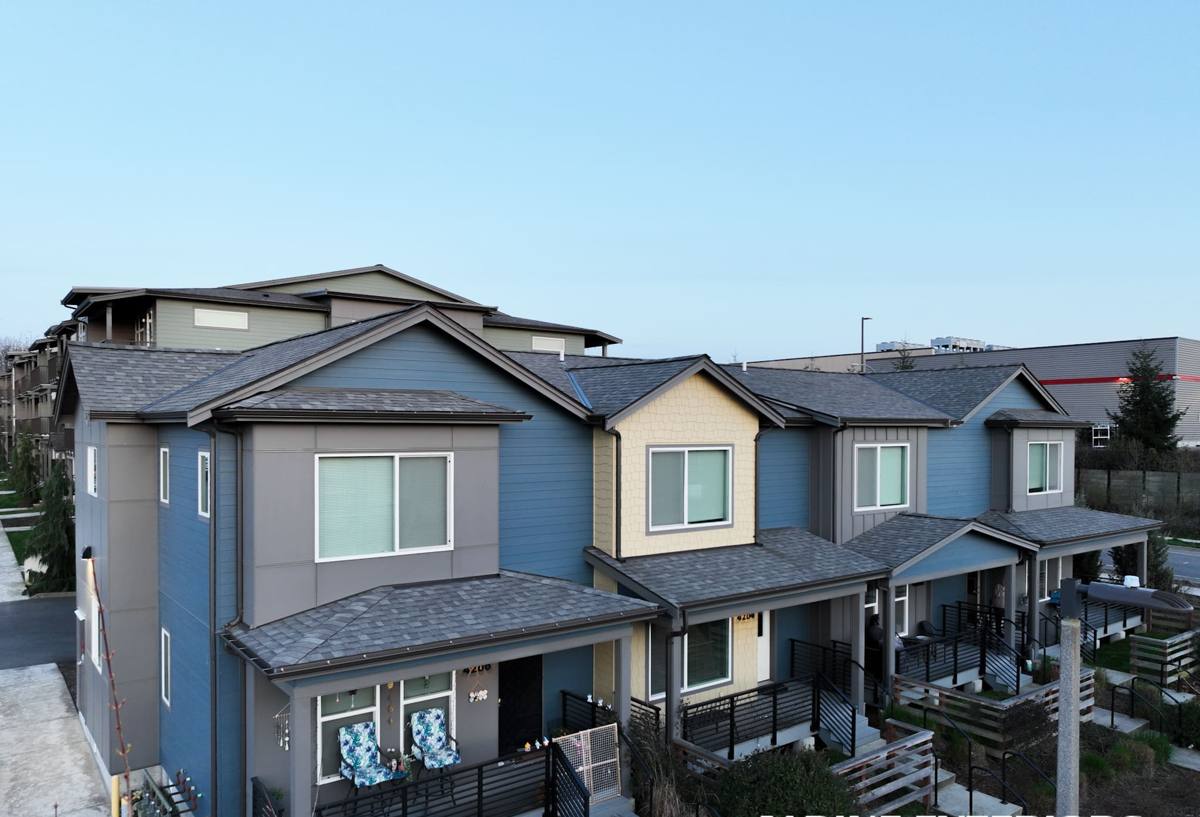
What Actually Damages Siding in Skycrest
Storm and Wind-Borne Debris Impact
Hurricane season brings more than wind load — it brings debris. Palm fronds, loose gutter sections, patio furniture, and tree limbs become projectiles in sustained wind events, and siding takes the hit. The result is usually localized: a cracked or punctured panel, a dented corner, a section knocked loose from its fastening. That kind of damage is often a clean repair candidate, provided the panel behind it and the water-resistive barrier underneath weren't compromised in the same event.
Sun-Facing Fade, Chalking, and Sealant Breakdown
Florida's UV load is some of the most intense in the country, and it doesn't let up for most of the year. On sun-facing elevations, that breaks down caulk and sealant faster than homeowners expect, and it can chalk or fade older field-applied paint well before the siding itself has any structural problem. A repair here is often less about the siding board and more about re-sealing joints and trim before UV-degraded caulk turns into an actual water entry point.
Wind-Driven Rain at Joints and Trim
Vertical rain sheds easily off almost any siding. Rain pushed sideways by a 40, 50, or 60-plus mph gust behaves differently — it finds butt joints, fastener penetrations, and trim intersections that were never tested by a calm rain event. Over a storm season or two, homes with aging caulk lines or marginal flashing start showing water intrusion at exactly those points, usually well before the siding itself looks obviously damaged from the street.
Salt Air and Fastener Corrosion
Airborne salt settles on every exterior surface across Clearwater, and it accelerates corrosion in exposed metal fasteners and trim over years of exposure. A corroding fastener loses holding strength and can open a small gap where it penetrates the siding — a slow, quiet entry point that gets worse rather than better. Repair calls that start as "a nail popped out" are sometimes actually about fastener corrosion that's been progressing for a while.
Repair or Replace? How We Make the Call
The honest answer depends on what's happening behind the visible damage, not just how the siding looks from the driveway. We check for moisture intrusion, sheathing condition, and how widespread the problem actually is before recommending either path.
| What We Find | Typical Recommendation | Why |
|---|---|---|
| Isolated storm damage, dry sheathing behind it | Targeted repair | Localized damage with no moisture history is a clean patch-and-match candidate |
| Failed caulk or sealant on an otherwise sound wall | Re-seal and spot repair | Catching UV-degraded sealant early prevents it from becoming a water entry point |
| Soft or spongy sheathing found behind damaged panels | Section replacement with sheathing repair | Patching over damp sheathing just traps the problem instead of fixing it |
| Widespread fastener corrosion or repeated leak points | Broader repair or full re-side, discussed honestly | Recurring failures across the wall usually point to a systemic issue, not a one-off |
| Original siding decades old with no documented replacement | Depends on inspection findings | Age alone doesn't mean replacement, but it raises the odds of hidden wear |
We'll tell you plainly which category a given repair call falls into, including when a smaller job is the right answer even though a full re-side would be more profitable for us.
What a Correct Siding Repair Actually Involves
A repair that just covers the visible damage without addressing what's underneath tends to fail again within a season or two. A repair done correctly involves a few steps that don't show up in a quick look at the finished work:
- Moisture check behind the damaged section — before any new material goes on, we confirm the sheathing and water-resistive barrier behind the damage are dry and intact.
- Matching profile and exposure — lap siding comes in different plank widths and reveal heights, and a mismatched patch is visible from the street even after paint. We match the existing course lines rather than forcing in whatever's on the truck.
- Color matching — factory ColorPlus finishes hold their color far longer than field-applied paint, but sun-faded older siding still won't perfectly match brand-new material on day one. We're upfront about what will and won't blend immediately versus after some weathering.
- Flashing re-integration — any repair that touches a window, door, or wall penetration needs the flashing put back in the correct sequence with the water-resistive barrier, not just caulked over.
- Corrosion-resistant fasteners — repairs in a coastal, high-salt environment get fastener types and spacing suited to that exposure, not whatever was originally used decades ago.
Why We Only Patch and Match With James Hardie
We install James Hardie fiber cement exclusively, and that standard carries into repair work too. When the existing siding on a Skycrest home is already James Hardie, a repair is usually straightforward — we match the product line, profile, and finish and tie the new section into the existing installation correctly. When the existing siding is something else — vinyl, LP SmartSide, an older fiber cement brand, or original wood siding — the conversation is more honest. We won't patch failing vinyl or engineered wood with more of the same product just because it's what's already on the wall, and we won't install those products as new repair material even into an existing non-Hardie house.
Instead, we'll walk through what a Hardie section replacement in that spot would look like, including any transition detailing needed where new fiber cement meets an existing different material, and let the homeowner decide with real information rather than a sales script. We made this call because fiber cement's dimensional stability, non-combustible core, and factory-applied finish hold up better in Clearwater's mix of intense UV, wind-driven rain, and salt air than the alternatives — and a repair that uses a weaker product in one spot just moves the next failure a few years down the road instead of solving it.
Our Skycrest Repair Process
- On-site inspection of the damaged area and a check of surrounding siding for related but less obvious problems
- Moisture testing and, where needed, opening up the affected section to check sheathing condition
- Honest recommendation — targeted repair, section replacement, or a conversation about broader scope if we find it
- Sourcing matching James Hardie profile, exposure, and finish for the repair
- Removal of only the damaged material, preserving sound surrounding siding wherever possible
- Sheathing repair if needed, followed by correct water-resistive barrier and flashing integration
- Installation of new material to manufacturer fastening and clearance specifications
- Final walkthrough covering caulking, any touch-up needs, and what to watch for going forward
Signs Your Skycrest Home Needs a Siding Repair Call
- A cracked, dented, or missing siding section after a storm or wind event
- Caulk or sealant that's visibly cracked, chalky, or pulling away from joints and trim
- Soft or spongy siding when pressed, especially near the bottom courses or around windows and doors
- Rust streaks or visible corrosion around fasteners and trim pieces
- Gaps opening at seams, corners, or trim joints that weren't there a year or two ago
- Interior staining, musty odors, or peeling paint on walls that back up to exterior siding
- One elevation fading or chalking noticeably faster than the rest of the house
None of these signs automatically means a full re-side, but they're worth a professional look before the next storm season rather than after water has had months to work on the sheathing behind the wall.
Why a Crew That Already Works Skycrest Matters
Repair work rewards local, repeated experience more than new installation does, because every repair starts with correctly diagnosing what's actually happening behind a small visible problem. A crew that works Clearwater neighborhoods regularly has already seen how salt air, sun exposure, and storm-driven rain play out on real homes here — which wall orientations fail first, which trim details tend to open up after a few hurricane seasons, and which "small" cracks are cosmetic versus which ones are a sign of something wet and rotting underneath. That judgment is harder to get right from a contractor who mostly works new-construction jobs or drives in from outside the area for a one-off repair call.
It also matters for matching. Sourcing the right James Hardie profile and finish, and installing it so the seam disappears into the existing wall rather than standing out, is easier for a crew that installs this specific product across this specific climate day in and day out.
Roofing, Windows, and Decks Alongside a Siding Repair
Siding damage in Skycrest sometimes traces back to a source that isn't the siding at all — a roof-to-wall flashing detail that's failed, a window that isn't shedding water correctly, or a deck ledger board trapping moisture against the house. Because we also handle roofing, windows, and decks, we can look at a repair call as part of the whole exterior envelope instead of patching a symptom and leaving the actual water source unaddressed.
Get a Free, No-Pressure Estimate
If you've got storm damage, a failing seam, or just want an honest second opinion on whether a section of your Skycrest home's siding needs a repair or something bigger, we're glad to take a look. Use the form below to schedule a free estimate — no pressure, no upsell script, just a straight answer about what your home actually needs.