 Clearwater Siding
 Window Replacement Built for Sunset Point's Coastal Conditions
Sunset Point is one of Clearwater's more established residential pockets, sitting close enough to the water that homes here take a different kind of beating than houses further inland. Between the salt-laden air drifting off Clearwater Harbor, the intense Florida sun beating down nearly year-round, and the wind-driven rain that shows up with every strong storm, windows in this neighborhood are working harder than the manufacturer's spec sheet ever accounted for. When a window fails here, it's rarely one single cause — it's usually years of small stresses stacking up until the seal, the frame, or the glass finally gives out.
Window replacement isn't a cosmetic upgrade in this part of Pinellas County. Done right, it's a structural and moisture-management job as much as an aesthetic one. This page walks through what actually wears out windows in Sunset Point, what a correct replacement job looks like, and why local, hands-on experience in this specific neighborhood matters more than most homeowners expect.
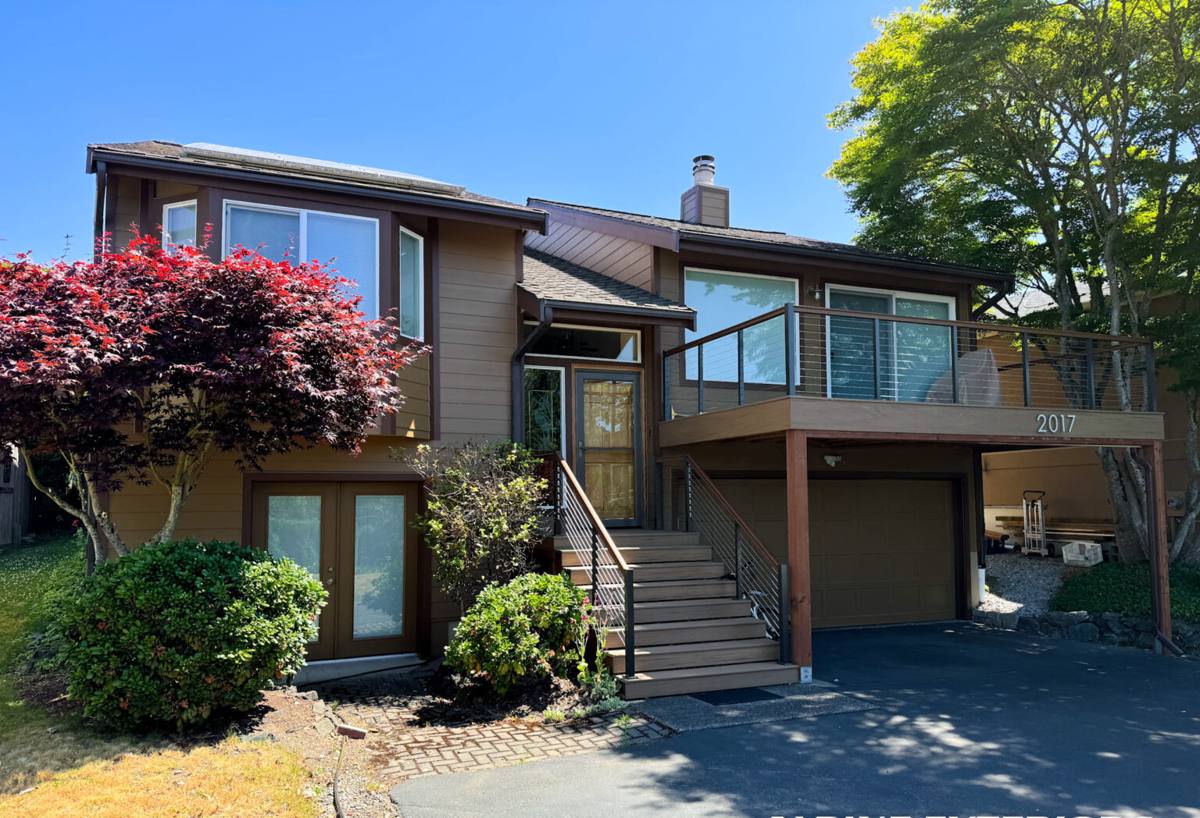
What Clearwater's Climate Does to Older Windows
Every window replacement conversation in this area starts with the same four stressors, because they're the ones doing the damage:
- Salt air corrosion: Proximity to the harbor means airborne salt settles on metal hardware, screen frames, and window tracks year-round. Over time it pits aluminum, seizes up locks and cranks, and accelerates corrosion in fasteners that weren't rated for a marine-adjacent environment.
- UV exposure: Florida sun is relentless on vinyl frames, rubber gaskets, and window seals. UV breaks down the plasticizers in vinyl and rubber over the years, making them brittle, prone to cracking, and less able to hold a tight seal against air and water.
- Wind-driven rain: It's not just rainfall totals — it's rain forced sideways and upward under pressure during storms. Older windows and worn flashing details that were fine in a light shower let water in when rain is driven horizontally against the glass and frame.
- Hurricane-force wind loads: Even homes that never take a direct hit see repeated pressure cycling from tropical systems passing through the Gulf. That cycling stresses seals and frame connections well before an actual failure shows up as a leak.
None of these forces are unique to Sunset Point, but the combination — a coastal-adjacent neighborhood with a mix of older and newer housing stock — means window problems here tend to show up earlier and more visibly than in drier, more inland parts of the county.
Signs Your Sunset Point Home Needs Window Replacement
Most homeowners don't replace windows because one clearly broke — they replace them because a handful of small issues finally add up. Before scheduling anything, it's worth checking your own windows against this list:
- Fogging or a persistent haze between double-pane glass (a sign the seal has failed and the gas fill or insulating air gap is gone)
- Visible daylight or a draft around the frame when the window is fully closed and latched
- Difficulty opening, closing, or locking — often from swollen wood, corroded hardware, or a frame that's shifted slightly out of square
- Soft or discolored drywall, trim, or sill area below or beside the window (a sign moisture has been getting past the seal)
- Chalky, brittle, or cracked vinyl frames, especially on south- and west-facing exposures that take the most direct sun
- Noticeably higher cooling bills without any other explanation — old single-pane or failed-seal windows lose conditioned air fast
- Rattling or visible flexing during windy weather
Any one of these on its own might just need a repair. Several at once, especially on a home that's had its original windows for a couple decades, usually points to replacement being the more cost-effective long-term call.
What a Correct Window Replacement Job Actually Involves
Removal and Rough Opening Inspection
The old window comes out carefully so we can actually see the rough opening underneath — the wood framing, the sheathing, and any existing flashing. This is the point where hidden water damage or rot gets caught, and it's also the step that gets skipped by crews trying to move fast. In a coastal-adjacent neighborhood like this one, we routinely find moisture staining or soft framing that wasn't visible from inside or outside the house.
Flashing and Water Management
This is the part that actually keeps water out, and it matters more here than almost anywhere else in the house. Proper flashing tape and sill pan details direct any water that gets past the window itself back out and away from the wood framing — not into it. Wind-driven rain finds gaps that ordinary rain never would, so this step doesn't get shortcuts on a Clearwater home.
Setting, Shimming, and Fastening
The new window has to sit level, plumb, and square in the opening, shimmed correctly so it doesn't bind or rack over time, and fastened per the manufacturer's installation instructions — which, for impact-rated products, is also what's required to keep the wind rating and warranty valid.
Sealing and Finish Work
Low-expansion foam or backer rod and sealant around the frame perimeter, exterior caulking sized for movement and UV exposure, and interior trim reset or replaced as needed. This is also where hardware, screens, and locks get checked and adjusted so everything operates smoothly on day one.
Choosing the Right Window Frame and Glass for This Area
Frame material matters more here than in a dry inland climate, because it has to hold up to salt air and constant sun, not just look good on install day. Here's how the common options actually compare in a coastal-adjacent setting:
| Frame Material | How It Handles Salt Air & UV | Maintenance | Typical Fit for Sunset Point |
|---|---|---|---|
| Vinyl | Good resistance to corrosion; quality matters for UV stability over time | Low — no painting, occasional cleaning | Strong all-around choice for most homes |
| Aluminum | Strong structurally, but more prone to corrosion and pitting from salt air unless properly coated | Moderate — hardware and finish need periodic attention | Workable, but we're upfront about the corrosion trade-off this close to the harbor |
| Fiberglass | Excellent dimensional stability, resists UV degradation well | Low | A strong option where budget allows, especially for larger openings |
| Wood/wood-clad | Handsome, but wood is the most vulnerable to moisture and salt-driven rot without diligent upkeep | High — regular inspection and refinishing needed | Best reserved for interior-facing or well-protected openings |
Glass matters too. Impact-rated laminated glass with a low-E coating is the standard we recommend for most Clearwater homes — it addresses wind-borne debris risk and cuts down on the UV and heat load coming through the glass, which helps with cooling costs in a house that runs the air conditioner most of the year.
Impact-Rated Windows, Wind Codes, and Permits
Pinellas County follows the Florida Building Code's High-Velocity Hurricane Zone and wind-borne debris requirements that apply across this part of the state. In practice, that means window replacement isn't a swap-it-yourself weekend project — it requires a permit, and the replacement products need to meet the wind load and impact requirements for your specific home's exposure and location.
Homeowners often ask whether impact-rated glass or accordion/roll shutters with standard glass make more sense. Both can meet code when installed correctly, but they come with different trade-offs:
- Impact-rated windows: Protection is built in and always on — no deploying anything before a storm, no maintaining separate hardware, and typically more insurance-friendly.
- Shutters with standard glass: Lower upfront cost in some cases, but they require you to physically close them before every storm and store/maintain the hardware year-round.
We pull permits and schedule inspections as part of every job — it protects you if you ever sell the home and need to show the work was done to code, and it protects the wind rating and manufacturer warranty on the windows themselves.
How We Work in Sunset Point
- Free on-site estimate: We look at every window being considered, check the rough openings where possible, and talk through what's actually causing the problem before recommending replacement.
- Straightforward proposal: Frame material, glass package, and pricing laid out clearly — no pressure, no artificial deadlines to sign today.
- Permitting handled for you: We submit for the Pinellas County permit and schedule the required inspections as part of the job.
- Installation: Careful removal, rough opening check, proper flashing, correct fastening, and full sealing — the details covered above, done the same way on every window.
- Final walkthrough: We check operation, locks, and finish work with you before calling the job done, and make sure the permit closes out cleanly.
Why Hiring a Crew That Already Works This Neighborhood Matters
Sunset Point has enough of a mix of home ages and construction styles that a crew unfamiliar with the area can easily misjudge what a rough opening will look like once the old window comes out, or underestimate how far salt air corrosion has gotten into hardware and fasteners. A crew that regularly works this part of Clearwater already knows what to expect from the housing stock here, has a working relationship with the county permitting process, and isn't guessing at wind zone requirements on the fly.
That familiarity shows up in fewer surprises mid-project, more accurate estimates up front, and a finished job that's built for the conditions this specific neighborhood actually sees — not a generic install pulled from a different climate.
If your windows in Sunset Point are showing any of the wear signs above, or you're just ready to stop babying old hardware every storm season, we'd be glad to take a look. Reach out for a free, no-pressure estimate using the form below — we'll walk the property, answer your questions honestly, and give you a clear picture of your options before you decide anything.