 Clearwater Siding
 Why Belleair Siding Takes More Punishment Than Siding Inland
Belleair sits close to the Intracoastal Waterway and the Gulf, which means homes here deal with a harder version of Florida's weather than houses even a few miles inland in Clearwater. Salt-laden air moves through the neighborhood constantly, and it doesn't just sit on the surface of your siding — it works into fastener heads, trim joints, and any gap in a paint film. Add in wind-driven rain that gets pushed sideways into wall assemblies during storms, hurricane-force wind events that test every fastener and joint at once, and some of the most intense year-round UV exposure in the country, and you've got a climate that is genuinely hard on exterior materials.
Most siding failures we see in this area aren't dramatic. They're slow: a section of trim that stayed damp too long after a storm, a caulk joint that gave up years before it should have, paint that chalked and faded because the substrate underneath wasn't built to hold a factory finish. Fiber cement siding, installed correctly, is built to handle exactly this combination of stresses — but "installed correctly" is doing a lot of work in that sentence, and it's the part that separates a siding job that lasts twenty-plus years from one that starts showing problems in five.
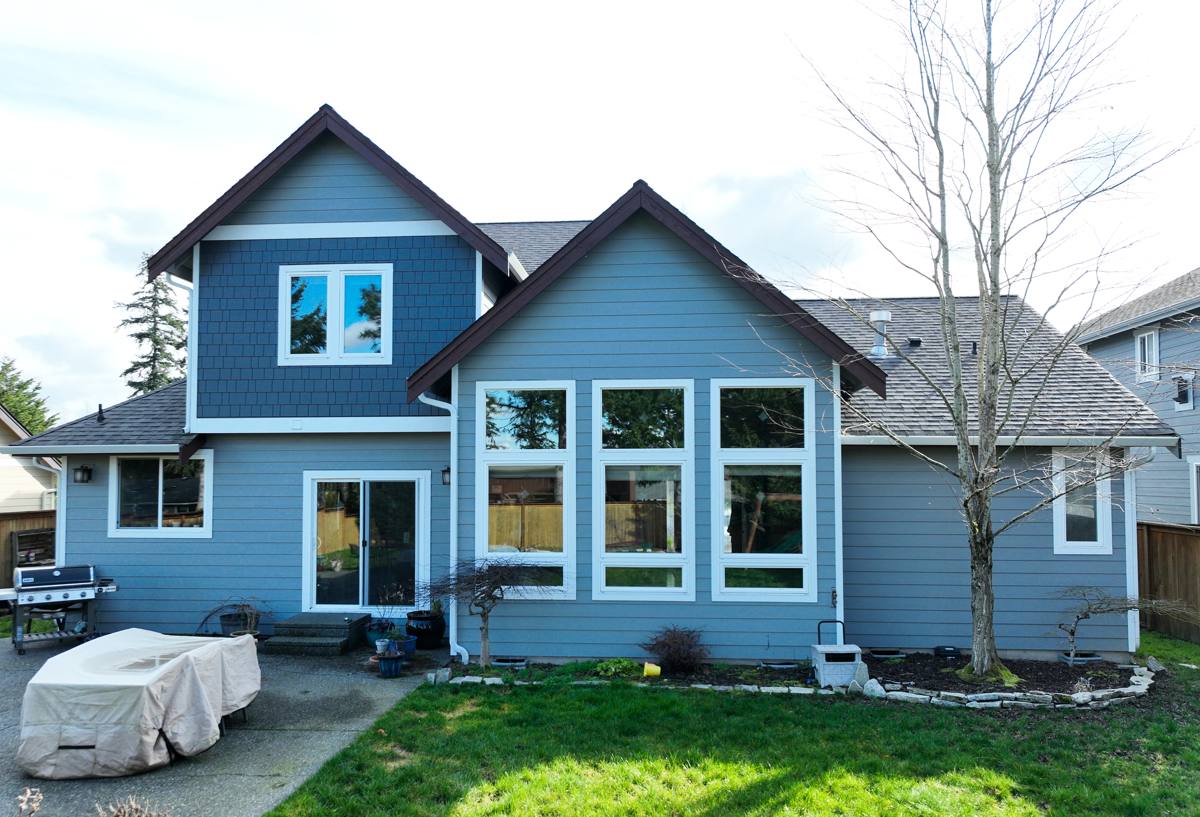
What Correct Fiber Cement Installation Actually Means Here
Fiber cement siding is only as good as the details underneath it. In a Pinellas County coastal environment, a handful of installation details matter more than they would somewhere drier and calmer.
Fastening and Clearances
James Hardie specifies fastener type, spacing, and placement for a reason — in high-wind zones, under-fastened siding is one of the most common causes of blow-off during storms. We also hold proper clearance between the bottom of the siding and grade, roofing, decks, and patios. Skipping that clearance is a shortcut that looks fine on install day and causes moisture problems within a few seasons, especially with the amount of wind-driven rain this area sees.
Flashing and the Weather Barrier
Siding is the visible layer, but the water-resistive barrier and flashing behind it are what actually keep a wall assembly dry. Around windows, doors, and any wall penetration, we lap materials so water sheds outward and never behind the barrier. This is the step that's invisible once the job is done and the one most likely to be rushed on a lower-bid job.
Caulking and Joints
Butt joints, corners, and trim intersections need the right sealant, applied correctly, or they become the first failure point in salt air and UV. We follow Hardie's joint treatment guidance rather than treating caulk as a cosmetic afterthought.
Why We Install Only James Hardie — Not Vinyl, Not Engineered Wood, Not Other Fiber Cement Brands
We made a decision as a company to install one siding system: James Hardie fiber cement, in its climate-engineered HardieZone lines with factory-applied ColorPlus finish. We didn't arrive at that by accident, and it's worth explaining honestly rather than just asserting it.
Vinyl siding is affordable and easy to install, and in calmer inland climates it can perform reasonably well. In a wind-driven-rain, hurricane-exposed, high-UV coastal environment, vinyl's weak points show up faster: it can warp or distort in sustained heat, its impact resistance is limited compared to fiber cement, and its color is baked into the material itself, which means fading is permanent and uneven over time. Engineered wood products (LP SmartSide and similar) perform well in many climates but rely on wood-based cores that are more sensitive to sustained moisture exposure than a cement-based product — a real consideration this close to the water. Other fiber cement brands and lower-cost cement board products exist, but they don't all carry the same factory finish warranty, the same climate-specific product engineering, or the same installed track record we're comfortable standing behind on a coastal Pinellas County home.
James Hardie is non-combustible, engineered specifically for high-humidity, high-UV, storm-prone climates through its HardieZone system, and backed by a factory finish (ColorPlus) that's baked on rather than field-painted, plus a transferable warranty that matters if the home ever sells. That's the standard we hold every Belleair job to.
| Factor | James Hardie Fiber Cement | Vinyl Siding | Engineered Wood |
|---|---|---|---|
| Moisture tolerance | High — cement-based, resists rot | High but can trap moisture behind panels | Moderate — wood-based core |
| Wind/impact resistance | High when properly fastened | Moderate — can crack or blow off | Moderate to high |
| UV/fade resistance | Strong with factory ColorPlus finish | Color molded in but fades and chalks | Depends on field-applied finish |
| Combustibility | Non-combustible | Combustible | Combustible |
| Typical maintenance | Periodic caulk/joint checks, occasional wash | Low but limited repair options | Regular finish maintenance needed |
Our Process for a Belleair Fiber Cement Siding Job
- On-site assessment. We walk the exterior, check existing siding, trim, and flashing condition, and note anything specific to the home's exposure — proximity to water, tree canopy, sun-facing walls.
- Product and color selection. We go over Hardie's plank profiles, textures, and ColorPlus palette, and match the HardieZone product to the home's wind exposure.
- Tear-off and substrate check. Old siding comes off and we inspect sheathing underneath for hidden moisture damage before anything new goes up.
- Weather barrier and flashing. House wrap or building paper and flashing go in first, lapped correctly at every penetration.
- Siding installation. Panels and trim go up to Hardie's fastening and clearance specifications, not shortcuts.
- Joint treatment and final inspection. Caulking, touch-up, and a walk-through so you know exactly what was done and why.
Problem Areas We See Most Often on Belleair Homes
A lot of homes in this part of Pinellas County have been through multiple siding or paint cycles already, and certain trouble spots show up repeatedly on older coastal properties. Trim around windows and doors is a frequent one — it's where water intrusion tends to start, and where a prior installer's shortcuts (missing flashing, wrong caulk, tight clearances) tend to surface first. Lower wall sections near grade, decks, and patios are another common failure point, since splash-back and reduced airflow keep that area damp longer after a storm. We also regularly find that a home's siding looks fine from the street but has soft or compromised sheathing behind it — which is exactly why we check the substrate during tear-off rather than just installing over whatever is already there.
Living With Fiber Cement Siding in a Salt-Air Climate
One reason we recommend fiber cement over lower-maintenance-sounding alternatives is that its maintenance needs are modest and predictable rather than a gamble. In this climate, that means an occasional rinse to clear salt residue and airborne debris, a yearly walk-around to check caulk joints and trim for any separation, and prompt attention if a joint or corner ever looks compromised after a major storm. ColorPlus finish is formulated to resist the fading and chalking that's common with field-applied paint in high-UV environments, so repainting isn't something you should need to budget for on the same cycle as a painted wood or stucco home.
Signs Your Current Siding Is Past Its Service Life
- Visible warping, buckling, or separation at panel joints
- Soft spots or give when you press on siding or trim near the base of the wall
- Paint or finish that's chalking heavily or peeling rather than just fading
- Caulk joints that are cracked, gapped, or missing in multiple spots
- Water stains or discoloration on interior walls near exterior corners
- Rising energy bills that suggest the wall assembly isn't performing the way it used to
Why Hiring a Crew That Already Works Belleair Matters
Coastal Pinellas County communities like Belleair often have their own permitting expectations, wind-load requirements tied to the county's building code, and in some neighborhoods, architectural review considerations that come into play before exterior work starts. A crew that's already done siding work in the area knows what the local building department will ask for, how to document wind-rated installation for permitting, and what tends to trip up an out-of-town contractor unfamiliar with Pinellas County's coastal construction requirements. That familiarity isn't a luxury here — it's part of what keeps a project on schedule and out of trouble with inspections.
It also means we've already seen how homes in this specific stretch of coastline age, which siding details hold up and which don't, and where the recurring trouble spots tend to be. That's knowledge you can't get from a general contractor who works fifty miles inland and treats every job the same way regardless of exposure.
Getting Started
If your Belleair home's siding is showing its age, or you're planning ahead of the next storm season, we're happy to walk the exterior with you and give you a straight, no-pressure assessment of what it actually needs. There's a form below to request a free estimate — no obligation, just an honest look at your home and what correct James Hardie installation would involve.