 Clearwater Siding
 Belleair's Setting Puts Real Demands on a Home's Exterior
Belleair sits close to the water in Pinellas County, and that proximity shapes what siding has to survive here. Salt-laden air moves inland off the Gulf and Intracoastal, humidity stays high most of the year, and afternoon storms during hurricane season bring wind-driven rain that finds every gap in a weak building envelope. Add in the intense, near-constant Florida UV exposure, and you have a combination that wears down siding materials faster than in almost any other part of the country. Homes in Belleair's established neighborhoods, whether decades old or recently built, all face the same basic exposure profile.
This is the reason siding choice and installation quality matter more here than in a drier, cooler climate. A product that performs fine in the Midwest can fail early on the Gulf Coast if it isn't rated for this kind of moisture and salt exposure, or if it's installed without the right flashing and clearances. We install James Hardie fiber cement siding exclusively, and on a page like this we want to explain specifically what that means for a Belleair home, not just repeat generic marketing points.
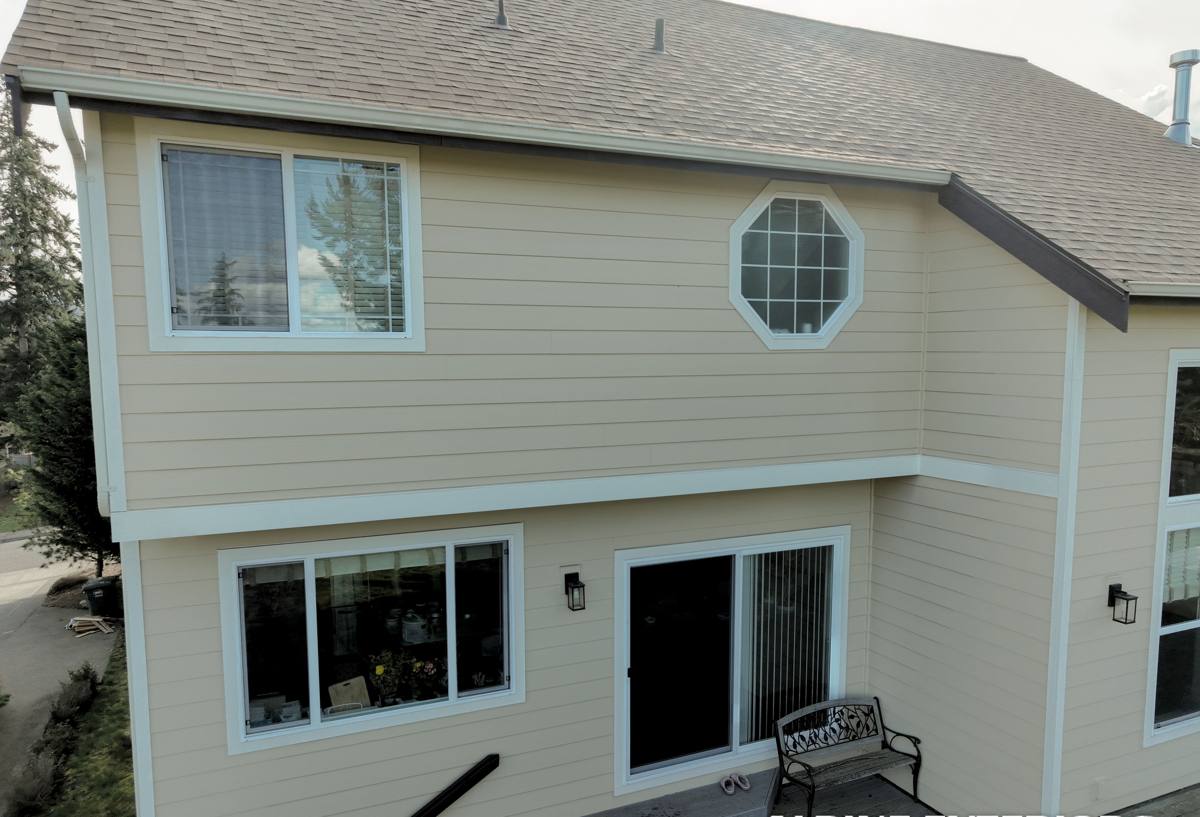
What Salt Air, UV, and Wind-Driven Rain Actually Do to Siding
Each of these stressors attacks a home's exterior differently, and understanding the mechanism helps explain why some materials hold up and others don't:
- Salt air accelerates corrosion of fasteners and trim metal, and it can degrade certain paint and coating systems faster than inland exposure would.
- UV exposure breaks down pigments and surface coatings over time, leading to fading, chalking, or a dull, weathered look on lower-quality finishes.
- Wind-driven rain pushes moisture sideways and upward, not just down, which means water finds its way behind siding at seams, laps, and penetrations if the install wasn't detailed correctly.
- Humidity keeps moisture in contact with building materials longer, which is exactly the condition that lets rot, mold, and swelling take hold in anything wood-based or moisture-sensitive.
None of this is unique to Belleair, but living this close to the coast means the exposure is more constant and more severe than a few miles further inland. It's a big part of why we standardized on one product system rather than offering several.
Why We Install Only James Hardie Fiber Cement
We don't install vinyl, LP SmartSide, primed wood, cedar, or other fiber cement brands. That's a deliberate professional standard, not an arbitrary preference. James Hardie's fiber cement is non-combustible, dimensionally stable in heat and humidity, and manufactured with regional climate engineering in mind — the HZ5 product line is formulated specifically for hot, humid, moisture-heavy climates like ours, with enhanced resistance to moisture-related damage. The factory-applied ColorPlus finish is baked on and warrantied against fading and peeling, which matters directly for UV-heavy exposure like Belleair sees.
We're not going to claim other products are worthless — vinyl is inexpensive and easy to source, wood has real curb appeal for some buyers, and other fiber cement brands have their own engineering. What we will say plainly is that after years of doing exterior work on the Gulf Coast, we found the maintenance burden, moisture behavior, and long-term appearance of those alternatives didn't hold up the way we wanted for our own name attached to the job. James Hardie, installed correctly, does.
How James Hardie Compares on the Factors That Matter Here
| Factor | James Hardie Fiber Cement | Vinyl Siding | Untreated/Primed Wood |
|---|---|---|---|
| Salt air resistance | Strong; non-corrosive core material | Can become brittle and discolored over time | Vulnerable to rot acceleration |
| UV/fade resistance | ColorPlus factory finish, long fade warranty | Fades and can warp with heat | Repaint needed every few years |
| Wind-driven rain performance | Excellent when correctly flashed and lapped | Prone to water intrusion at seams | High risk if any coating fails |
| Fire resistance | Non-combustible | Combustible | Combustible |
| Typical maintenance | Occasional wash, repaint decades out | Low, but limited to replacement when damaged | Regular repainting/resealing |
The James Hardie Lines That Make Sense for Belleair Homes
Belleair has a mix of home styles — traditional, coastal, and more contemporary builds — and James Hardie's product range covers most of what we see on a walk-through:
- HardiePlank lap siding — the most common choice, available in several textures and exposures, gives a clean traditional or coastal look.
- HardieShingle siding — for homes wanting a shingle-style accent or full shingle façade, common on coastal-influenced architecture.
- HardiePanel vertical siding — used for board-and-batten sections or modern accents, often paired with lap siding for visual contrast.
- HardieTrim — fiber cement trim boards that match the siding's durability instead of pairing durable siding with a trim material that will fail first.
The right combination depends on the home's existing architecture and what the homeowner wants to keep or change. We walk through those options during the estimate rather than pushing one default package.
What a Correct Installation Involves in This Climate
James Hardie siding performs the way it's engineered to only when it's installed to the manufacturer's specifications — and in a high-moisture, high-wind coastal environment, the margin for error is smaller. A correct install here includes:
- Proper weather-resistive barrier behind the siding, installed and lapped correctly to shed water down and out.
- Flashing at every window, door, and penetration, integrated with the barrier so wind-driven rain can't track behind the cladding.
- Correct fastener type and spacing — using fasteners rated for the exposure, not just whatever is on hand.
- Proper clearances at grade, roof lines, and decks so siding isn't sitting in standing water or trapped moisture.
- Factory-mitered or properly caulked joints using sealants rated for the coastal UV and moisture load.
- Following James Hardie's published installation instructions for the specific climate zone, which affects nailing patterns and gapping.
This is also where a lot of siding jobs go wrong, even with a good product on the wall. Fiber cement that's installed too tight to the ground, or without correct flashing at a window head, will trap moisture and cause problems regardless of the material's quality. The product doesn't fail — the installation does.
Our Process, Start to Finish
- On-site assessment — we look at the existing siding, sheathing condition, trim, and any moisture damage before quoting anything.
- Product and design walkthrough — reviewing HardiePlank exposures, colors, and trim details that fit the home.
- Written estimate — clear scope, materials, and timeline, no vague allowances.
- Tear-off and substrate check — removing old siding and inspecting sheathing for rot or damage before anything new goes up.
- Barrier and flashing installation — the step that determines whether the job holds up long-term.
- Siding installation — following Hardie's climate-specific installation spec.
- Trim, caulking, and final inspection — checking every seam and penetration before walking the job with the homeowner.
Cost Factors for a Belleair James Hardie Project
Every home is different, but the factors that move a Belleair project's cost up or down are fairly consistent:
| Factor | Why It Matters |
|---|---|
| Home size and wall complexity | More corners, gables, and dormers mean more cutting, flashing, and labor |
| Existing substrate condition | Rotted sheathing found during tear-off adds repair scope |
| Product line and profile | HardieShingle and custom trim details cost more than standard lap siding |
| ColorPlus vs. field-painted finish | Factory-finished ColorPlus costs more upfront but avoids a repaint cycle |
| Access and site conditions | Tight lots, landscaping, or multi-story sections affect labor time |
We don't publish blanket per-square-foot pricing because it varies too much based on these factors to be honest at a glance. What we do provide is a clear, itemized estimate after seeing the home.
Maintaining James Hardie Siding in a Salt Air, High-UV Environment
One of the reasons we like Hardie for this area is how little upkeep it needs compared to the alternatives — but "low maintenance" isn't "no maintenance." A simple annual routine keeps it performing:
- Rinse the siding periodically to remove salt residue, especially on sides facing prevailing coastal winds.
- Inspect caulking at trim, windows, and joints yearly, and re-caulk any cracked or separated sealant.
- Check for debris buildup at the bottom edge of siding where it meets grade, decks, or landscaping beds.
- Watch for any soft spots or discoloration, which can signal a flashing or sealant failure worth addressing early.
- Keep sprinklers and irrigation from spraying directly on the siding long-term, which shortens the life of any caulked joint.
Why It Matters to Hire a Crew That Already Works This Area
Installing James Hardie correctly on the Gulf Coast isn't the same as installing it in a drier inland climate — the flashing details, fastener choices, and clearances all need to account for the humidity, salt exposure, and storm intensity Belleair actually experiences. A crew that works Pinellas County regularly has already seen how homes here age, where moisture problems tend to start, and what the local permitting and inspection process expects. That local pattern recognition is hard to replace with a generic install crew working from a national playbook.
If you're weighing a siding replacement or new install in Belleair, we're glad to walk the home with you and give a straightforward, no-pressure estimate — what we'd recommend, what it would involve, and what it would cost. There's no obligation, and the form below is the easiest way to get started.