 Clearwater Siding
 Building a Deck That Can Actually Handle Clearwater Beach
A deck on Clearwater Beach lives a harder life than a deck almost anywhere else in the region. It sits a few hundred yards from the Gulf, catches salt-laden air every day of the year, takes direct sun for most of daylight hours, and gets hit by wind-driven rain and tropical systems on a regular schedule. A deck built the way it might be built inland — standard lumber, standard fasteners, standard footings — will show problems within a couple of seasons: rusted hardware, cupped or split boards, soft spots at the ledger, and railings that loosen faster than they should. Building a deck for this location means starting with the climate, not adding it as an afterthought.
This page covers what a deck built specifically for Clearwater Beach conditions requires, what our process looks like from first call to final inspection, and why local experience on this stretch of coastline actually changes the outcome.
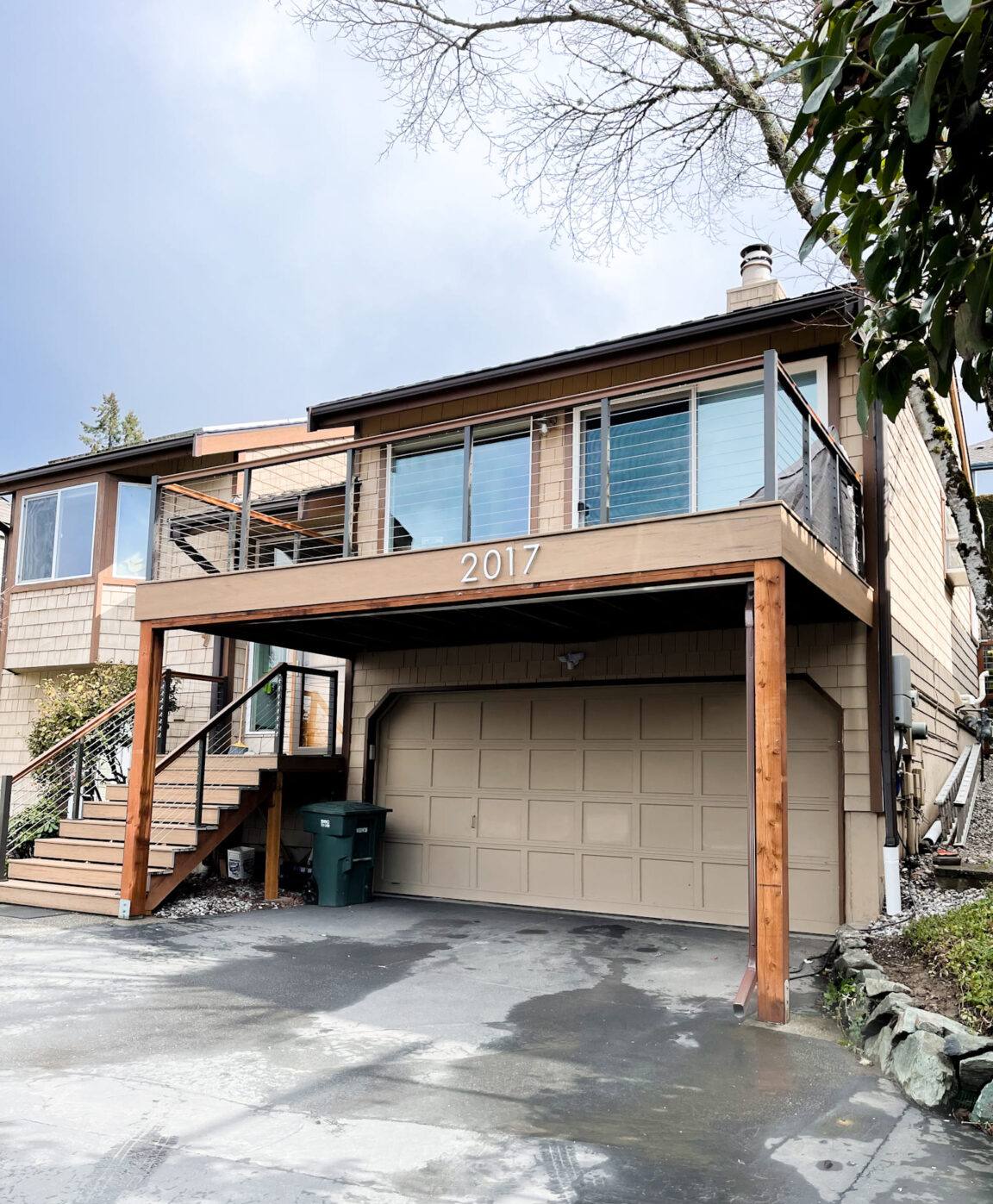
What the Coastal Environment Does to a Deck Over Time
Every material and fastener on an exposed deck is fighting four things at once here in Pinellas County:
- Salt air corrosion — airborne salt accelerates rust on any hardware that isn't rated for coastal exposure, including nails, screws, joist hangers, and railing brackets.
- UV exposure — Florida's sun year-round breaks down unstabilized plastics, dries out wood fibers, and fades color faster than manufacturers' ratings sometimes suggest for inland climates.
- Wind-driven rain — storms don't just drop rain straight down here; wind pushes it sideways and up under boards, into ledger connections, and behind railing posts if flashing and gaps aren't handled correctly.
- Hurricane-force wind loads — a deck attached to the house and any railing system on it has to resist uplift and lateral loads that inland decks never see, and it has to keep doing that after repeated storm seasons, not just pass inspection once.
None of these forces are exotic or unusual for Clearwater Beach — they're just constant. The difference between a deck that lasts fifteen-plus years and one that needs major repair in five comes down to material choice, fastener choice, and detailing at every connection point.
Choosing the Right Decking Material
There's no single "best" decking material for every homeowner — it's a real trade-off between upfront cost, maintenance tolerance, and how the material actually behaves this close to the water. Here's how the common options stack up for a Clearwater Beach property:
| Material | Upfront Cost | Maintenance | Coastal Durability |
|---|---|---|---|
| Pressure-treated pine | Lowest | Annual sealing/staining required | Fair — prone to cupping, splintering, and fastener corrosion without diligent upkeep |
| Capped composite | Mid-high | Low — periodic washing | Good — resists moisture and fading better than uncapped composite, but formulation quality varies by brand |
| Cellular PVC | Highest | Very low | Very good — doesn't absorb moisture, holds up well to sun and salt, but installation is less forgiving of mistakes |
| Tropical hardwood (e.g., ipe) | High | Periodic oiling to maintain color | Very good structurally — naturally dense and rot-resistant, but hardware and fastening require extra care |
We'll talk through this table with you honestly during your estimate. Pressure-treated wood isn't a bad choice — it's a real budget option that works fine if you're committed to annual maintenance. Composite and PVC cost more up front but trade that for far less upkeep over the life of the deck, which matters a lot to homeowners who aren't on the beach year-round. We won't push a product because it carries a better margin; we'll tell you what fits your budget and how much upkeep you're actually willing to do.
A Note on "Capped" vs. Uncapped Composite
Not all composite decking is built the same. Early-generation uncapped composite absorbs moisture at the surface and can mold or fade unevenly in a humid, sun-heavy climate like ours. Capped composite has a protective outer shell that resists moisture intrusion and UV fading much better — it's the version we recommend when a homeowner wants composite on a beach-adjacent property. We'll walk you through manufacturer warranty terms so you know exactly what's covered before you commit.
Framing, Fasteners, and Hardware That Actually Last
The decking surface is what you see, but the framing and hardware underneath it is what determines whether the deck stays safe and solid. On a Clearwater Beach project, we treat this as non-negotiable:
- Structural framing rated for ground contact where required, with joist tape or flashing to keep moisture out of end grain and fastener holes.
- Stainless steel or marine-grade coated fasteners throughout — standard galvanized hardware corrodes noticeably faster this close to salt air, and rust streaks on decking or siding are one of the most common complaints we see on older beach decks.
- Properly flashed ledger board connections where the deck attaches to the house, since this is the single most common point where wind-driven rain finds its way into wall framing.
- Joist hangers, post bases, and hurricane ties sized and spaced to meet current wind load requirements, not just what was code when an older deck was originally built.
A deck can look finished and still be under-built where it counts. We inspect and photograph the framing stage before decking goes down so you can see exactly what's holding the structure together.
Permits, Flood Considerations, and Florida Building Code
Deck construction on Clearwater Beach is permitted work — it isn't a project that should be done off the books, even for a simple replacement. Because the beach is a barrier island, some properties fall under additional flood-zone construction requirements that affect footing depth, elevation, and connection details. We pull the required permits, coordinate inspections, and build to the current Florida Building Code wind and structural requirements for this area rather than guessing at what might pass.
If your property has specific flood-zone designations or HOA/condo association rules — which is common along the beach — we'll factor those into the plan before we ever start framing, so there are no surprises at inspection or at resale.
Railings, Stairs, and Code-Required Safety Details
Railings and stairs are where a lot of deck failures actually happen — not from rot, but from loose connections that were never solid to begin with. Code requirements exist for a reason here: guardrail height, baluster spacing, and stair rise/run all affect real safety, especially on an elevated beach deck exposed to wind. We build railings to spec with corrosion-resistant hardware and post connections rated for the same wind loads as the rest of the structure — not just screwed to the fascia board and called finished.
Our Deck Building Process
- On-site consultation — we look at your existing structure or building site, talk through material and budget options, and take measurements.
- Design and permitting — we finalize the plan, pull permits with the appropriate local authority, and schedule required inspections.
- Demolition (if replacing) — old decking, framing, and hardware are removed and any hidden damage to the ledger or house connection is assessed before we build back.
- Framing — structural framing, flashing, and hardware go in first, inspected before decking is installed.
- Decking and railings — surface material and railing systems are installed per manufacturer specs and code.
- Final walkthrough and inspection — we review the finished deck with you and confirm it passes final inspection.
Deck Maintenance Checklist for Clearwater Beach Homeowners
Whatever material you choose, a little seasonal attention goes a long way in this climate. Keep an eye on:
- Rust streaks or corrosion at visible fasteners, brackets, and railing connections
- Soft spots, gaps, or discoloration where the deck meets the house (ledger area)
- Loose or wobbly railing posts, especially after a windy season
- Standing water or debris trapped between boards, which accelerates wear
- Faded or chalky finish on wood surfaces that need re-sealing
- Any visible cracking in footings or post bases after a storm
Catching these early is far cheaper than waiting for a full repair, and after any significant storm it's worth a quick visual check before the deck sees heavy use again.
Why a Crew That Already Works Clearwater Beach Matters
Building a deck three miles inland and building one on Clearwater Beach are not the same job, even though they look similar on paper. A crew that already works this stretch of Pinellas County knows which fastener grades actually hold up here, which flood-zone and permitting requirements apply to beach properties, and which decking products perform the way they're advertised versus which ones struggle with our combination of sun, humidity, and salt. That local track record shows up in fewer callbacks, fewer surprises at inspection, and a deck that's still solid five hurricane seasons from now — not just on the day it's finished.
If you're considering a new deck or need an honest look at repairing an existing one, we're happy to come take a look. Fill out the form below for a free, no-pressure estimate — we'll tell you what your deck actually needs, not just what's easiest to sell.