 Clearwater Siding
 Decks in Coachman Ridge Face a Different Set of Conditions
A deck built in Coachman Ridge doesn't age the way one does in a drier, milder climate. Between hurricane-force wind events, intense year-round UV exposure, wind-driven rain, and salt-laden air that reaches even inland neighborhoods on a peninsula like Pinellas County, the materials and construction details that hold up elsewhere often fail early here. Fasteners rust from the inside out. Wood checks and silvers under UV before it ever rots. Framing that isn't properly flashed traps water against ledger boards and structural posts, and the damage stays hidden until a board feels soft underfoot.
None of this means a deck in Coachman Ridge has to be a maintenance headache or a short-lived investment. It means the build has to account for these conditions from the design stage forward, not patch around them after the fact. This page covers what that actually looks like for a custom deck project in this specific part of Clearwater.
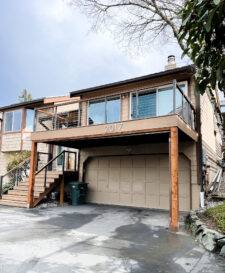
What a Deck Built for This Climate Actually Requires
Clearwater sits in a wind zone where decks, like the rest of the structure attached to your home, need to be engineered for uplift and lateral load, not just vertical weight. A deck that only has to hold people standing on it is a different structural problem than one that has to stay attached to your house through sustained high winds and gusts. The connection points — where the deck ties into the house, where posts meet footings, where joists meet beams — are where failures start, and they're also the parts most homeowners never see or think about.
Beyond wind, three other regional factors shape how we build:
- UV load — Florida sun degrades untreated or poorly finished wood surfaces far faster than the same material would age in a northern climate, so surface treatment and material choice matter more here than the marketing on the box suggests.
- Wind-driven rain — Storms in this area don't just fall straight down; they drive moisture sideways and upward under overhangs and ledger connections, so flashing details that would be optional elsewhere aren't optional here.
- Salt and humidity — Even away from the immediate coastline, Pinellas County's air carries enough salt content to accelerate corrosion in standard fasteners and connectors over just a few seasons.
Choosing the Right Decking Material
There's no single "best" decking material — there's a best material for your budget, your maintenance appetite, and how much sun and weather exposure your specific deck location will get. Here's how the common options actually compare under Clearwater conditions:
| Material | How it handles this climate | Maintenance | Typical lifespan here |
|---|---|---|---|
| Pressure-treated pine | Affordable, but UV and humidity cause checking, splintering, and warping faster than in drier climates | Annual sealing/staining recommended | 10-15 years with upkeep |
| Composite decking | Resists UV fading and moisture absorption well; color-through capped boards hold up best in direct sun | Periodic washing, no sealing/staining | 25-30+ years, manufacturer-dependent |
| PVC decking | Fully moisture-proof, handles humidity and rain exposure with no wood-based rot risk | Low — occasional cleaning | 25-30+ years |
| Tropical hardwoods | Naturally dense and rot-resistant, but requires consistent oiling to prevent graying and surface checking under strong UV | Regular oiling, 1-2x per year | 20-25 years with diligent care |
Composite and PVC decking have become the more common choice for homeowners in this area who want to spend less time maintaining the deck and more time using it. That said, real wood still has a place, especially where the look and feel of natural timber matters more than long-term low maintenance — it just needs an honest conversation about the upkeep involved before you commit.
A Note on Hidden Structural Wood
Even an all-composite deck surface sits on a wood or engineered-lumber frame underneath in most residential builds. That framing lumber needs to be rated for ground contact or above-ground exposure as appropriate, and every cut end and drilled hole needs to be sealed — because that's where moisture gets in first, regardless of what the walking surface is made of.
The Structural Work Nobody Sees
The parts of a deck that determine whether it lasts 10 years or 30 are almost entirely hidden once the project is finished. This is also where corner-cutting is easiest to hide and hardest for a homeowner to catch after the fact.
Ledger Board Attachment
The ledger board — where the deck ties into your house — is the single most common point of failure in residential deck construction nationally, and wind-driven rain in this region makes proper flashing even more critical. A correctly built ledger connection includes structural flashing that directs water away from the house band board, not caulk alone, and lag bolts or through-bolts rated for the load, not construction screws.
Footings and Post Bases
Footings need to be sized and set to local frost-free depth requirements and soil conditions, with post bases that keep the structural post itself off the concrete and out of standing water. Pinellas County's sandy soil drains well in most areas, but footing depth and diameter still need to be verified for your specific lot, not assumed from a standard plan.
Fasteners and Hardware
This is the detail that separates a deck that looks fine for five years from one that stays sound for twenty-five. In a coastal-influenced climate, standard galvanized fasteners corrode faster than their rated lifespan suggests. Stainless steel or high-grade coated fasteners rated for coastal/marine exposure cost more up front and are worth it on every connector, joist hanger, and screw that isn't easily replaceable later.
Permits, Wind Load, and Local Code
Decks attached to a home in Clearwater and Pinellas County generally require a building permit, and the structural design needs to meet Florida Building Code wind load requirements for this zone. This isn't paperwork for its own sake — it's the mechanism that ensures the framing, footings, and attachment points are actually sized for the wind loads this area sees. Skipping the permit process, or hiring a crew that skips it for you, leaves you holding the liability if something fails, and can complicate a home sale or insurance claim down the road.
Permitted work also typically means inspections at key stages — footings before they're poured over, framing before decking goes down — which is a second set of eyes on the structural work that matters most.
How We Approach a Coachman Ridge Deck Project
Every property is different, but the process we follow stays consistent because it's built around the failure points this climate actually causes:
- On-site assessment of sun exposure, drainage, and how the deck location relates to your home's existing roofline and water flow
- Material recommendation based on your maintenance preferences and budget, with the honest tradeoffs explained up front
- Engineered plans that meet Pinellas County wind load and structural requirements, submitted for permit before any work begins
- Structural flashing at every ledger and house connection point, not caulk-only shortcuts
- Coastal-rated fasteners and connectors throughout, not just at visible points
- Footings sized and inspected to code, not eyeballed to "what's worked before"
- Final walkthrough covering how to maintain your specific decking material for this climate
Keeping Your Deck in Good Shape Year After Year
Maintenance needs depend heavily on the material you choose, but a few things apply across the board in this climate. Keep gutters and downspouts near the deck clear so water isn't dumping directly onto framing or footings. Check fastener heads periodically for early rust staining, which shows up well before a fastener actually fails. If you have a wood deck, don't let sealing lapse — UV damage that's caught early can be sanded and resealed, but damage left too long means board replacement. For composite or PVC decking, periodic washing prevents mildew buildup in Florida's humidity, even though the material itself won't rot.
After any major storm, a quick visual check of post bases, railings, and the ledger connection is worth the ten minutes it takes — catching a loosened connection early is a much smaller fix than dealing with it after a second storm finds the same weak point.
Why Hiring a Crew That Already Works Coachman Ridge Matters
A deck built to a generic national spec sheet isn't necessarily built for this climate. Contractors who work regularly in Clearwater and the surrounding Pinellas County area know which fastener grades actually hold up, which flashing details wind-driven rain will find a way around if skipped, and what the local permitting process actually requires before a footing gets poured. That familiarity shows up in decisions made throughout the project, not just in the finished look of the deck.
It also means someone who understands the tradeoffs between material options isn't guessing — they've seen how pressure-treated pine, composite, PVC, and hardwood decking each actually perform after a few Florida summers, not just how they're marketed when new.
If you're considering a new deck or replacing one that's showing its age, we're glad to take a look and talk through what makes sense for your property, your budget, and how you actually plan to use the space. Fill out the form below for a free, no-pressure estimate.