 Clearwater Siding
 Coachman Ridge Homes Face a Specific Set of Exterior Stresses
Like the rest of Clearwater and Pinellas County, homes in the Coachman Ridge area sit inside a climate that is genuinely hard on exterior building materials. It's not one problem — it's four working on the siding at the same time. Hurricane-force winds test how well siding is fastened and how well it holds a nail. Intense, near year-round UV breaks down pigments and resins faster than in almost any other part of the country. Wind-driven rain finds every gap in flashing and trim during a strong squall or tropical system. And salt-laden air, carried inland off Tampa Bay and the Gulf, works on fasteners, caulk joints, and any material that isn't built to resist it. None of these are hypothetical risks in this part of Florida — they're the baseline conditions a siding product has to be engineered around, not just tolerate.
We work in Coachman Ridge and the surrounding Clearwater neighborhoods regularly, and we see the same pattern on older homes: siding that looked fine from the street for years, then failed quickly once moisture got behind it or UV finally broke down a coating. Fiber cement siding, installed correctly, is the product we trust to hold up to that combination — which is why it's the only siding material we install.
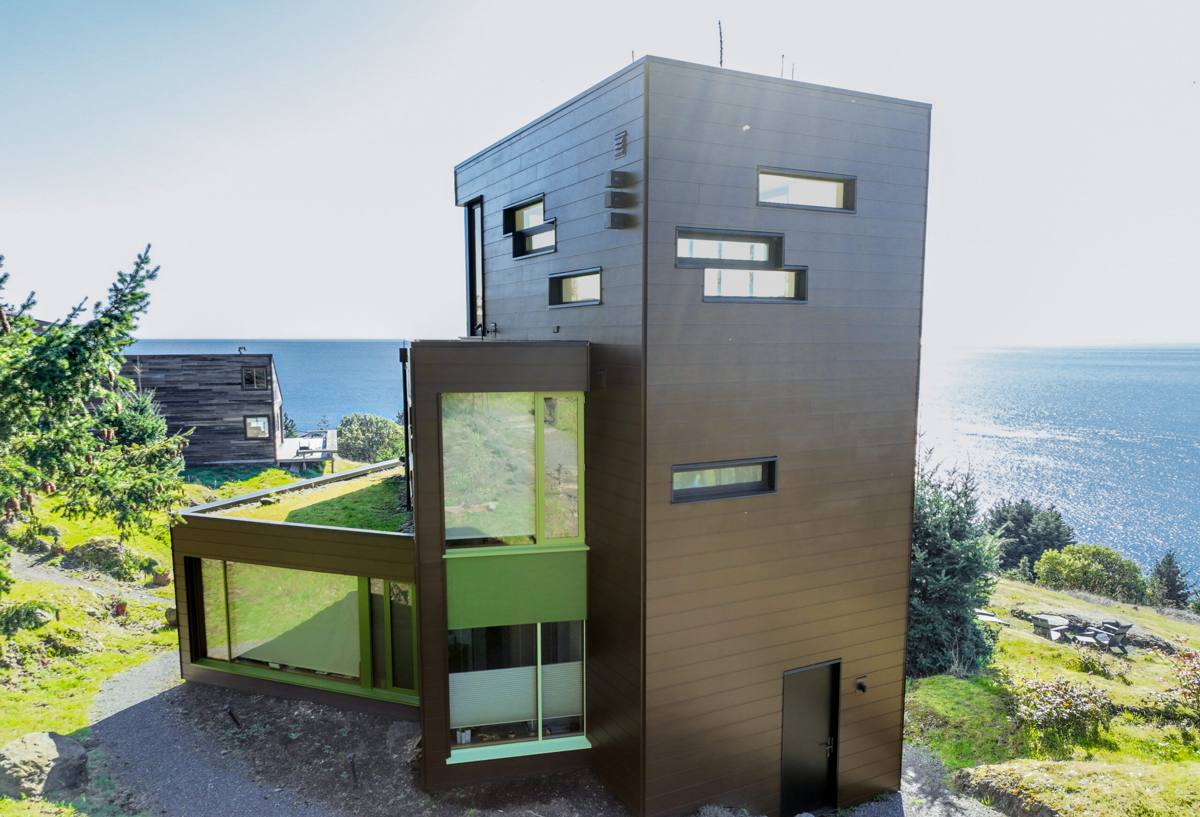
Why We Only Install James Hardie Fiber Cement Siding Here
We don't install vinyl, LP SmartSide, Cemplank, Allura, or primed wood siding. That's not a marketing position — it's a standard we've settled on after weighing how each of those products actually performs under Gulf Coast conditions versus how James Hardie's fiber cement system performs. Fiber cement is non-combustible, dimensionally stable in heat and humidity swings, and resistant to moisture-driven rot and pest damage in a way that engineered wood and vinyl products simply are not built for. James Hardie is the manufacturer we've standardized on because their product line is engineered specifically for climate zones like ours, backed by a factory finish system and a warranty structure that holds up when the installation is done to spec.
The HardieZone System and Why It Matters in a Tampa Bay Climate
James Hardie designs its siding by climate zone rather than shipping one product nationwide. Homes in Clearwater fall into the HZ5 zone, which covers the moisture, humidity, and freeze-thaw profile of the Gulf Coast and Southeast. HZ5 products are formulated and tested for exactly the kind of sustained humidity and wind-driven rain exposure that Coachman Ridge homes deal with, rather than a generic national spec that assumes drier or colder conditions. That distinction matters more than it sounds — a siding board engineered for a dry climate can behave very differently once it's exposed to Pinellas County's humidity load year after year.
ColorPlus Factory Finish vs. Field-Applied Paint
UV is one of the fastest ways siding fails cosmetically in Florida, and paint is usually the first thing to go. James Hardie's ColorPlus finish is baked on in a controlled factory environment through multiple coats, which gives it better fade resistance and adhesion than paint applied on-site after installation. It's not just a convenience feature — it's part of why the finish holds its color through the kind of sun exposure Coachman Ridge gets nearly every month of the year. Field-painted siding can still be done correctly, but it depends heavily on weather conditions at the time of painting and on repainting on schedule, which is one more maintenance item most homeowners would rather not manage.
What Correct Fiber Cement Installation Actually Requires
Fiber cement siding's reputation is only as good as the installation underneath it. Most of the failures we get called out to inspect in this area — cracking, buckling, moisture staining at seams — trace back to installation shortcuts, not the material itself. A correct install on a Coachman Ridge home involves several things that are easy to skip and hard to notice once the siding is up:
- A properly lapped weather-resistant barrier behind the siding, with all seams and penetrations sealed before a single board goes up
- Correct fastener type, spacing, and penetration depth — Hardie's installation specs are precise, and getting this wrong is the single most common cause of premature failure
- Proper clearance between the bottom of the siding and grade, roofing, decks, and patios, so water has somewhere to go instead of wicking into the board
- Flashing integrated at every window, door, and roofline intersection — not caulk used as a substitute for flashing
- Butt joints and seams treated per manufacturer spec, with factory-cut edges sealed where required
- Correct nailing pattern for high-wind zones, since standard fastening schedules are not always adequate for coastal Pinellas County wind exposure
None of this is visible once the job is finished and the house looks good from the street. That's exactly why it matters who does the install, not just what material goes on the wall.
How Fiber Cement Compares to Other Siding Options in This Climate
Homeowners in Coachman Ridge considering a re-side often ask how fiber cement stacks up against the other materials they've seen or been quoted. Here's an honest comparison based on how each material behaves under sustained coastal Florida exposure — not marketing claims.
| Material | Wind & Storm Performance | Moisture Behavior | UV / Fade Resistance | Typical Maintenance |
|---|---|---|---|---|
| James Hardie fiber cement | Strong when installed to fastening spec; non-combustible | Dimensionally stable; resists rot when detailed correctly | ColorPlus finish holds color well over time | Occasional wash; repaint only if field-painted |
| Vinyl siding | Can warp, crack, or blow off in sustained high winds | Doesn't rot, but traps moisture behind it if not vented properly | Color fades and can become brittle under intense UV | Low, but panels are hard to color-match if replaced later |
| LP SmartSide (engineered wood) | Good if fastened correctly, but wood-based core is moisture-sensitive | Vulnerable to swelling and edge failure if moisture gets in | Requires field paint or factory finish maintenance | Higher — moisture inspection and repainting over time |
| Traditional cedar / primed wood | Performs well structurally but is combustible | Prone to rot, insect damage, and warping in humid climates | Needs regular repainting or staining | Highest — ongoing sealing, painting, pest monitoring |
This is why fiber cement, and specifically a climate-engineered product line like Hardie's HZ5, tends to be the material homeowners in this area are happiest with five and ten years after installation — not just on install day.
Signs Your Current Siding Is Already Losing the Battle
Because siding failure often starts behind the surface, it's worth knowing what to look for before a problem becomes a full replacement. On a walk-around of a Coachman Ridge home, the things we check for include soft or spongy spots when pressed, visible cracking or buckling along seams, staining or discoloration that tracks along a seam or window (a sign water is getting behind the material), caulk that's separated or gone brittle at trim joints, and any bowing or waviness when viewed at a low angle along the wall. Any one of these on their own might just need a repair. Several of them together, especially on a home that's due for an exterior update anyway, usually means it's worth having a full inspection rather than patching piece by piece.
Cost Factors for a Fiber Cement Project in This Area
Every home is different, so we don't quote a project without seeing it, but the main variables that move the price on a Coachman Ridge fiber cement job are fairly consistent:
- House size and wall complexity — more corners, gables, and trim details mean more cutting, fitting, and labor time
- Condition underneath the existing siding — if there's water damage or rot in the sheathing, that has to be repaired before new siding goes on, which affects both cost and timeline
- Product line and profile — lap width, plank vs. shingle-style profiles, and trim details all carry different material costs
- Color and finish — factory ColorPlus finishes cost more upfront than primed boards but remove the recurring cost of repainting
- Site access and prep — landscaping, fencing, or tight lot lines around a home can add labor time for material staging and tear-off
We walk through all of these on-site before giving a number, so the estimate reflects the actual house rather than a generic square-footage guess.
Our Process on Coachman Ridge Projects
Assessment and Scope
We start with an on-site walk of the exterior, checking for moisture intrusion, sheathing condition, and any structural issues that need to be addressed before siding goes on. This is also where we talk through product line, color, and trim details specific to the home.
Tear-Off and Substrate Repair
Old siding comes off, and any damaged sheathing or framing is repaired before anything new is installed. Skipping this step is one of the most common ways a re-side goes wrong — new siding over a compromised substrate just hides the problem for a while.
Weather Barrier and Flashing
A continuous, properly lapped weather-resistant barrier goes on first, with flashing detailed at every window, door, and roof intersection before the first board is hung.
Installation to Manufacturer and High-Wind Spec
Siding is installed following James Hardie's fastening schedule for our wind zone, with correct clearances maintained at grade, roofing, and hardscape.
Final Inspection
Before we consider a job finished, we walk the full exterior to check fastening, seams, caulk joints, and trim details against installation spec — the same details that determine whether the siding performs for the next several decades or needs attention in a few years.
Why Local Experience in Coachman Ridge Matters
A crew that regularly works Clearwater neighborhoods understands the practical realities specific to this area — how HOA guidelines in established neighborhoods typically handle exterior material and color changes, how Pinellas County permitting and inspection works for siding replacement, and how to sequence a job around this area's rain patterns so a home isn't left exposed mid-project during a sudden afternoon storm. That local familiarity doesn't replace craftsmanship, but it does mean fewer surprises and fewer delays for a homeowner who just wants the job done right the first time.
If you're weighing a siding replacement or repair for a home in Coachman Ridge, we're glad to come take a look and give you a straightforward, no-pressure estimate — including an honest read on whether your current siding has real life left in it or is due for a full replacement. Use the form below to get started.