 Clearwater Siding
 Decking on a Barrier Island Takes a Different Kind of Abuse
A deck built three miles inland in Pinellas County and a deck built on Clearwater Beach are not living the same life, even if they're made from identical boards. On the beach, salt-laden air moves through the wood or composite constantly, not just during storms. UV exposure runs close to year-round at high intensity. Wind-driven rain gets forced sideways under railings and into joints that a typical rain event would never reach. And when a tropical system does come through, the deck structure needs to hold up under hurricane-force gusts without the fasteners backing out or the substructure racking.
None of this means decking can't be done right on Clearwater Beach — it just means the standard approach used on an inland deck isn't good enough here. The board choice, the fastener choice, the substructure, and the drainage detailing all need to be upgraded for the environment, or you end up replacing a deck in five years that should have lasted twenty.
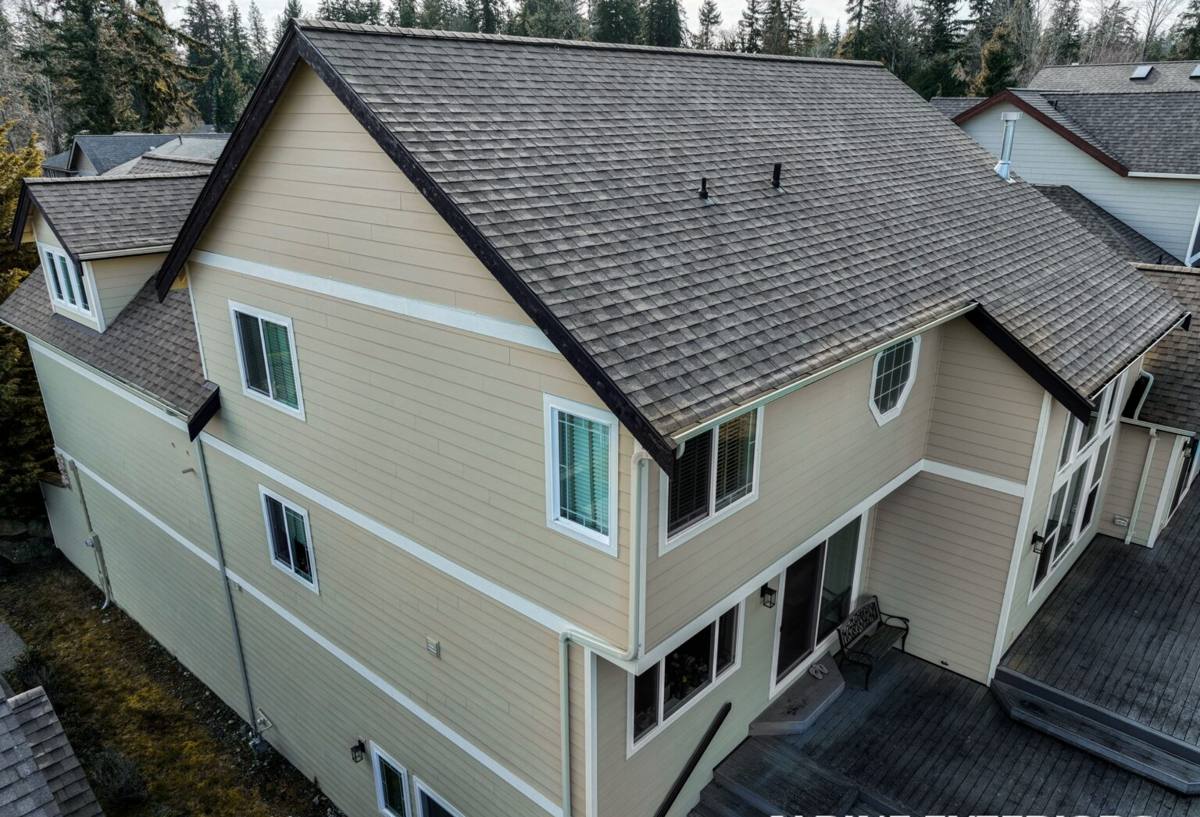
Why Composite Makes Sense for This Environment
Wood decking isn't off the table everywhere in Florida, but on a coastal lot it fights a losing battle against moisture cycling and salt intrusion. Wood absorbs salt-laden humidity, dries out under intense sun, swells again, and that expansion-contraction cycle loosens fasteners, opens up checking and splitting, and accelerates rot at the fastener holes — exactly where you don't want failure to start.
Composite decking, when it's the right product installed the right way, doesn't absorb moisture the same way wood does, doesn't need annual sealing or staining, and holds its color and structure through repeated UV and salt exposure far better over a 15-20 year span. That's why it's become the default recommendation we give for beachside outdoor living spaces — not because it's trendy, but because it's the material that actually matches what this environment demands.
That said, composite is not maintenance-free, and any contractor who tells you otherwise is setting you up for a bad surprise. It still needs to be cleaned periodically, it still needs correct drainage underneath it, and cheaper composite products still degrade faster in coastal UV and salt exposure than better-built ones. The product matters. So does the install.
What a Correct Composite Deck Build Involves
The Substructure
The deck boards get the attention because they're what you see and stand on, but the framing underneath is what determines whether the whole system survives storm-force wind loads. On Clearwater Beach we treat the substructure as the priority, not an afterthought:
- Joists and beams sized and spaced to manufacturer specs for wind uplift, not just standard code minimums
- Structural hardware rated for coastal/marine exposure, not standard interior-grade connectors
- Proper blocking and bracing so the frame doesn't rack under lateral wind loads
- Ledger board attachment (where applicable) flashed and fastened to resist both wind uplift and wind-driven rain intrusion behind the house's exterior
Fasteners and Hardware
This is the detail most homeowners never think to ask about, and it's where a lot of coastal decks quietly fail. Standard galvanized fasteners corrode faster in salt air than most people expect, and once a fastener starts rusting, it weakens right at the point where the board is supposed to be held down. On a beachside build, hardware should be stainless steel or coated specifically for coastal/marine-grade corrosion resistance — every screw, every joist hanger, every structural bolt, not just the ones that show.
Ground Clearance and Ventilation
Composite decking needs airflow underneath it to manage moisture and heat buildup, and that's doubly true near the beach where humidity is already high. Correct ground clearance, proper joist spacing, and unobstructed airflow under the deck keep moisture from getting trapped against the framing, which protects both the substructure and the underside of the boards themselves.
Comparing Composite Options for Coastal Use
Not every composite board is engineered the same way, and the differences matter more on a barrier island than they do inland. Here's a general breakdown of what tends to separate a better coastal choice from a weaker one:
| Factor | What to Look For | Why It Matters at the Beach |
|---|---|---|
| Capping | Fully capped (all four sides) vs. non-capped or partially capped | A full cap resists moisture absorption and salt intrusion far better than exposed composite core |
| UV/Fade Warranty | Longer, manufacturer-backed fade warranty | Reflects how the product is actually engineered to hold color under sustained high-UV exposure |
| Board Density | Higher-density composite core | Denser boards resist moisture wicking and hold fasteners more securely over time |
| Surface Texture | Textured, slip-resistant finish | Wet feet from pool decks or beach walks make traction a real safety factor, not a cosmetic one |
| Heat Performance | Lighter colors or heat-mitigating formulations | Dark composite can get uncomfortably hot underfoot in direct Florida sun |
We'll walk through the specific product lines that fit your budget and the look you want during the estimate — the goal here is just to show you what actually separates a good coastal product from one that isn't built for this exposure.
Drainage: The Detail That Makes or Breaks a Beachside Deck
Wind-driven rain during Gulf storms doesn't fall straight down — it gets pushed sideways and finds its way into gaps that a calmer inland rain never would. A well-built deck accounts for this with proper board spacing for water shedding, correct slope where the deck meets the house, and flashing details at any wall or door transition that keep water moving away from the structure instead of pooling against it. Skipping this step is one of the most common reasons a deck that looks fine on installation day develops soft framing or fastener corrosion within a few years.
Our Process for a Clearwater Beach Deck Project
We keep the process straightforward, and every step accounts for the coastal exposure your property deals with:
- On-site assessment — we look at sun exposure, wind exposure, existing structure (if replacing a deck), drainage patterns, and how the space will actually be used
- Product and layout discussion — honest options across budget tiers, with the trade-offs explained plainly, not upsold
- Permitting — pulled and handled correctly for Clearwater and Pinellas County requirements before work starts
- Substructure build — coastal-rated framing and fasteners, inspected before boards go down
- Decking installation — boards, fastening system, and edge/trim details installed to manufacturer spec
- Final walkthrough — we go over care and what to expect from the product in this environment
Maintaining a Composite Deck in a Salt-Air Environment
Composite decking cuts down on maintenance dramatically compared to wood, but "low-maintenance" isn't "no-maintenance," especially this close to the Gulf. A simple seasonal routine keeps a coastal composite deck performing the way it should:
- Rinse the deck surface periodically to clear salt residue before it builds up in the board texture
- Sweep or blow off sand and debris rather than letting it grind into the surface underfoot
- Clean underneath the deck periodically to keep the substructure area free of debris that traps moisture
- Check railings, fastener caps, and any hardware for early signs of corrosion once or twice a year
- After any major storm, do a quick visual check of the framing and connections, especially if the deck took direct wind or storm surge exposure
Why It Matters That We Already Work Clearwater Beach
A deck detail that works fine forty miles inland can be the wrong call on a barrier island lot. Knowing to spec coastal-grade fasteners as standard, understanding how wind-driven rain behaves against a beachside structure, and building substructures to handle real hurricane-force wind loads isn't something you learn from a manufacturer's install manual — it's something you learn from building decks in this exact environment, on this exact stretch of coastline, repeatedly. That local experience is what keeps a deck performing for its full service life instead of needing early repairs.
We also know the practical side: what Pinellas County and Clearwater permitting requires for a coastal build, how flood zone considerations near the beach can affect structural details, and what inspectors here are looking for. That local familiarity keeps your project moving instead of getting held up by details an out-of-area crew wouldn't anticipate.
Let's Talk About Your Deck
If you're planning a new composite deck or replacing one that didn't hold up to the beach environment, we're glad to walk the property, look at your sun and wind exposure, and give you a straight assessment of what your space needs. There's no pressure and no cost to get an estimate — just fill out the form below and we'll take it from there.