 Clearwater Siding
 Clearwater's Climate Is Hard on a Deck
A deck in the Countryside area of Clearwater takes a different kind of beating than a deck almost anywhere else in the country. Pinellas County sees intense, near year-round UV exposure that bakes wood fibers and breaks down finishes faster than manufacturers' labels usually admit. Add in wind-driven rain from afternoon storms and the occasional hurricane-strength wind event, and you've got a structure that's constantly cycling between soaked and bone-dry. That cycling is what actually destroys a deck — not one big storm, but years of expansion, contraction, and moisture intrusion at every joint and fastener.
Countryside sits inland from the immediate coastline, so the salt air here is less aggressive than a deck built right on the Intracoastal or Gulf beaches. But Clearwater is still a coastal city, and Gulf breezes carry enough salt content to accelerate corrosion on lower-grade fasteners and hardware over time. Combine that with our humidity and you have an environment where the wrong materials or the wrong build details fail years before they should.
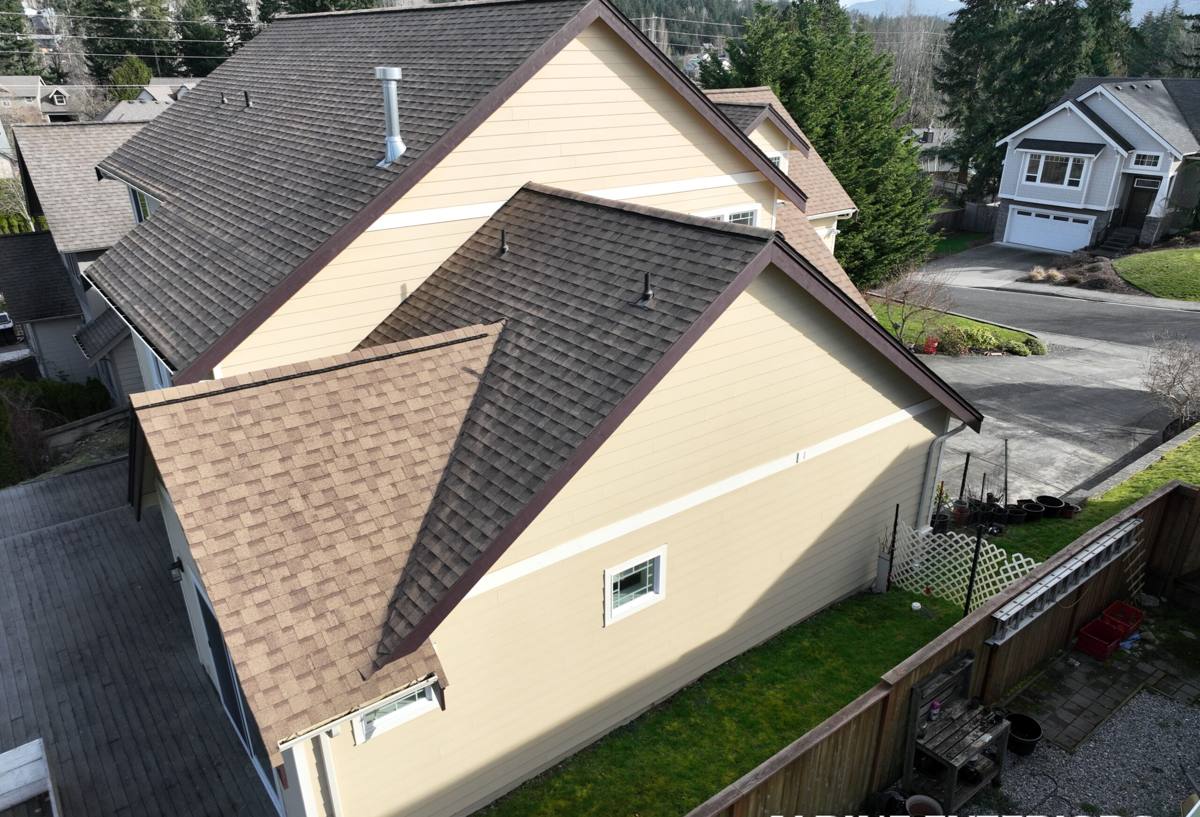
Signs a Countryside Deck Needs Replacement, Not Another Repair
Homeowners often call us wanting a repair quote, and sometimes that's the right call. But there's a point where patching individual boards or sistering a joist is just delaying a full rebuild — and spending money on a structure that's already compromised underneath. Here's what tells us a deck is past the point of spot repair:
- Soft, spongy, or springy spots in the decking when you walk across it
- Rot or staining where the deck's ledger board meets the house — this is a structural connection point, not cosmetic
- Rusted, streaking, or crumbling fasteners and hardware
- Railings or posts that wobble or flex under light pressure
- Support posts that have shifted, tilted, or sunk at the base
- Boards that are cracked, cupped, or splitting from sun exposure rather than just weathered gray
- Recurring mold or mildew that comes back within weeks of cleaning
- Damage after a named storm that affected framing, not just surface boards
If you're seeing two or more of these, especially anything involving the ledger board or support posts, a full replacement is usually more cost-effective than chasing repairs on a structure that's failing from the inside out.
What a Correct Deck Replacement Actually Involves
A deck is only as good as what's underneath it. Anyone can lay new boards over old framing — that's not a replacement, that's a facelift, and it doesn't hold up to our climate. A proper replacement rebuilds the structure from the ground up.
Ledger Board and House Connection
The ledger board is the single most important — and most commonly done wrong — part of a deck. It has to be properly flashed to keep wind-driven rain from working its way behind it and into your home's framing, and it has to be fastened with hardware rated for the load and for our humidity. A poorly flashed ledger is the number one reason we find rot at the house connection on older decks.
Footings and Posts
Footings need to be sized and set to local code depth, and posts need to sit on proper bases that keep the wood or composite material off direct contact with concrete and soil moisture. In Florida's wet-dry cycling soil, undersized or shallow footings are a common shortcut that shows up as a wobbly deck within a few years.
Framing and Hardware
Joist hangers, structural screws, and connectors should be corrosion-resistant hardware rated for exterior and coastal-influenced use — not standard interior-grade fasteners that streak and weaken. Given our wind events, hurricane ties and proper structural connections between framing members matter as much as the visible decking above.
Decking Surface and Railings
The final layer — decking boards and railings — is where material choice and fastening method most affect long-term maintenance. Railings also have code-required height and baluster spacing that we build to as standard, not as an upsell.
Choosing a Decking Material That Holds Up in Our Climate
There's no single "best" decking material — there's a best material for your budget, your maintenance tolerance, and how much sun and rain that specific deck will see. Here's how the common options actually perform under Pinellas County conditions:
| Material | UV / Fade Resistance | Moisture Behavior | Maintenance | Typical Lifespan Here |
|---|---|---|---|---|
| Pressure-treated wood | Fades and grays without regular sealing | Absorbs moisture; prone to cupping/splitting if not maintained | Annual cleaning + resealing recommended | 10–15 years with upkeep |
| Composite decking | Good, varies by product and color | Doesn't absorb like wood, but core matters — capped composite handles our humidity best | Occasional washing, no sealing | 20–25+ years |
| PVC / vinyl decking | Very good | Fully moisture-resistant, doesn't rot or swell | Lowest maintenance of the three | 25+ years |
We install pressure-treated wood, composite, and PVC decking, and we'll walk you through the honest trade-offs for your specific project rather than pushing whichever material has the best margin. Wood costs less up front but demands the most upkeep in our sun and rain. Composite and PVC cost more initially but largely eliminate the sealing and staining cycle that Florida weather makes miserable.
Permits, Wind Load, and Pinellas County Code
Deck replacement in Clearwater isn't a weekend project you can skip past the county on — and you shouldn't want to. Pinellas County requires permitting for deck construction and reconstruction, with inspections tied to wind load and structural connection requirements appropriate for our hurricane exposure. That means specific standards for how the ledger attaches to the house, how footings are sized, and what hardware is acceptable.
Skipping permits might save time short-term, but it creates real problems at resale — unpermitted structural work is a common flag in home inspections — and it means nobody with code expertise ever verified the structure can handle a real wind event. We pull permits and schedule inspections as a standard part of every deck replacement, not an optional add-on.
Our Deck Replacement Process, Start to Finish
- On-site assessment — we inspect the existing deck, ledger connection, and framing to confirm replacement is the right call and identify any underlying issues (like water damage at the house wall) that need addressing first.
- Design and material selection — we go over decking material, railing style, and layout options based on your budget and how you actually use the space.
- Permitting — we handle the Pinellas County permit submission and engineering documentation where required.
- Demolition — full removal of the old deck, including checking the ledger area and house sheathing for hidden moisture damage before rebuilding.
- Structural rebuild — footings, posts, framing, and ledger flashing installed to code, built for our wind and moisture conditions.
- Decking and railings — final surface and railing installation with fastening methods appropriate to the chosen material.
- Final inspection and walkthrough — county inspection sign-off, followed by a walkthrough with you so you know how to care for the new deck.
Why Hiring a Crew That Already Works in Countryside Matters
Countryside has a mix of home styles and lot layouts built across different decades, which means slab heights, setback requirements, and existing structural conditions vary more than people expect. A crew that already works this neighborhood has seen the common framing quirks and house-attachment issues specific to homes built in this part of Clearwater, so there are fewer surprises once demolition starts.
There's also a practical response advantage. When a named storm rolls through and damages an existing deck, a contractor already established in the area can typically get to an assessment faster than a company driving in from across the county. And because we're local, we're accountable locally — we're not disappearing after the invoice clears.
What Affects the Cost of a Deck Replacement
We don't publish fixed pricing because every deck is different, but these are the factors that move the number up or down on most Countryside projects:
| Factor | Why It Matters |
|---|---|
| Square footage | Larger decks need more framing, footings, and decking material |
| Material choice | Pressure-treated wood costs less upfront than composite or PVC |
| Height and stairs | Elevated decks need more structural support and additional railing/stair code compliance |
| Railing style | Cable, glass, or custom railing systems cost more than standard baluster railing |
| Demolition complexity | Decks attached over difficult access points or requiring extensive haul-away add labor time |
| Engineering/permit needs | Larger or elevated structures may require engineered plans beyond a standard permit |
Broadly, a straightforward ground-level or low deck in pressure-treated wood sits at the lower end of the cost range, while a larger elevated deck in composite or PVC with upgraded railing sits at the higher end. We'll give you real numbers once we've seen the site and talked through what you want.
If your Countryside deck is showing its age or didn't hold up the way it should have, we're happy to take a look. Fill out the form below for a free, no-pressure estimate — we'll assess the structure honestly and tell you whether repair or full replacement makes sense before recommending anything.