 Clearwater Siding
 What "New-Construction Windows" Actually Means
In the window trade, "new-construction" isn't a marketing term — it describes a specific type of window and a specific installation method. A new-construction window has a nailing flange (sometimes called a nail fin) built into the frame. That flange gets fastened directly to the wall sheathing before siding, stucco, or brick goes on, and it becomes part of the wall's weatherproofing system. This is different from a "replacement" or "insert" window, which is built without a flange and installed inside an existing frame that stays in place.
Homeowners in Countryside run into new-construction windows in a few real situations: building a new home on an infill lot, doing a room addition or garage conversion, replacing a bay window or sliding glass door opening where the old frame has to come out entirely, or doing a full "frame-out" replacement where the installer removes the old unit down to the studs instead of working around it. If your project involves open wall studs and exposed sheathing at the window opening, you're in new-construction territory, even if the rest of the house has been standing for forty years.
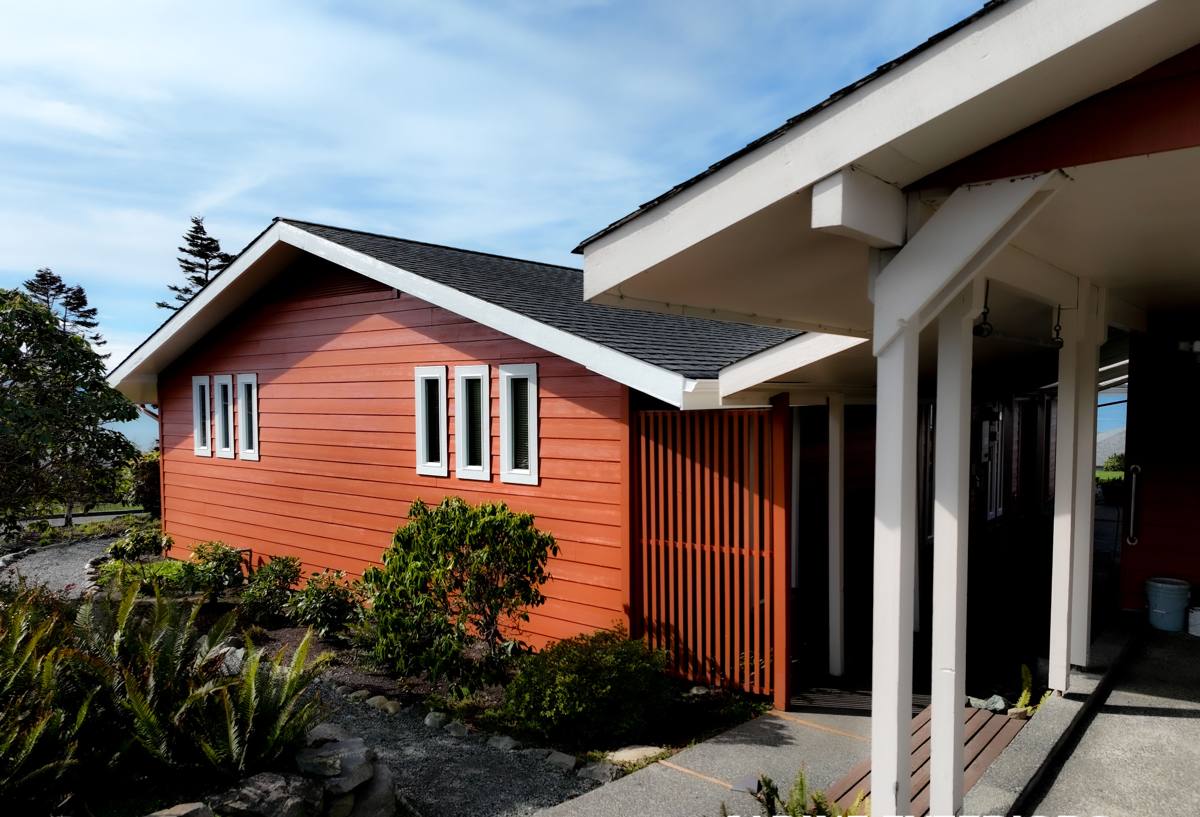
Why Countryside's Housing Stock Makes This a Judgment Call
Countryside is a mature, established part of Clearwater, and that matters for window work. A lot of homes here were built in the 1970s and 80s, which means original openings, wall assemblies, and even wood species vary block to block. When we open up a wall for a new-construction window, we're not just setting a frame — we're often finding out what's actually behind the old siding or stucco: sheathing that's held up fine, sheathing that's soft from decades of humidity, or framing that was never flashed correctly the first time. A crew that hasn't seen much of this housing stock can miss those issues and simply seal a new window into a wall that still has a moisture problem underneath.
Pinellas County's climate doesn't leave much room for that kind of mistake. Between hurricane-force wind events, sun exposure that runs nearly year-round, wind-driven rain that gets pushed sideways into wall assemblies, and the slow corrosive effect of salt air working inland from the Gulf, a window opening that isn't properly flashed and sealed will eventually leak — it's a matter of when, not if.
What This Climate Demands From an Opening
- Wind resistance — the window itself and its attachment to the framing both need to hold up under sustained and gust-load wind pressure.
- Water management — flashing has to shed water down and out, never trap it behind the siding.
- UV stability — frame materials, sealants, and finishes need to tolerate constant sun without chalking, cracking, or going brittle early.
- Corrosion resistance — fasteners and hardware exposed to salt-laden air need the right coatings or materials, especially the closer a home sits to the coast.
Florida Building Code and Wind Ratings, in Plain Terms
Every new-construction window installed in Pinellas County has to meet the wind pressure requirements set by the Florida Building Code for that specific address, which are based on the county's design wind speed, the home's height and exposure, and where the opening sits on the building. Windows carry either a Notice of Acceptance (NOA) from Miami-Dade County or a Florida Product Approval number — both are ways of documenting that a specific window model has been tested and rated for wind pressure and, where required, large- and small-missile impact.
Pinellas County is not classified as a High-Velocity Hurricane Zone (that designation applies to Miami-Dade and Broward), but it does fall within a wind-borne debris region, which means impact-rated glass or approved protective coverings are generally required on new openings depending on the home's wind zone and design pressure. The permit process is where this gets checked — the window's approval documentation has to match what the opening actually needs, not just carry a rating that sounds impressive on a sales sheet.
This is also where "new-construction" installation and code compliance intersect directly: the flange attachment, the fastener schedule, and the flashing sequence around the window are all part of what an inspector is verifying, not just the window unit itself. A code-rated window installed with the wrong fastener pattern or without proper flashing integration isn't actually performing to its rating.
New-Construction vs. Replacement Windows
| Factor | New-Construction (Flange) Windows | Replacement/Insert Windows |
|---|---|---|
| Wall condition required | Open studs, exposed sheathing | Existing frame stays intact |
| Flashing access | Full access to integrate with house wrap/WRB | Limited — sealant-dependent |
| Typical use case | New builds, additions, full remodels, frame-out replacements | Swapping windows in a sound, non-leaking existing frame |
| Exterior finish impact | Siding/stucco/trim must be cut back and reworked | Existing trim usually stays in place |
| Best long-term outcome when opening has damage | Yes — problem gets addressed, not covered | No — issues behind the frame can persist |
Neither approach is universally "better" — they solve different problems. The mistake we see most often is a replacement-style install used on an opening that actually needed to be opened up and done as new-construction, usually to save time or cost. It looks fine on installation day and causes trouble two or three rainy seasons later.
What a Correct New-Construction Installation Involves
The window unit itself is only part of the job. What actually determines whether the opening performs for the next twenty-plus years is the sequence around it:
- Opening prep — squaring the rough opening, confirming sheathing is sound, and correcting anything that isn't before the window ever goes in.
- Sill pan flashing — a sloped, sealed pan at the bottom of the opening so any water that gets past the window sheds outward instead of soaking into the framing.
- Weather-resistive barrier integration — the house wrap or building paper has to be cut, lapped, and taped in the correct shingle-style order so water is always directed down and out, never trapped.
- Window setting and fastening — the unit gets shimmed level and plumb, then fastened through the nailing flange on the schedule specified by its product approval — not a generic pattern.
- Flange and head flashing — flashing tape over the flange and a head flashing detail above the window that sheds water around, not into, the top of the opening.
- Interior and exterior sealant — a backer rod and sealant joint on the interior for air sealing, and a proper exterior sealant joint that's compatible with the frame material and finish.
Skip or rush any one of these steps and the window itself can be a perfectly good product while the opening still fails.
Frame Material and Glass — What Actually Affects the Outcome
| Factor | What to Weigh |
|---|---|
| Frame material | Vinyl is cost-effective and low-maintenance; aluminum handles larger spans and heavier glass; fiberglass and composite frames resist UV-driven warping over the long run. |
| Glass package | Impact-rated laminated glass vs. standard glass with separate hurricane protection — impacts upfront cost, storm-prep routine, and daily light/sound performance. |
| Low-E coating | Reduces solar heat gain, which matters directly for cooling costs given how much direct sun Pinellas County gets most of the year. |
| Hardware and fastener finish | Coated or stainless fasteners and hardware hold up better against salt air, especially for homes closer to the water. |
| Warranty structure | Look at what's covered — glass seal failure, frame defects, and labor are often separate warranty terms, not one blanket guarantee. |
Our Process for Countryside Projects
We start with a walk-through of the actual openings — new build, addition, or a full frame-out replacement — and check what the wall assembly and framing are giving us to work with before we talk products. From there we confirm the wind pressure and impact requirements for that specific address and select windows with product approval documentation that actually matches, not just a rating that sounds sufficient. We pull permits, install using the sill pan, flashing, and fastening sequence outlined above, and we're available for the inspections that come with permitted window work. Nothing about this process is unique to us — it's the standard the code and the climate both require. What we bring is having done it repeatedly on the mix of home ages and wall types you find throughout Countryside and the rest of Clearwater.
Before You Sign: A Practical Checklist
- Confirm the installer is pulling a permit — new-construction window work at an opening this size should be permitted, not done off the books.
- Ask to see the specific product approval (NOA or Florida Product Approval number) for the window model being quoted, and confirm it covers your home's wind pressure requirement.
- Ask what flashing method will be used at the sill, jambs, and head — a vague answer here is a warning sign.
- Get the warranty terms in writing, and ask specifically what's covered on labor versus materials.
- Ask how they'll handle any sheathing or framing damage found once the old window or wall section comes out — and get that answer before work starts, not after.
Why Local Experience With Countryside Homes Matters
A window that's rated correctly on paper still depends entirely on the installation for its real-world performance, and the installation depends on understanding what's actually inside the wall. A crew that's worked openings throughout Countryside and the surrounding Clearwater area has already seen the range of construction methods and conditions common to this part of Pinellas County — which shortens the guesswork and reduces the odds of a surprise mid-project. That familiarity, paired with a correct flashing and fastening sequence and the right product approval for your address, is what determines whether a new-construction window installation holds up through the next decade of Gulf Coast weather or becomes a problem down the road.
If you're planning a new build, addition, or full window replacement in Countryside, we're happy to walk the openings with you and put together a straightforward, no-pressure estimate — just fill out the form below to get started.