 Clearwater Siding
 Decks Built for Clearwater Beach's Coastal Conditions
A deck on Clearwater Beach lives a harder life than one built a few miles inland. Salt-laden air off the Gulf works into every seam, fastener, and joint. UV exposure is intense nearly year-round, breaking down finishes and stressing wood fibers. Wind-driven rain finds its way under poorly flashed ledger boards, and during hurricane season, an entire deck structure has to hold together under wind loads that inland builders rarely have to design for. None of this means a deck is a bad investment here — it means the deck has to be built differently than a catalog plan from a cooler, drier climate.
We build and repair custom decks for homeowners throughout Clearwater and the beach community specifically, and the difference between a deck that lasts fifteen-plus years here and one that starts failing in three usually comes down to decisions most homeowners never see: what's under the boards, what's holding the boards down, and how the whole structure ties back to the house.
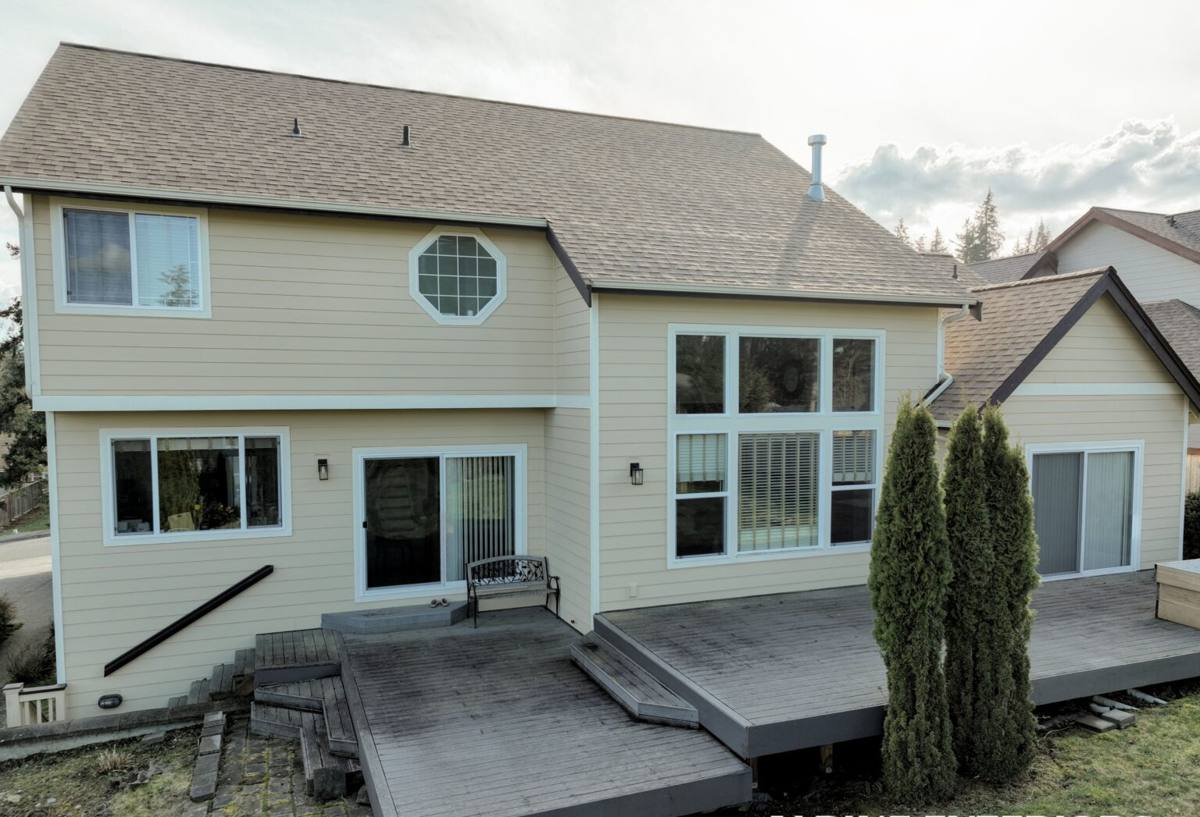
What Coastal Exposure Actually Does to a Deck
Salt Air and Corrosion
Salt air doesn't just sit on the surface of a deck — it gets carried by humidity into every metal connection point. Standard zinc-coated fasteners and joist hangers that hold up fine inland can start rusting within a couple of seasons this close to the water. Once a fastener corrodes, it loses holding strength long before it looks obviously bad, which is why so many deck failures near the coast start below the decking, out of sight.
UV and Heat
Florida sun is hard on every exterior material, but a horizontal deck surface takes it worse than a wall or roof because it faces the sun directly for most of the day. UV breaks down the lignin in wood fiber, dries out natural oils, and accelerates fading and checking. Dark-colored composite decking can also run noticeably hotter underfoot in direct summer sun, which is worth thinking through at the design stage, not after installation.
Wind and Storm Loading
Pinellas County sits in a high-wind zone, and a beachfront or near-beach property often carries stricter wind design requirements than a home a few miles inland. That affects post spacing, footing depth, joist hanger selection, and how — and whether — a deck ties into the structure of the house. A deck that looks identical to one built in Ohio can be engineered completely differently underneath to survive a Gulf Coast wind event.
Choosing the Right Decking Material for This Climate
There's no single "best" decking material for Clearwater Beach — there's a best material for your budget, your maintenance appetite, and how close you are to the water. Here's how the common options actually compare in this environment.
| Material | Coastal Durability | Maintenance | Relative Cost |
|---|---|---|---|
| Pressure-treated pine | Fair — needs diligent sealing to hold up to salt air and sun | High — annual inspection, periodic re-sealing/staining | Lowest upfront |
| Tropical hardwood (e.g., ipe) | Very good — dense, naturally rot- and insect-resistant | Moderate — oiling needed to maintain color and prevent surface checking | High |
| Capped composite | Very good — resists moisture and salt staining well | Low — occasional washing, no sealing or staining | Mid to high |
| PVC decking | Excellent — fully synthetic, unaffected by moisture or salt | Lowest — soap and water cleaning only | Highest |
We install all of the above depending on what a homeowner wants, but for decks within a mile or two of the water, we steer people toward capped composite or PVC unless they specifically want the look and feel of real wood and are prepared for the upkeep that comes with it. It's not that wood "fails" here — it's that the maintenance burden to keep it looking and performing well is real, and we'd rather a homeowner make that choice with full information than find out the hard way after year two.
Railing and Hardware Considerations
Railings and fasteners matter as much as the decking surface. Standard mild-steel hardware corrodes fast this close to the Gulf. We spec stainless steel or marine-grade coated fasteners and connectors for coastal installs, and for railings, aluminum or vinyl systems generally outperform untreated wood or standard cable systems that rely on steel components exposed to salt air.
What a Correct Coastal Deck Build Actually Involves
Footings and Framing
Post footings need to be sized and set to local frost-free, wind-rated depth requirements — not just "deep enough to feel solid." Ledger board attachment to the house needs proper flashing so wind-driven rain can't work its way into the rim joist behind it, which is one of the most common rot points we find on older decks during inspections. Joist hangers and structural connectors should be corrosion-rated for coastal exposure, not the standard-grade hardware sold at most big-box stores.
Fastening the Decking Surface
Hidden fastener systems and coated or stainless screws hold up far better than exposed standard deck screws, which tend to show rust streaking within a season or two in salt air. This is a small detail that has an outsized effect on how a deck looks five years in.
Drainage and Airflow
Proper board spacing and under-deck airflow matter more in a humid coastal climate than in a dry one, since trapped moisture under a deck is what drives mold, mildew, and accelerated rot in framing. We design in ventilation rather than treating it as an afterthought.
Permitting and Florida Building Code in Pinellas County
Deck construction in Clearwater falls under Florida Building Code wind provisions, and most new or substantially rebuilt decks require a permit and inspection through the local building department. Depending on the property's location relative to the coastline, there may also be setback or flood-zone considerations that affect footing depth or structure height. We handle the permitting process as part of our build — pulling permits, scheduling required inspections, and making sure the finished structure will pass — so homeowners aren't left navigating that on their own.
Skipping permits on a deck build might save time upfront, but it creates real problems at resale (unpermitted structures routinely surface in home inspections) and can void insurance coverage on storm damage to the deck. We build to code as standard practice, not as an upcharge.
Our Process
- On-site assessment — we look at the existing structure (if there is one), grade, drainage, and how the deck will tie into the house.
- Design and material selection — we walk through material trade-offs based on your budget, maintenance preference, and how exposed the site is to wind and salt air.
- Permitting — we prepare and submit the permit package and schedule required inspections with the local building department.
- Construction — footings, framing, decking, and railing installed to code, with coastal-rated hardware throughout.
- Final walkthrough — we go over the finished deck and any maintenance recommendations specific to the materials chosen.
Keeping a Coastal Deck in Good Shape
Whatever material you choose, a little routine attention goes a long way this close to the water. We give every customer a maintenance rundown specific to their decking material, but the basics apply across the board:
- Rinse salt residue and debris off the deck surface periodically, especially after storms
- Check railing posts and stair connections for looseness once or twice a year
- Inspect fasteners and metal hardware for early rust staining
- Keep gutters and downspouts near the deck clear so runoff isn't draining onto or under it
- Re-seal or re-stain wood decking on the schedule recommended for the specific product used
- Walk the underside of the deck after major storms to check for shifted footings or damaged framing
Why Local Experience on Clearwater Beach Matters
A deck builder who mostly works inland Florida or out-of-state won't necessarily think about salt-air fastener corrosion, Gulf-facing wind loading, or how Pinellas County's permitting process actually runs day to day. Working this specific stretch of coast repeatedly means we've already made the material and hardware decisions that hold up here, we know what inspectors are looking for locally, and we're not learning coastal construction on your project. That translates into fewer surprises, fewer callbacks, and a deck that's actually built for where it's standing rather than adapted from a design meant for somewhere else.
If you're planning a new deck or replacing one that's showing its age, we're happy to come take a look and talk through honest options for your property — no pressure, no obligation. Reach out using the form below for a free estimate.