 Clearwater Siding
 Custom Windows in Skycrest: Built for Clearwater's Coastal Climate
Skycrest is one of Clearwater's established residential neighborhoods, and like many older, close-in Pinellas County neighborhoods, its homes span a wide range of ages and prior renovations. That mix matters more for windows than for almost any other exterior product, because window openings in older homes rarely match a manufacturer's stock size chart. Framing shifts a little over the decades, additions get tied into original construction at odd angles, and a prior owner's "quick fix" replacement sometimes left an opening that's slightly out of square. Before any real window project in Skycrest gets quoted, someone has to measure what's actually there, not what a catalog assumes should be there.
Layer Pinellas County's climate on top of that, and the stakes go up further. Hurricane-force wind events, intense year-round UV, salt air drifting in off the Gulf and Tampa Bay, and wind-driven rain that hits a wall sideways instead of falling straight down all put real, sustained load on a window assembly. In Skycrest, a window isn't just an aesthetic upgrade — it's a structural and weatherproofing component that has to perform correctly for years under conditions a lot of the country never has to design around. This page covers what that climate actually does to windows here, what "custom" means for a neighborhood with this kind of housing stock, how our process works, and why it's worth hiring a crew that already does this work in Skycrest specifically.
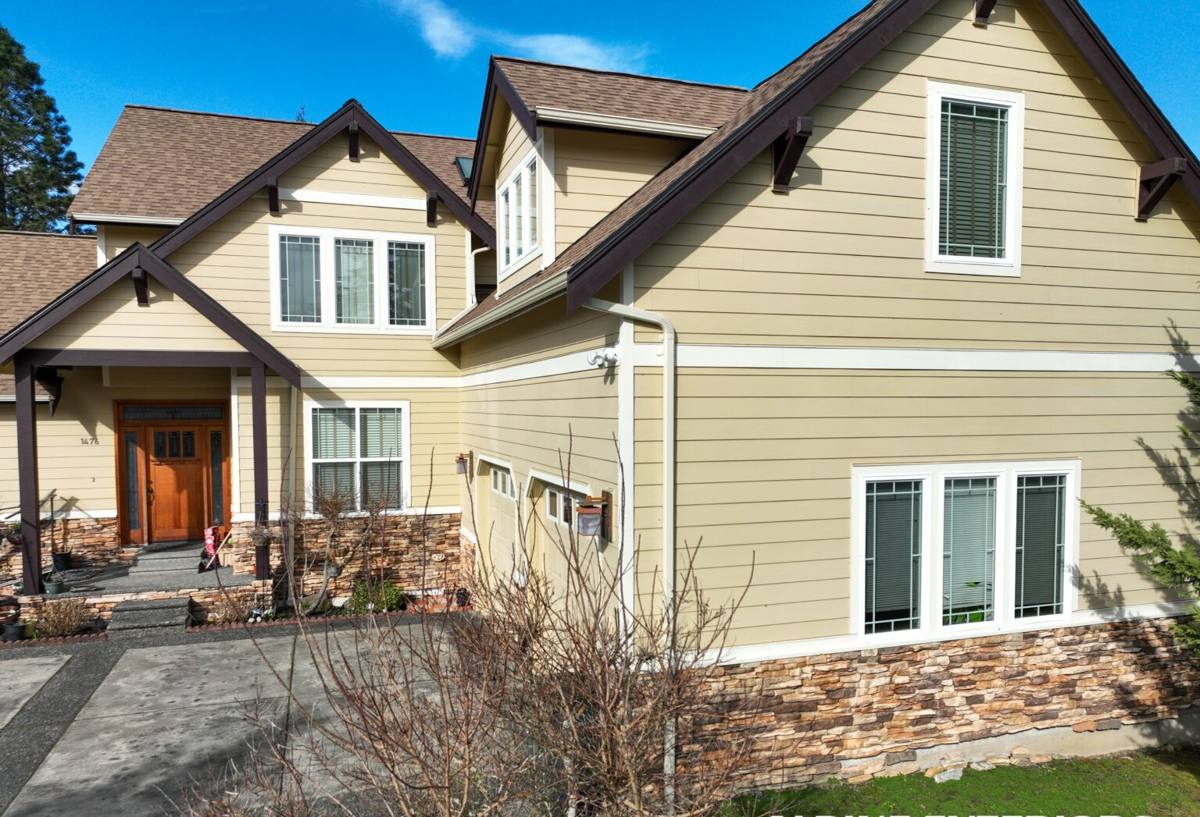
What This Climate Does to Windows in Skycrest
Salt Air and Frame or Hardware Corrosion
Clearwater sits close enough to the Gulf and Tampa Bay that salt-carrying air reaches inland neighborhoods like Skycrest on a regular basis, not just directly on the waterfront. Over years, that salt load accelerates corrosion on window hardware, screen frames, and lower-grade fasteners. It shows up first as pitting, stiffness in a lock or crank mechanism, or a screen frame that's started to corrode at the corners. Frame materials and hardware finishes that aren't built for a marine-influenced climate tend to show this wear noticeably earlier than the rest of the window.
UV Exposure and Seal or Finish Degradation
Florida's UV load is intense for most of the year, not just in summer, and it's harder on exterior materials than the UV exposure in most of the country. On windows, that shows up as chalking or fading on lower-quality vinyl and composite frames, and as gradual breakdown of the sealant and glazing compounds that hold insulated glass units together. Once a seal starts to fail from UV exposure, moisture works its way between the panes, and the fogging that follows isn't repairable — the unit has to be replaced.
Wind-Driven Rain and Water Intrusion
Rain in Pinellas County frequently arrives sideways, pushed by wind rather than falling straight down, especially during summer thunderstorms and tropical systems. That kind of rain finds its way into window assemblies through paths that straight-down rain never tests: sill pans that aren't pitched to drain, head flashing that's missing or improperly lapped, and jamb seals that were caulked instead of properly flashed. Most water damage we find around older windows traces back to how the unit was originally installed, not to the window product itself.
Hurricane Wind Loads and Impact Requirements
Windows in this part of Florida also have to withstand real wind pressure and, depending on the home's specific requirements, resist impact from wind-borne debris during a storm. That's a structural performance question, not just a weatherproofing one — the glass, the frame, and the anchoring into the surrounding wall all have to be rated and installed to handle it. A window that looks fine on a calm day can still be the wrong product, or the wrong installation, for what a named storm will actually put it through.
What "Custom" Actually Means for Skycrest's Housing Stock
Non-Standard and Out-of-Square Openings
"Custom" doesn't necessarily mean an unusual shape or a high-end product line — most often in Skycrest it simply means an opening that isn't a standard stock size, or one that's shifted slightly out of square over the years. Forcing a stock-size window into an opening like that leads to gaps that get packed with foam or caulk instead of properly shimmed and sealed, which is exactly the kind of shortcut that turns into a leak a few storm seasons later. A correct custom job starts with accurate field measurements of the actual opening, not the size a previous window happened to be.
Matching the Neighborhood's Architecture
Skycrest, like many established Clearwater neighborhoods, includes homes from a range of design periods, and window style is one of the details that most affects whether a replacement looks original to the house or obviously bolted on. Grid pattern, sightline width, and how the window sits relative to existing trim all matter here. Custom sizing and configuration options let us match a home's existing window lines — including specialty shapes, mulled multi-unit assemblies, and matched sidelights — rather than defaulting to whatever standard size is easiest to source.
Impact-Rated Glass vs. Standard Windows Plus Shutters
Homeowners in Skycrest generally have two paths to meeting Florida's wind-borne debris protection requirements: impact-rated windows, or standard windows paired with code-approved shutters or panels. Both are legitimate approaches, and the right one depends on budget, how the home is used, and how much day-to-day hassle a homeowner wants to take on before a storm.
| Factor | Impact-Rated Windows | Standard Windows + Shutters |
|---|---|---|
| Upfront Cost | Higher per opening | Lower window cost, added shutter/panel cost |
| Storm-Day Effort | None — protection is built in | Shutters or panels must be installed before each storm |
| Daily Living Impact | Laminated glass reduces outside noise year-round | No change to window itself day to day |
| Insurance Considerations | May qualify for wind mitigation credits | Shutter type and coverage affect eligibility |
| Appearance | No visible hardware when not in a storm | Shutter tracks or panel brackets visible year-round |
We'll walk through both options against your specific home and budget rather than pushing whichever is easier to sell. Some Skycrest homeowners standardize on impact glass across the whole house; others prioritize impact windows on the most exposed elevations and use shutters elsewhere.
Frame Material: What Actually Holds Up Here
Frame material affects how a window handles Clearwater's combination of humidity, salt air, and sustained UV over the long run, not just how it looks on install day.
| Frame Material | Moisture & Salt Air Behavior | UV Performance | Typical Maintenance |
|---|---|---|---|
| Vinyl | Won't rot or corrode; quality varies by manufacturer | Better formulations resist chalking; lower-grade vinyl can fade | Low |
| Fiberglass | Dimensionally stable, resists moisture and corrosion well | Strong UV resistance, holds color well | Low |
| Aluminum | Strong and rigid, but can corrode over time near salt air without a marine-grade finish | Finish can chalk under sustained sun exposure | Moderate |
| Wood, clad or painted | Attractive but vulnerable to moisture at joints and sills without diligent upkeep | Depends entirely on the coating; needs periodic refinishing | Higher |
There's no single correct answer for every home in Skycrest — it depends on the look you want, your budget, and how much upkeep you're willing to take on. We'll walk through the real trade-offs for your specific project rather than defaulting to whatever's easiest to install.
Our Custom Window Process in Skycrest
Custom window projects go wrong most often when the process gets rushed at the front end — measurements, code requirements, or the condition of the existing opening get glossed over to get to installation faster. Ours is built to catch those issues before they become problems:
- On-site assessment. We measure the actual openings, check for square and level, and look for any existing moisture damage or settling that needs to be addressed before a new window goes in.
- Product and code review. We go over frame material, glass, and impact-protection options against your budget and Florida Building Code requirements for your specific home and elevation exposure.
- Manufacturing to the actual opening. Custom units are built to the measurements we took on site, not to the closest standard size.
- Removal and prep. Old units come out carefully, and we inspect the rough opening, sill, and surrounding wall for any hidden rot, moisture damage, or flashing issues before the new window goes in.
- Installation, flashed and sealed correctly. Every opening gets proper sill pan pitch, flashing integration, and fastening to manufacturer and code specifications — not caulk used as a substitute for flashing.
- Final walkthrough. We check operation, seals, and finish on every unit before we consider the job done.
Installation Details We Don't Treat as Optional
Most window failures in this climate trace back to installation shortcuts, not the window product itself. On every custom window job in Skycrest, that means:
- A properly pitched sill pan that sheds water outward instead of letting it pool under the frame
- Head flashing integrated with the wall's water-resistive barrier, lapped correctly so water sheds down and out
- Jamb flashing tied into the surrounding wall assembly, not caulk used as the primary seal
- Fastening and anchoring to the frame per the manufacturer's tested specifications for the wind rating on that opening
- Corrosion-resistant fasteners and hardware appropriate for a salt-influenced, high-humidity climate
- Correct shimming so the frame isn't racked or stressed by an out-of-square opening
None of this adds meaningfully to the cost of a job compared to the window itself, but skipping it is exactly what turns a window that should last decades into one that's leaking behind the wall within a few storm seasons.
Signs a Skycrest Home Needs Window Attention
- Fogging or condensation trapped between panes, which usually means a failed seal on an insulated glass unit
- Drafts or a noticeable temperature difference near a closed window
- Difficulty opening, closing, or latching a window that used to operate smoothly
- Soft, discolored, or spongy trim and sill material
- Visible daylight, gaps, or cracked caulk around the frame
- Chalking, fading, or brittle hardware on aluminum or lower-grade vinyl frames
- Water staining on interior walls or ceilings near a window after heavy rain
Any one of these is worth a professional look. Caught early, most point to a repair or reseal. Left through another hurricane season, several of them point to water damage already working its way into the surrounding wall.
Why a Crew That Already Works Skycrest Matters
A crew that installs custom windows across Clearwater and Pinellas County through hurricane season after hurricane season sees how salt air, UV, and wind-driven rain actually behave on real homes over years, not just how a product performs on a spec sheet. That shows up in practical decisions: how much attention a particular elevation in Skycrest needs based on sun and prevailing wind exposure, how to correctly size and flash a custom unit for an opening that's shifted slightly out of square over the decades, and which fastening and flashing details are worth the extra time on install day so you're not dealing with a leak two storms from now. It also means having someone who understands the mix of home ages and prior renovations in this neighborhood, rather than treating every house the same way.
If you're weighing custom window replacement for a Skycrest home — whether it's a single problem window or a full-house project — we're glad to take a look and give you a straightforward, honest read on what it actually needs. Reach out using the form below to schedule a free, no-pressure estimate.