 Clearwater Siding
 Harbor Oaks is one of Clearwater's older, more established neighborhoods, and the siding on homes there has usually been through a lot more weather than siding on a newer build across town. Hurricane-force wind events, near-constant subtropical UV, wind-driven rain, and salt air moving in off Clearwater Harbor and the Gulf all work on exterior siding year-round, not just during storm season. A repair that only addresses what's visible from the curb tends to fail again within a season or two. A repair that's actually done right accounts for what's happening behind the panel, not just what's showing on the surface.
Why Siding Repair in Harbor Oaks Isn't a One-Size Job
Homes in Harbor Oaks span a range of ages and original siding materials — some have been re-sided at some point with newer products, others still carry older wood, older fiber cement, or vinyl that's aging out. That mix matters for repair work, because the right fix depends heavily on what's already on the wall, how it was originally installed, and how the wall assembly behind it was built. Mature tree canopy common in older Clearwater neighborhoods also changes how a section of siding ages — shaded walls hold moisture longer after rain, while sun-exposed walls take the brunt of Florida's UV. A repair plan that treats every wall the same, regardless of orientation or original material, usually misses something.
Proximity to the water adds another layer. Homes closer to Clearwater Harbor get more direct salt air exposure than homes further inland, which speeds up corrosion on fasteners, trim, and any hardware not rated for a coastal environment. None of this means every repair is complicated — plenty aren't — but it does mean a correct diagnosis has to account for the neighborhood's specific mix of age, exposure, and construction rather than applying a generic checklist.
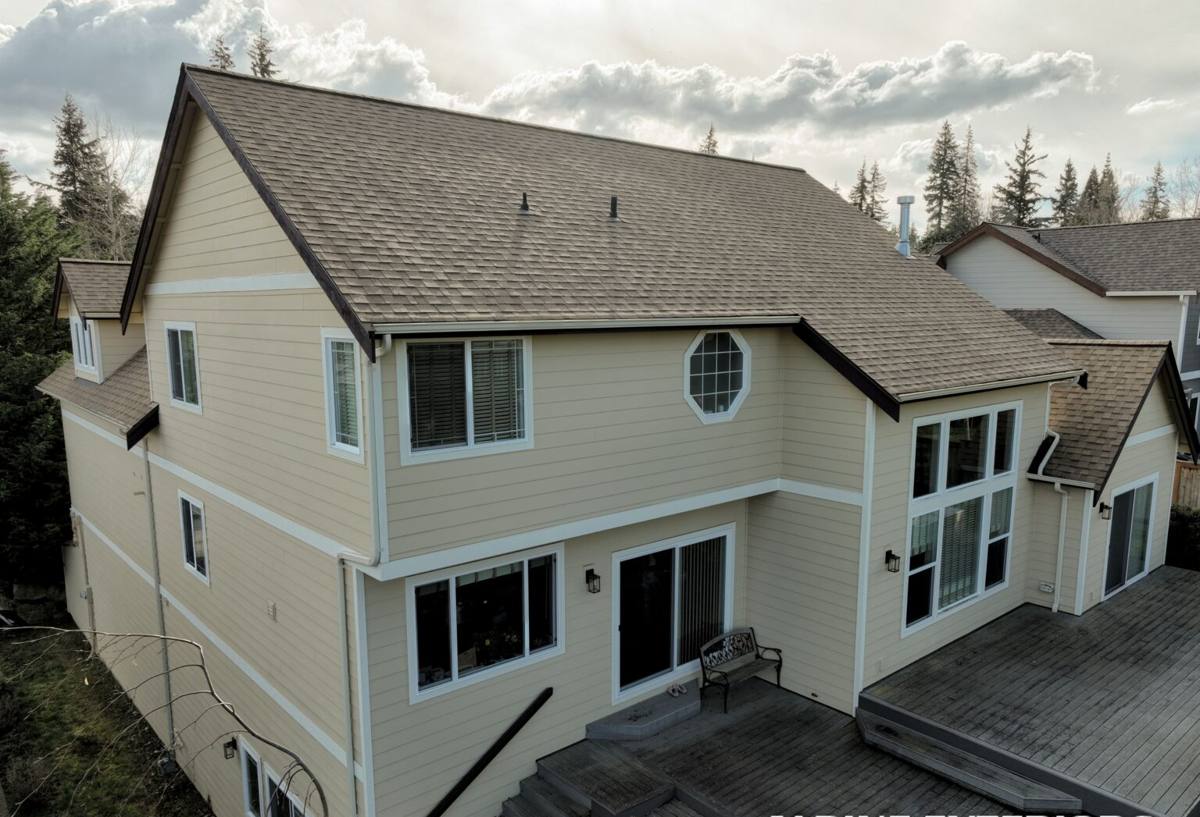
The Climate Damage We See Most Often
Four conditions do most of the damage to siding in this part of Pinellas County, and they rarely act alone.
- Hurricane-force wind — loosens panels, pulls fasteners partway out, and can crack or blow off sections outright during a named storm or even a strong seasonal front
- Intense, year-round UV — breaks down lower-grade finishes and caulking faster here than almost anywhere else in the country, showing up as fading, chalking, and brittleness
- Wind-driven rain — pushes water sideways and upward into seams, laps, and penetrations that a calmer climate's siding details were never really tested against
- Salt air — accelerates corrosion on fasteners, flashing, and trim hardware, which is often the actual point of failure even when the siding panel itself looks fine
Where Damage Hides
The damage a homeowner notices — a cracked panel, a loose corner, a stained section — is usually not the whole story. Water that gets behind siding through a failed seam or a poorly flashed penetration can travel and cause rot or moisture damage well beyond the spot where it entered. That's why a repair limited to "replace the cracked piece" without checking what's behind it can leave the underlying problem in place, ready to resurface as a new complaint a year later.
What a Correct Siding Repair Actually Involves
Diagnosing the Real Problem
Before anything gets replaced, we need to know whether we're looking at cosmetic damage, a fastener or installation issue, or active moisture intrusion. Those three things can look similar from a distance but call for different fixes. A cracked panel from wind impact is a different repair than a section that's soft or discolored from months of water working behind it, even if both show up as visible damage in roughly the same spot.
Matching Material and Profile
We repair with James Hardie fiber cement, and matching an existing Hardie installation means getting the plank width, texture, and reveal right, not just the color. Hardie's factory-applied ColorPlus finish is formulated to hold color consistently over time, which means a well-matched repair on an existing ColorPlus installation can blend in without repainting the whole wall. On older installations that predate the home's current siding or on transitions where materials don't match cleanly, we'll walk through the honest options rather than forcing a patch that will stand out.
Flashing and Moisture Barrier Repair
Most siding failures that keep coming back trace to flashing or moisture barrier problems, not the siding material itself. A correct repair reopens the area enough to check the housewrap or weather-resistive barrier, corrects any flashing that's lapped the wrong direction or missing at a penetration, and re-seals the assembly before the new siding goes back on. Skipping this step is the single most common reason a repair doesn't hold.
Fastening to Manufacturer and Code Spec
Hardie fiber cement has specific fastening requirements — nail type, spacing, and embedment all affect how the panel performs in wind. In a coastal environment, we use corrosion-resistant fasteners rated for salt air exposure, since standard fasteners can corrode and fail years before the siding itself would otherwise need attention.
Repair or Full Re-Side: Making the Right Call
Not every damaged section needs a full re-side, and not every "small" repair should stay small. The table below covers how we think through that decision.
| Factor | Spot Repair Usually Makes Sense | Full Re-Side Should Be Considered |
|---|---|---|
| Extent of damage | Isolated to one or a few sections | Spread across multiple walls or elevations |
| Underlying moisture barrier | Intact once the area is opened up | Failing broadly, not just at the repair site |
| Age and condition of remaining siding | Rest of the siding still has useful life left | Remaining siding is near the end of its service life anyway |
| Color and material match | Existing ColorPlus finish or profile can be matched closely | Original material is discontinued or too weathered to match |
| Cause of damage | Isolated storm impact or a single failed detail | Systemic issue — original installation defects, chronic moisture, widespread fastener corrosion |
What Drives Repair Cost
| Factor | Why It Matters |
|---|---|
| Hidden moisture or rot | Sheathing or framing repair behind the siding adds work beyond the visible panel |
| Access | Second-story sections, tight side yards, or areas near landscaping take more time to work safely |
| Material match | Matching an existing ColorPlus color or an older, discontinued profile can add sourcing time |
| Flashing scope | Repairs that require reworking flashing at windows, doors, or roof-to-wall transitions take longer than a straight panel swap |
| Number of separate repair areas | Several small isolated repairs across a home often cost more in aggregate than one consolidated section |
Our Harbor Oaks Repair Process
- On-site inspection — we look at the visible damage and check surrounding areas, seams, and penetrations for signs the problem extends further than what's showing
- Diagnosis — we determine whether the cause is impact damage, a fastening or installation issue, or moisture intrusion, since that determines the actual scope of the fix
- Honest scope and estimate — we explain what we found, what we recommend, and why, including whether a spot repair or a larger scope makes more sense
- Sourcing matched material — we source Hardie panels or trim in the matching profile and ColorPlus color where possible
- Repair work — damaged material comes out, the moisture barrier and flashing underneath get corrected as needed, and new material goes in fastened to spec
- Final check — we confirm the repair is sealed, fastened correctly, and blends with the surrounding siding before calling the job done
Why We Repair Exclusively With James Hardie Fiber Cement
We install and repair with James Hardie fiber cement only — we don't patch with vinyl, LP SmartSide, or other engineered wood siding, even when it would be a faster or cheaper fix in the moment. Fiber cement is non-combustible and doesn't share the moisture-sensitivity that engineered wood products can have at cut edges and exposed seams, which matters on a repair where those edges are being newly created. Hardie's HZ5 product line is engineered specifically for humid, high-moisture climates like ours, and the factory-applied ColorPlus finish is what makes a clean color match on a repair realistic years after the original install, instead of requiring a full repaint to hide the patch. It also carries a strong transferable warranty when installed to spec, which matters more on a repair, since a patch done with mismatched material or corner-cut installation can quietly void coverage on the rest of the wall. Standardizing on one material system means every repair we do is compatible with what's already on the house, or at worst requires an honest conversation about a fuller re-side rather than a mismatched patch job.
Why Hiring a Crew That Already Works in Harbor Oaks Matters
A repair crew that hasn't worked much in this specific neighborhood is guessing at things a local crew already knows — how older Harbor Oaks wall assemblies were typically built, what permitting through the City of Clearwater and Pinellas County actually requires for exterior repair work, and how much salt air and UV exposure a given section of the neighborhood has really seen based on its distance from the water and its tree cover. That local pattern recognition shortens the diagnosis step and reduces the odds of a repair that looks right on day one but fails again after the next storm season.
It also matters for accountability. A contractor who plans to keep working in Harbor Oaks has a direct incentive to do the repair right the first time, since a bad patch job is the kind of thing neighbors notice and talk about. That's a different incentive structure than a crew passing through for a one-off job with no reason to come back.
Signs Your Harbor Oaks Home Needs Siding Repair Now
- Cracked, warped, or missing panels, especially after a storm or high-wind event
- Soft or spongy spots when you press on a section of siding
- Staining, streaking, or dark patches that don't wash off
- Visible gaps or separation at seams, corners, or trim joints
- Paint or finish that's chalking, peeling, or fading unevenly across a wall
- Rust streaks around fasteners or trim hardware
- Musty odor or visible mold on an interior wall that backs up to an exterior siding section
- Panels that flex, rattle, or feel loose to the touch
If you're seeing any of the above, or you just want a second opinion on whether a section needs a spot repair or something more, we offer free, no-pressure estimates for Harbor Oaks homes and the rest of Clearwater. Use the form below to get a time on the schedule.