 Clearwater Siding
 Building Decks for Island Estates, Not Just Clearwater in General
Island Estates sits differently than most of the neighborhoods we work in around Clearwater. It's a waterfront community, most homes are on or near canals, and that changes what a deck actually has to survive day to day. A deck built for an inland lot a few miles away doesn't face the same combination of salt-laden air, near-constant humidity, and open exposure to wind coming off the water. When we build or replace a deck here, we're not just following a generic spec sheet — we're accounting for what this specific stretch of Pinellas County throws at outdoor structures.
That means different fastener choices, different attention to ledger flashing, and often different conversations about elevation and drainage than we'd have on a deck a mile inland. This page covers what actually goes into a correctly built custom deck for an Island Estates property, not a generic "add a deck" pitch.
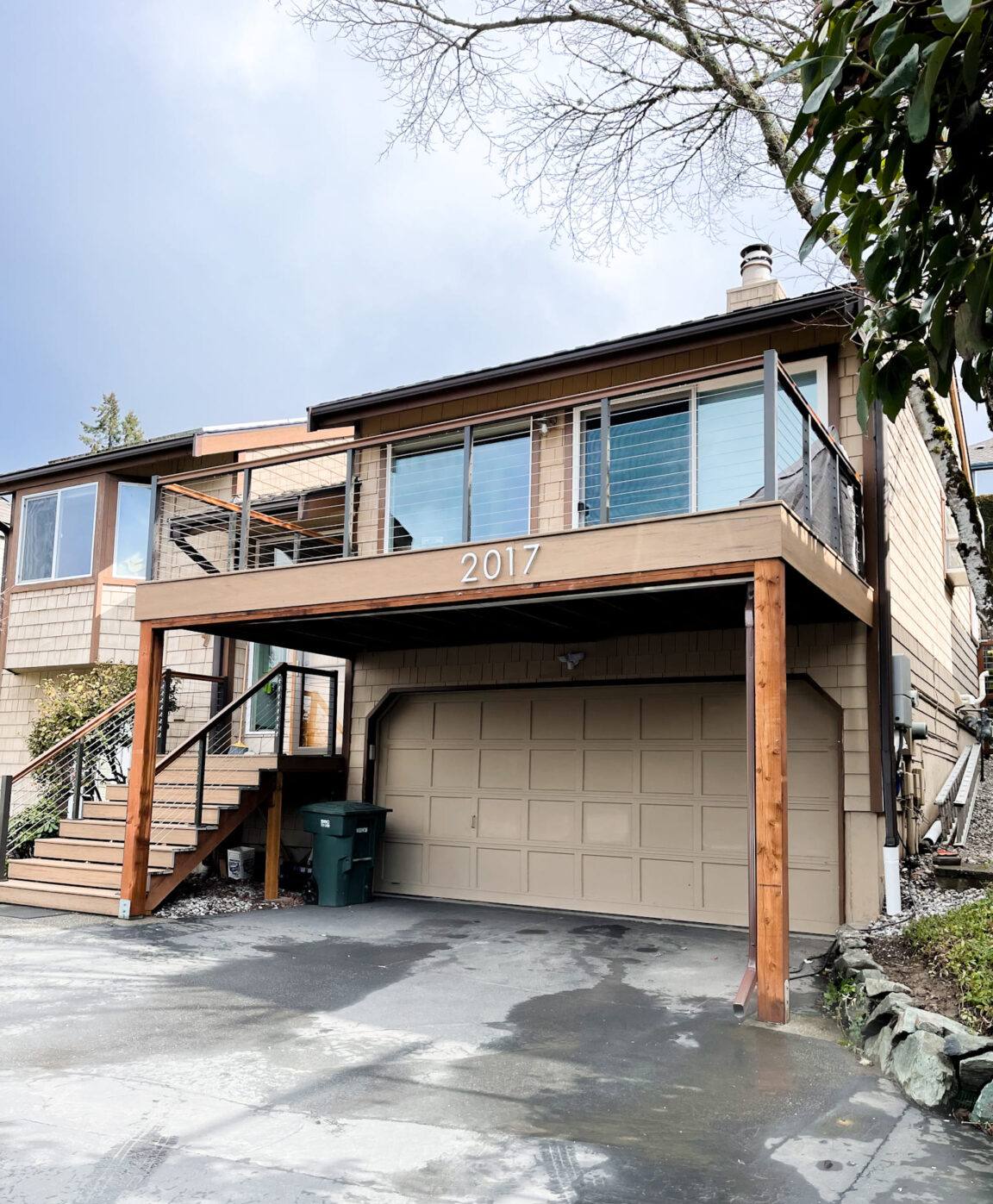
What Island Estates Homes Actually Deal With
A few conditions show up over and over on waterfront and near-waterfront lots in this part of Clearwater:
- Salt air corrosion — proximity to canal and Gulf-influenced air accelerates rust and corrosion on any fastener, bracket, or connector that isn't rated for it.
- Sustained wind exposure — open water nearby means fewer windbreaks, so structures see more direct wind load, both in daily gusts and during named storms.
- Intense, near year-round UV — Florida sun breaks down unprotected wood fibers and degrades some composite and plastic products faster than manufacturers' mainland test data suggests.
- Wind-driven rain — rain doesn't just fall here, it gets pushed sideways into ledger boards, railing posts, and any gap in flashing.
- High humidity and ground moisture — waterfront lots often sit lower and drain slower, which matters for footings and any structure built close to grade.
None of this means a deck can't be built to last in Island Estates. It means the material choices, hardware, and construction details need to be picked for this environment specifically, not pulled from a national average spec.
Permits, Codes, and Flood Zone Considerations
Any new deck or deck replacement in Clearwater goes through the local building department, and the plans have to meet Florida Building Code wind load requirements for our area. A few things matter more on Island Estates specifically:
Wind load and structural connections
Pinellas County wind speed design requirements mean footings, post connections, and railing anchoring all need to be sized and fastened correctly — not just "deck-standard" hardware pulled off a shelf. This is inspected, and it should be. It's also the part of the job that actually determines whether your deck stays attached to your house in a bad storm.
Flood zone and elevation
Waterfront parcels in this area are frequently in a mapped flood zone, which can affect how a structure attached to the home is allowed to be built — including requirements around breakaway construction below the base flood elevation for anything enclosed. Every lot is different, and this is something we check against the specific property before design, not something we guess at.
Railing and guard code
Any deck surface more than 30 inches above grade requires a code-compliant guardrail, generally 36 inches minimum for residential decks, with baluster spacing that won't allow a 4-inch sphere to pass through. This is non-negotiable and gets checked at inspection.
We pull the permit, coordinate the inspections, and design to what your specific lot requires — we don't submit a generic plan and hope it clears.
Choosing a Decking Material for This Environment
There's no single "best" decking material — there's the right material for your budget, your maintenance appetite, and how close you are to the water. Here's how the common options actually compare for an Island Estates property:
| Material | Salt air / corrosion resistance | Maintenance | Typical lifespan | Notes |
|---|---|---|---|---|
| Pressure-treated pine | Fair — needs sealed cuts and stainless fasteners | Annual cleaning/sealing recommended | 10-15 years with upkeep | Lowest upfront cost, most maintenance-dependent |
| Tropical hardwood (ipe, cumaru) | Good — naturally dense and rot-resistant | Periodic oiling to maintain color; fine unsealed too | 25+ years | Heavier, requires pre-drilling and hidden fastener systems |
| Composite decking | Good — won't rot, but check UV/fade warranty specifics | Occasional washing, no sealing | 25-30 year warranties common | Board quality varies a lot by brand and tier |
| PVC/cellular decking | Very good — fully synthetic, no organic material to degrade | Lowest — soap and water | Comparable to or longer than composite | Higher cost, can run hotter underfoot in direct sun |
On a waterfront lot, we lean toward steering clients away from unsealed softwood left to the elements long-term — not because the wood itself is bad, but because the maintenance burden in this climate is real, and a missed sealing cycle or two shows up fast as checking and fastener staining. Composite and PVC decking shift that maintenance burden down considerably, at a higher material cost.
Fasteners and Hardware Matter More Here Than the Decking Itself
We've seen decks with perfectly good boards fail early because the hardware underneath wasn't rated for salt exposure. Standard galvanized fasteners can start showing corrosion within a few years this close to the water. For Island Estates work we use stainless steel or marine-grade coated fasteners and structural connectors, and we make sure any dissimilar-metal contact points (aluminum railing on steel brackets, for example) are isolated correctly so galvanic corrosion doesn't eat away at the connection from the inside.
Framing, Footings, and the Parts You Don't See
A deck's surface gets all the attention, but the framing underneath determines whether it's safe and whether it lasts. On Island Estates lots specifically, we pay close attention to:
- Footing depth and sizing — sized for the actual wind uplift and load path, not a minimum guess, and coordinated with soil conditions on lower-lying waterfront lots.
- Ledger board attachment — where the deck ties into the house is the single most common failure point on decks nationally. It needs proper flashing, a moisture barrier, and correctly spaced structural lag bolts or through-bolts, not nails.
- Hurricane ties and connectors — joist hangers, post bases, and beam connections rated and installed to resist uplift, not just vertical load.
- Post-to-footing connections — mechanically fastened and rated for wind uplift, since a deck that isn't tied down is a liability in a storm, not an asset.
Every one of these is inspected by the county, but "it passed inspection" is a floor, not a ceiling. We build to hold up over the deck's full service life in salt air, not just to clear a one-time inspection.
Waterfront-Specific Design Considerations
Because so many Island Estates homes back up to canals, deck design here often has to account for things a standard backyard deck doesn't:
Drainage and grade
Lower-lying waterfront lots don't always shed water the way an elevated inland lot does. We plan deck footings and any ground-level hardscape transitions so water isn't pooling against the house foundation or the deck posts themselves.
Proximity to docks and seawalls
Where a deck design needs to integrate with an existing dock, seawall, or elevated walkway to the water, we coordinate the framing and elevation changes so the transition is structurally sound and code-compliant, not just cosmetically connected.
Sun and shade orientation
Open water exposure often means less natural shade than an inland lot with mature tree cover. Pergolas, shade sails, or simply orienting the deck layout around the sun path can make a real difference in how usable the space is during Florida's hottest months.
Our Process for a Custom Deck Build
Every project runs through the same sequence, adjusted for the specifics of your lot:
- On-site assessment of the existing structure (if replacing a deck), grade, drainage, and flood zone status
- Design and material selection conversation based on your budget, maintenance preference, and how close you are to the water
- Engineered plans sized to Pinellas County wind load requirements
- Permit submission and coordination with the building department
- Demolition of the old structure (if applicable) and disposal
- Framing with corrosion-rated hardware and hurricane connectors
- Decking, railing, and any stairs or transitions installed to code
- Final walkthrough and inspection sign-off
We don't skip the design and permitting steps to move faster — a deck that isn't engineered for actual wind load and properly permitted is a problem waiting to surface, either at resale or in the next storm.
Questions Worth Asking Before You Start
- Is my lot in a mapped flood zone, and does that affect what can be built or attached to the house?
- What fastener and hardware grade is actually being used, not just the decking brand?
- Is the ledger board attachment flashed and sealed, or just bolted to the siding?
- What's the realistic maintenance schedule for the material I'm choosing, given salt air exposure?
- Is the permit and engineering included, or a separate line item I need to manage myself?
Maintaining a Deck in This Climate
Whatever material you choose, a few habits matter more here than in a drier, inland climate:
- Rinse salt residue off decking and railings periodically, especially after storms with wind off the water
- Inspect fastener heads and metal connectors annually for early corrosion signs
- Reseal or re-oil wood decking on the manufacturer's recommended schedule — UV here is more aggressive than most product warranties assume
- Keep gutters and downspouts near the deck clear so water isn't dumping directly onto framing or footings
- Check railing post connections periodically, since these take the most direct wind load over time
Why Hire a Crew That Already Works This Neighborhood
Island Estates isn't a neighborhood you can build for correctly using assumptions from a generic Florida spec sheet. Flood zone status, wind exposure, and salt air severity vary block by block along the water. A crew that's already pulled permits and built decks in this specific part of Clearwater knows what the local building department will flag, what hardware actually holds up here long-term, and what design choices are worth the extra cost versus what's just upsell. That's the difference between a deck that looks right on day one and one that's still solid a decade of hurricane seasons later.
If you're weighing a new deck or replacing one that's showing its age, we're happy to take a look and give you a straight, no-pressure estimate — use the form below to get started.