 Clearwater Siding
 Building Decks for Island Estates' Waterfront Homes
Island Estates sits differently than most Clearwater neighborhoods — it's a waterfront and canal-front community, which means a much higher share of homes here have decks that sit close to open water, brackish canals, or boat docks. That changes what a deck actually has to survive. A deck built the same way you'd build one three miles inland, away from saltwater exposure, will show its age in Island Estates years sooner. Rot shows up in the joists before the boards even look bad. Fasteners bleed rust stains into the decking. Railings loosen because the posts were never rated for the wind this location actually sees.
We build and repair decks throughout the Clearwater area, and Island Estates jobs get treated differently from the start — different fastener grade, different attention to ledger flashing, different footing depth assumptions — because the environment demands it, not because we're upselling anything. This page walks through what actually matters for a deck on this kind of lot.
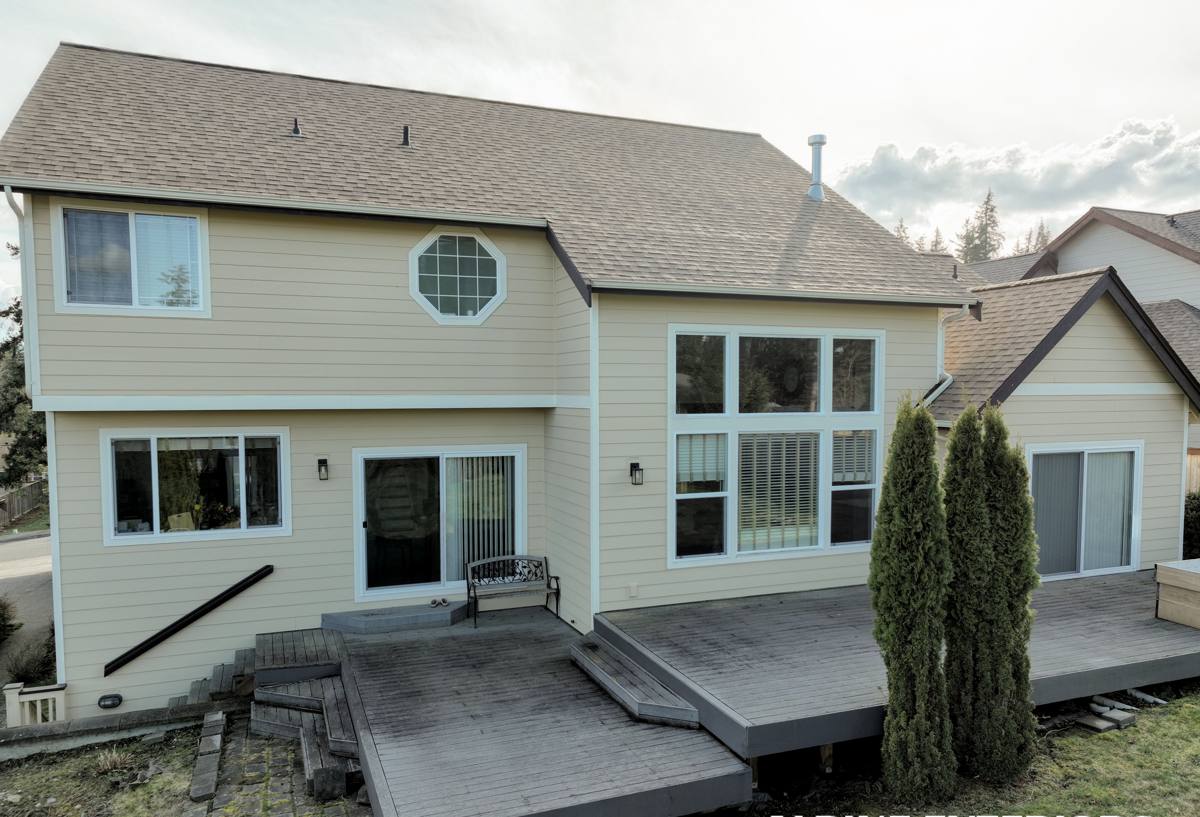
What Clearwater's Climate Does to a Deck Over Time
Every deck in Pinellas County deals with heat, humidity, and the occasional tropical system. A waterfront lot in Island Estates deals with all of that plus a steady dose of salt air, which is a different and faster kind of wear.
Salt Air and Humidity
Salt-laden air corrodes untreated or under-rated metal fasteners and connectors far faster than it corrodes wood or composite decking itself. On a canal-front deck, that corrosion often starts in the hidden hardware — joist hangers, structural screws, post bases — long before anything visible looks wrong. By the time a homeowner notices rust streaking through the boards, the connector underneath may already be compromised.
Intense, Year-Round UV
Florida sun breaks down wood fibers and fades or chalks lower-grade composite decking. Boards that aren't properly sealed or that use a lower UV-stabilized formulation will gray, splinter, or lose color consistency well before the structure underneath has any problem. This is a cosmetic issue first, but it's also often the first visible sign that a board's protective layer is failing.
Wind-Driven Rain
Rain that comes in sideways off the water finds every gap in flashing, every under-sealed ledger board attachment, and every low spot where water can pool instead of shed. On a house-to-deck connection, that's the single most common source of hidden rot — not the decking surface, but the ledger board and rim joist behind it.
Hurricane-Force Wind Loads
Wind is the structural driver. Railings, post connections, and the ledger attachment all need to be sized and fastened for storm-force wind, not just everyday wear. A deck can look fine and still be under-built for the loads this area sees during a named storm.
Decking Material Options for Island Estates Homes
There's no single "right" material for every deck — it depends on budget, how close the deck sits to water, and how much maintenance a homeowner actually wants to do. Here's how the common options hold up in this specific environment.
| Material | Salt Air / Humidity Behavior | Maintenance | Typical Lifespan Here |
|---|---|---|---|
| Pressure-treated pine | Needs sealing to resist moisture and salt intrusion; untreated cut ends are vulnerable | Annual cleaning, re-sealing every 1-2 years | 10-15 years with upkeep |
| Tropical hardwood (e.g., ipe) | Naturally dense and rot-resistant; still needs oiling to hold color | Periodic oiling to prevent graying | 20-25+ years |
| Capped composite | Excellent — the cap resists moisture, salt, and staining | Occasional washing, no sealing | 25-30 year manufacturer warranties are common |
| Uncapped composite | More prone to moisture absorption and mold in humid, salt-air settings | Requires more regular cleaning | Shorter effective life near water |
| PVC decking | Fully synthetic — does not absorb moisture or salt | Lowest maintenance of the group | Long service life, higher upfront cost |
We steer waterfront and canal-front clients toward capped composite or PVC more often than not — not because pressure-treated or hardwood decks can't work here, but because the maintenance burden of keeping a wood deck sealed against this much moisture and salt is real, and most homeowners underestimate it. If a client wants natural wood, we're glad to build it — we just make sure they know the upkeep schedule going in.
Structural Considerations for Waterfront and Canal-Front Lots
Elevation and Flood Zone Factors
Many lots in this part of Clearwater fall within flood zones that affect how low a structure can sit and how footings need to be designed. We check the applicable flood zone and base flood elevation for the property before designing footings or ledger height, rather than assuming a standard inland layout will apply.
Fastener and Hardware Grade
Given the corrosion risk from salt air, we spec stainless steel or heavy hot-dip galvanized fasteners and structural connectors rated for coastal exposure, not the standard-grade hardware that's fine three miles from the water. This costs more up front and saves the homeowner from hidden hardware failure down the road.
Ledger Attachment and Flashing
The ledger board — where the deck attaches to the house — is the single most important detail on any attached deck, and it's the spot most likely to be done wrong. Proper flashing has to shed water away from the house framing, not trap it behind the ledger. We treat this connection as critical, not routine.
Proximity to Docks and Seawalls
When a deck ties into or sits near a dock or seawall, footing placement and drainage need extra thought so the structure isn't undermined by tidal movement or fluctuating water levels at the property line.
Permitting and Code Requirements in Pinellas County
Deck construction in Clearwater requires a permit in nearly all cases, and inspections along the way — footings, framing, and final. Because Island Estates is a coastal, flood-zone-influenced area, plans often need to address wind load and elevation requirements more specifically than a standard inland permit application. We handle the permitting and inspection scheduling as part of the job, so the homeowner isn't stuck decoding county requirements or chasing inspection windows themselves.
Our Deck Building Process
1. On-Site Assessment
We look at the existing structure (for repairs or replacements), the lot's elevation and flood zone status, sun and wind exposure, and how close the deck sits to water or a seawall.
2. Design and Material Selection
We walk through material trade-offs honestly — cost, maintenance, and expected lifespan in this specific environment — rather than defaulting to whatever's cheapest to install.
3. Permitting
We prepare and submit the permit package and schedule the required inspections with the county.
4. Construction
Footings are set to the depth and bearing the design calls for, framing uses coastal-rated hardware, and the ledger connection gets proper flashing before decking goes down.
5. Final Walkthrough
We inspect railings, stair connections, and fastening before calling the job done, and go over care and maintenance expectations for whatever material was installed.
Maintenance Checklist for Island Estates Deck Owners
Regardless of which material you choose, a few habits go a long way toward getting the full lifespan out of a deck this close to saltwater:
- Rinse salt residue off the deck surface and railings periodically, especially after storms or high winds off the water
- Check fasteners and visible hardware once or twice a year for rust staining or looseness
- Keep gutters and downspouts near the deck clear so water isn't dumping onto the structure
- Reseal wood decking on the schedule the product actually requires, not "when it looks bad"
- Watch the ledger board area at the house wall for any staining, soft spots, or gaps in flashing
- Trim back vegetation that traps moisture against framing or footings
- Have the structure looked at after any major storm, even if damage isn't obvious from the surface
Why Hire a Crew That Already Works in Island Estates
A contractor who mostly builds decks well inland can still do competent framing — but they may not default to coastal-rated hardware, may not think through flood zone footing depth, and may not flag the ledger flashing detail as the priority it is here. None of that shows up as a problem on day one. It shows up two or three years later as rust streaks, a soft spot at the house wall, or a railing that's gone loose.
We work in Clearwater and across Pinellas County regularly, including waterfront lots like the ones common in Island Estates, so these aren't edge cases for us — they're the baseline we design to. That includes knowing which fastener grade to spec by default, which materials actually hold up against salt air and constant UV, and how to handle permitting for a flood-zone-influenced property without it turning into a back-and-forth with the county.
If you're planning a new deck, replacing an aging one, or just want an honest opinion on whether your current deck's structure is holding up, we're happy to take a look. Reach out using the form below for a free, no-pressure estimate.