 Clearwater Siding
 Why Siding Works Harder on Island Estates
Island Estates sits differently than most Clearwater neighborhoods. It's a waterfront island community wrapped by canals and open water on nearly every side, which means homes here take on a level of exposure that inland Pinellas County properties simply don't deal with. Salt-laden air moves across the property around the clock, not just during a storm event. Add in reflected sun off the water, near-constant humidity, and wind that can push rain sideways into a wall assembly, and you have a climate that will find every weak point in a siding installation faster than it would almost anywhere else in the region.
That's not a reason to panic about siding choice — it's a reason to be precise about it. The right product, installed the right way, holds up beautifully out here. The wrong product, or a rushed installation of the right product, tends to show problems years earlier than it would on a typical mainland Clearwater street.
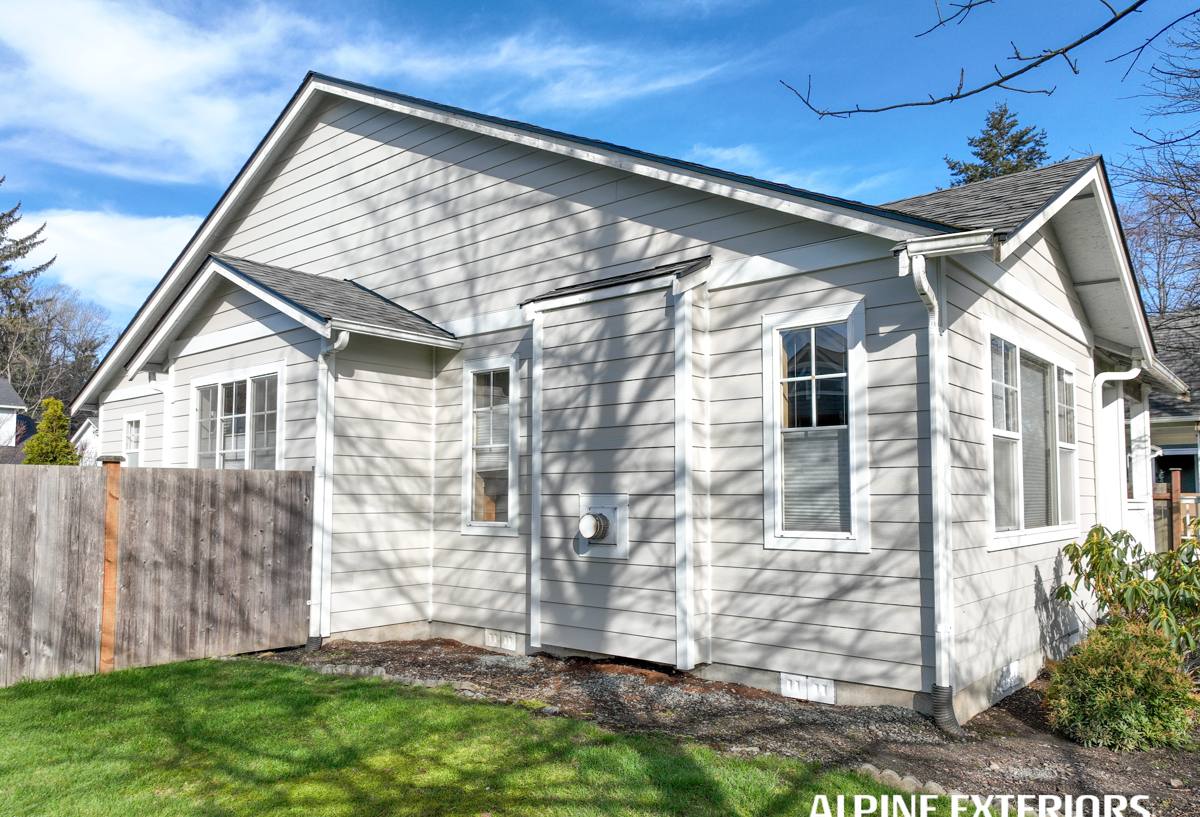
What Salt Air and Water Exposure Actually Do to a Wall
Corrosion Pressure on Fasteners and Trim
Salt air accelerates corrosion on anything metal — nails, screws, flashing, trim fasteners. On an island property, that process runs faster than it does even a mile or two inland. Siding systems that rely on standard fasteners or unprotected metal trim details are the first to show rust streaks, loosening boards, and failed seals.
Constant Moisture Cycling
Homes near canals and open water deal with humidity swings and condensation almost year-round, not just during rainy season. Materials that absorb moisture — or that swell and shrink with it — are put through more expansion-and-contraction cycles here than in drier inland neighborhoods, which stresses joints, caulk lines, and paint film.
UV Load Off the Water
Open water reflects sunlight back onto a home's exterior in addition to direct sun exposure. That reflected UV adds to the fading and surface breakdown that painted or coated siding products experience, especially on south- and west-facing elevations.
Wind-Driven Rain During Tropical Systems
Being on the water means Island Estates properties often see wind-driven rain pushed nearly horizontal during tropical storms and hurricanes. That kind of rain doesn't just run down a wall — it gets forced up under laps and into any gap that isn't properly flashed and sealed.
What Correct Installation Has to Account For Here
Given all of that, a proper siding installation on Island Estates isn't just "put the panels up." It's a set of specific decisions that determine whether the job holds up for decades or starts failing in year five.
- Corrosion-resistant fasteners rated for coastal exposure, not standard interior-grade hardware
- Correct starter strip and J-channel placement so water has a defined path off the wall, never a place to pool
- Proper house wrap and drainage plane behind the siding, so any moisture that does get past the surface can drain and dry rather than sit against sheathing
- Tight, code-compliant fastening patterns that hold up to hurricane-force wind loads without over-driving or under-driving fasteners
- Correct clearance between the bottom of the siding and grade, decks, or seawalls, since ground-level and dock-adjacent moisture is a real factor on canal-front lots
- Careful flashing and sealant detailing around windows, doors, and penetrations — the majority of water intrusion failures start at these transitions, not in the field of the wall
Miss any one of these and even a premium material will underperform. This is why we treat installation quality as equal in importance to the product itself.
Why We Install Only James Hardie Fiber Cement
We made a deliberate decision as a company to install James Hardie fiber cement siding exclusively — not vinyl, not LP SmartSide, not Cemplank, not Allura, not primed wood or cedar. On a property type like Island Estates, that decision matters more than usual.
Fiber cement is non-combustible and dimensionally stable, meaning it doesn't expand and contract with humidity swings the way wood-based or vinyl products can. James Hardie's HZ5 product line is specifically engineered for high-humidity, coastal climates like ours, and the ColorPlus factory-applied finish is baked on under controlled conditions rather than field-painted, which gives it far better resistance to the fading and wear that reflected water-glare UV causes. Hardie backs its products with a strong, transferable warranty, which matters to owners on the island who may sell in the years ahead — a warranty that survives a change of ownership adds real value at resale.
None of this is a knock on every alternative product across the board. It's simply that, for the exposure profile of a waterfront island neighborhood, we weren't comfortable putting our name behind materials that carry more moisture sensitivity, more field-finish variability, or weaker long-term warranty structures. Fiber cement, installed correctly, is what we trust on our own reputation here.
How Our Installation Process Works
1. On-Site Assessment
We walk the exterior and look specifically at the conditions unique to waterfront lots: proximity to the seawall or dock, drainage patterns, existing moisture damage around windows and the base of walls, and sun exposure by elevation.
2. Removal and Substrate Inspection
Old siding comes off and we inspect the sheathing and framing underneath before anything new goes up. On older Island Estates homes this step often reveals moisture history that wasn't visible from the outside — it needs to be addressed before new siding goes on, not covered up.
3. Weather Barrier and Drainage Plane
We install house wrap and flashing details built for a drainage-plane approach, so incidental moisture has somewhere to go instead of sitting against the wall assembly.
4. Fastening to Manufacturer and Wind-Load Spec
James Hardie panels and planks are installed using corrosion-resistant fasteners at the spacing required for our wind-exposure category — this is not an area where we cut corners to save time.
5. Trim, Flashing, and Sealant Detail Work
Windows, doors, corners, and penetrations get the careful flashing and sealing that stops the majority of real-world water intrusion problems before they start.
6. Final Walkthrough
We walk the finished job with the homeowner, checking lines, gaps, and finish quality before calling it complete.
Comparing Approaches for Waterfront Exposure
| Factor | Standard Inland Approach | What Island Estates Exposure Requires |
|---|---|---|
| Fasteners | Standard galvanized | Coastal-rated, corrosion-resistant hardware |
| Finish | Field-applied paint acceptable | Factory-cured finish to resist reflected UV and salt exposure |
| Moisture management | Basic house wrap | Full drainage-plane detailing with attention to grade and dock-side clearance |
| Wind rating | Standard fastening pattern | Fastening pattern engineered for hurricane-force wind exposure |
| Material choice | Wider range acceptable | Non-combustible, moisture-stable fiber cement preferred |
What Drives Cost on a Job Like This
Every Island Estates home is different, so we don't quote sight-unseen — but a few factors consistently move the price on waterfront properties more than they would on a typical inland home.
| Cost Factor | Why It Matters Here |
|---|---|
| Substrate condition | Waterfront homes more often need sheathing repair before new siding goes on |
| Home elevation and access | Elevated or dock-adjacent homes can require additional staging and access planning |
| Trim and detail complexity | Corners, window returns, and architectural detail add labor time |
| Siding profile selected | Lap, shingle, and panel profiles carry different material and labor costs |
| Full tear-off vs. partial replacement | Full removal costs more upfront but avoids covering up hidden moisture damage |
We'll walk through these specifics during your on-site estimate so you know exactly what you're paying for and why.
Maintenance After Installation
One advantage of James Hardie fiber cement with a factory finish is that it asks less of you long-term than most alternatives. Even so, a few habits go a long way on a waterfront property:
- Rinse salt residue off the exterior periodically, especially on elevations facing open water
- Keep an eye on caulk lines around windows and trim, and have any cracked sealant addressed promptly
- Trim back vegetation and irrigation spray that keep any section of wall damp longer than necessary
- Have gutters and downspouts checked each season so water is directed away from the foundation and walls
- Schedule a periodic visual inspection, particularly after major storms, to catch small issues before they grow
Why Local, Island-Specific Experience Matters
Siding contractors who mostly work inland don't always plan for the details that matter on a canal-front island property — access around docks and seawalls, the extra moisture load near the water, or the wind-exposure category that applies out here. A crew that already works Island Estates and the wider Clearwater waterfront knows to build in those details from the start, rather than treating the job like a standard mainland install and hoping it holds up.
We've built our process around Pinellas County's coastal conditions specifically, and Island Estates represents some of the most demanding exposure in our own service area. That's exactly the kind of job we want to get right the first time.
Let's Talk About Your Home
If you're planning a siding project on Island Estates, we'd like to take a look and give you a straightforward, no-pressure estimate — no invented pricing, no upsell pressure, just an honest read on what your home needs. Use the form below to get started.