 Clearwater Siding
 Why Oldsmar Decks Wear Out Faster Than You'd Expect
Oldsmar sits along Old Tampa Bay in Pinellas County, and that waterfront location cuts both ways. It's a big part of why people love living here, but it also means local decks take on more abuse than the same structure would inland. Salt-laden air drifts off the bay and speeds up corrosion in fasteners, brackets, and any exposed metal hardware. Add in Florida's relentless UV exposure, which breaks down wood fibers and fades or chalks composite decking over time, and you've got a structure that's aging faster than its calendar age suggests.
Then there's the rain. Pinellas County gets heavy, wind-driven downpours for much of the year, and a deck that doesn't shed water properly will hold moisture in joints, ledger connections, and end grain long after the sun comes back out. During hurricane season, gusts put real lateral load on railings and stair connections that were never inspected after the last storm. None of this means Oldsmar decks are doomed — it means they need repairs that actually account for this climate, not a generic patch job.
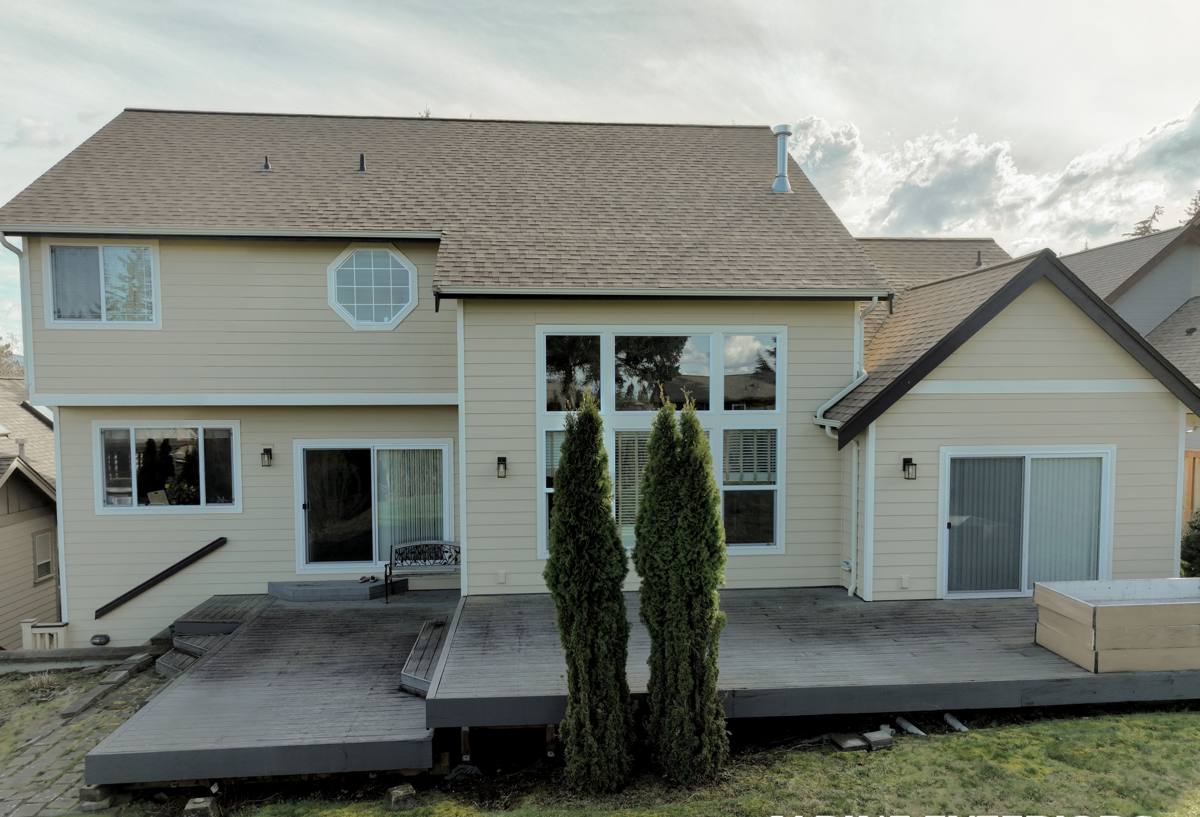
The Deck Problems We See Most Often in This Area
Rot at Connection Points
The ledger board (where the deck attaches to the house), post bases, and joist hangers are almost always the first places to fail. Water gets trapped where wood meets wood or wood meets metal, and rot sets in from the inside before it's visible on the surface.
Corroded or Failing Fasteners
Standard screws and nails that aren't rated for coastal or treated-lumber exposure corrode faster here than they would inland. Once a fastener weakens, the board or railing it's holding starts to move, which accelerates wear on everything around it.
Cupped, Split, or Splintering Boards
Repeated wet-dry cycles from summer storms followed by intense sun cause boards to cup and split. This is as much a UV and moisture-cycling issue as it is normal wear.
Loose or Unsafe Railings and Stairs
Railings take the brunt of wind load during storms, and stair stringers exposed to standing water are prone to hidden rot. These are the components most likely to become a safety issue rather than just a cosmetic one.
Composite Decking Issues
Composite holds up well overall, but improperly spaced boards, unventilated substructures, or poor edge sealing can trap moisture and cause swelling at cut ends, especially on boards installed without proper end-capping.
Repair or Replace? How We Actually Decide
Not every problem deck needs to be torn out. A lot of what looks like "the whole thing is shot" is actually isolated damage that can be repaired properly if it's caught before it spreads. Here's how we think through it:
| Factor | Usually Repairable | Usually Needs Replacement |
|---|---|---|
| Structural framing (joists, beams, posts) | Localized rot in 1-2 members, sound wood elsewhere | Rot has spread across most of the substructure |
| Ledger board connection | Flashing failure caught early, wood still solid | Long-term water intrusion has softened the rim joist or sill |
| Decking boards | Scattered cupped or split boards | Most boards are splitting, soft, or delaminating |
| Railings and stairs | Loose but sound posts, worn balusters | Wobbling posts with rot at the base or footing |
| Age of structure | Under 10-12 years, built to code | Older structure with no permit history or unknown framing |
Age alone isn't the deciding factor — a well-built 15-year-old deck with sound framing can often be brought back with targeted repairs, while a newer deck with a bad ledger connection may need more extensive work. We tell homeowners honestly which category their deck falls into, including when repair isn't the better financial choice.
What a Correct Deck Repair Actually Involves
A repair that just swaps out the obviously bad boards and calls it done is treating the symptom, not the cause. A proper repair starts with figuring out why the damage happened in the first place, so the same problem doesn't reappear in two years.
- Full structural inspection of framing, ledger connection, posts, and footings — not just the visible decking surface
- Checking ledger flashing and the house-to-deck connection, since this is the single most common source of hidden rot
- Replacing corroded fasteners and hardware with connectors rated for treated lumber and coastal exposure
- Sistering or replacing any joists, beams, or posts with compromised structural integrity
- Verifying stair stringer and railing post connections meet current load and spacing requirements
- Replacing damaged boards with proper gapping for drainage and airflow underneath
- Confirming adequate ventilation under the deck to prevent moisture buildup between rain events
Permits Matter Here
Depending on the scope of the repair — especially anything touching structural framing, footings, or railings — Pinellas County or the City of Oldsmar may require a permit and inspection. Skipping this on a structural repair isn't just a paperwork issue; it can affect your homeowner's insurance and resale disclosures down the road. We handle this as part of the job rather than leaving it for the homeowner to sort out.
Our Process, Start to Finish
1. On-Site Inspection
We walk the entire deck, including underneath it where possible, and check framing, fasteners, ledger flashing, and drainage — not just what's visible from the top.
2. Honest Scope and Estimate
You get a clear written breakdown of what's actually wrong, what needs to be repaired versus replaced, and why. No inflated scope, no vague line items.
3. Permitting (When Required)
If the repair involves structural or railing work that requires a permit, we pull it and coordinate the inspection so everything is documented and legal.
4. The Repair Work
We address the root cause first — flashing, framing, fastener corrosion — then move to surface repairs like board replacement and refinishing.
5. Final Walkthrough
Before we consider the job done, we walk the deck with you, point out what was fixed and why, and flag anything worth watching in the future.
Materials We Use and Why
For framing repairs, we use pressure-treated lumber rated for ground contact where appropriate, paired with hot-dip galvanized or stainless steel fasteners and connectors. In a bay-adjacent climate like Oldsmar's, standard electro-galvanized hardware corrodes noticeably faster, and a repair is only as good as its weakest fastener. For decking surfaces, we work with both quality wood and composite options depending on the homeowner's budget and maintenance preference.
Composite decking costs more upfront but needs far less ongoing maintenance and resists UV fading and moisture absorption better than untreated wood over the long run. Wood decking costs less initially but needs regular sealing or staining to hold up against Florida sun and rain. We'll walk you through the real trade-offs for your specific deck rather than pushing one option across the board — the right call often depends on how much sun exposure and foot traffic the deck actually gets.
Maintenance Checklist for Oldsmar Deck Owners
A few simple habits go a long way toward avoiding a major repair bill later:
- Inspect railings and stair connections for looseness at least twice a year, and always after a significant storm
- Check the area where the deck meets the house for soft wood, staining, or gaps in flashing
- Keep gutters and downspouts near the deck clear so water isn't dumping directly onto framing or footings
- Sweep debris out from between boards regularly to prevent moisture and organic buildup
- Reseal or restain wood decking on the schedule recommended for the product — sun exposure here shortens the usual intervals
- Watch for rust streaking around fasteners, which usually signals hardware that needs replacing before it fails
Why Hiring a Crew That Already Works in Oldsmar Matters
A deck repair isn't just carpentry — it's carpentry that has to hold up against this specific coastal Pinellas County environment. A contractor who mostly works inland or out of state may not automatically account for salt-air fastener corrosion, local flashing failure patterns, or the permitting process specific to Oldsmar and Pinellas County. We already know what to check first because we've seen the same failure points repeat across decks in this area.
Working locally also means faster response when something needs a second look, and a crew that's still around if a question comes up after the job is finished. That kind of continuity is hard to get from a company that's just passing through.
Ready for an Honest Look at Your Deck?
If your deck has soft spots, loose railings, corroding hardware, or boards that are cupping and splitting, it's worth getting an inspection before the damage spreads further into the structure. We offer free, no-pressure estimates for Oldsmar homeowners — use the form below to get a straightforward assessment of what your deck actually needs.