 Clearwater Siding
 Why Storm Damage Hits Oldsmar Roofs So Hard
Oldsmar sits close enough to Tampa Bay and the Gulf that its roofs take on the same punishment as the rest of Pinellas County, just with its own local mix of tree cover, older neighborhoods, and homes built across several different decades of code. When a storm rolls through, the roof is the first thing absorbing the impact, and it's rarely just one type of damage. Hurricane-force and tropical-storm-force winds lift shingle edges and tabs, tear at ridge caps, and drive rain sideways under flashing that was never designed to handle water moving uphill. Add in the intense, nearly year-round UV exposure that bakes asphalt shingles and dries out sealants between storms, plus the salt air drifting in off the water that speeds up corrosion on nails, flashing, and vent boots, and you get roofs that are already weakened before the next system even forms in the Gulf.
That combination matters for how we approach repairs. A roof that's been through a season of UV aging and salt exposure doesn't respond to storm damage the same way a newer roof somewhere inland does. Shingles that would flex and reseal on a fresh roof can crack instead. Fasteners that have started to corrode can pull through decking that a wind-driven repair crew assumes is still sound. Diagnosing storm damage on an Oldsmar roof means accounting for that cumulative wear, not just the most recent storm.
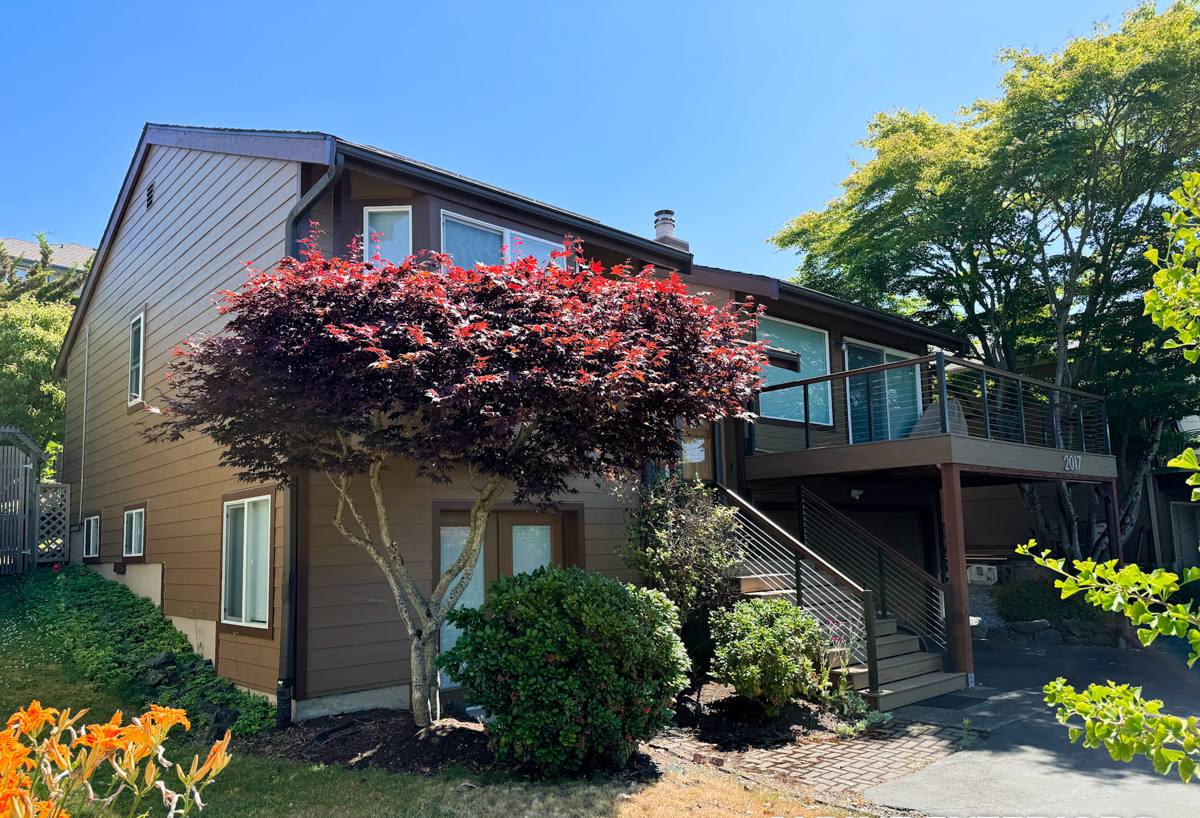
Signs of Storm Damage Homeowners Miss
Some storm damage is obvious — a tree limb through the roof, a section of shingles stripped bare, water actively dripping into a ceiling. Most of it isn't. The damage that causes the most long-term trouble is usually the kind that doesn't show up inside the house for weeks or months, by which point it's no longer just a roof repair.
- Granules collecting in gutters or at downspout outlets after a storm, which signals shingle surface wear even without visible tears
- Lifted or creased shingle tabs that look fine from the ground but no longer seal flat
- Soft spots or slight give when walking the roof, which usually means the decking underneath has already absorbed moisture
- Rust streaks or gaps around plumbing vent boots, chimney flashing, or skylight edges
- Bent, missing, or loose ridge cap shingles along the roof's peak
- Ceiling stains, especially ones that appear a few days after a storm rather than during it
- Debris or fine grit in the attic insulation directly under the roof deck
- Nail heads that have backed out or are visibly popped above the shingle surface
If any of these sound familiar after a recent storm, it's worth getting a roof looked at even if there's no active leak. Water that gets under a roofing system in Pinellas County's humidity doesn't dry out on its own — it sits, and it spreads.
What a Correct Storm Damage Repair Actually Involves
A quick patch and a proper storm repair can look identical from the driveway. The difference is what happens underneath, and it's the part that determines whether the repair holds through the next system or fails at the first hard rain.
Flashing and Underlayment First
Wind and wind-driven rain do most of their damage at transitions — where the roof meets a wall, a chimney, a vent pipe, or a valley. Replacing shingles without addressing the flashing and underlayment beneath them just puts new material over the same weak point. A correct repair pulls back the surrounding shingles, inspects the underlayment for saturation, and replaces flashing that's bent, corroded, or no longer sealing tight.
Matching Materials, Not Just Colors
Shingle repairs age visibly if the replacement material doesn't match the existing roof's type, weight, and wind rating — and mismatched materials can also mean mismatched wind resistance, which defeats the point of the repair. We match not just the look but the product class, so the repaired section performs the same as the rest of the roof in the next storm.
Checking the Deck, Not Just the Surface
If storm water reached the roof deck, the plywood or OSB underneath may be softened even if it hasn't failed yet. Screwing new shingles onto compromised decking is a short-term fix that fails again, often in a worse spot. Any section with soft decking gets cut out and replaced before new roofing goes back down.
Repair Options and Cost Factors
Not every storm-damaged roof needs the same scope of work, and cost depends heavily on what's actually happening underneath the visible damage. Here's a general breakdown of the factors that move price, without pretending every job fits a fixed number.
| Factor | Lower Cost Scenario | Higher Cost Scenario |
|---|---|---|
| Extent of damage | Isolated area, few shingles or one flashing point | Multiple sections, whole slopes, or ridge line affected |
| Deck condition | Dry decking, surface damage only | Saturated or soft decking requiring replacement |
| Material match | Common shingle type still available and matched easily | Discontinued or specialty material requiring a wider blend area |
| Roof age | Newer roof, materials still flexible and sealing well | Older, UV-weathered roof needing broader repair to blend safely |
| Access and pitch | Standard pitch, easy access | Steep pitch, multiple stories, or limited access around the home |
We walk every roof and give an honest read on which side of that table a given repair falls on before any work starts — not after.
Our Storm Damage Repair Process
Emergency Tarp and Assessment
If a roof is actively leaking, the first priority is stopping water intrusion, not scheduling a full repair. A temporary tarp or dry-in protects the interior and the decking while we do a full inspection — walking the roof, checking the attic from inside, and documenting every point of damage with photos.
A Written Scope Before Any Work Starts
Once we know what's actually damaged, we put it in writing: what gets replaced, what gets repaired, and what we're leaving alone because it doesn't need touching. Storm damage repair shouldn't turn into an upsell for a full re-roof unless the roof genuinely needs one.
The Repair Itself
Work follows the order that actually protects the home: flashing and underlayment first, deck repair where needed, then shingles or tiles matched to the existing roof, finished with a check of every seal, vent boot, and fastener in the repaired area — not just the spot that was originally damaged.
Working With Your Insurance Adjuster
Most storm damage repairs in this area involve an insurance claim, and the roofing contractor's documentation often matters as much as the repair itself. We photograph damage before, during, and after the repair, and we're available to walk an adjuster through what we found on the roof. What we won't do is inflate a scope of damage to match a bigger payout or tell a homeowner what they want to hear about coverage — that's between the homeowner and their insurer, and it protects everyone when the paperwork matches what's actually on the roof.
Why a Crew That Already Works Oldsmar Matters
Storm response in Pinellas County isn't evenly distributed. After a significant weather event, roofing crews get pulled in every direction, and homeowners in less-central neighborhoods can end up waiting behind bigger jobs closer to a contractor's usual territory. A crew that already works Oldsmar and the surrounding Clearwater area on a regular basis isn't learning the neighborhood for the first time after a storm — we already know the mix of roof ages and styles common here, and we're not routing a first visit around a dozen other cities first.
Local presence also matters for follow-up. Storm repairs sometimes need a return visit — a spot that needs a second look after the first hard rain, a warranty question, an insurance adjuster who wants the contractor present for a re-inspection. A contractor working out of the immediate area can turn that around in days, not weeks.
After the Repair: Keeping It That Way
A properly done storm repair should last as long as the rest of the roof, but a few habits help it hold up against the next round of Gulf storms and daily UV exposure:
- Clear gutters and downspouts before hurricane season so water has somewhere to go
- Trim back tree limbs that overhang the roofline before they become storm debris
- Have the roof looked at after any storm with sustained high winds, even without a visible leak
- Keep documentation and photos of the repair on file for future insurance claims
- Address small issues — a lifted shingle, a small soft spot — before the next storm finds them first
If your Oldsmar home has storm damage, or you're not sure whether what you're seeing needs attention, we're happy to take a look and give you a straight answer. Reach out for a free, no-pressure estimate using the form below.