 Clearwater Siding
 Why Palm Harbor's Climate Is Hard on Siding
Palm Harbor sits in one of the more demanding stretches of Pinellas County for exterior building materials. The community's mix of canal-front lots, older ranch homes, and newer construction all face the same combination of stressors: long, intense UV exposure nearly year-round, high humidity that never really lets up, wind-driven rain during summer storms, and salt-laden air carried in off the Gulf and the Intracoastal. None of these factors is dramatic on its own. Together, over years, they're what separates siding that holds up from siding that fails early.
UV breaks down pigments and surface coatings, which is why so many homes in this part of Florida show chalking, fading, or color drift on the sun-facing walls years before the rest of the house looks tired. Humidity keeps wall assemblies damp longer after every rain, which is a problem for any siding material that can absorb moisture or trap it behind the panel. Wind-driven rain doesn't fall straight down — it gets pushed sideways into seams, laps, and fastener points, which means installation detailing matters as much as the product itself. And salt air is corrosive to fasteners, trim, and any siding component not rated for coastal exposure.
A siding installation done for Palm Harbor needs to be specified and installed with all four of these in mind at once, not just picked for looks.
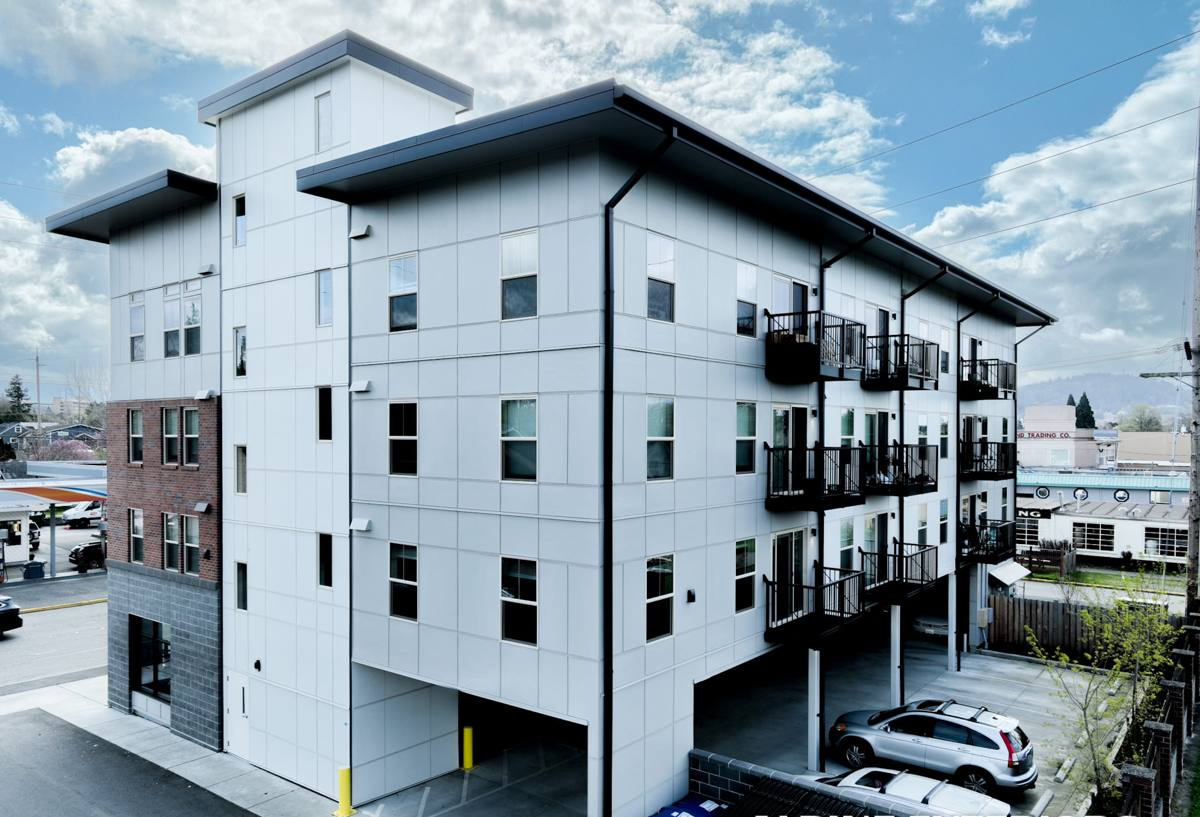
What a Correct Siding Installation Actually Involves
Siding installation is often talked about like it's just "put the new panels on the wall." That's not what determines whether a job lasts 10 years or 40. The materials underneath and the details around openings do most of the work.
The Water Management Layer
Every siding installation should include a properly lapped weather-resistive barrier, correctly flashed windows and doors, and a drainage plane that lets any moisture that gets behind the siding find its way back out instead of sitting against the sheathing. In a humid coastal climate, skipping or rushing this step is the single most common reason siding jobs fail from the inside out, long before the siding itself shows a problem.
Fastening and Fastener Choice
Fastener spacing, embedment depth, and material all affect how siding performs in wind events and how long it resists corrosion in salt air. Under-fastened or improperly placed nails are a common cause of siding that rattles loose, cracks at fastener points, or blows off in storms — issues that show up as workmanship failures, not product failures.
Trim, Caulking, and Transitions
Corners, butt joints, and the transitions around windows, doors, and roofline intersections are where wind-driven rain finds its way in if they're not detailed correctly. Quality caulking and trim work isn't cosmetic — it's part of the water management system.
Clearance and Ventilation
Proper clearance from grade, roofing, and decking surfaces keeps siding from sitting in standing moisture, and adequate ventilation behind the cladding helps the wall assembly dry out after the frequent rain this area gets. Both are easy to overlook and both matter a lot over a 20-30 year timeframe.
Why We Install James Hardie Fiber Cement — and Nothing Else
We install James Hardie fiber cement siding exclusively. We don't install vinyl, LP SmartSide, Cemplank, Allura, or primed wood siding like spruce or cedar. That's a deliberate standard, not a sales preference, and it's worth explaining honestly.
Vinyl siding is affordable and low-maintenance in mild climates, but it softens and can distort in high heat, becomes brittle with age and UV exposure, and its unsealed lap-and-J-channel design is more forgiving of wind-driven rain intrusion in theory than in the reality of a Pinellas County storm season. Wood-based products, including primed spruce, cedar, and OSB-core siding like LP SmartSide, perform well when maintained perfectly, but they depend on an unbroken paint film and diligent upkeep to resist moisture — a tall order in a climate this humid, where lapses in maintenance show up faster than in drier regions.
James Hardie fiber cement is non-combustible, doesn't support pest damage, holds its dimensional stability in heat and humidity, and is engineered in HZ5 and HZ10 formulations specifically for high-moisture, hurricane-prone climates like ours. Its ColorPlus factory-applied finish is baked on under controlled conditions and carries its own finish warranty, which means the color and coating aren't dependent on field application quality the way a job-site paint job is. It's not the cheapest option on the market, and we're upfront about that — but for a home that has to withstand what Palm Harbor throws at exterior walls year after year, it's the product we're willing to stand behind.
Siding Material Comparison for Coastal Pinellas County Homes
| Factor | James Hardie Fiber Cement | Vinyl | Wood-Based (LP SmartSide, cedar, primed spruce) |
|---|---|---|---|
| UV / color stability | Factory ColorPlus finish, warrantied | Fades and chalks over time | Depends entirely on paint upkeep |
| Heat performance | Dimensionally stable | Can soften, warp, or distort | Stable if sealed and maintained |
| Moisture / humidity resistance | Engineered HZ lines for high-moisture climates | Moderate; seams are vulnerable points | Requires unbroken paint seal; vulnerable if compromised |
| Fire rating | Non-combustible | Combustible | Combustible |
| Pest resistance | Not a food source for pests | Not a food source | Vulnerable without maintenance |
| Maintenance burden | Low; occasional wash and caulk check | Low, but limited repair options | Ongoing repainting/resealing required |
| Typical upfront cost | Higher | Lowest | Moderate to higher, plus ongoing upkeep cost |
Our Palm Harbor Siding Installation Process
Assessment and Estimate
We start with an on-site look at the home's current siding, wall assembly, and any problem areas — corners, window returns, low-clearance sections near grade or decking — and walk the homeowner through what a correct installation will involve and what it costs, in plain terms.
Removal and Substrate Check
Old siding comes off and we check the sheathing underneath for rot, moisture staining, or damage before anything new goes on. Covering up a compromised substrate is how "new siding" ends up with old problems a few years later.
Water Management Installation
Weather-resistive barrier, flashing at every window, door, and penetration, and correct lapping sequence — installed to shed water the way the wall assembly is designed to, not just to look right once the siding covers it up.
James Hardie Installation to Spec
Panels or planks installed per manufacturer fastening schedules, with correct clearances, joint treatment, and trim detailing throughout — the details that determine whether the installation holds up to Gulf-coast wind and rain over decades, not just years.
Final Walkthrough
We review the finished work with the homeowner and go over care basics before we consider the job done.
Signs a Palm Harbor Home Needs New Siding
- Visible cracking, warping, or buckling panels, especially on sun-facing or storm-exposed walls
- Soft spots or give when siding is pressed near the base of walls or below windows
- Persistent moisture staining, peeling paint, or a musty smell along interior walls that back up to exterior siding
- Chalking, fading, or a siding color that looks noticeably different from when it was installed
- Gaps opening up at corners, seams, or trim after a storm season
- Rising energy bills that can't be explained by anything else, which can point to a failing wall assembly
- Siding that's original to a home older than 20-25 years and has never been fully replaced
Hurricane and Wind-Zone Considerations
Pinellas County's wind-load requirements exist because storms here aren't hypothetical. Siding installation in Palm Harbor has to account for wind uplift at panel edges and corners, correct fastener schedules rated for the applicable wind zone, and trim and flashing details that hold up when rain is being driven sideways instead of falling straight down. This is also where cutting corners is easiest to hide and hardest to catch until a storm actually tests the work. A siding job that looks identical to a correctly installed one on a calm day can perform very differently in a named storm if fastening and flashing weren't done to spec.
Why Local Experience in Palm Harbor Matters
A crew that regularly works Palm Harbor and the surrounding Clearwater area already understands the wind-zone requirements that apply here, has a feel for how the area's canal and coastal exposure varies block to block, and knows what tends to go wrong on the mix of older and newer homes common in this community. That's different from a crew learning the local climate on the homeowner's project. Local experience also means faster, more accurate estimates, because the crew has already seen the conditions this climate creates on siding up close, repeatedly, rather than working from a generic checklist.
If your Palm Harbor home is due for new siding, or you want a straight answer about whether it can be repaired versus replaced, we're happy to take a look. The estimate is free, there's no pressure, and we'll tell you honestly what your home needs — use the form below to get started.