 Clearwater Siding
 Why Decks in Seminole Wear Out Faster Than the Warranty Card Suggests
Seminole sits in the part of Pinellas County that gets the full weather package: long stretches of intense UV, sudden wind-driven rain off the Gulf, salt-laden air drifting in from the nearby coastline, and the occasional hurricane-force wind event that puts real structural load on anything built outdoors. A deck here isn't just outdoor furniture with a floor — it's a structure that has to survive conditions most manufacturer warranties were never really tested against.
Standard lumber and hardware ratings assume a moderate climate. Seminole doesn't have one. UV breaks down wood fibers and fades or chalks composite surfaces faster than it would in a drier, cooler region. Humidity keeps moisture sitting inside joints, fastener holes, and ledger connections longer after every rain. Salt air accelerates corrosion on anything less than a marine-grade or coated fastener, even well inland from the beach. None of that means a deck can't last — it means it has to be built to account for those conditions from the start, not patched together with materials chosen for price alone.
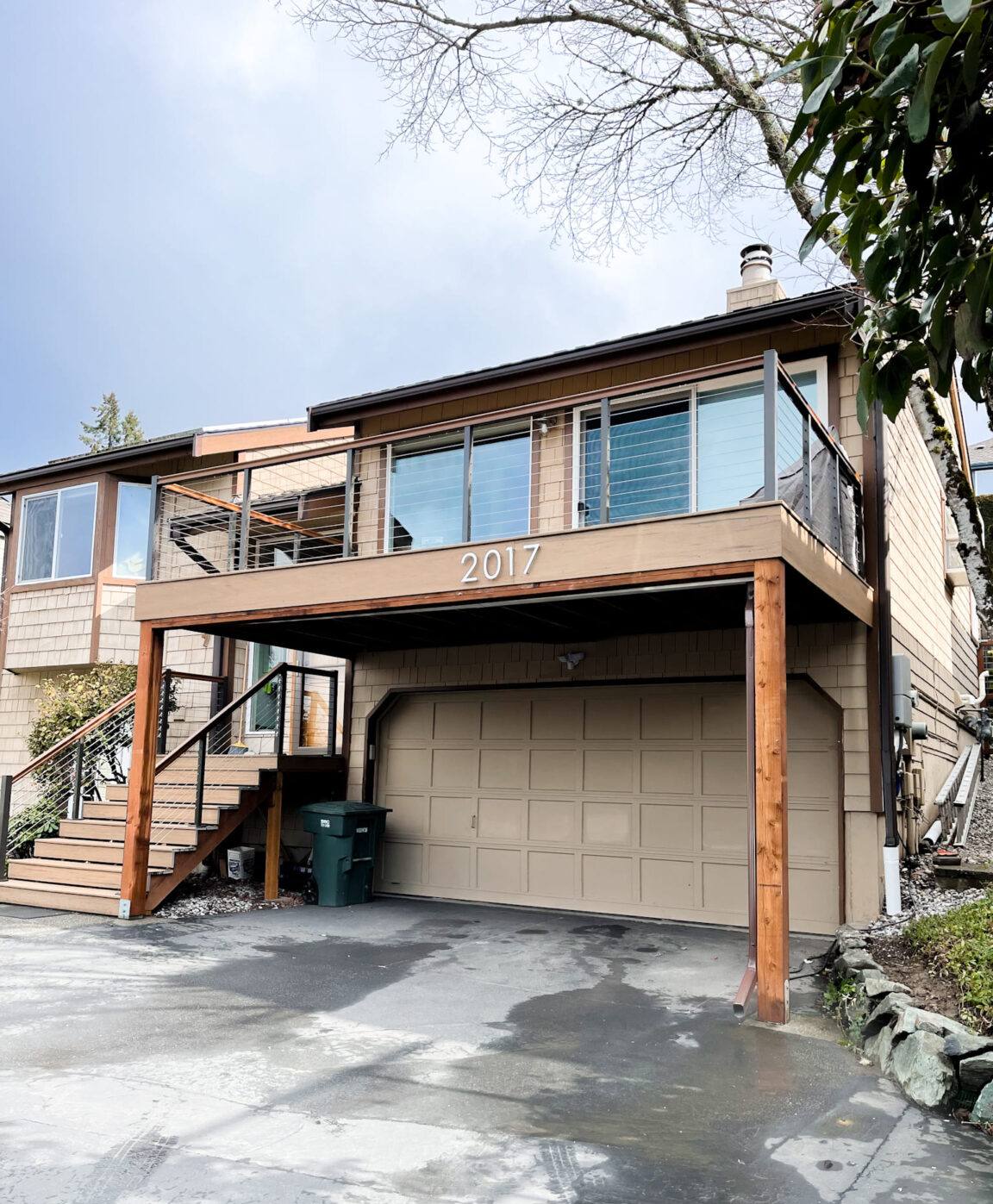
Signs a Deck Needs Replacement, Not Another Repair
We get a lot of calls asking whether a deck can be saved with a few new boards. Sometimes it can. Often the deck is past the point where surface repairs solve anything, because the problem has moved into the framing, the ledger connection, or the footings — none of which a board swap fixes.
- Boards that feel spongy, springy, or soft underfoot, especially near the house or stair landing
- Visible rot, delamination, or splintering at the ends of boards where water sits longest
- Fasteners that have popped, corroded, or left rust streaks down the face of the decking
- A ledger board pulling away from the house, or gaps opening between the deck and the exterior wall
- Joists or beams that flex noticeably when walked on, or visible sagging along a span
- Railings or posts that wobble under moderate pressure — a safety issue, not a cosmetic one
- Persistent mold, algae, or a musty smell coming from underneath the deck
- A deck older than 15-20 years that has never had the substructure inspected, only the surface
If more than one or two of these apply, replacement is almost always the more honest answer than another round of patchwork — repeated repairs on a failing frame cost more over time than doing it right once.
What a Correct Deck Replacement Involves in Pinellas County
Deck replacement in Seminole is a permitted job, not a weekend project, and for good reason. Florida's building code accounts for wind uplift, and Pinellas County reviews deck plans against those wind-load requirements before work starts. A correctly engineered deck ties framing, posts, and footings together so the whole structure resists being lifted or racked in a storm — not just held down by its own weight.
The Parts That Actually Matter
The visible decking surface is the smallest part of what determines whether a deck lasts. The parts that fail first, and that cause the most expensive failures when ignored, are underneath:
- Ledger attachment — where the deck bolts to the house. This connection needs proper flashing to keep water from tracking behind it into the home's rim joist, which is one of the most common sources of hidden rot in older decks.
- Footings — sized and placed to meet load requirements, not just "deep enough to look right."
- Fasteners and hardware — stainless steel or coated fasteners rated for treated lumber and coastal exposure, not generic hardware that corrodes within a few seasons.
- Joist hangers and structural connectors — the hidden hardware that keeps the frame from racking in wind, correctly rated for the load path of the specific design.
A permit pulls all of this into the open. An inspector checks the framing before decking goes down, which is exactly the point in the process where problems are cheapest to catch. Skipping that step to save time is how homeowners end up with a deck that looks fine for three years and then fails at the ledger.
Choosing Decking Material for This Climate
There's no single "best" decking material — there's a best material for a given budget, maintenance appetite, and how much direct sun and rain exposure the deck actually gets. Here's how the common options hold up under Seminole's conditions specifically.
| Material | UV & Heat Behavior | Moisture & Salt Air | Maintenance |
|---|---|---|---|
| Pressure-treated pine | Fades and can check/crack under sustained sun exposure | Prone to swelling and splitting if not sealed regularly | Needs sealing/staining every 1-2 years to hold up |
| Capped composite | Holds color well; capped layer resists fading better than uncapped | Doesn't absorb water or rot; performs well near coastal air | Occasional washing; no sealing or staining |
| Uncapped composite | More prone to fading and surface wear in constant sun | Better than wood but can absorb some moisture over time | Low, but not maintenance-free like capped versions |
| PVC decking | Very stable in heat and UV; won't rot or absorb moisture | Excellent in humid, salty air — doesn't feed mold growth | Lowest maintenance of the common options |
Wood costs less up front and has a warm, traditional look many homeowners still want — that's a legitimate reason to choose it, as long as the maintenance schedule is realistic. Composite and PVC cost more initially but trade ongoing sealing and staining for occasional washing, which matters a lot in a climate that's hard on exposed wood. We'll walk through the honest trade-offs for your specific deck rather than push one option by default.
Railings, Stairs, and Pool Code Requirements
Florida code sets minimum requirements for railing height and baluster spacing on any elevated deck, and those requirements get enforced at inspection, not left to preference. If your deck sits near a pool, Florida's pool barrier law adds another layer — gates, latch height, and in some cases self-closing hardware — that has to be accounted for in the design, not bolted on afterward.
Stairs get their own scrutiny too: rise and run consistency, handrail requirements on longer runs, and proper landing dimensions at the bottom. These aren't arbitrary rules — uneven stair rise is one of the most common causes of falls on residential decks, and it's also one of the easiest things to get right during design if it's planned for from the start.
Our Deck Replacement Process
- On-site assessment — we inspect the existing deck's framing, ledger, and footings (not just the surface) to determine what's actually driving the need for replacement.
- Design and material selection — we go over decking material options, railing style, and layout changes if you want them, sized to meet Florida wind-load requirements.
- Permitting — we handle the Pinellas County permit submission and coordinate the required inspections so you're not left tracking down paperwork.
- Demolition and disposal — the old deck comes down and off your property; we don't leave debris piled in the yard.
- Framing and structural inspection — footings, posts, beams, joists, and ledger flashing go in first and get inspected before any decking is installed.
- Decking, railings, and finish work — surface material and railings are installed to the design spec, with attention to fastener pattern and drainage.
- Final walkthrough — we go over the finished deck with you and confirm final inspection sign-off.
Why a Crew That Already Works Seminole Matters
A deck built to a generic national spec sheet isn't necessarily built for Pinellas County. Local permitting offices have their own submission requirements and review timelines, and knowing them ahead of time keeps a project from stalling in the queue. Local soil and drainage conditions affect footing placement, especially on lots near canals or low-lying areas where standing water after heavy rain is common. And a crew that's replaced decks throughout this area already knows which framing and hardware choices hold up here versus which ones look fine on paper but fail early in Gulf Coast humidity and salt air.
That local track record isn't a marketing line — it's the difference between a deck that gets designed defensively for this specific climate and one that gets built to a generic standard and hopes for the best.
What Drives the Cost of a Deck Replacement
Every deck is different, but the same handful of factors move the price up or down on nearly every project we quote. Rather than throw out a number that doesn't apply to your situation, here's what actually determines it.
| Factor | Why It Matters |
|---|---|
| Deck size and shape | Square footage plus the number of angles, level changes, or curves affects both material and labor |
| Decking material | Pressure-treated wood, uncapped composite, capped composite, and PVC all carry different material costs |
| Height and access | Elevated decks require more substantial framing, footings, and often stairs and additional railing |
| Railing style | Basic baluster railing costs less than cable, glass, or custom designs |
| Site conditions | Grading, existing landscaping, and access for equipment can add time to demo and construction |
| Permit and inspection scope | Larger or more complex decks may require additional engineering review |
We'll give you a real, itemized number after seeing the site and talking through material choices — not a rough estimate that changes once the old deck comes off and hidden framing problems show up.
Living With Your New Deck
Whatever material you choose, a little seasonal attention keeps it performing the way it should. Sweep debris off the surface regularly so it doesn't trap moisture against the boards. Keep gutters and downspouts directed away from the deck footprint so runoff isn't constantly soaking one area. If you chose wood, plan on resealing on the schedule your contractor recommends rather than waiting until it visibly needs it. If you chose composite or PVC, an occasional wash is usually all that's required. None of this is complicated, but skipping it is how a well-built deck ages faster than it should.
If your deck in Seminole is showing its age, or you're just ready to replace an old one with something built for how hard this climate is on outdoor structures, we're glad to take a look. Reach out for a free, no-pressure estimate using the form below — we'll assess the existing deck, talk through honest material options, and give you a real plan and price before any work begins.