 Clearwater Siding
 Why Sunset Point Homes Need Siding Built for This Climate
Sunset Point is one of the older, established residential pockets of Clearwater, close enough to the water that sun, salt, and wind all take their toll on a home's exterior faster than they would twenty miles inland. Siding here isn't just a cosmetic choice — it's the first line of defense between the house and a climate that doesn't let up. Pinellas County sees hurricane-force wind gusts during tropical systems, wind-driven rain that gets forced sideways into wall assemblies instead of falling straight down, intense UV exposure nearly year-round, and a steady dose of salt-laden air off the nearby water. Any one of those on its own would be manageable. Stacked together over a decade or two, they expose weak siding products and weak installation work fast.
That's the standard we hold every Sunset Point siding installation to: not "what looks good on day one," but "what still performs correctly after years of Gulf Coast weather." The product matters. So does the crew putting it on the wall. Get either one wrong and you're looking at buckled panels, trapped moisture behind the cladding, or a finish that chalks and fades years before it should have.
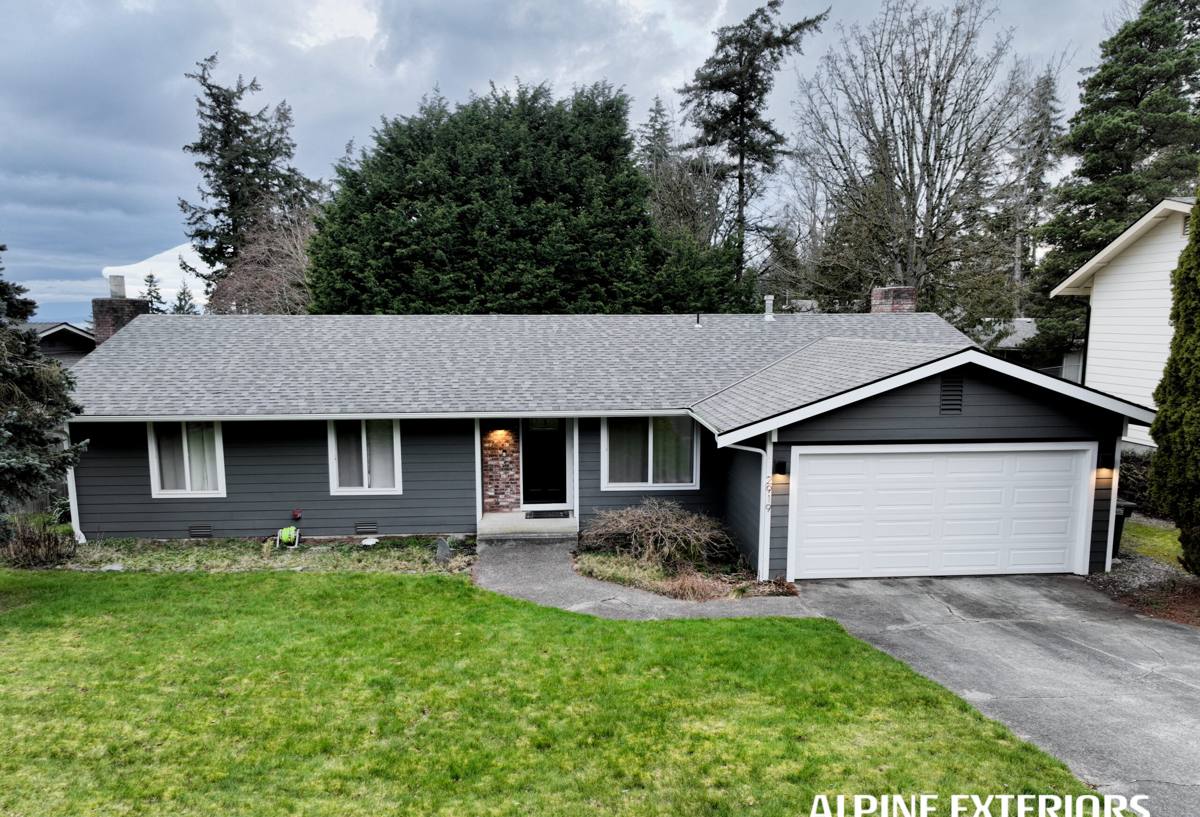
What Correct Siding Installation Actually Involves
Siding looks simple from the curb — panels going up in rows. What actually determines whether it lasts happens underneath, at the laps, and around every penetration in the wall. This is where most of the difference between a good installation and a problem installation gets decided, long before the first coat of color is visible.
Water Management Comes First
Every wall needs a continuous weather-resistant barrier behind the siding, with flashing integrated correctly at windows, doors, and any place a pipe or fixture penetrates the wall. Water has to be directed out and down, never trapped behind the cladding. In a coastal climate with frequent wind-driven rain, a barrier with even one gap or a flashing detail installed out of sequence becomes the spot where a wall starts rotting from the inside, often for years before anyone sees a sign of it on the outside.
Fastening for Real Wind Load
Fiber cement siding has a manufacturer-specified nailing pattern, fastener type, and penetration depth, and those specs change based on the local wind zone. Pinellas County's wind exposure means fastening can't be treated as a generic step — it has to match what the product is actually rated to withstand in a storm. Under-fastened or improperly placed nails are one of the most common reasons siding fails in high wind, and it's not something you can see just by looking at a finished wall.
Clearances That Get Skipped
Starter strips, ground clearance, kickout flashing at roof-wall intersections, and gaps at trim joints all exist for a reason: they keep water moving away from the wood, framing, and sheathing underneath. These are the details that get rushed on a fast job and are also the details that determine whether a home holds up through its next several hurricane seasons.
Why We Only Install James Hardie Fiber Cement
We standardized on James Hardie fiber cement siding for every home we work on, including in Sunset Point, and we don't install vinyl, LP SmartSide, or other fiber cement alternatives. That's not a marketing position — it's a decision based on what actually holds up in this climate when installed correctly.
Engineered for Humid, Coastal Conditions
Hardie's HZ5 product line is engineered specifically for climates like ours — high humidity, heavy seasonal rain, and repeated wet-dry cycling. Fiber cement doesn't absorb and swell the way some engineered wood products can, and it doesn't degrade under sustained UV and moisture exposure the way vinyl can become brittle over time.
A Factory Finish That Doesn't Depend on a Field Painter
ColorPlus finish is baked on at the factory under controlled conditions, not brushed or sprayed on-site. That matters in a market where field-applied paint jobs are exposed to sun and humidity before they've even fully cured. A factory finish resists fading and chipping far better and comes backed by its own finish warranty.
Non-Combustible Material
Fiber cement doesn't burn. For homeowners weighing exterior materials, that's a real, tangible difference in fire risk compared to some alternative claddings, on top of everything it offers for moisture and wind performance.
A Warranty Built to Transfer
Hardie backs its siding with a strong, transferable warranty — a real asset if the home is ever sold, and a sign of how confident the manufacturer is in the product's long-term performance when it's installed to spec.
Signs Sunset Point Homes Show When Siding Is Failing
Because of the mix of sun, salt, and storm exposure here, siding problems tend to show up in fairly consistent ways. Worth checking for periodically, especially after a rough storm season:
- Panels that look warped, bowed, or separated from the wall at the corners or seams
- Soft or spongy spots when you press on the siding near the bottom of the wall
- Paint or finish that's chalking, peeling, or badly faded on the sun-facing side of the house
- Visible gaps at trim, window, or door edges where caulking has failed or pulled away
- Streaking, dark staining, or a persistent musty smell near exterior walls
- Rust bleeding through at fastener points
- Missing or cracked panels after a wind event
Any of these on their own might be minor. Several at once, or any sign of moisture intrusion, usually means it's worth having the wall assembly looked at before it turns into a larger repair.
Our Installation Process, Start to Finish
Assessment and Tear-Off
We start by evaluating the existing siding and the wall sheathing underneath it. If there's hidden water damage from a prior installation, that gets addressed before anything new goes up — covering a bad substrate with new siding just hides the problem for a few more years.
Weather Barrier and Flashing
A new weather-resistant barrier goes on, with flashing detailed correctly at every window, door, and penetration. This step gets done right the first time, since it's the layer that does the real work of keeping water out of the wall long after the siding itself is up.
Hardie Installation to Manufacturer Spec
Panels, fasteners, and clearances follow Hardie's published installation requirements for our wind zone — not a generic approach borrowed from a different climate or a different product.
Trim, Caulking, and Detail Work
Trim gets fitted and sealed at every joint, corner, and penetration. This is where a lot of the long-term water performance actually gets locked in, and it's a step that's easy to rush but shouldn't be.
Final Walkthrough and Cleanup
We walk the finished job with the homeowner, confirm everything meets spec, and clear the site of old materials and debris.
What Affects the Cost of Siding Installation in Sunset Point
Every home is different, but the same handful of factors drive most of the cost variation we see on siding installation projects in this area.
| Factor | Why It Matters |
|---|---|
| Home size and wall complexity | More square footage, more corners, dormers, and roof-wall intersections all mean more material and more labor-intensive detail work |
| Condition of existing sheathing | Hidden water or rot damage found during tear-off has to be repaired before new siding goes on |
| Siding profile and accessories | Lap width, trim style, and accent details all affect material cost and installation time |
| Finish color and options | ColorPlus factory finishes vary in cost by color and product line |
| Access and site conditions | Tight lot lines, landscaping, or multi-story walls affect labor time and equipment needs |
| Permitting requirements | Local permitting and inspection requirements factor into project timeline and cost |
We walk through these specifics with every homeowner during the estimate, so there's a clear picture of where the cost is actually going before any work starts.
Why a Crew That Already Works Sunset Point Matters
Siding installation isn't identical from one neighborhood to the next, even within the same city. A crew that regularly works this part of Clearwater already understands the wind zone requirements that apply here, knows what condition to expect from homes of a certain age when the old siding comes off, and has already worked through the local permitting process more than once. That familiarity shows up in fewer surprises mid-project and fewer callbacks after the fact.
It also matters for something less obvious: salt air awareness. Homes near the water corrode and weather differently than homes further inland, which affects everything from fastener choice to how trim and flashing details get handled. A crew that's done this work up and down the Pinellas County coastline treats that as standard practice, not an afterthought.
Keeping Your Siding Performing After Installation
Correctly installed Hardie siding is low-maintenance, but "low" isn't "none." A rinse with a garden hose a couple of times a year clears off salt residue and airborne grime before it builds up. It's worth doing a visual check after any major storm — looking for cracked panels, lifted trim, or fresh gaps at caulk lines — since catching a small issue early is a lot cheaper than dealing with water damage that's had months to spread behind the wall.
If your Sunset Point home's siding is showing its age, or you're planning ahead of the next storm season, we're happy to take a look and walk you through what we're seeing — no pressure, no obligation. Reach out for a free estimate using the form below.