 Clearwater Siding
 Siding Built for What Skycrest Homes Actually Face
Skycrest sits inland enough to feel like a quiet, established Clearwater neighborhood, but it's still Pinellas County — which means every exterior wall on every house is dealing with the same coastal Florida punishment as homes much closer to the water. Hurricane-force winds and the debris they carry, wind-driven rain that gets forced sideways into seams and laps, intense year-round UV that breaks down pigments and coatings, and salt-laden air that corrodes fasteners and trim all work on a home's siding every single day, not just during storm season.
Siding that isn't engineered for this environment doesn't fail dramatically — it fails slowly. Paint chalks and fades early. Seams open up. Panels cup, swell, or delaminate. Fasteners bleed rust streaks down the face of the wall. By the time it's obvious from the street, moisture has usually already gotten behind the cladding. A siding job done right in Skycrest has to account for all of this from the first product decision through the last bead of caulk.
What Skycrest's Housing Stock Means for a Siding Project
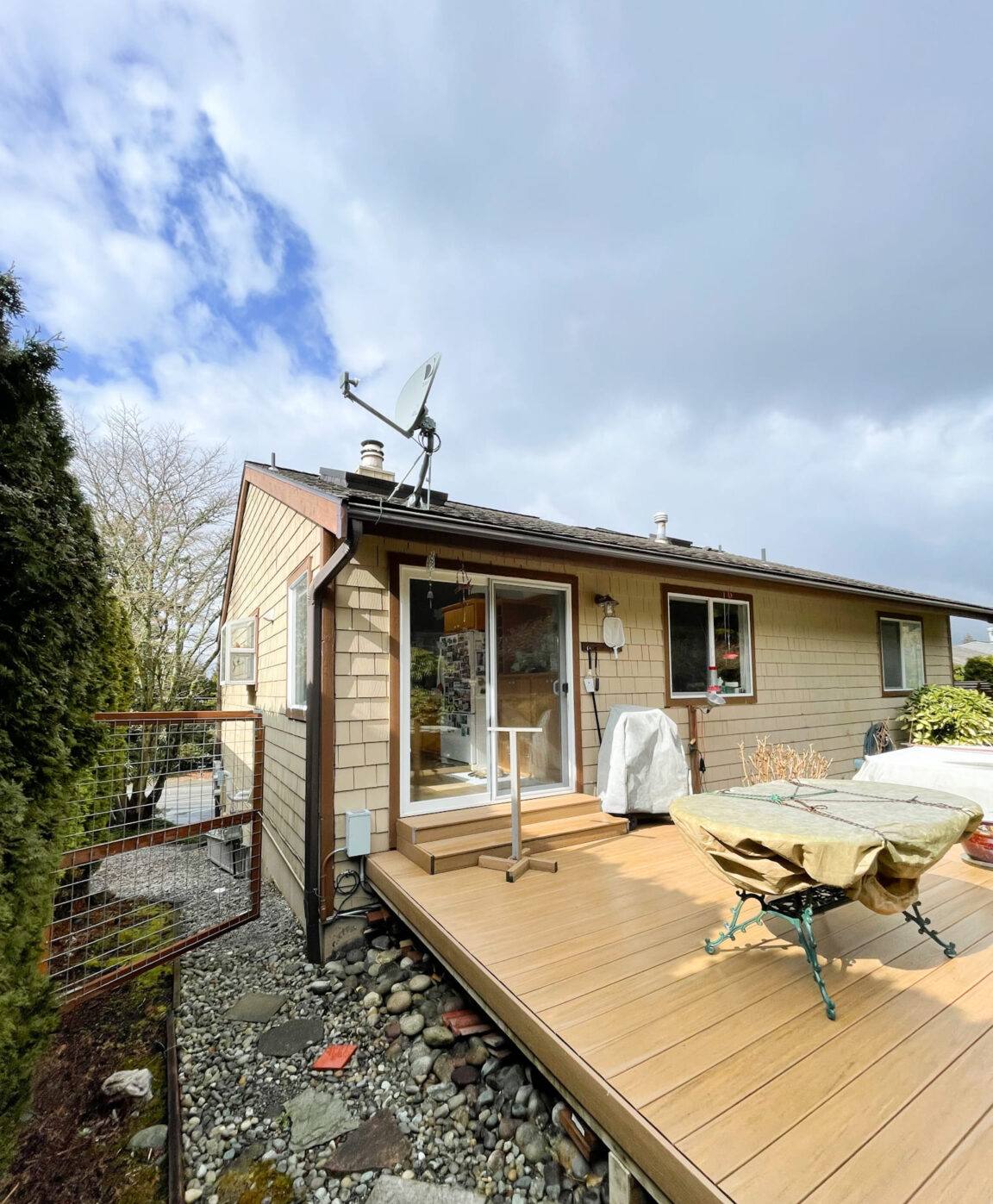
Like much of Clearwater's older platted neighborhoods, Skycrest has a mix of home ages and original construction methods — you'll find mid-century homes alongside more recently updated ones, often with additions, enclosed porches, or prior siding or paint jobs layered on over the decades. That matters for a siding project in a few practical ways:
Original Sheathing and Wall Assemblies
Older homes may have wood board sheathing, older housewrap or felt, or no proper weather-resistive barrier at all behind the existing siding. A correct installation starts by opening up the wall system, inspecting what's actually there, and fixing or upgrading it before a single course of new siding goes up. Skipping this step is the single most common cause of early siding failure, regardless of what product goes on the outside.
Mixed Materials and Additions
It's common on older homes to find a mix of original wood siding, later vinyl retrofits, or aluminum trim from a previous remodel. Tying new fiber cement siding into these transitions cleanly — especially around window and door openings, roof lines, and additions — takes more planning than a straightforward new-construction install.
Why This Company Installs Only James Hardie Fiber Cement
We install one siding system: James Hardie fiber cement. We don't install vinyl, LP SmartSide, Cemplank, Allura, or primed wood products like spruce or cedar siding. That's a deliberate standard, not a sales preference, and it comes down to what actually holds up in a climate like this one.
Vinyl softens, warps, and can crack under wind-driven debris, and it has real limits on how dark a color it can safely be used in under intense Florida sun. Wood and primed-wood products need consistent, disciplined maintenance to keep moisture out — a schedule that's easy to fall behind on. Competing fiber cement and wood-composite products vary in their moisture engineering, factory finish quality, and warranty structure, and we've made the call that James Hardie's engineering and track record are what we're willing to put our labor and our name behind.
James Hardie fiber cement is non-combustible, dimensionally stable in heat and humidity, and available in HZ5 formulations engineered specifically for hot, humid, high-moisture climates like ours. The ColorPlus factory finish is baked on and warranted separately from the substrate, which matters enormously under year-round UV exposure. It's a system, not just a board — and installed correctly, it's the product we trust on our own standards for a Clearwater exterior.
What a Correct Fiber Cement Installation Involves
Fiber cement siding is only as good as the details behind it. A rushed or generic install will still look fine on day one — the difference shows up in year three, five, and ten. The fundamentals we hold every Skycrest job to:
- A continuous, properly lapped weather-resistive barrier behind the siding, with no gaps at seams or penetrations
- Correct starter strip installation at the base of the wall so the first course sits and drains properly
- Proper flashing at every window, door, and roof intersection — this is where wind-driven rain finds its way in
- Fasteners placed per manufacturer spec (location, spacing, and depth), not just "close enough"
- Correct clearance between the siding's bottom edge and roof lines, decks, and grade to prevent wicking
- Factory-cut and factory-primed edges wherever possible, with any field cuts properly sealed
- Manufacturer-approved caulk and sealant at joints — never generic caulk that fails under UV in a season or two
None of this is exotic. It's discipline, and it's exactly what separates a siding job that looks good in photos from one that still performs a decade into Gulf Coast weather.
Our Process for a Skycrest Siding Project
Assessment and Wall Inspection
We start with an honest look at your current siding and, where it's already failing, what's underneath it. This tells us whether we're dealing with a straightforward re-side or whether sheathing repair or a weather barrier upgrade needs to be part of the scope before we quote a final number.
Product and Color Selection
We walk through James Hardie's HardiePlank, HardiePanel, and trim options and ColorPlus color palette, factoring in your home's style and Skycrest's mix of architectural character — no pressure toward a particular look, just an honest read on what will hold color and perform well on your specific exposure.
Installation
Removal of failing material, correction of any underlying wall issues, weather barrier and flashing work, then siding installation to manufacturer spec — fastening, clearances, and joint sealing included, not treated as afterthoughts.
Final Walkthrough
We go around the home with you before calling the job done, checking seams, trim lines, and paint coverage so nothing gets left for you to discover later.
Comparing Siding Options for a Skycrest Home
| Factor | James Hardie Fiber Cement | Vinyl Siding | Wood / Primed Wood |
|---|---|---|---|
| Wind and impact resistance | High when installed to spec | Moderate; can crack or blow off under debris | Moderate; splits under impact |
| UV and fade resistance | Strong — factory ColorPlus finish | Fades and can distort in intense heat | Depends entirely on paint maintenance |
| Moisture and rot behavior | Non-combustible, engineered for humid climates | Doesn't rot, but traps moisture behind panels if installed poorly | Prone to rot without consistent upkeep |
| Maintenance | Low; occasional wash and caulk check | Low, but limited repair options | High; regular repainting and sealing required |
| Typical lifespan (installed correctly) | Decades, with strong factory warranty | 15–25 years, varies with sun exposure | Highly variable, maintenance-dependent |
What Drives the Cost of a Skycrest Siding Job
Every home is different, but a few factors consistently move the price on a fiber cement project in this neighborhood:
Condition of the Existing Wall
If sheathing repair, weather barrier replacement, or rotted trim is discovered once the old siding comes off, that work gets priced honestly and separately — it's not something we hide in a low upfront number and then surprise you with later.
Home Size, Stories, and Trim Complexity
Square footage, roofline complexity, number of windows and doors, and how much custom trim work is involved all affect labor time.
Product Selection
HardiePlank lap siding, HardiePanel vertical siding, and trim packages carry different material costs, and color and texture choices within the ColorPlus line can vary as well.
We give straightforward, itemized estimates so you know what you're paying for and why — no vague lump-sum numbers.
Maintenance in a Pinellas County Climate
James Hardie siding is low-maintenance, not no-maintenance. In Clearwater's climate, that means periodically rinsing off salt residue and organic buildup, checking caulk lines at trim and penetrations after big storms, and keeping an eye on any spot where irrigation or sprinklers are hitting the siding directly, which can shorten the life of even a well-finished product. None of this is heavy work — it's the kind of occasional check that keeps a correctly installed system performing for the long haul.
Why Local Experience in Skycrest Matters
A crew that regularly works Skycrest and the surrounding Clearwater neighborhoods already understands the age range of the housing stock, the permitting process with the City of Clearwater, and how Pinellas County's wind and moisture exposure should shape installation details — none of that has to be learned on your project. That local familiarity translates into fewer surprises during tear-off, faster problem-solving when something unexpected turns up behind the old siding, and a finished job that's built for the specific conditions your home sits in, not generic textbook conditions.
If you're weighing a siding replacement in Skycrest, we're happy to take a look and give you a straightforward, no-pressure estimate — just fill out the form below.