 Clearwater Siding
 Safety Harbor's Roofs Take a Specific Kind of Beating
Safety Harbor sits close enough to Old Tampa Bay that homes here deal with a mix of problems most inland roofs don't see as often: salt-laden air moving off the water, wind funneling across open water before it hits rooflines, and the wind-driven rain that comes with almost every serious storm in this part of Pinellas County. Add in the UV load that any Central Florida roof takes year-round, and you end up with roofing systems that age faster and fail in ways that aren't always obvious from the ground.
Storm damage repair in this neighborhood isn't just about patching what broke during the last named storm. It's about recognizing that Safety Harbor roofs are under constant, low-grade stress between storms too — and that a repair done without accounting for that will fail again, sometimes within a single season.
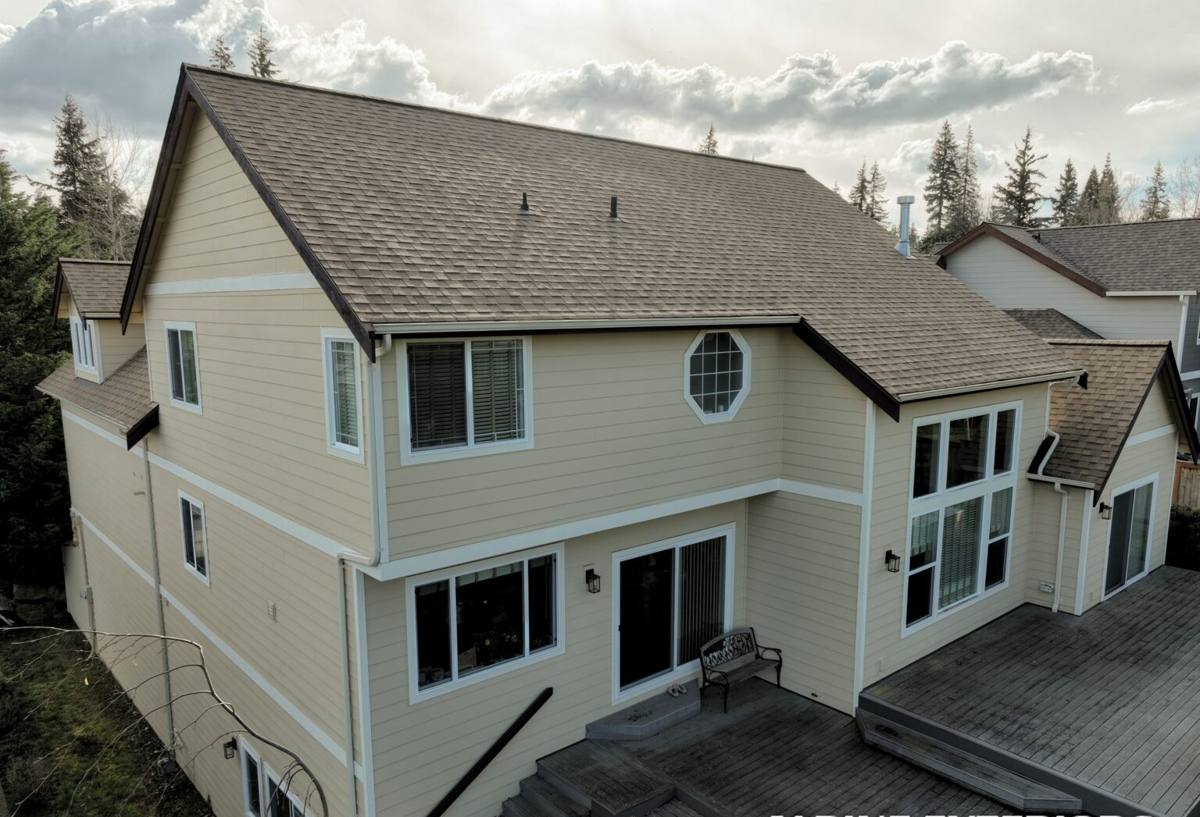
What Storm Damage Actually Looks Like Here
Homeowners usually call us after something obvious happens — a shingle patch missing after a squall line comes through, a soffit panel torn loose, water showing up on a ceiling after a hard rain. Those are real problems, but they're often just the visible part of a larger pattern of damage.
Visible Damage
- Missing, cracked, or curled shingles, especially on the roof edges and ridges where wind uplift concentrates
- Torn or lifted flashing around chimneys, vent stacks, and roof-to-wall intersections
- Dented or displaced gutters and downspouts from wind-driven debris
- Granule loss showing up as bare, dark patches on shingle roofs
- Ceiling stains, especially near interior walls or around penetrations, that show up days after a storm rather than during it
Hidden Damage
The damage that causes the most long-term trouble is usually the kind you can't see from the driveway. Wind-driven rain doesn't need a hole to get in — it can work its way under a shingle that's been lifted just a fraction of an inch, or through a fastener that's backed out slightly from repeated flexing. Salt air accelerates corrosion on exposed metal fasteners and flashing faster than most manufacturers' standard warranties account for. Once moisture gets under the roofing layer, it can sit in the decking and insulation for weeks before it ever shows up as a stain inside the house.
Why Waiting Costs More Than It Saves
It's tempting to leave minor storm damage alone if there's no active leak yet. In our experience, that's the most expensive decision a homeowner can make. A lifted shingle or open flashing seam left through even one more heavy rain event can let enough moisture into the decking to start rot or mold growth that a simple shingle swap won't fix. What would have been a same-day repair turns into a decking replacement, and in some cases a partial re-roof.
There's also an insurance timing issue. Most policies expect storm damage to be reported and documented within a reasonable window after the event. Damage that's discovered and reported months later, after it's clearly worsened, is harder to tie back to a specific storm — which can complicate a claim that would otherwise have been straightforward.
What a Correct Storm Damage Repair Involves
A repair that actually holds up in this climate goes further than replacing whatever shingles are visibly missing. We look at the repair as a system, not a patch:
Inspection Before Repair
We check the full roof plane the damage occurred on, not just the spot that was reported — wind damage rarely stays confined to one small area. We also check flashing, fasteners, and the decking underneath in the affected zone, since that's where hidden moisture problems show up.
Matching Materials Correctly
Shingle color and profile change over time with UV exposure, so a patch using new material next to weathered material can look mismatched and, more importantly, may not seal properly against older, less pliable shingles. We match as closely as the existing roof allows and explain honestly when a full slope replacement will look and perform better than a visible patch.
Flashing and Fastener Upgrades
Given the salt air exposure this area gets, we don't just reuse or reinstall the same fasteners and flashing that failed. Where it makes sense, we upgrade to corrosion-resistant fasteners and properly lapped flashing details, since replacing standard components with the same standard components in a high-corrosion area just sets up the next repair call.
Sealing Against Wind-Driven Rain
Proper repair means correcting the shingle nailing pattern and sealant strip adhesion, not just laying a new shingle over the gap. Wind-driven rain finds any weak point, so the repair has to address wind resistance, not just visible coverage.
Our Process, Start to Finish
- Initial assessment. We inspect the roof, document the damage with photos, and check for related issues in the surrounding area, attic, and interior ceilings.
- Honest scope of work. We tell you plainly whether this is a targeted repair, a slope replacement, or something closer to a full re-roof — and why.
- Insurance documentation. If you're filing a claim, we provide the photo documentation and written scope your adjuster will need, in a format insurers are used to seeing.
- Repair work. We complete the agreed repair using matched materials and, where warranted, corrosion-resistant hardware suited to a bay-adjacent, coastal-influenced climate.
- Final walk-through. We review the completed work with you before we consider the job done, including a look at the attic side if moisture was a concern.
Repair or Replace? What Actually Decides It
Not every storm-damaged roof needs full replacement, and not every roof can be safely patched. The decision usually comes down to a handful of factors, and we walk through them honestly rather than defaulting to whichever option is bigger.
| Factor | Favors Targeted Repair | Favors Replacement |
|---|---|---|
| Age of existing roof | Under roughly 10-12 years | Nearing or past manufacturer's expected service life |
| Extent of damage | Isolated to one slope or small area | Spread across multiple slopes or the ridge line |
| Decking condition | Dry, solid decking under affected shingles | Soft spots or rot found during inspection |
| Material availability | Matching shingles still available | Discontinued color or profile, poor match likely |
| Prior repair history | First storm-related repair on this roof | Repeated patch jobs already on record |
We'll always show you what we found and let the roof's actual condition drive the recommendation, not the other way around.
Insurance Claims Without the Runaround
Filing a storm damage claim is stressful enough without wondering whether the paperwork is going to hold up. We document damage the way adjusters expect — clear photos, a written scope, and dated inspection notes — so there's less back-and-forth over what actually happened to the roof. We're not a public adjuster and we don't negotiate your claim for you, but we make sure the roofing side of your documentation is solid before it ever reaches your insurer.
Why It Matters That We Already Work in Safety Harbor
A crew that already works this neighborhood knows what a Safety Harbor roof is up against in a way a company driving in from across the county doesn't. We've seen how quickly salt air corrodes exposed fasteners here compared to more inland parts of Pinellas County, and we know that a roof facing the bay often takes wind loading from a different direction than the prevailing storm pattern would suggest. That local familiarity means fewer surprises during inspection and a repair scope that accounts for conditions specific to this area rather than a generic Florida storm-damage checklist.
What to Do Right After a Storm
If Safety Harbor just came through a storm and you're not sure whether your roof needs attention, a few simple checks help you decide how urgently to call someone out.
- Walk the perimeter of your home and look for shingle pieces, granules, or flashing debris on the ground
- Check gutters and downspouts for dents, separation, or debris blockages
- Look at ceilings and interior walls, especially near exterior walls, for new stains or soft spots
- Check the attic, if accessible, for damp insulation, daylight coming through the decking, or a musty smell
- Avoid climbing onto the roof yourself — storm-loosened shingles and flashing can shift underfoot even when the damage looks minor
- Take dated photos of anything you notice, even if you're not sure it's storm-related, before cleanup begins
If you see any of these signs, it's worth getting a professional inspection before the next rain event rather than waiting to see if a small problem gets worse on its own.
Get an Honest Look at Your Roof
If your Safety Harbor home has visible storm damage, or you just want a second opinion after a rough week of weather, we're happy to take a look. The estimate is free, there's no pressure to move forward, and you'll get a straight answer about what your roof actually needs — use the form below to get started.